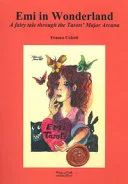
Emi in Wonderland. A Fairy Tale Through the Tarots' Major Arcana
 74
74

Emi in Wonderland. A Fairy Tale Through the Tarots' Major Arcana
Franco Coletti's *Emi in Wonderland* attempts to fuse the archetypal language of the Major Arcana with the narrative structure of a fairy tale. The premise is intriguing: to present the Fool's journey not as a series of abstract symbols, but as the unfolding adventure of a character named Emi. The strength of this approach lies in its potential for accessibility, turning complex esoteric concepts into a relatable story. However, the execution occasionally feels strained; the narrative sometimes serves the Tarot rather than the other way around. A notable passage, the interpretation of The Tower as Emi's moment of unexpected upheaval, highlights both the book's innovative potential and its challenges in maintaining narrative flow. While Coletti's 2020 work offers a novel perspective, it sometimes sacrifices the depth of individual card meanings for the sake of story coherence. It's a commendable effort to democratize Tarot's esoteric core.
📝 Description
74
Franco Coletti's 2020 book, Emi in Wonderland, retells the Major Arcana as a fairy tale.
Published in 2020, Emi in Wonderland frames the Major Arcana's archetypal journey as a fairy tale narrative. Franco Coletti uses the story of Emi to make the Tarot's symbolism more accessible. This approach aims to demystify the cards for those interested in occult sciences and metaphysical ideas.
The book is for readers curious about Tarot beyond simple fortune-telling. It suits people who enjoy allegorical stories and want to see the Major Arcana as a guide for personal and spiritual growth. Those interested in how mythology, fairy tales, and esoteric traditions connect will find Coletti's method valuable. It serves as an introduction for newcomers and a new viewpoint for experienced practitioners alike.
Coletti's work arrives during a modern revival of interest in esoteric studies, particularly the Tarot. While Tarot's history began in 15th-century Italy and its occult significance grew in the late 19th and early 20th centuries with figures like Eliphas Lévi and the Golden Dawn, this book uses a contemporary storytelling style. It continues a tradition of making Tarot symbolism relatable through narrative, moving beyond purely academic or ritualistic uses.
💡 Why Read This Book?
• Understand the Major Arcana as a narrative arc: Learn how the sequence of Tarot cards, from The Fool to The World, can be interpreted as a cohesive story of personal growth, mirroring Emi's fairy tale journey. • Explore archetypes through a story-driven lens: Gain insight into figures like The Magician and The High Priestess by seeing them integrated into Emi's unfolding adventure, moving beyond static symbolic meanings. • Discover a modern fairy tale interpretation of Tarot: Experience a fresh perspective on the esoteric symbolism of the Major Arcana, as presented in Coletti's 2020 work, offering an alternative to traditional Tarot study methods.
⭐ Reader Reviews
Honest opinions from readers who have explored this book.
❓ Frequently Asked Questions
What is the core concept of Emi in Wonderland by Franco Coletti?
The book reframes the 22 Major Arcana cards of the Tarot as stages in a fairy tale narrative, following the protagonist Emi's journey of self-discovery and spiritual development.
When was Emi in Wonderland published?
Franco Coletti's *Emi in Wonderland* was first published in 2020, placing it within contemporary explorations of esoteric traditions.
Is this book suitable for beginners to Tarot?
Yes, its fairy tale approach makes the archetypal journey of the Major Arcana more accessible to those new to Tarot or esoteric symbolism.
What is the significance of the character Emi in the book?
Emi serves as the central figure whose experiences and encounters allegorically represent the lessons and transformations associated with each of the Major Arcana cards.
Does the book focus on divination or archetypal meaning?
The book emphasizes the archetypal and psychological journey represented by the Major Arcana, using narrative to illustrate these deeper meanings rather than focusing on predictive divination.
What esoteric traditions does the book draw from?
It primarily draws from the Western esoteric tradition's interpretation of the Tarot Major Arcana, particularly concepts of the hero's journey and archetypal psychology.
🔮 Key Themes & Symbolism
The Fool's Journey as Fairy Tale
The central theme is the reinterpretation of the Fool's journey, a foundational concept in Tarot esotericism, as a coherent fairy tale. Emi embodies the innocent yet courageous spirit beginning an adventure. Each Major Arcana card becomes a chapter in her story, illustrating the progression from innocence through trials and wisdom, culminating in integration. This narrative framework allows readers to trace the archetypal path of consciousness development as depicted in the Tarot, starting from the initial leap of faith represented by The Fool.
Archetypal Characters and Encounters
The book populates Emi's world with characters representing the archetypes of the Major Arcana. Figures like The Magician, The High Priestess, The Emperor, and The Lovers are not merely symbols but active participants in Emi's journey, offering lessons, challenges, or guidance. This approach highlights the psychological depth of each archetype, showing how they manifest in relational dynamics and internal struggles. The narrative emphasizes understanding these figures as facets of the human psyche and the universal forces at play in life's unfolding drama.
Symbolism in Narrative Context
Coletti embeds the detailed symbolism of the Tarot within the unfolding plot of Emi's fairy tale. Instead of abstractly analyzing symbols like the 'keys' of The Hierophant or the 'wheel' of The Wheel of Fortune, the book shows how these symbols manifest organically within the story's events and Emi's experiences. This contextualization aims to make the esoteric meanings more tangible and memorable. The narrative provides a framework for understanding how symbolic language operates in both ancient traditions and personal narratives, revealing deeper layers of meaning.
Transformation and Integration
A core theme is the transformative power of the journey, mirroring the ultimate goal of spiritual and psychological integration. Emi's progression through the Major Arcana represents a process of facing trials, gaining self-awareness, and ultimately achieving a more integrated self. The narrative arc, from The Fool's naivety to The World's completion, illustrates the esoteric principle of becoming whole. The book suggests that understanding these archetypal stages is key to navigating one's own path towards personal evolution and inner balance.
💬 Memorable Quotes
Direct passages from the work, attributed to the author.
“The Magician showed her the tools, but Emi had to learn to wield them herself.”
— This interpretation highlights the transition from potential to active manifestation, emphasizing that esoteric knowledge (the tools) requires personal agency and practice to become effective.
“Within the silent halls of the High Priestess, Emi began to hear her own inner voice.”
— This concept points to the intuitive wisdom and subconscious knowledge associated with The High Priestess, suggesting that true understanding comes from within, often accessed in quiet introspection.
“Finally, Emi saw the whole dance, understanding her place within the grand design.”
— This interpretation relates to The World card, symbolizing completion, integration, and the realization of one's interconnectedness within the larger cosmic or personal narrative.
💡 Key Ideas
Editorial paraphrase of the work's core concepts — not direct quotes.
Emi stepped out, not knowing where the path led, only that she must follow.
This paraphrased concept captures the essence of The Fool's initial, unburdened leap into the unknown, setting the stage for the entire archetypal journey Emi undertakes.
The Tower's sudden collapse was terrifying, yet it cleared the ground for something new.
This paraphrased idea illustrates the destructive yet ultimately liberating force of The Tower card, suggesting that upheaval, though difficult, can be a catalyst for necessary change and rebuilding.
🌙 Esoteric Significance
Tradition
This work operates within the broad lineage of Western Esotericism, specifically drawing from the established esoteric interpretations of the Tarot's Major Arcana that flourished from the late 19th century onwards. It aligns with the concept of the 'Fool's Journey' or 'Hero's Journey' as a map of psychological and spiritual development, a theme explored by various esotericists. Coletti's innovation is to translate this journey into a fairy tale narrative, making it a departure from more technical Kabbalistic or Hermetic applications, focusing instead on archetypal storytelling.
Symbolism
Key symbols include the archetypal figures themselves: The Fool (innocence, new beginnings), The Magician (manifestation, skill), The High Priestess (intuition, hidden knowledge), and The World (completion, integration). In the context of Emi's fairy tale, these are not static images but active forces or characters guiding her evolution. The journey itself, progressing from card to card, symbolizes the path of individuation and the unfolding of consciousness within the esoteric framework.
Modern Relevance
Coletti's approach speaks to contemporary interest in archetypal psychology, narrative therapy, and accessible esotericism. Thinkers and practitioners in fields like Jungian psychology, mythology studies, and modern spiritual development often seek ways to understand universal patterns of human experience. This book's method of using a fairy tale to explore Tarot archetypes appeals to those looking for relatable frameworks beyond traditional academic or ritualistic approaches, finding practical application in self-understanding and personal growth.
👥 Who Should Read This Book
• Aspiring Tarot enthusiasts seeking narrative understanding: Individuals new to Tarot who find traditional symbolism daunting will benefit from Emi's story as a guide through the Major Arcana's archetypes. • Readers of comparative mythology and folklore: Those interested in how universal archetypes are expressed across different narrative forms, from ancient myths to modern fairy tales, will find Coletti's approach insightful. • Students of esoteric psychology: Individuals exploring the symbolic language of the psyche and the stages of personal transformation will appreciate the book's allegorical mapping of the Major Arcana.
📜 Historical Context
Franco Coletti's *Emi in Wonderland*, published in 2020, arrives during a period of renewed popular and academic interest in esoteric traditions, particularly Tarot. The esoteric interpretation of the Tarot gained significant traction in the late 19th century, notably through the work of Eliphas Lévi and later the Hermetic Order of the Golden Dawn, who linked the cards to Kabbalistic and Hermetic systems. This tradition contrasted with earlier, more secular uses of Tarot in Italy dating back to the 15th century. Coletti's approach, framing the Major Arcana as a fairy tale, can be seen as a contemporary evolution of making these complex symbols accessible. It moves beyond purely divinatory applications or strict adherence to historical esoteric schools, offering a narrative-driven entry point. While figures like Arthur Edward Waite and Pamela Colman Smith dramatically shaped modern Tarot imagery and interpretation in the early 20th century, Coletti's 2020 work builds on this legacy by integrating narrative storytelling as a primary pedagogical tool.
📔 Journal Prompts
Emi's initial step as The Fool: What unknown path are you currently compelled to explore?
The Magician's tools: How can you consciously apply your inherent skills to manifest your intentions?
The High Priestess's silent wisdom: What intuitive truths are you beginning to recognize within yourself?
The Lovers' choice: Reflect on a significant decision where your values were tested.
The World's completion: What does 'wholeness' signify in the context of your personal journey?
🗂️ Glossary
Major Arcana
The set of 22 trump cards in a Tarot deck, traditionally representing significant life events, spiritual lessons, and archetypal forces in the journey of the soul.
Archetype
A universal, inherited pattern of thought or imagery derived from the collective unconscious, as defined by psychologist Carl Jung. In Tarot, archetypes represent fundamental human experiences and characters.
The Fool's Journey
An esoteric concept interpreting the Major Arcana as a narrative sequence depicting the spiritual and psychological development of an individual, starting with The Fool.
Esotericism
Systems of belief and practice that focus on inner, hidden, or secret knowledge, often concerning spiritual transformation and the nature of reality, distinct from exoteric or public teachings.
Symbolism
The use of images, figures, or characters to represent abstract ideas or concepts. In Tarot, each card is rich with symbolism that conveys deeper meanings beyond the literal.
Allegory
A story, poem, or picture that can be interpreted to reveal a hidden meaning, typically a moral or political one. This book uses a fairy tale as an allegory for the Tarot's Major Arcana.
Individuation
A psychological concept, notably from Carl Jung, referring to the process of integrating the conscious and unconscious aspects of the self to achieve a more whole and complete personality.