Cosmic Consciousness

 73
73

Cosmic Consciousness
Richard Maurice Bucke's ambitious attempt to map the ascent of human awareness in *Cosmic Consciousness* is both a product of its time and a remarkably prescient work. His detailed cataloging of experiences, from his own illumination in 1872 to accounts attributed to historical figures like Walt Whitman, provides a unique dataset for anyone studying altered states. The strength lies in its earnest, almost scientific, approach to phenomena often dismissed by mainstream thought. However, Bucke's reliance on subjective interpretation and his categorization of individuals, sometimes based on limited information, can feel dated and overly prescriptive. The passage describing his own awakening, though personal, serves as a pivotal anchor for his theory, highlighting the experiential core of his argument. Ultimately, *Cosmic Consciousness* remains a significant, if sometimes flawed, foundational text for understanding the historical discourse on spiritual enlightenment.
📝 Description
73
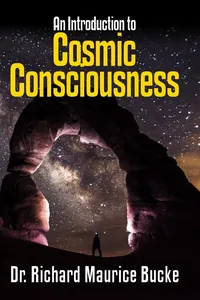
Richard Maurice Bucke's 1901 book details a progression of human consciousness toward a higher state.
Published in 1901, *Cosmic Consciousness* examines the evolution of human awareness. Bucke proposes that consciousness moves through stages, culminating in a state he calls 'cosmic consciousness.' This state, characterized by profound insight and unity with the universe, is described through personal accounts and the experiences of historical figures. Bucke sought to establish a scientific and philosophical basis for these heightened states of awareness, which were often confined to religious or mystical interpretations.
The book is aimed at readers interested in the development of consciousness and spiritual experience across different cultures and time periods. It includes detailed case studies of individuals who have reported similar states, making it relevant for scholars of comparative religion and mystical traditions. Bucke's work emerged during a period of significant interest in spiritualism and the study of consciousness, influenced by contemporaries like William James. By including figures from Buddha and Jesus to modern thinkers, Bucke illustrated what he saw as a universal spiritual progression.
Bucke's work is situated within the late 19th and early 20th-century interest in spiritualism, psychical research, and the potential for human consciousness to transcend ordinary awareness. It connects to traditions that explore altered states, mystical experiences, and the idea of spiritual evolution, drawing parallels between figures from diverse religious backgrounds and Bucke's own experiences. The book attempts to bridge the gap between empirical observation and subjective spiritual phenomena, framing mystical insight as a natural, albeit advanced, stage of human development.
💡 Why Read This Book?
• You will learn Bucke's specific three-stage model of consciousness development, including the characteristics of "cosmic consciousness" as detailed in his own 1872 experience. • You will encounter historical case studies of illuminated individuals, such as Buddha and William Blake, as analyzed by Bucke in his 1901 publication. • You will gain an understanding of how late 19th-century thinkers approached the study of higher states of awareness, providing context for contemporary discussions.
⭐ Reader Reviews
Honest opinions from readers who have explored this book.
❓ Frequently Asked Questions
What is the core theory presented in Richard Maurice Bucke's Cosmic Consciousness?
Bucke's core theory posits that human consciousness evolves through three stages: simple consciousness (like animals), self-consciousness, and the highest stage, cosmic consciousness, which involves intuitive illumination and a profound sense of unity.
Which historical figures did Bucke include as examples of cosmic consciousness?
Bucke cited numerous figures, including Buddha, Jesus, Paul, Plotinus, Muhammad, Dante, Francis Bacon, and William Blake, to illustrate his concept of higher consciousness across different eras and cultures.
When was Cosmic Consciousness first published?
Richard Maurice Bucke's seminal work, Cosmic Consciousness, was first published in 1901, reflecting the intellectual climate of the late Victorian era.
What personal experience influenced Bucke's research?
Bucke described his own profound experience of cosmic consciousness, which he dated to March 1872, as a primary catalyst for his extensive research and writing on the subject.
How does Bucke describe the subjective experience of cosmic consciousness?
He characterized it by an overwhelming sense of intellectual, moral, and spiritual illumination, a feeling of immortality, supreme happiness, and an apprehension of the universe as a divine whole.
Is Cosmic Consciousness considered a scientific or philosophical work?
While Bucke aimed for a scientific approach by cataloging instances and seeking patterns, the work is deeply philosophical and experiential, bridging empirical observation with metaphysical speculation on consciousness.
🔮 Key Themes & Symbolism
Evolution of Consciousness
Bucke argues that human consciousness is not static but undergoes a gradual evolution. He identifies three principal forms: the simple consciousness of the lower animals, the consciousness of self, and the higher consciousness of the universe (cosmic consciousness). This progression is not merely individual but represents a potential future for humanity, moving towards greater illumination and unity. The work traces this potential through historical figures, suggesting an unfolding pattern in human spiritual development.
Illumination and Intuition
The central theme is the experience of 'cosmic consciousness' itself, characterized by an overwhelming illumination, profound joy, and a direct, intuitive apprehension of truth. Bucke distinguishes this state from ordinary intellectual understanding, highlighting its immediacy and transformative power. He presents numerous accounts from individuals across history who experienced this higher state, often describing it as a sudden, profound awakening that fundamentally alters their perception of reality and self.
Historical Manifestations
Bucke meticulously compiles evidence of cosmic consciousness from a wide array of historical figures, including religious founders, philosophers, poets, and even contemporaries. By examining the lives and writings of individuals like Buddha, Jesus, Plotinus, and William Blake, he seeks to demonstrate that this state is not a modern anomaly but a recurring phenomenon throughout human history. This historical survey aims to establish a lineage and universality of spiritual enlightenment.
The Subjective Experience
A significant portion of the book is dedicated to describing the subjective qualities of the cosmic consciousness state. Bucke emphasizes the feelings of immortality, supreme happiness, and the sense of being one with the universe. He details the suddenness with which these experiences can occur, often triggered by seemingly ordinary events, and the profound, lasting impact they have on the individual's worldview and ethical stance.
💬 Memorable Quotes
Direct passages from the work, attributed to the author.
“The whole universe is seen as one, and man is seen to be in it and of it.”
— This captures the essence of the unity experienced in cosmic consciousness. The separation between the self and the external world dissolves, leading to a profound sense of belonging and interconnectedness with all existence.
“A sense of supreme happiness, a feeling of ecstasy, fills the soul.”
— Beyond mere intellectual understanding, the experience of cosmic consciousness is overwhelmingly positive and euphoric. This statement underscores the emotional component, a profound and lasting joy that transcends ordinary human experience.
“The sight of the world is suddenly changed, and the world itself is changed.”
— This interpretation reflects Bucke's observation that the experience alters not only the individual's perception but also their reality. The mundane becomes extraordinary, and a new, luminous dimension of existence is revealed.
💡 Key Ideas
Editorial paraphrase of the work's core concepts — not direct quotes.
The illumination breaks in upon him in a moment. He suddenly perceives the truth of all things.
This paraphrased concept highlights the instantaneous nature of the breakthrough Bucke describes. It's not a gradual learning process but a sudden, overwhelming revelation of universal truth that fundamentally shifts the individual's understanding.
There is in it a sense of immortality, a feeling that the soul is deathless.
Bucke frequently noted the experience of overcoming the fear of death. This quote emphasizes the profound existential certainty of eternal life that accompanies the higher states of consciousness he documents.
🌙 Esoteric Significance
Tradition
Bucke's work can be situated within the broader currents of Western esotericism and New Thought, particularly its emphasis on the evolution of consciousness and the potential for spiritual illumination. While not strictly adhering to Hermetic, Kabbalistic, or Gnostic frameworks, his concept of 'cosmic consciousness' echoes ideas of divine union and gnosis found in these traditions. It departs by framing these experiences within a more secular, evolutionary, and psychological lens, seeking to validate them through empirical observation of historical and contemporary figures.
Symbolism
While Bucke doesn't focus heavily on traditional esoteric symbols, his narrative is imbued with the symbolism of light and sudden revelation. The 'illumination' itself acts as a primary symbol for the attainment of cosmic consciousness, representing clarity, truth, and divine insight. The 'fold' or 'veil' that is lifted symbolizes the transition from ordinary perception to a higher, unified awareness, where the underlying unity of existence is apprehended.
Modern Relevance
Bucke's exploration of higher states of consciousness has found resonance in modern transpersonal psychology, consciousness studies, and spiritual exploration communities. Thinkers and practitioners exploring altered states, meditation, and the potential for human spiritual evolution often draw upon his foundational work. His detailed case studies continue to inform discussions on mystical experiences, peak experiences, and the subjective nature of spiritual awakening in contemporary spiritual and psychological discourse.
👥 Who Should Read This Book
• Individuals interested in the historical study of consciousness and mystical experiences, seeking to understand late 19th-century perspectives on spiritual illumination. • Students of comparative religion and philosophy who wish to examine Bucke's integration of figures like Buddha and Jesus into his theory of evolving awareness. • Seekers exploring personal spiritual development who are curious about documented accounts of profound states of consciousness and their potential implications.
📜 Historical Context
Published in 1901, *Cosmic Consciousness* emerged during a fertile period for explorations of the mind and spirit. The late 19th century saw a surge of interest in spiritualism, Theosophy, and early psychology, with figures like William James exploring religious experiences and Frederic W. H. Myers investigating psychic phenomena. Bucke’s work offered a more structured, albeit subjective, framework for understanding profound states of awareness, differentiating his approach from the purely religious or the emerging scientific psychology of the time. He sought to integrate accounts from ancient sages like Buddha with contemporary figures, notably his friend Walt Whitman, positioning his theory as a universal evolutionary step. While not facing significant censorship, the book was part of a broader intellectual current that challenged materialistic philosophies, proposing a richer, more spiritual dimension to human existence.
📔 Journal Prompts
The sudden illumination described by Bucke: How does this differ from gradual learning?
Bucke's interpretation of Buddha's enlightenment: What specific evidence did he present?
Reflecting on the 'sense of immortality' mentioned by Bucke, what are its implications?
The three stages of consciousness: How might these stages be observed in individuals or society?
Compare Bucke's description of 'cosmic consciousness' with other concepts of spiritual awakening.
🗂️ Glossary
Cosmic Consciousness
A state of higher awareness characterized by intuitive illumination, profound joy, a sense of immortality, and a direct apprehension of the universe as a divine, unified whole. It is considered the third and highest stage of consciousness development by Bucke.
Simple Consciousness
The most basic form of awareness, attributed by Bucke to animals. It involves a direct response to stimuli and a basic awareness of existence without self-reflection or complex thought processes.
Self-Consciousness
The second stage of consciousness, characterized by awareness of oneself as a distinct individual, the ability for introspection, and complex reasoning. This is the dominant form of consciousness in most adult humans.
Illumination
A key characteristic of cosmic consciousness, referring to a sudden, overwhelming perception of truth and understanding that transcends ordinary intellectual processes. It is often described as a flash of insight.
Apprehension of the Universe
The subjective experience within cosmic consciousness where the individual perceives the entirety of existence as a single, interconnected, and divinely ordered entity, dissolving the boundaries between self and cosmos.
Sense of Immortality
A profound feeling experienced during cosmic consciousness that the individual soul or essence is deathless and eternal, overcoming the ordinary human fear of mortality.
C.P.
An individual, whose full identity remains anonymous in Bucke's text, whose experience of cosmic consciousness served as a significant case study for Bucke's research and theory.
This book appears in 1 collection
🔮 Readers Also Liked
Browse all →









From the “Cosmic Consciousness” Collection
View all →





More Free Occult Philosophy Books
View all →