Ein Visionär von Gott inspiriert - Nostradamus
 75
75

Ein Visionär von Gott inspiriert - Nostradamus
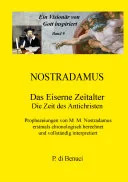
P. di Benuci's "Ein Visionär von Gott inspiriert - Nostradamus" undertakes the ambitious task of sequencing Nostradamus's "Centuries" for the 21st century. The strength of this edition lies in its chronological arrangement and the author's attempt at detailed interpretation, particularly concerning astrological dating. This method provides a structured framework for engaging with the prophecies, moving beyond random selection. However, the interpretations, while thorough, occasionally feel overly constrained by a pre-determined chronological scheme, potentially forcing readings that might not fully capture the ambiguity inherent in Nostradamus's quatrains. A particularly illustrative section is the analysis of prophecies linked to celestial events in the early 2000s, which shows the author's dedication to precise dating. While the chronological ordering is a valuable organizing principle, the work could benefit from a more expansive discussion of alternative interpretive frameworks for certain quatrains. This volume serves as a meticulously organized, if sometimes rigidly interpreted, guide to Nostradamus's predictions for our era.
📝 Description
75
P. di Benuci's 2018 work analyzes Nostradamus's prophecies, specifically those concerning the 21st century.
This volume presents Michel de Nostredame's "Centuries," with a focus on predictions believed to relate to the 21st century. The author, P. di Benuci, has organized these prophecies according to chronological markers and provides interpretations for each. The book seeks to clarify the astrological and numerological elements within Nostradamus's writings, making them understandable for a modern audience interested in historical foresight.
The "Centuries," originally published in 1555, appeared during a time of significant religious and political unrest in Europe. Nostradamus, who was a physician and astrologer, worked in a culture where prophecy was common, yet his methods and visions drew both followers and critics. The book's later translations and analyses have generated debate and study for centuries, securing its place in occult literature. The central focus is on interpreting Nostradamus's quatrains, which are allegorical verses. Benuci's method stresses chronological arrangement and symbolic reading. Key ideas include using astrological and astronomical cycles for dating prophecies, identifying historical figures and events within the text, and understanding the linguistic and cultural codes Nostradamus used.
Nostradamus's "Centuries" is a cornerstone of Western prophetic literature, originating in the Renaissance when astrology and divination were integrated into intellectual and political life. His work, presented in cryptic quatrains, has been a subject of continuous interpretation, linking his visions to historical events from his time to the present. This book situates itself within that long tradition of exegesis, attempting to decode the astrological and symbolic language used by the prophet.
💡 Why Read This Book?
• Gain a structured understanding of Nostradamus's "Centuries" through chronological ordering, focusing on prophecies relevant to the 21st century as presented in this volume. • Explore detailed interpretations of quatrains, with the author explaining the astrological and numerological calculations used to date specific predictions. • Examine how historical events and figures are identified within the text, offering concrete examples of Nostradamus's predictive methods as analyzed in the book.
⭐ Reader Reviews
Honest opinions from readers who have explored this book.
❓ Frequently Asked Questions
When were Nostradamus's "Centuries" first published?
Nostradamus's "Centuries," the collection of his prophecies, was first published in Lyon, France, in 1555. This foundational edition laid the groundwork for centuries of interpretation and analysis.
What is the primary focus of "Ein Visionär von Gott inspiriert - Nostradamus"?
This book specifically focuses on Nostradamus's prophecies from the "Centuries" that are interpreted to relate to the 21st century, presenting them in a chronological order with detailed explanations.
What interpretive methods are used in this book?
The book employs chronological sequencing based on calculated dates and provides detailed interpretations that consider astrological conjunctions, numerology, and the symbolic language within Nostradamus's quatrains.
Is this book a direct translation of the original "Centuries"?
While it contains the "Centuries," the primary contribution is the chronological arrangement and interpretive commentary specifically for the 21st century, building upon the original text.
Who was Nostradamus?
Michel de Nostredame, known as Nostradamus, was a 16th-century French astrologer, physician, and reputed seer. He is famous for his book "Les Prophéties," first published in 1555.
Does the book offer predictions for specific future events?
The book presents interpretations of Nostradamus's existing prophecies that are believed to pertain to the 21st century, explaining how they might correlate with contemporary or near-future events.
🔮 Key Themes & Symbolism
Chronological Prophetic Ordering
This volume distinguishes itself by meticulously arranging Nostradamus's "Centuries" according to calculated chronological markers. The author's interpretive framework seeks to establish a linear progression of prophecies, specifically those believed to unfold in the 21st century. This approach aims to provide a coherent narrative of future events as envisioned by the seer, moving beyond the scattered presentation of the original text and offering readers a structured timeline for analysis and contemplation of historical cycles.
Astrological and Numerological Interpretation
Central to the book's methodology is the detailed interpretation of Nostradamus's quatrains through astrological and numerological lenses. The author analyzes celestial alignments and numerical patterns cited or implied within the prophecies to ascertain their temporal placement and symbolic meaning. This focus highlights Nostradamus's reliance on esoteric sciences for his divinatory work, providing readers with insight into the mechanics of his predictive system and how these ancient methods are applied to contemporary events.
The 21st Century Focus
The primary objective of this edition is to isolate and interpret prophecies specifically relevant to the era from 2000 onwards. The work scrutinizes the "Centuries" for verses that align with perceived events, societal shifts, and geopolitical developments of the contemporary age. This targeted approach allows readers to engage with Nostradamus's legacy through the lens of their own time, exploring the seer's foresight concerning modern challenges and transformations.
The Seer's Language and Symbolism
Understanding Nostradamus requires decoding his unique poetic and symbolic language. This book examines the allegorical nature of the quatrains, exploring the recurring motifs, cryptic allusions, and the historical context that informed his vocabulary. By dissecting these elements, the author aims to unlock the layered meanings within the prophecies, revealing how Nostradamus used metaphor and symbolism to convey complex visions that could be understood across different eras.
💬 Memorable Quotes
Direct passages from the work, attributed to the author.
“Prophecies concerning the 21st century are chronologically arranged.”
— This statement captures the book's core organizational principle: presenting Nostradamus's visions in a sequential order based on calculated dates, specifically focusing on our current era.
“Interpretations are grounded in astrological calculations.”
— This highlights the methodological approach of the author, emphasizing the use of astronomical positions and numerology to decipher the timing and meaning of the prophecies.
“Nostradamus's work requires detailed exegesis.”
— This reflects the necessity of in-depth analysis and scholarly examination to properly understand the complex and often ambiguous verses left by the 16th-century seer.
“The seer's visions are presented for modern comprehension.”
— This conveys the book's aim to bridge the gap between Nostradamus's historical prophecies and contemporary understanding, making his foresight accessible today.
💡 Key Ideas
Editorial paraphrase of the work's core concepts — not direct quotes.
The "Centuries" contain coded references to future events.
This paraphrase points to the belief that Nostradamus deliberately obscured his predictions using symbolic language and allegories, requiring careful study to reveal their intended meaning.
🌙 Esoteric Significance
Tradition
Nostradamus's work is deeply embedded within the Western Hermetic tradition, drawing heavily on Neoplatonic ideas of cosmic influence and divine inspiration channeled through astrological observation and numerological systems. His method of interpreting celestial events to foresee earthly occurrences aligns with Hermetic principles of "as above, so below." While not strictly Kabbalistic, his use of numerical correspondences and symbolic language shares affinities with Jewish mystical traditions. The "Centuries" represent a unique synthesis, applying these esoteric frameworks to a systematic, albeit veiled, chronicle of future history.
Symbolism
Key symbols in Nostradamus's "Centuries" include celestial bodies (Sun, Moon, stars) representing divine order and influence, and animals often used allegorically (e.g., lions for kings or powerful nations, birds for omens or messengers). Water, particularly the sea, frequently appears, symbolizing change, migration, or conflict. The concept of the "great king" or "antichrist" serves as a recurring motif representing powerful destructive forces or transformative leaders, often tied to specific historical epochs interpreted through astrological cycles.
Modern Relevance
Contemporary esotericists and historical researchers continue to engage with Nostradamus's "Centuries." Modern occult circles often use his quatrains as a basis for divinatory practice or comparative prophecy studies, seeking patterns that resonate with current global events. Thinkers in fields like comparative mythology and the history of ideas analyze his enduring influence on popular consciousness and conspiracy theories. The work remains a touchstone for discussions on predictive accuracy, historical determinism, and the human fascination with foreknowledge.
👥 Who Should Read This Book
• Students of Renaissance esotericism seeking primary source material on 16th-century prophetic traditions and their historical reception. • Enthusiasts of divination and prophecy interested in analyzing the methods and alleged predictions of one of history's most famous seers. • Comparative religion scholars examining the role of prophecy and apocalyptic literature across different historical periods and cultural contexts.
📜 Historical Context
The "Centuries" emerged from the fertile intellectual ground of the mid-16th century, a period marked by the Protestant Reformation and heightened interest in astrology and esotericism. Michel de Nostredame, a physician trained in Montpellier, published the first edition in 1555. His work drew upon classical prophetic traditions, Kabbalistic numerology, and astrological calculations. While prophecy was a common literary and intellectual pursuit, Nostradamus's systematic approach and the cryptic nature of his quatrains set his work apart. He operated within a culture where figures like Agrippa von Nettesheim explored similar occult sciences, though Nostradamus's focus on future political and societal events garnered widespread attention. The "Centuries" quickly gained popularity, leading to numerous editions and translations, but also attracted scrutiny; some viewed him as a divinely inspired prophet, while others, like the Parliament of Paris, investigated him for potential heresy or fraud, reflecting the era's ambivalence towards such predictive arts.
📔 Journal Prompts
Nostradamus's use of astrological conjunctions for dating prophecies.
The symbolic meaning of animal imagery in quatrain X, C:Y.
Comparing interpretations of the "great king" motif across different centuries.
The historical reception of Nostradamus's "Centuries" in the 16th century.
Personal reflections on the concept of historical cycles as presented in the text.
🗂️ Glossary
Centuries
The primary collection of Nostradamus's prophecies, organized into quatrains grouped into sets of one hundred, known as 'Centuries'.
Quatrain
A four-line stanza, the poetic form Nostradamus predominantly used for his prophecies. Each quatrain is typically dense with allegory and symbolism.
Exegesis
Critical explanation or interpretation of a text, particularly a religious or ancient text. In this context, it refers to the detailed analysis of Nostradamus's verses.
Astrological Conjunction
The apparent closeness of two or more celestial bodies in the sky, often interpreted in astrology as having a significant influence on earthly events.
Numerology
The study of the mystical relationship between numbers and events or objects. Nostradamus is believed to have used numerical patterns in his prophecies.
Hermeticism
A philosophical and religious tradition based primarily upon writings attributed to Hermes Trismegistus, emphasizing divine wisdom and the interconnectedness of the cosmos.
Allegory
A story, poem, or picture that can be interpreted to reveal a hidden meaning, typically a moral or political one. Nostradamus's quatrains are often considered allegorical.
This book appears in 1 collection
🔮 Readers Also Liked
Browse all →









From the “Nostradamus” Collection
View all →





More Free Occult Philosophy Books
View all →