Edgar Cayce on channeling your higher self
 83
83

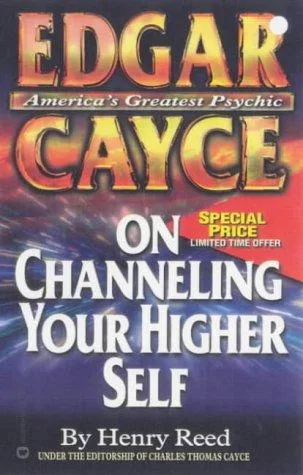
Edgar Cayce on channeling your higher self
Henry Reed’s Edgar Cayce on Channeling Your Higher Self offers a refreshingly grounded approach to a topic often shrouded in mystique. Reed’s strength lies in his ability to distill Cayce’s vast, often rambling, readings into coherent, actionable steps. He avoids esoteric jargon, presenting the higher self as an accessible aspect of one's own consciousness rather than an external deity. The chapter detailing how to discern the higher self’s voice from the ego’s chatter is particularly lucid, a crucial distinction for any aspiring channeler. However, the book occasionally suffers from a degree of repetition, a common pitfall when working with channeled material. While the intent is reinforcement, some sections feel like rephrased versions of previous points. Despite this, the book provides a solid, practical manual for those looking to connect with their inner guidance, stemming directly from the extensive Cayce archives. It serves as a capable, if not revolutionary, guide to intuitive development.
📝 Description
83
Published in 1989, Henry Reed's book offers practical techniques for connecting with one's higher self, drawing on Edgar Cayce's readings.
Henry Reed's 1989 work, Edgar Cayce on Channeling Your Higher Self, provides a practical guide to accessing inner guidance. The book moves past abstract ideas to present actionable methods based on the psychic readings of Edgar Cayce, known as the "Sleeping Prophet." Reed seeks to make the process of inner communication clear, showing the higher self as a usable inner resource for personal growth and spiritual understanding, not a remote being.
This book is for people who want to build a stronger link with their inner wisdom. It speaks to those interested in practical spirituality, self improvement, and the nature of consciousness. Readers curious about the Edgar Cayce material but who prefer concrete methods over theory will find this text especially useful. It suits the seeker ready for self discovery and the development of their intuitive abilities.
This book is situated within the tradition of channeled spiritual guidance, drawing heavily from the extensive catalog of Edgar Cayce's trance readings. Cayce (1877-1945) produced thousands of readings on subjects ranging from health and past lives to spiritual development. Reed's work, published in 1989 during a surge of interest in New Age thought, bridges Cayce's historical phenomenon with contemporary practices of connecting with inner consciousness. It emphasizes practical application of channeled wisdom for personal transformation.
💡 Why Read This Book?
• Gain practical techniques for discerning your higher self's guidance, directly drawing from Edgar Cayce's extensive readings, offering a unique method beyond generic meditation. • Understand the specific Cayce concept of the "Akashic record" as a source of higher wisdom, providing a unique metaphysical framework for personal insight. • Learn to differentiate between ego-driven thoughts and authentic intuitive impressions, a skill honed through exercises rooted in Cayce's advice from the 1930s.
⭐ Reader Reviews
Honest opinions from readers who have explored this book.
❓ Frequently Asked Questions
What is the "higher self" according to Edgar Cayce and Henry Reed?
The higher self, as presented in Edgar Cayce on Channeling Your Higher Self, represents the soul's connection to the divine or universal consciousness. It's the aspect of you that retains wisdom from past lives and has a broader perspective, accessible through intuition and inner knowing.
How does this book differ from other channeling guides?
This book uniquely bases its techniques on the thousands of psychic readings given by Edgar Cayce between 1901 and 1944. It focuses on practical application derived from his specific advice, rather than general New Age theories.
Can I really learn to channel from this book?
The book provides a structured approach to developing intuitive abilities and connecting with inner guidance, aiming to make channeling a practical skill. It emphasizes consistent practice and self-awareness, drawing from Cayce's methods.
What are some specific exercises mentioned in the book?
Exercises include developing a dedicated meditation practice, focusing on affirmations, analyzing dreams for symbolic meaning, and cultivating a quiet inner space to receive guidance, all methods suggested in Cayce's readings.
Is this book suitable for beginners in spirituality?
Yes, the book is designed to be accessible to beginners. It explains concepts clearly and offers step-by-step guidance, making the practice of connecting with one's higher self manageable for those new to esoteric concepts.
What is the significance of the Akashic Records in this context?
The Akashic Records are presented as a universal library of all experiences and knowledge. Connecting with the higher self is seen as a way to access relevant information from these records for personal guidance and understanding.
🔮 Key Themes & Symbolism
Connecting with Inner Guidance
The core theme revolves around establishing a reliable channel to one's higher self, viewed as the soul's innate connection to divine wisdom. Reed outlines methods, informed by Edgar Cayce's readings, to quiet the mental chatter of the ego and attune to subtler intuitive signals. This connection is presented not as a rare psychic gift, but as a natural faculty to be cultivated for navigating life's challenges and enhancing personal growth. The book stresses consistency and trust in the process.
The Nature of the Higher Self
This theme explores the many-sided nature of the higher self as described in the Cayce material. It's depicted as the repository of soul memory, holding insights from past incarnations and a broader perspective on one's life purpose. Reed explains how this aspect of consciousness offers guidance, healing, and clarity. Understanding the higher self involves recognizing its distinct qualities from the personality or ego-self, emphasizing its role as a source of unconditional love and truth.
Practical Application of Intuition
Moving beyond theory, the book emphasizes the practical application of intuitive insights derived from the higher self. Reed provides techniques such as specific meditation practices, dream interpretation methods, and the use of affirmations, all grounded in Cayce's extensive readings. The goal is to integrate this inner guidance into daily decision-making, relationships, and spiritual development, fostering a more conscious and purposeful existence.
Discernment and Ego Differentiation
A crucial aspect is learning to differentiate the voice of the higher self from the often-loud projections of the ego. Reed addresses this challenge directly, offering criteria and exercises to help readers distinguish between authentic intuitive impulses and desires or fears stemming from the personality. This discernment is vital for building trust in one's inner guidance system and avoiding misinterpretations.
💬 Memorable Quotes
Direct passages from the work, attributed to the author.
“The voice of the higher self is subtle, often perceived as a feeling or a knowing rather than a distinct voice.”
— This highlights the non-verbal, intuitive nature of higher self communication. It encourages readers to pay attention to inner sensations and intuitive nudges, which are key indicators of this guidance.
“Regularly quiet the mind through meditation to create space for inner wisdom to surface.”
— This emphasizes the foundational role of contemplative practice. By stilling external and internal noise, one becomes more receptive to the subtle communications from the higher consciousness.
“Dreams offer a direct line to the subconscious and higher self, providing symbolic messages about our inner state.”
— This points to the significance of the dream state as a portal for psychic information. Analyzing dream imagery can unlock clear insights into personal challenges and spiritual growth.
“Distinguishing intuition from ego requires self-awareness and a willingness to question the origin of thoughts.”
— This underscores the critical skill of discernment. The book guides readers to critically examine their mental processes to ensure they are acting on genuine inner wisdom, not personal biases.
“The higher self acts as a guide, offering perspectives that align with soul growth and universal principles.”
— This defines the purpose and function of the higher self. It serves as a benevolent guide, oriented towards the soul's evolutionary journey and adherence to spiritual laws.
🌙 Esoteric Significance
Tradition
This work draws heavily from the practical, often Christian-influenced, esoteric tradition popularized by Edgar Cayce. While not strictly adhering to a single lineage like Hermeticism or Theosophy, Cayce's material incorporates elements of reincarnation, karma, and spiritual evolution common in Western esotericism. Reed's book fits within this unique 'Cayce-an' tradition, emphasizing the practical application of spiritual principles for personal betterment and soul growth, accessible through inner communion.
Symbolism
The primary symbolic concept is the "higher self" itself, representing the soul's divine spark and connection to universal consciousness. Another significant motif is the "Akashic Records," a metaphysical library of all knowledge and experience, which the higher self can access. Dreams are also treated symbolically, serving as a direct channel of communication from the subconscious and higher realms, rich with personal meaning.
Modern Relevance
Contemporary practices in mindfulness, intuitive development, and life coaching often echo the principles found in this book. Thinkers and practitioners focused on embodied spirituality, conscious living, and accessing inner guidance systems can find value in Reed's distillation of Cayce's methods. The emphasis on practical, self-directed spiritual growth appeals to modern desires for personal agency and authentic experience.
👥 Who Should Read This Book
• Individuals interested in developing their intuition and psychic abilities, seeking a structured approach based on historical psychic readings. • Seekers exploring Edgar Cayce's extensive work who prefer practical, step-by-step guidance over theoretical exploration. • Those looking for methods to differentiate their own ego-driven thoughts from genuine inner wisdom and spiritual guidance.
📜 Historical Context
Published in 1989, Henry Reed's Edgar Cayce on Channeling Your Higher Self emerged during a period of intense interest in New Age spirituality and parapsychology. The late 1980s saw a surge in books and workshops exploring psychic phenomena, channeling, and personal transformation, reflecting a broader cultural shift towards inner exploration. Edgar Cayce himself, active from the early 1900s to 1944, was a significant figure whose readings had already spawned organizations like the Association for Research and Enlightenment (ARE). Reed's work tapped into this established interest, presenting Cayce's concepts in a more accessible, self-help-oriented format. This era also saw the rise of authors like Shirley MacLaine, whose popular books brought mystical experiences into mainstream consciousness, creating fertile ground for texts like Reed's. While not directly engaging with academic psychological discourse of the time, which might have focused on dissociation or altered states, Reed's book instead positioned itself within the popular esoteric tradition, offering practical tools for spiritual development.
📔 Journal Prompts
Reflect on the subtle sensations experienced when attempting to connect with your higher self during meditation.
Analyze a recent dream using the symbolic interpretation methods discussed, focusing on messages from your higher self.
Consider the concept of ego differentiation: how might a fear-based thought differ from a higher self insight?
Write down three affirmations designed to strengthen your connection to your soul's innate wisdom.
Explore how the idea of Akashic Records might influence your perspective on learning and personal growth.
🗂️ Glossary
Higher Self
The aspect of the soul connected to divine consciousness, possessing wisdom from past lives and a broader perspective on one's life purpose. It serves as a source of intuitive guidance and truth.
Ego
In this context, the personality-driven aspect of the self, often characterized by desires, fears, and self-centered perspectives. Differentiating the ego's voice from the higher self's is a key focus.
Channeling
The process of receiving information or guidance from a source perceived as being outside the conscious, rational mind, often from a higher spiritual intelligence or one's own higher self.
Akashic Records
A metaphorical, non-physical library containing a record of all events, thoughts, and emotions that have ever occurred or will occur. The higher self is believed to have access to this information.
Intuition
The ability to understand something immediately, without the need for conscious reasoning. Often described as a 'gut feeling' or inner knowing, it's a primary mode of communication from the higher self.
Dream Interpretation
The practice of analyzing the symbolic content of dreams to gain insight into the subconscious mind, hidden desires, fears, and messages from the higher self.
Affirmation
A positive statement or declaration, often repeated, used to reinforce a desired belief, attitude, or outcome. In this context, used to attune to the higher self.
🔮 Readers Also Liked
Browse all →








More by Reed, Henry
All books →
More Free Occult Philosophy Books
View all →