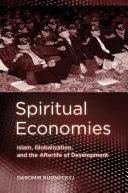
Spiritual Economies
 83
83

Spiritual Economies
Daromir Rudnyckyj's *Spiritual Economies* provides a much-needed counter-narrative to prevalent stereotypes of Islam in the West. The book's strength lies in its detailed ethnographic approach, particularly its focus on Southeast Asia, which offers a less-explored perspective than the Middle East or South Asia. Rudnyckyj effectively demonstrates how Muslim individuals and communities are not passive recipients of modernity but active agents in its redefinition. A particularly striking element is the analysis of motivational programs that frame Islamic tenets as pathways to entrepreneurial success. While the book excels in its empirical data and theoretical innovation, the dense academic prose might present a barrier for some readers outside of specialized fields. The central argument about the "spiritual economy" is compelling, but the conclusion could have more forcefully elaborated on the long-term implications of these evolving practices. It is a significant contribution to understanding contemporary religious and economic life.
📝 Description
83
In 2011, Daromir Rudnyckyj published *Spiritual Economies*, questioning how Muslim communities engage with modern self-improvement.
Daromir Rudnyckyj's *Spiritual Economies*, published in 2011, examines contemporary Islam by looking beyond simple tradition versus modernity divides. The book investigates how Muslim communities, especially in Southeast Asia, actively use and change modern economic and self-help ideas. Rudnyckyj shows that Islamic practices are not seen as a rejection of modern life. Instead, they become tools for personal growth and business success. This creates what the author calls a "spiritual economy." The work is relevant for academics in religious studies, anthropology, and sociology. It also speaks to anyone interested in the real ways global Islam functions. Readers who question general views of Islam and are curious about how faith, business, and personal development connect will find this book useful.
The book was released during a time when global discussions about Islam and its relation to Western modernity were intense. Many believed Islam was against secular progress. Rudnyckyj's research challenged these ideas. He used evidence from Muslim majority areas to show a process of adaptation and innovation. The study connects with anthropological discussions of Islam and capitalism common in the early 21st century. Rudnyckyj introduces the concept of "spiritual economy" to explain how Islamic principles blend with modern self-help and business methods. This reframes religious practices as methods for personal improvement and financial gain. Concepts like *niyyah* (intention) and *ihsan* (excellence) are shown in new ways within motivational talks and business contexts.
While not strictly an esoteric text in the Western sense, *Spiritual Economies* engages with the practical application of spiritual principles in secular life. It examines how concepts traditionally associated with inner contemplation or religious duty are reframed and utilized within contemporary frameworks of personal development and economic success. This aligns with a broader interest in how spiritual disciplines and worldviews intersect with and influence material existence, particularly in contexts where traditional religious frameworks are being actively reinterpreted by adherents in response to globalized economic and cultural forces.
💡 Why Read This Book?
• Learn how Islamic practices are reinterpreted as tools for business success and personal growth, as detailed in the analysis of motivational seminars and training programs, offering a unique perspective on faith in the modern marketplace. • Understand the concept of a "spiritual economy," as developed by Rudnyckyj, and how it challenges assumptions about the conflict between Islam and modernity, moving beyond simplistic oppositional frameworks. • Gain insights into the agency of Muslims in Southeast Asia, specifically, in shaping their own modernity, as evidenced by the ethnographic research conducted in the early 2010s, providing a nuanced view of global religious adaptation.
⭐ Reader Reviews
Honest opinions from readers who have explored this book.
❓ Frequently Asked Questions
What is the core concept of a 'spiritual economy' as presented in Rudnyckyj's book?
The "spiritual economy" refers to the reinterpretation of Islamic practices and beliefs as strategies for achieving personal growth and business success within modern capitalist societies. It signifies Muslims actively integrating their faith into contemporary self-help and entrepreneurial discourses.
Which regions are primarily studied in Spiritual Economies?
The book primarily focuses on Muslim communities in Southeast Asia, offering a distinct perspective compared to studies centered on the Middle East or South Asia. This regional focus highlights specific cultural and economic adaptations.
When was Spiritual Economies first published?
Spiritual Economies was first published on June 15, 2011. This publication date places it within a period of significant global discussion about Islam's relationship with modernity.
How does the book challenge common assumptions about Islam and modernity?
It challenges the notion that Muslims are inherently in conflict with modernity. Instead, Rudnyckyj shows how moderate Muslims actively engage with modern economic and self-improvement trends, reframing Islamic practice to align with contemporary aspirations.
Who is the author of Spiritual Economies?
The author is Daromir Rudnyckyj. He is an academic whose work focuses on the anthropology of Islam and its intersection with economic and social change.
What kind of practices are reinterpreted within the 'spiritual economy' concept?
Practices such as *niyyah* (intention) and *ihsan* (excellence) are reframed within motivational programs and business training. These are presented as methods to enhance productivity, ethical conduct, and ultimately, economic outcomes.
🔮 Key Themes & Symbolism
Islam and Capitalism
The work scrutinizes the often-assumed dichotomy between Islamic faith and capitalist modernity. Rudnyckyj demonstrates how Muslims are not merely adapting to capitalism but are actively reshaping its discourse through their religious frameworks. The concept of the "spiritual economy" illustrates this by showing how Islamic values like intention (*niyyah*) and excellence (*ihsan*) are repurposed within business and self-help contexts, suggesting a more fluid and complex interaction than commonly depicted.
Religious Practice as Self-Improvement
A central theme is the re-signification of Islamic rituals and beliefs as tools for personal optimization and professional advancement. This is evident in motivational seminars and training programs where religious concepts are presented as drivers of productivity, ethical leadership, and entrepreneurial success. The book reveals how this approach allows individuals to reconcile their faith with the demands of contemporary economic life, fostering a sense of agency and modernity.
Constructing Modernity
Rudnyckyj's research challenges monolithic definitions of modernity by highlighting the diverse ways in which it is experienced and constructed globally. The "spiritual economy" represents a specific form of Muslim modernity, one that integrates religious identity with economic aspirations without necessarily rejecting secularization. This perspective underscores the agency of Muslim communities in defining their own paths in the contemporary world, moving beyond Western-centric models.
Southeast Asian Islam
The book provides crucial ethnographic insights into the lived realities of Muslims in Southeast Asia. By focusing on this region, Rudnyckyj offers a valuable counterpoint to dominant narratives that often overlook the specific adaptations and innovations occurring outside the Middle East. The study illuminates how local interpretations of Islam engage with global economic forces and self-help ideologies in unique ways.
💬 Memorable Quotes
Direct passages from the work, attributed to the author.
“Muslims are represented in conflict with modernity—but what could be more modern than motivational programs that represent Islamic practice as conducive to business success and personal growth?”
— This provocative opening statement frames the book's central argument: that contemporary Islam is not necessarily antithetical to modernity, but can actively engage with and even drive its modernizing impulses through economic and self-improvement frameworks.
“The work explores how concepts like niyyah (intention) are reframed within business contexts.”
— This interpretation points to a specific example of religious re-signification, showing how a fundamental Islamic concept is adapted to serve modern entrepreneurial goals, emphasizing the practical and economic application of faith.
“Challenging widespread assumptions about contemporary Islam by showing its engagement with self-help and economic growth.”
— This captures the book's critical stance against simplistic portrayals of Islam, emphasizing its focus on the dynamic and adaptive nature of Muslim practices in relation to global trends in personal development and commerce.
“The book details how moderate Muslims in Southeast Asia are actively participating in and shaping modern discourses.”
— This highlights the ethnographic focus on a specific demographic and region, underscoring the active role of moderate Muslims in constructing their own modernity and contributing to contemporary global dialogues.
💡 Key Ideas
Editorial paraphrase of the work's core concepts — not direct quotes.
reinterpreting Islam not to reject modernity but to create a 'spiritual economy'
This paraphrase highlights the core concept of the 'spiritual economy' as a deliberate construction by Muslims, who leverage their faith to navigate and benefit from modern economic systems, rather than seeing it as a force for opposition.
🌙 Esoteric Significance
Tradition
While not strictly belonging to a single esoteric lineage like Hermeticism or Kabbalah, *Spiritual Economies* engages with the modern esoteric interest in the intersection of spirituality and practical life, particularly concerning personal transformation and prosperity. It aligns with contemporary New Age and self-help movements that often draw eclectically from various spiritual traditions to offer pathways to success. The book's focus on reinterpreting religious concepts for worldly benefit echoes themes found in some strands of practical occultism and prosperity magick.
Symbolism
The concept of *niyyah* (intention) functions symbolically as the inner engine of action, representing the spiritual grounding that the book argues can be harnessed for material gain. *Ihsan* (excellence) symbolizes the aspiration towards perfection, reinterpreted not just in a spiritual sense but as a benchmark for quality and effectiveness in business and personal endeavors. These terms, when reframed, symbolize the bridge between the sacred and the secular, the inner spiritual life and outer worldly achievement.
Modern Relevance
Rudnyckyj's work is highly relevant to contemporary thinkers and practitioners interested in the evolving nature of spirituality in the digital age and the commodification of self-improvement. It speaks to scholars of global religious trends, particularly the adaptation of Islam in diverse cultural contexts. Furthermore, it speaks to those exploring the "prosperity gospel" and similar movements across various faiths that link spiritual well-being directly to material success, offering a critical anthropological lens on these phenomena.
👥 Who Should Read This Book
• Academics and researchers in religious studies, anthropology, and sociology interested in the nuanced relationship between Islam, economics, and modernity, particularly in Southeast Asia. • Individuals curious about how religious traditions adapt and are reinterpreted within globalized capitalist systems and self-help discourses. • Students and practitioners seeking to understand contemporary Muslim identity formation and the ways faith is integrated into personal and professional aspirations beyond traditional religious scholarship.
📜 Historical Context
Published in 2011, Daromir Rudnyckyj's *Spiritual Economies* emerged during a period of intense global scrutiny and often negative stereotyping of Islam, particularly in relation to Western modernity. Prevailing academic and public discourse frequently framed Islam as inherently resistant to secularization and capitalist development. Rudnyckyj's work directly contested this by presenting nuanced ethnographic research from Southeast Asia, demonstrating how Muslims were actively engaging with, rather than rejecting, modern economic and self-help ideologies. This contrasted with earlier anthropological studies that might have emphasized resistance or a more distinct separation of religious and economic spheres. The book's publication coincided with scholarly debates on the "Islamic economic model" and the "globalization of Islam," offering a critical perspective on how faith is being pragmatically integrated into contemporary life, particularly through the lens of personal and professional growth.
📔 Journal Prompts
The concept of a 'spiritual economy' and its manifestation in modern motivational programs.
Reinterpreting *niyyah* (intention) and *ihsan* (excellence) for personal and professional growth.
Muslim agency in constructing modernity distinct from Western models.
The intersection of Islamic practice and contemporary business success.
Southeast Asian Muslim communities' engagement with global self-help trends.
🗂️ Glossary
Spiritual Economy
A term coined by Rudnyckyj to describe the reinterpretation of Islamic practices and beliefs as strategies for achieving personal growth and business success within modern capitalist societies.
Niyyah
An Arabic term meaning 'intention' or 'purpose.' In an Islamic context, it is crucial for determining the validity and reward of actions. Rudnyckyj explores its re-signification within motivational and business training.
Ihsan
An Arabic term signifying excellence, beauty, or perfection. It refers to worshipping Allah as if you see Him. The book examines its adaptation into modern contexts emphasizing high performance and quality.
Moderate Muslims
Refers to Muslims who engage with contemporary societal structures and norms, often seeking to integrate their faith with modern life rather than rejecting it outright. This term is used in contrast to more fundamentalist or secular interpretations.
Motivational Programs
Seminars, workshops, and training sessions designed to inspire individuals towards greater achievement, often focusing on self-improvement, goal setting, and success strategies, frequently incorporating spiritual or psychological elements.
Southeast Asia
A subregion of Asia, consisting of the countries that are geographically east of India, south of China, and west of Papua New Guinea. Includes nations like Indonesia, Malaysia, and Brunei, where the book's ethnographic research is centered.
Modernity
A complex concept referring to the social, cultural, and economic transformations associated with industrialization, secularization, and the rise of nation-states. The book examines how different cultures, particularly Muslim communities, engage with and shape their own forms of modernity.