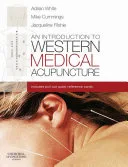
E-Book An Introduction to Western Medical Acupuncture
 71
71

E-Book An Introduction to Western Medical Acupuncture
Adrian White, Mike Cummings, and Jacqueline Filshie's 2008 work, 'An Introduction to Western Medical Acupuncture,' offers a commendable effort to translate the ancient practice of acupuncture into the language of modern Western medicine. Its strength lies in its clear, systematic approach, particularly its detailed discussion of safety protocols and the application of acupuncture for pain management. The integration of orthodox diagnosis with acupuncture treatment planning is well-articulated. However, the book's focus on the Western medical model, while its stated aim, occasionally feels like it sidelines the richer philosophical underpinnings of acupuncture that many practitioners find essential. For instance, the section on basic point information, while clinically useful, could benefit from a slightly broader perspective. Despite this limitation, it remains a solid introductory text for clinicians seeking a rational, evidence-informed understanding of medical acupuncture.
📝 Description
71
Published in 2008, An Introduction to Western Medical Acupuncture bridges Eastern concepts and contemporary clinical application.
This book lays out acupuncture as practiced within a conventional medical framework, detailing its use after Western diagnostic procedures. It covers patient safety, various therapeutic methods, acupoint information, and clinical applications. The text is intended for healthcare professionals like doctors, physiotherapists, and nurses who want to add acupuncture to their practice. It acts as a guide for understanding acupuncture's evidence-based use, especially for pain management and other common issues. Students in complementary and alternative medicine will also find it useful.
It explains how acupuncture works in a Western biomedical model. This involves looking at neurophysiological explanations for acupuncture's effects, such as the gate control theory of pain and the release of natural opioids. The book stresses patient assessment, diagnosis, and treatment plans based on medical principles, rather than just meridian theories.
While framed within Western medicine, this book engages with a tradition that views the body's vital energy, qi, as a subject for manipulation. Western Medical Acupuncture attempts to map these concepts onto Western physiological understanding, seeking to explain effects through nerve stimulation and neurochemical release. The authors work to translate the energetic principles inherent in traditional acupuncture into a language understandable by modern science, acknowledging the historical roots of acupuncture as a practice influencing the body's internal balance and healing capacity.
💡 Why Read This Book?
• Learn the principles of medical acupuncture as understood through Western physiology, as detailed in the sections on basic point information and clinical issues, offering a distinct perspective from traditional Chinese medicine. • Understand the critical safety considerations and clinical application of acupuncture in treating specific conditions, as explored in the chapter on clinical conditions, especially pain management. • Gain insight into the integration of acupuncture with orthodox diagnosis, a key concept highlighted throughout the text, allowing for its incorporation into established healthcare practices.
⭐ Reader Reviews
Honest opinions from readers who have explored this book.
❓ Frequently Asked Questions
What is Western Medical Acupuncture?
Western Medical Acupuncture is a therapeutic approach that applies acupuncture principles within the framework of Western medicine. It focuses on evidence-based practice, orthodox diagnosis, and physiological mechanisms, often targeting specific points for pain relief and other conditions.
Who are the authors of An Introduction to Western Medical Acupuncture?
The authors are Adrian White, Mike Cummings, and Jacqueline Filshie. The book was first published in November 2008.
What is the primary focus of this book on acupuncture?
The book's primary focus is on the practical application of acupuncture as a therapy following orthodox medical diagnosis. It emphasizes safety, clinical issues, and its use in treating conditions, particularly pain.
Does this book cover traditional Chinese medicine (TCM) concepts?
While it acknowledges the origins of acupuncture, the book primarily describes the Western medical approach. It explains acupuncture's effects through Western physiological models rather than solely relying on TCM meridian theory.
Is this book suitable for complete beginners with no medical background?
The book is designed as an introductory guide but is most beneficial for healthcare professionals or students seeking to integrate acupuncture into medical practice. Some familiarity with medical terminology is helpful.
What clinical conditions are discussed in the book?
The book specifically addresses the application of acupuncture in various clinical conditions, with a particular emphasis on the treatment of pain, as detailed in its clinical sections.
🔮 Key Themes & Symbolism
Biomedical Integration
This work positions acupuncture as a therapeutic modality compatible with conventional Western medical practice. It moves beyond esoteric explanations to explore physiological mechanisms, such as the gate control theory of pain and the release of endorphins, as potential explanations for acupuncture's efficacy. The emphasis is on empirical evidence and reproducible clinical outcomes, framing acupuncture as a tool within the orthodox diagnostic and treatment paradigm, rather than a standalone system.
Clinical Pragmatism
The book prioritizes practical application and patient safety. It provides clear guidance on assessing patients, selecting appropriate acupoints based on anatomical and physiological reasoning, and managing common clinical scenarios, particularly pain syndromes. This pragmatic approach aims to equip healthcare professionals with the knowledge to confidently and effectively use acupuncture in their daily practice, adhering to established medical standards and protocols.
Evidence-Informed Practice
A significant theme is the alignment of acupuncture with an evidence-informed approach. The authors discuss how acupuncture can be utilized following orthodox diagnosis, suggesting a framework where its use is justified by research and clinical data. This perspective seeks to bridge the gap between traditional practices and the scientific scrutiny of contemporary medicine, making acupuncture more accessible to skeptical practitioners and patients within the Western healthcare system.
Safety and Protocol
Central to the 'Western Medical' approach is a rigorous focus on safety. The text details necessary precautions, contraindications, and best practices for needle insertion and management to minimize risks. This adherence to safety protocols is presented as a non-negotiable aspect of integrating acupuncture into mainstream healthcare, ensuring patient well-being and professional accountability.
💬 Memorable Quotes
Direct passages from the work, attributed to the author.
“The text covers issues of safety, different approaches to acupuncture, basic point information, clinical issues and the application of acupuncture in clinical conditions, especially in the treatment of pain.”
— This statement expresses the book's practical and comprehensive scope. It highlights the author's intention to provide a thorough, clinically oriented guide for practitioners, covering essential aspects from foundational knowledge to specific therapeutic applications.
“The Western medical approach to the use of acupuncture as a therapy following orthodox diagnosis.”
— This phrase defines the book's unique perspective. It signifies a departure from purely traditional frameworks, focusing instead on integrating acupuncture into established medical diagnostics and treatment plans, emphasizing a scientifically grounded rationale.
“A clear and practical introductory guide to the practice of medical acupuncture.”
— This description underscores the book's accessibility and utilitarian design. It suggests that the content is presented in a straightforward manner, making it suitable for those new to the field or seeking actionable knowledge.
“Especially in the treatment of pain.”
— This highlights a key application area for medical acupuncture as presented in the text. It indicates that pain management is a significant focus, offering readers specific insights into how acupuncture can be effectively employed for this common clinical challenge.
“Basic point information, clinical issues.”
— These elements represent the core components of the book's practical instruction. They suggest a focus on the 'how-to' of acupuncture, providing essential details for practitioners to understand and apply the therapy effectively in real-world scenarios.
🌙 Esoteric Significance
Tradition
While ostensibly a medical text, its positioning within the Esoteric Library suggests an interest in the broader philosophical underpinnings that inform acupuncture, even when presented through a Western lens. It can be seen as engaging with the Hermetic principle of 'As Above, So Below' by seeking to map energetic concepts onto anatomical and physiological structures. It represents a modern attempt to rationalize ancient energetic practices within a materialist scientific framework, a common theme in esoteric literature seeking to reconcile spiritual or vitalistic concepts with empirical observation.
Symbolism
Within the Western medical framework presented, the acupoints themselves can be viewed as symbolic nodes connecting the body's physical structure to its underlying energetic or neurological systems. The needle, a sharp instrument of precision, symbolizes the focused intervention intended to correct imbalances or stimulate healing responses. The concept of 'Qi,' while not always explicitly detailed in this medicalized version, remains a symbolic representation of vital life force or regulatory mechanisms that the practice aims to influence.
Modern Relevance
Contemporary thinkers and practitioners in fields like neuro-acupuncture and pain science draw upon the principles outlined in works like this. Researchers investigating the neurobiological effects of acupuncture continue to build on the evidence-based approach championed by authors like White, Cummings, and Filshie. Its relevance persists in modern integrative medicine clinics and in the ongoing effort to bridge the divide between traditional healing arts and scientific understanding.
👥 Who Should Read This Book
• Healthcare professionals (physicians, physiotherapists, nurses) seeking to understand and integrate acupuncture into their clinical practice based on orthodox diagnosis and evidence-informed principles. • Students of medicine or complementary therapies who require a foundational text that bridges traditional acupuncture with Western biomedical explanations and safety protocols. • Researchers interested in the scientific validation and physiological mechanisms of acupuncture, particularly as applied in pain management and other clinical conditions.
📜 Historical Context
Published in 2008, 'An Introduction to Western Medical Acupuncture' arrived during a significant period of Western medicine's engagement with complementary and alternative therapies (CAM). The early 21st century saw a growing, albeit often contentious, movement to integrate practices like acupuncture into mainstream healthcare, driven by patient demand and emerging research. This era was marked by debates surrounding evidence-based practice, with proponents advocating for rigorous scientific validation of CAM modalities. Authors like Adrian White, Mike Cummings, and Jacqueline Filshie sought to bridge the gap between the empirical traditions of acupuncture and the scientific paradigms of Western biomedical science. They aimed to present acupuncture not as an esoteric practice, but as a clinical tool justifiable through physiological mechanisms and quantifiable outcomes. This approach contrasted with more traditional interpretations of acupuncture, which were often rooted in concepts like Qi and meridians, and faced skepticism from established medical communities. The book reflects a broader intellectual current of rationalizing and medicalizing alternative therapies, aligning them with orthodox diagnosis and treatment protocols.
📔 Journal Prompts
The application of acupuncture in clinical conditions, especially in the treatment of pain.
Orthodox diagnosis and its relationship to acupuncture point selection.
Safety considerations in medical acupuncture practice.
Proposed physiological mechanisms for acupuncture's therapeutic effects.
The integration of acupuncture within a Western healthcare model.
🗂️ Glossary
Acupuncture
A therapeutic technique involving the insertion of fine needles into specific points on the body, used here within a Western medical framework for diagnosis and treatment.
Orthodox Diagnosis
The process of identifying a disease or condition using standard Western medical methods and scientific principles, as opposed to traditional diagnostic systems.
Acupoints
Specific locations on the body that are targeted for stimulation with needles in acupuncture, selected based on anatomical and physiological reasoning in this text.
Gate Control Theory of Pain
A theory suggesting that non-painful input closes the 'gates' to painful input, which helps explain how acupuncture may modulate pain perception.
Endogenous Opioids
The body's natural pain-relieving chemicals, such as endorphins, which are believed to be released in response to acupuncture stimulation.
Clinical Conditions
Specific diseases or health problems that are addressed through medical treatment, in this context, focusing on conditions treatable with medical acupuncture.
Western Medical Approach
A methodology that applies principles, diagnostics, and treatments established within the scientific and empirical framework of Western medicine.