Card Reading - Cartomancy
 80
80

Card Reading - Cartomancy
Nik W D Goodman's "Card Reading - Cartomancy" offers a refreshing take on a practice often overshadowed by the more elaborate Tarot. Goodman rightly points to the humble playing card deck as a potent tool for divination, tracing its lineage back to esoteric currents associated with figures like Hermes Trismegistus. The book’s strength lies in its accessible approach, demystifying the process for newcomers. However, while it references Pythagoras, the connection feels somewhat tenuous, lacking deeper exposition on his specific mathematical or philosophical contributions to the deck's symbolism. The exposition on card combinations, while present, could benefit from more extensive examples. Goodman's work is a solid primer, particularly for those seeking a practical, no-nonsense introduction to cartomancy.
📝 Description
80
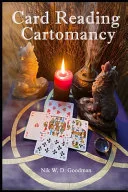
Nik W D Goodman's 2018 book, 'Card Reading - Cartomancy,' demystifies divination using standard playing cards.
This guide offers a practical introduction to cartomancy, the art of divination through playing cards. Goodman traces the history of card reading, from its early roots to its current uses, presenting the deck as a tool for both foresight and personal insight. Readers will learn the symbolic meanings of individual cards and how to interpret their combinations in a spread. The book focuses on the structure of a standard 52-card deck and its potential for revealing patterns in life. It serves as an instructional manual for those interested in understanding the mechanics of card divination outside of Tarot. The author aims to provide a solid grounding in the practice, connecting it to historical divinatory methods. The text emphasizes the intuitive and psychological elements involved in interpreting the cards. It covers how to approach readings for oneself and others, fostering a deeper understanding of the cards' messages. The goal is to equip readers with the knowledge to use playing cards for self-reflection and guidance.
Goodman places cartomancy within a broader lineage of divinatory practices, noting its connection to Western esotericism. The book touches upon figures like Pythagoras and Hermes Trismegistus, suggesting an influence from ancient philosophical and mystical traditions. It acknowledges the evolution of card decks from gaming implements to oracular instruments. This historical framing aims to connect the practice to older forms of seeking knowledge and understanding the cosmos, aligning it with a tradition of esoteric inquiry that seeks meaning beyond the material world.
💡 Why Read This Book?
• Gain practical skills in using standard playing cards for divination, moving beyond Tarot to understand the specific symbolism Goodman outlines for each card and suit, as discussed in the 'Key Concepts' section. • Understand the historical roots of cartomancy, connecting the practice to esoteric traditions and figures like Hermes Trismegistus, as explored in the 'Historical Context' section. • Develop a personal interpretive framework for card readings by learning about card combinations and their meanings, providing a distinct approach to divination not commonly found in generic guides.
⭐ Reader Reviews
Honest opinions from readers who have explored this book.
❓ Frequently Asked Questions
What is the primary difference between Tarot and cartomancy as presented in this book?
This book focuses on cartomancy using a standard 52-card playing deck, distinguishing it from Tarot, which uses a larger, more complex deck with Major and Minor Arcana. Goodman emphasizes the accessible nature of playing cards for divination.
Does the book explain specific card meanings for fortune-telling?
Yes, "Card Reading - Cartomancy" provides interpretations for individual cards and explores how they combine to offer insights. It guides readers on how to derive meaning for predictive and introspective purposes.
What historical figures are mentioned in relation to card reading?
The book references historical and philosophical figures such as Pythagoras and Hermes Trismegistus, linking them to the esoteric traditions that have influenced the development and practice of card reading.
Is this book suitable for absolute beginners in divination?
Absolutely. The book is designed as a sound introduction, offering a comprehensive overview and practical guidance for those new to the art of card reading and cartomancy.
What kind of deck is recommended for practicing the methods in this book?
The book specifically details cartomancy using a standard 52-card deck of playing cards. Readers are encouraged to use such a deck to follow along with the techniques and interpretations presented.
Beyond prediction, what other uses does the book suggest for card reading?
Goodman suggests that card reading serves as a tool for self-discovery and personal insight. It can illuminate circumstances and offer guidance, acting as a mirror to the user's inner world.
🔮 Key Themes & Symbolism
Playing Card Divination
This theme centers on the unique application of standard playing cards for divination, distinct from Tarot. The work details how each of the 52 cards, along with suits and numbers, carries specific symbolic weight. Goodman guides readers in interpreting these symbols, both individually and in combination, to unlock insights into past, present, and future events. It emphasizes the deck's potential as a tool for foresight and self-reflection, grounded in established cartomantic practices.
Esoteric Lineages
The book situates cartomancy within broader esoteric traditions, referencing historical figures like Pythagoras and Hermes Trismegistus. It explores the philosophical underpinnings and historical development that connect card reading to ancient wisdom and Western occultism. This theme highlights how cartomancy is not merely a folk practice but is tied to a lineage of symbolic systems and divinatory arts that have influenced spiritual thought for centuries.
Symbolic Interpretation
Central to the text is the concept of symbolic language embedded within playing cards. Goodman expounds on the meanings associated with each card, exploring archetypal representations and their potential applications in readings. The work details how these symbols can be interpreted to understand personality traits, predict outcomes, and gain deeper self-awareness. It presents a systematic approach to deciphering the visual and conceptual language of the cards.
Cartomancy as a Tool
This theme frames card reading as a practical method for personal guidance and understanding. Goodman presents cartomancy not just as a fortune-telling technique but as a means for introspection and navigating life's challenges. The book offers methods for performing readings that can illuminate situations, reveal hidden factors, and provide clarity, encouraging a proactive engagement with the insights gained from the cards.
💬 Memorable Quotes
Direct passages from the work, attributed to the author.
“The magical past of the cards to magical card combinations.”
— This phrase captures the book's scope, suggesting it covers both the historical mystique surrounding playing cards and the practical techniques for interpreting their interplay in divination.
“A sound introduction to the art of card reading.”
— This highlights the book's pedagogical aim, positioning it as a reliable and comprehensive resource for individuals seeking to learn the fundamentals of cartomancy.
“Learn more about the mysterious Tarot deck and its connection to personalities such as Pythagoras and Hermes Trismegistus.”
— This points to the book's exploration of the esoteric connections and historical figures associated with card divination, linking common playing cards to deeper symbolic traditions.
“Immerse yourself in the fascinating world of card reading.”
— This serves as an invitation to the reader, emphasizing the engaging and intriguing nature of the subject matter and the journey of discovery the book offers.
“This book offers y”
— This appears to be an incomplete sentence from the original blurb, suggesting the original text may have been truncated or intended to be continued, hinting at further content or benefits.
🌙 Esoteric Significance
Tradition
This work aligns with the Western Esoteric tradition, specifically drawing from the lineage of Hermeticism and general occult philosophy. It situates cartomancy not just as a folk practice but as a symbolic system with potential connections to ancient wisdom, as suggested by its references to Hermes Trismegistus. Goodman's approach emphasizes the deck as a microcosm reflecting universal patterns, a common Hermetic principle. It departs from purely mystical or theological interpretations by focusing on the practical application of card symbolism for divination and self-understanding.
Symbolism
The core symbolism revolves around the standard playing card deck itself. Each suit (Hearts, Diamonds, Clubs, Spades) is often associated with elements (Water, Earth, Fire, Air) or aspects of life (Emotions, Material World, Action, Intellect). Numbers 1-10 represent stages of development or specific energies, while the court cards (Jack, Queen, King) embody archetypal personalities or roles. The book explores how these elements combine to create a rich symbolic language capable of depicting complex situations and psychological states.
Modern Relevance
In contemporary esoteric circles, Goodman's work offers a accessible entry point to divination practices that complement or serve as an alternative to Tarot. It appeals to modern practitioners interested in psychological approaches to divination, self-help, and comparative occult studies. The focus on playing cards appeals to those seeking a more portable, less intimidating, or historically grounded method. Thinkers and practitioners exploring syncretic approaches to magic and divination might find value in its systematic, yet symbolic, interpretation of the deck.
👥 Who Should Read This Book
• Aspiring cartomancers seeking a comprehensive introduction to divination using standard playing cards, including understanding individual card meanings and combinations. • Students of Western Esotericism interested in the historical and philosophical connections of card reading to figures like Pythagoras and Hermes Trismegistus. • Individuals looking for practical tools for self-reflection and insight, who appreciate a structured approach to divination beyond more complex systems like Tarot.
📜 Historical Context
Published in 2024, Nik W D Goodman's "Card Reading - Cartomancy" emerges in a contemporary landscape where esoteric studies are gaining renewed interest, often alongside a resurgence of interest in historical occult practices. The work taps into a long tradition of using playing cards for divination, a practice that flourished particularly in the 18th and 19th centuries, diverging from or complementing the more elaborate Tarot systems. Goodman’s text implicitly engages with earlier cartomantic manuals and esoteric literature that sought to codify card meanings, often referencing figures like Etteilla or Éliphas Lévi, who bridged Tarot and playing card divination. While the book mentions Pythagoras and Hermes Trismegistus, it operates within a broader milieu of Western Esotericism that draws from Hermeticism, Kabbalah, and Neoplatonism, seeking to find divine order and predictive power within seemingly mundane systems. This book arrives in an era where comparative religious studies and historical occultism are academic fields, allowing Goodman to present cartomancy with a historical grounding absent in purely practical guides.
📔 Journal Prompts
The symbolic representation of the Ace of Spades in cartomancy.
Pythagoras's potential influence on the mathematical structure of card decks.
Hermes Trismegistus's connection to the esoteric underpinnings of card reading.
The interpretation of a specific card combination discussed in the text.
How the concept of 'magical card combinations' can be applied to personal challenges.
🗂️ Glossary
Cartomancy
The practice of divination using a deck of cards, typically standard playing cards, to gain insight into the past, present, or future.
Divination
The practice of seeking knowledge of the future or the unknown by supernatural means. Card reading is a form of divination.
Esoteric
Intended for or likely to be understood by only a small number of people with a specialized knowledge or interest; arcane.
Hermes Trismegistus
A legendary allegorical hermetic chimeira, combining the Greek god Hermes and the Egyptian god Thoth, traditionally credited with authorship of the Hermetic Corpus.
Pythagoras
An ancient Greek philosopher and mathematician, founder of the Pythagorean school of thought, known for his contributions to mathematics and his theories on the mystical significance of numbers.
Playing Cards
A set of illustrated cards used for games or, in this context, for divination (cartomancy).
Symbolism
The use of symbols to represent ideas or qualities. In cartomancy, each card carries specific symbolic meanings.