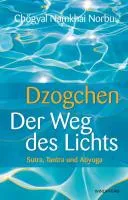
Dzogchen - Der Weg des Lichts
 72
72

Dzogchen - Der Weg des Lichts
The approach taken in "Dzogchen - Der Weg des Lichts" is commendably direct, aiming to bridge the gap between theoretical understanding and lived experience. Its strength lies in its clarity regarding Rigpa, the fundamental awareness, often a point of confusion for newcomers. The work excels at articulating the non-dualistic essence without resorting to overly academic jargon. However, a notable limitation is its brevity in detailing the practical application of Trekchö, leaving the reader perhaps wanting more concrete guidance on the 'cutting through' aspect. The section discussing the Sem, or ordinary mind, offers a particularly lucid contrast to Rigpa, making the distinction accessible. For those seeking an unvarnished introduction to Dzogchen's core tenets, this text provides a valuable, albeit concise, overview.
📝 Description
72
Nam-mkhavi-nor-bu's 2012 book, 'Dzogchen - Der Weg des Lichts,' reveals the direct path of Tibetan Buddhist realization.
This volume by Nam-mkhavi-nor-bu, published in 2012, examines the Dzogchen tradition of Tibetan Buddhism, often called the 'Way of Light.' It focuses on the direct path to awakening, highlighting innate awareness and the mind's non-dual character. The book moves beyond abstract philosophy to show how Dzogchen principles can be applied in everyday life. It offers practical methods for recognizing and resting in this natural state of awareness.
This text is suitable for students and practitioners of Tibetan Buddhism who wish to understand Dzogchen more deeply. It is particularly useful for those drawn to its naturalistic, non-meditative approach. Readers with some background in Buddhist philosophy or contemplative practice will find direct experiential guidance here, rather than purely academic analysis. It also speaks to individuals on a personal spiritual path seeking teachings that emphasize immediate recognition of enlightenment.
The Dzogchen tradition, meaning 'Great Perfection,' has ancient roots in Tibet, predating the dominance of the Gelug school. While this specific publication is recent, its teachings come from an unbroken lineage passed down through masters such as Longchenpa and Jigme Lingpa. The Great Perfection's emphasis on primordial purity and spontaneous presence presents a unique viewpoint within Buddhist thought, often set apart from more gradual methods. Its transmission historically included both monastic and non-monastic lines.
💡 Why Read This Book?
• Gain clarity on the concept of Rigpa, the primordial awareness, as presented in the book's explanation of the natural state, offering a direct path beyond conceptual thought. • Understand the practice of Trekchö, or 'cutting through,' as outlined in the text, providing methods to recognize and release habitual mental constructs. • Differentiate between the Sem (ordinary mind) and Rigpa, learning how the book distinguishes these states to facilitate direct introduction to enlightenment.
⭐ Reader Reviews
Honest opinions from readers who have explored this book.
❓ Frequently Asked Questions
What is the primary focus of "Dzogchen - Der Weg des Lichts"?
The book's primary focus is to offer a direct path to understanding and realizing the Dzogchen state of awareness, emphasizing innate luminosity and non-dual recognition rather than extensive philosophical discourse.
Who is the author, Nam-mkhavi-nor-bu?
Nam-mkhavi-nor-bu is a figure associated with the transmission of Dzogchen teachings. The work was first published in 2012, bringing these ancient Tibetan Buddhist concepts to a contemporary audience.
Does the book require prior knowledge of Buddhism?
While some familiarity with Buddhist philosophy or contemplative practices can be helpful, the book aims for direct experiential understanding, making its core concepts accessible even to those new to Buddhist terminology.
What does 'Dzogchen' mean?
Dzogchen translates from Tibetan as 'Great Perfection' or 'Great Completion'. It refers to the highest teachings and the ultimate realization within the Nyingma school of Tibetan Buddhism, emphasizing primordial purity.
Is this book suitable for academic study?
Yes, while primarily experiential, the book provides context and key concepts that are valuable for academic study of Tibetan Buddhism and comparative religion, especially concerning non-dual traditions.
What is Rigpa?
Rigpa is a central concept in Dzogchen, referring to pure, primordial awareness or consciousness. It is the natural, unconditioned state of mind, characterized by clarity, emptiness, and unimpeded knowing.
🔮 Key Themes & Symbolism
Rigpa: Primordial Awareness
The book elaborates on Rigpa as the fundamental, unconditioned awareness that underlies all experience. It is described not as something to be attained through effort, but as the innate nature of mind, characterized by its emptiness, clarity, and luminosity. Recognizing Rigpa involves a direct apprehension of this state, free from conceptualization or fabrication. The text emphasizes that this awareness is ever-present, obscured only by habitual dualistic thinking and conceptual overlay, which the teachings aim to dissolve.
Trekchö: Cutting Through Dualism
Trekchö, meaning 'cutting through', is presented as a core practice for realizing the natural state. It involves directly confronting and severing the roots of conceptual thought and dualistic perception. This is not an act of forceful suppression but a recognition of the illusory nature of these mental constructs. The work guides the reader to see through the solidity of phenomena and the perceived separation between subject and object, thereby releasing the mind from its habitual patterns.
The Natural State
Central to Dzogchen is the concept of the 'natural state' – the primordial, unadulterated condition of existence. This state is characterized by its spontaneous presence, devoid of artificiality or embellishment. The book suggests that this natural state is not a distant goal but the immediate reality that can be recognized once the veils of ignorance and conceptualization are lifted. It is the ground of being, the source of all manifestation, and the ultimate realization.
Sem vs. Rigpa
A crucial distinction made in the text is between the 'Sem' (the ordinary, conceptual, dualistic mind) and 'Rigpa' (the primordial, non-dual awareness). The Sem is characterized by its constant stream of thoughts, emotions, and judgments, creating a sense of self and other. Rigpa, in contrast, is the pure, luminous emptiness that is the basis of the Sem, but remains unaffected by its contents. Understanding this difference is key to the direct introduction provided by Dzogchen teachings.
💬 Memorable Quotes
Direct passages from the work, attributed to the author.
“Rigpa is not created; it is recognized.”
— This statement highlights the non-fabricative nature of Dzogchen realization. Awareness is presented as an inherent quality of existence, not something to be manufactured through practice, but rather to be unveiled through direct recognition.
“The mind's true nature is like the sky, vast and ungraspable.”
— This interpretation likens the mind's fundamental essence to the boundless, clear, and intangible nature of the sky, emphasizing its emptiness and all-pervading quality before conceptual overlays.
“Trekchö dissolves the illusion of self.”
— This concept suggests that the practice of 'cutting through' conceptual formations directly undermines the solid sense of a separate, enduring self, revealing its impermanent and interdependent nature.
“Abide in the natural, unadorned state.”
— This encourages resting in the mind's fundamental condition without adding or subtracting anything, embracing its spontaneous clarity and simplicity as the path to liberation.
“The Sem is like a restless monkey, Rigpa is the stillness beneath.”
— This metaphor contrasts the agitated, thought-driven ordinary mind (Sem) with the underlying, tranquil, and luminous primordial awareness (Rigpa) that remains present even amidst mental activity.
🌙 Esoteric Significance
Tradition
This work is firmly rooted in the Nyingma tradition of Tibetan Buddhism, specifically focusing on the Dzogchen teachings, often considered the pinnacle of their lineage. Unlike Hermetic or Kabbalistic traditions, Dzogchen emphasizes direct, unmediated realization of the mind's primordial nature, rather than symbolic interpretation or complex cosmological systems. It represents an esoteric path within Buddhism that prioritizes experiential insight over intellectual accumulation, aiming for immediate liberation.
Symbolism
Key symbolic motifs include 'light' and 'emptiness'. Light symbolizes the inherent luminosity and clarity of Rigpa, the fundamental awareness, which is ever-present and radiant. Emptiness, often referred to as 'shunyata', signifies the absence of inherent existence in all phenomena, including the self. The integration of these concepts suggests that the ultimate reality is a luminous, unconditioned emptiness, accessible through direct recognition.
Modern Relevance
Contemporary thinkers and practitioners in mindfulness, non-dual traditions, and somatic psychology often draw upon Dzogchen principles. Modern Buddhist teachers and secular mindfulness proponents increasingly explore concepts like Rigpa and the 'natural state' for their potential to foster mental well-being and reduce suffering. The emphasis on direct recognition and de-emphasis on elaborate ritual aligns with contemporary desires for accessible, experiential spiritual practices.
👥 Who Should Read This Book
• Advanced practitioners of Tibetan Buddhism seeking to deepen their understanding of Dzogchen's direct path and core concepts like Rigpa. • Contemplative scholars interested in non-dual traditions and the esoteric dimensions of Buddhist philosophy, particularly the Nyingma school. • Individuals on a spiritual quest who are drawn to teachings emphasizing direct experience and the recognition of innate awareness beyond intellectual constructs.
📜 Historical Context
The publication of "Dzogchen - Der Weg des Lichts" in 2012 places it within a modern resurgence of interest in Tibetan Buddhist contemplative traditions. Dzogchen, meaning 'Great Perfection,' is one of the highest and most ancient teachings within the Nyingma school, with roots tracing back to the 8th century and masters like Padmasambhava. While this specific text is contemporary, its lineage connects to figures like Longchenpa (14th century) and Jigme Lingpa (18th century), whose writings are foundational. In the broader field of Buddhist philosophy, Dzogchen stands apart from more gradualist paths, such as those emphasizing extensive scholastic study typical of the Gelug school. Its emphasis on direct introduction and the recognition of primordial awareness offered a distinct, often esoteric, approach. The dissemination of these teachings in the West gained momentum throughout the 20th century, with scholars and practitioners like Chögyal Namkhai Norbu (though not the author of this specific book, he is a prominent figure in Dzogchen transmission) playing a significant role in their introduction.
📔 Journal Prompts
The nature of Rigpa as distinct from the Sem.
Experiences of 'cutting through' conceptual elaborations.
The recognition of the 'natural state' in daily life.
Moments of clarity that felt unconditioned.
The contrast between mental fabrication and primordial awareness.
🗂️ Glossary
Dzogchen
Literally 'Great Perfection' or 'Great Completion'. The highest teachings and the ultimate realization within the Nyingma school of Tibetan Buddhism, emphasizing primordial purity and spontaneous presence.
Rigpa
Primordial awareness or consciousness; the fundamental, non-dual, luminous, and empty nature of mind that is recognized in Dzogchen.
Sem
The ordinary, conceptual, dualistic mind characterized by a stream of thoughts, emotions, and perceptions that create a sense of subject-object duality.
Trekchö
A core Dzogchen practice meaning 'cutting through'. It involves directly confronting and severing the roots of conceptual thought and dualistic perception to realize the natural state.
Natural State
The primordial, unconditioned, and spontaneously present condition of existence, characterized by clarity, emptiness, and luminosity, as realized in Dzogchen.
Luminosity
The radiant, clear, and knowing quality of awareness, particularly as a characteristic of Rigpa, distinct from mere emptiness.
Non-dual
Without duality; referring to a state of awareness or reality that transcends the perceived separation between subject and object, self and other, or inherent existence and emptiness.





![Maditations and Music for Sound Healing : Connect with Your Own Natural Source of Healing (sound Medicine) (2 Volume Set) [videorecording].](/img/thumb/maditations-and-music-for-sound-healing-connect-with-your-own-natural-source-of-healing-sound-medici-617284.webp)