Druids
 82
82

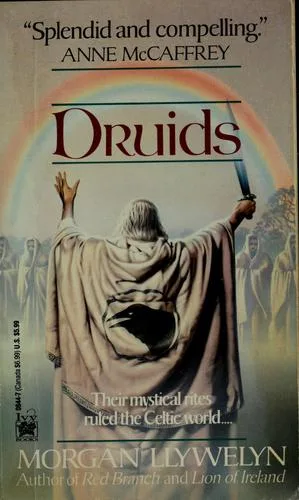
Druids
Morgan Llywelyn's "Druids" presents a compelling, if somewhat romanticized, portrait of these ancient figures. The strength of the novel lies in its immersive prose, which conjures a vivid sense of Iron Age Britain and Gaul. Llywelyn excels at depicting the deep connection between the Druids and the natural world, a recurring motif that feels particularly potent. However, the narrative occasionally falters due to the speculative nature of its subject matter. While the author grounds the story in historical possibilities, the personal lives and internal dialogues of the Druids are necessarily imagined, leading to moments where the characterization feels more modern than ancient. A particularly memorable aspect is the depiction of the Bards and their role in preserving lore, highlighting the intellectual and artistic functions of the Druidic class. Despite its necessary reliance on conjecture, "Druids" offers a thoughtful exploration of a deeply influential spiritual tradition. It’s a solid, evocative piece for those seeking to understand the spiritual heart of ancient Celtic society.
📝 Description
82
Morgan Llywelyn's 1992 novel reconstructs the world of ancient Celtic spiritual leaders.
Morgan Llywelyn's "Druids" is a historical novel that brings to life the ancient Celtic spiritual leaders. Published in 1992, the book attempts to recreate a lost world, examining the social positions, ceremonies, and beliefs that characterized the Druidic order. The story unfolds against the backdrop of Rome's push into Celtic territories, mentioning the Gallic Wars and the eventual conquest of Celtic groups. Llywelyn draws on research into Celtic history and myths, portraying Druids as more than just priests; they were also judges, healers, and keepers of knowledge.
The novel touches on core Druidic ideas, such as the transmigration of souls, a concept linked to Pythagorean thought that some Druids may have adopted. It highlights the significance of sacred forests and natural places, along with the passing down of wisdom through oral tradition. The book also addresses how Druidism was perceived by society and later suppressed by Roman forces. It is suited for readers interested in historical fiction that includes a strong mythological and spiritual element, particularly those curious about pre-Christian European cultures and nature-based spiritual practices.
This novel situates Druidism within a broader context of ancient European nature-based spirituality. It engages with the historical and mythological understanding of Druids as keepers of wisdom and intermediaries with the natural world. The book touches on beliefs like soul transmigration, connecting it to philosophical currents of the era and highlighting the oral transmission of knowledge. It presents Druidism as a complex spiritual system deeply tied to the land and community, contrasting it with the encroaching Roman religious and political order.
💡 Why Read This Book?
• Gain an imaginative perspective on the societal roles of Druids beyond mere priesthood, understanding their functions as judges and lore-keepers as depicted in the narrative's exploration of ancient Celtic law and oral traditions. • Experience a vivid reconstruction of Iron Age Britain and Gaul, immersing yourself in the spiritual and natural landscape that shaped Druidic beliefs, as described through Llywelyn's prose. • Grasp the challenges faced by Druidism during the Roman expansion, particularly the historical context of the Gallic Wars, and how this period impacted the survival of their traditions.
⭐ Reader Reviews
Honest opinions from readers who have explored this book.
❓ Frequently Asked Questions
When was Morgan Llywelyn's book 'Druids' first published?
Morgan Llywelyn's "Druids" was first published in 1992, offering readers a historical fiction perspective on the ancient Celtic spiritual leaders.
What historical period does the book 'Druids' cover?
The novel "Druids" is set during the Roman expansion into Celtic territories, specifically touching upon the era of the Gallic Wars and the subsequent Roman influence.
What were the key roles of Druids as portrayed in Llywelyn's novel?
Llywelyn's "Druids" portrays them not only as spiritual leaders but also as judges, healers, educators, and keepers of lore and history within Celtic society.
Does the book discuss Druidic beliefs about the afterlife?
Yes, the work explores concepts attributed to Druidic practice, including the transmigration of souls, reflecting philosophical currents of the time.
Is 'Druids' a factual historical account or historical fiction?
"Druids" is historical fiction, drawing upon scholarly understanding of Celtic history and mythology to construct a narrative about the lives and traditions of the Druids.
What is the significance of sacred groves in the book?
Sacred groves are depicted as central to Druidic ritual and spiritual practice, representing the deep connection between the Druids and the natural world.
🔮 Key Themes & Symbolism
The Druid as Societal Pillar
Llywelyn's work emphasizes that Druids were far more than simple priests; they were integral to the fabric of Celtic society. The novel depicts them functioning as judges, arbiters of law, healers, and educators, responsible for transmitting history, poetry, and sacred knowledge through oral tradition. This complex role highlights their influence and the void left by their suppression, positioning them as custodians of culture and wisdom in pre-Roman Europe.
Nature as Sacred Space
A central theme is the profound reverence for the natural world that characterized Druidic spirituality. The narrative frequently returns to sacred groves, ancient trees, and natural phenomena as sites of ritual and divine connection. This perspective underscores a worldview where the earth is alive and imbued with spiritual significance, a stark contrast to later, more anthropocentric belief systems and a core tenet for understanding their practices.
Oral Tradition and Lore
The book underscores the critical importance of oral tradition in preserving Druidic knowledge and culture. Llywelyn portrays Druids, particularly the Bards, as keepers of vast bodies of lore, genealogies, and spiritual teachings passed down through generations. This emphasis on spoken word and memory highlights a distinct method of knowledge transmission, contrasting with later written cultures and the impact of Roman script on Celtic society.
The End of an Era
"Druids" chronicles the twilight of this ancient order, set against the backdrop of Roman conquest. The narrative illustrates the systematic dismantling of Druidic influence and practices by Roman authorities who viewed them as a threat to imperial control. This theme explores the clash of cultures and the tragic loss of indigenous spiritual and intellectual traditions under external pressure.
💬 Memorable Quotes
Direct passages from the work, attributed to the author.
“The Druid was judge, priest, healer, and seer.”
— This interpretation highlights the expansive societal role attributed to Druids within Celtic culture, positioning them as complex leaders rather than confined religious figures.
“The forest was their temple, the stars their calendar.”
— This captures the deep connection to nature and the cosmos that is central to the novel's portrayal of Druidic spirituality and ritualistic practices.
“They saw life as a circle, with souls returning.”
— This reflects the belief in the transmigration of souls, a significant philosophical and spiritual concept attributed to Druidic teachings, as explored in the book.
“Rome feared what it could not control.”
— This interpretation speaks to the historical conflict between Roman expansionism and the independent spiritual and intellectual authority of the Druids, a key dynamic in the narrative.
💡 Key Ideas
Editorial paraphrase of the work's core concepts — not direct quotes.
Wisdom was carried in the mind, not on parchment.
This paraphrased concept emphasizes the reliance on oral tradition and memory for knowledge preservation among the Druids, contrasting with the written records favored by the Romans.
🌙 Esoteric Significance
Tradition
While not strictly adhering to a single defined esoteric lineage like Hermeticism or Kabbalah, "Druids" taps into the broader currents of Western Esotericism that seek to reclaim pre-Christian European spiritualities. It aligns with a nature-based, animistic, and shamanistic approach often associated with Neo-Paganism and certain interpretations of Celtic mythology. The work can be seen as a literary exploration of a reconstructed pre-Christian worldview, emphasizing immanence and the sacredness of the natural world.
Symbolism
The novel frequently employs the symbolism of the sacred grove, representing a liminal space between the human and divine, and the heart of Druidic ritual. The oak tree, often associated with Druids, symbolizes strength, wisdom, and longevity. The concept of the Otherworld, a parallel spiritual realm in Celtic belief, also features prominently, suggesting a cosmology where the physical and spiritual are deeply interconnected and accessible through specific practices and locations.
Modern Relevance
Contemporary Neo-Paganism, particularly Celtic Reconstructionism and various forms of Wicca and Druidry, finds traces of its core tenets within narratives like Llywelyn's. Thinkers and practitioners interested in animism, earth-based spirituality, and the re-evaluation of indigenous European traditions often reference or are influenced by such literary depictions, seeing them as vital cultural touchstones for understanding ancestral spiritual paths.
👥 Who Should Read This Book
['• Aspiring historians of ancient European religions: Those seeking to understand the popular imagination surrounding pre-Christian Celtic spirituality and its societal context during the Roman era.', '• Practitioners of nature-based spiritualities: Individuals drawn to animism, earth-centered rituals, and the symbolic language of the natural world will find resonance with the depiction of Druidic practices.', '• Readers of historical fiction with mythological elements: Those who enjoy immersive historical narratives that combine together known facts with imaginative explorations of ancient belief systems and cultural practices.']
📜 Historical Context
Published in 1992, Morgan Llywelyn's "Druids" emerged during a period of renewed interest in Celtic history and pagan revivalism. It arrived alongside a broader academic and popular fascination with pre-Christian European cultures, influenced by scholars like Miranda Green whose work on Druids and Celtic religion was gaining traction. The novel engages with the historical reality of Roman suppression of Druidic practices, particularly after the conquest of Gaul initiated by Julius Caesar in the 50s BCE and subsequent campaigns. Llywelyn's work implicitly contrasts the perceived spiritual depth and naturalism of Celtic traditions with the pragmatic, imperialistic worldview of Rome. While not a direct academic treatise, it contributed to a cultural narrative exploring the clash between indigenous European spirituality and encroaching imperial powers, a theme that found resonance with contemporary New Age and neo-pagan movements.
📔 Journal Prompts
The Druid's role as judge and healer.
Sacred groves as centers of spiritual power.
The transmission of wisdom through oral tradition.
The cyclical nature of life and soul transmigration.
The impact of Roman expansion on indigenous spiritual practices.
🗂️ Glossary
Druid
In ancient Celtic societies, individuals who held religious, judicial, and scholarly roles. They were often seen as intermediaries between the human and divine, responsible for preserving lore and guiding the community.
Sacred Grove
A natural area, often a forest or clearing, considered holy and used for religious rituals and ceremonies by ancient peoples, including the Druids.
Transmigration of Souls
The belief that a soul passes into a new body after death, continuing a cycle of rebirth. This concept is attributed to some Druidic philosophies.
Gallic Wars
A series of military campaigns waged by Julius Caesar between 58 and 50 BCE, resulting in the Roman conquest of Gaul (modern France and surrounding areas).
Bard
A poet, traditionally one reciting epics and composing lyrics in Celtic cultures. In the context of Druidism, Bards were often considered lore-keepers and historians.
Lore
A body of traditions and knowledge on a subject or held by a particular group, typically passed from generation to generation by word of mouth.
Otherworld
In Celtic mythology, a parallel spiritual realm often inhabited by deities, spirits, and the dead, accessible through specific sacred sites or mystical means.
🔮 Readers Also Liked
Browse all →
![Tales of the Unexpected [16 stories]](/img/thumb/tales-of-the-unexpected-16-stories-roald-dahl-051315.webp)








More by Morgan Llywelyn
All books →




More Free Occult Philosophy Books
View all →