Dogmat i mistika v Pravoslavii, Katolichestve i Protestantstve

 80
80

Dogmat i mistika v Pravoslavii, Katolichestve i Protestantstve
Novoselov's comparative study, "Dogmat i mistika," offers a rigorous dissection of how dogma and mystical experience interact within Christianity. His strength lies in meticulously detailing the theological frameworks, particularly highlighting the nuances of Orthodox thought often overlooked in Western analyses. For instance, his exploration of *theosis* as a lived reality, rather than mere theoretical aspiration, provides significant clarity. However, the book occasionally suffers from a density that may challenge readers less familiar with Byzantine theological terminology. A passage discussing the role of hesychasm in Orthodox prayer life, while informative, could benefit from further contextualization for a broader audience. Despite this, the work is an indispensable resource for understanding the spiritual fault lines and convergences within Christianity.
📝 Description
80
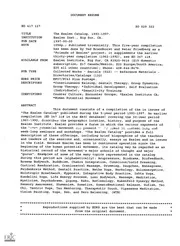
M. A. Novoselov's 2003 work, Dogma and Mysticism in Orthodoxy, Catholicism, and Protestantism, analyzes the interplay between doctrine and mystical experience.
Published in 2003, M. A. Novoselov's Dogma and Mysticism in Orthodoxy, Catholicism, and Protestantism examines the relationship between religious dogma and mystical experience in the three major branches of Western Christianity. The book undertakes a comparative analysis of how Orthodox, Catholic, and Protestant traditions reconcile institutionalized belief with direct encounters with the divine. It aims to clarify the historical and philosophical foundations of Christian mysticism and the divergent spiritual paths within these traditions.
Novoselov's study is situated within the context of Russian religious philosophy, a tradition that often sought to bridge Western scholasticism with Eastern Orthodox spirituality and esoteric thought. Appearing in the post-Soviet era, a time of renewed religious inquiry, the book addresses critiques of both rigid dogma and unfettered mysticism. It engages with the intellectual currents of thinkers like Pavel Florensky and Sergei Bulgakov, who also explored the metaphysical aspects of faith. The work requires a solid understanding of Christian theology.
This book emerges from the Russian religious philosophical tradition, which historically sought to integrate Western scholasticism with Eastern Orthodox spirituality and esoteric thought. It engages with the post-Soviet reevaluation of religious discourse, addressing the tension between established doctrine and direct mystical experience. Novoselov's work is part of a lineage that includes thinkers like Pavel Florensky and Sergei Bulgakov, who investigated the metaphysical dimensions of faith and spiritual practice.
💡 Why Read This Book?
• Gain a nuanced understanding of *kenosis* as it manifests differently in Orthodox, Catholic, and Protestant mystical practices, moving beyond simplistic theological definitions. • Explore the historical development of key concepts like *theosis* and its relationship to sacraments, as detailed in the book's comparative analysis of Christian traditions. • Appreciate the specific role of liturgical forms and Byzantine prayer techniques, such as hesychasm, in facilitating direct spiritual experience, as examined by Novoselov.
⭐ Reader Reviews
Honest opinions from readers who have explored this book.
❓ Frequently Asked Questions
What is the primary focus of "Dogma and Mysticism in Orthodoxy, Catholicism, and Protestantism"?
The book centers on the dynamic interplay between formal religious doctrine (dogma) and direct, personal spiritual experience (mysticism) across the three major Christian traditions, analyzing their theological and practical divergences and convergences.
When was M. A. Novoselov's "Dogma and Mysticism" first published?
The original publication date for "Dogmat i mistika v Pravoslavii, Katolichestve i Protestantstve" was 2003.
Does the book offer practical guidance for mystical practice?
While the book analyzes mystical practices historically and theologically, its primary aim is academic and comparative. It offers insight into the theoretical underpinnings rather than explicit step-by-step guidance for personal practice.
Who are some key figures or traditions discussed in relation to Christian mysticism?
Novoselov discusses figures and concepts related to hesychasm in Orthodoxy, the contemplative traditions in Catholicism, and various reformist movements in Protestantism, often contrasting their approaches to grace and spiritual union.
Is this book suitable for someone new to Christian theology?
The book assumes a degree of familiarity with Christian theological concepts. While informative, readers new to the subject might benefit from consulting introductory texts on theology and church history first.
What is the significance of comparing dogma and mysticism?
Comparing dogma and mysticism reveals how institutionalized belief systems shape, and are sometimes challenged by, individual spiritual encounters, offering a deeper understanding of religious evolution and human spiritual seeking.
🔮 Key Themes & Symbolism
Theosis and Deification
This theme explores the Eastern Orthodox concept of *theosis*, or deification, as the ultimate goal of the Christian spiritual life. Novoselov contrasts this with Western understandings, examining how the pursuit of union with God is articulated through dogma and experienced mystically. The work details how dogmatic pronouncements on Christology and the Trinity provide the theological scaffolding for the mystical aspiration towards divinization, a process understood not as becoming God, but as participating in the divine nature through grace.
Kenotic Spirituality
Novoselov investigates *kenosis*, the concept of self-emptying, particularly in relation to Christ's sacrifice and its imitation by mystics. He analyzes how Orthodox and Catholic traditions emphasize the emptying of the self as a prerequisite for spiritual fullness, contrasting this with certain Protestant doctrines that may prioritize imputed righteousness over experiential self-abnegation. The book traces the theological underpinnings of kenotic practices and their manifestation in asceticism and contemplative prayer across different Christian denominations.
Grace and Sacramental Efficacy
The work critically examines the doctrine of divine grace and the role of sacraments in mediating spiritual experience. Novoselov scrutinizes how Orthodoxy, Catholicism, and Protestantism conceptualize the reception and operation of grace, linking these theological differences to variations in mystical practice. He explores how dogmatic definitions of sacraments shape their mystical significance, differentiating between views that see them as essential channels of grace and those that emphasize faith as the primary mediator.
Dogma as Framework for Mysticism
This theme addresses how established religious dogma, far from being antithetical to mystical experience, often serves as its essential framework and interpretive lens. Novoselov demonstrates how theological doctrines concerning God's nature, salvation history, and the Church provide the conceptual language and boundaries within which Christian mystics articulate their encounters. The book highlights instances where adherence to dogma is seen as safeguarding against heterodox interpretations of spiritual phenomena.
💬 Memorable Quotes
Direct passages from the work, attributed to the author.
“Orthodox tradition emphasizes *theosis* as a process of participation in the divine life, distinct from merely imitating Christ.”
— This highlights a key distinction Novoselov draws between Eastern Orthodox theology and some Western interpretations, focusing on the transformative, participatory aspect of spiritual union.
“Protestant reformers often re-centered the experience of salvation on faith, altering the perceived necessity of sacraments for mystical communion.”
— This points to the Reformation's impact on Christian spirituality, suggesting how shifts in dogma regarding faith and sacraments influenced the field of mystical seeking.
“Hesychasm offers a method for achieving inner stillness, facilitating the direct perception of divine light.”
— This refers to a specific practice within Orthodox mysticism, illustrating how particular spiritual disciplines are developed and understood within the context of established dogma.
💡 Key Ideas
Editorial paraphrase of the work's core concepts — not direct quotes.
The path to divine union is paved by both the intellect's understanding of revealed truth and the heart's direct experience of God's presence.
This paraphrase captures the book's central thesis: that authentic Christian mysticism requires a balance. Dogma provides the intellectual map, while mystical experience offers the lived reality of the spiritual journey.
Catholic mysticism often navigates the tension between the juridical aspects of atonement and the experiential path of divine love.
This paraphrase addresses how Catholic spiritual theology grapples with both the legalistic implications of Christ's sacrifice and the deeply personal, affective experience of God's love.
🌙 Esoteric Significance
Tradition
This work fits within the broader esoteric Christian tradition, particularly drawing from the legacy of Russian religious philosophy. It bridges the gap between academic theological study and the practical exploration of mystical states. While not strictly Gnostic or Hermetic, it engages with themes of divine illumination and spiritual transformation that resonate across various esoteric lineages, offering a uniquely Orthodox Christian perspective on these universal spiritual quests.
Symbolism
Key symbols explored include the concept of Divine Light (as in hesychasm), representing uncreated divine energy and the goal of mystical perception. The Cross, beyond its dogmatic meaning of atonement, is examined as a symbol of spiritual discipline and the path of suffering that leads to union. The book also touches upon the symbolism of the Eucharist as a tangible, mystical presence of Christ, bridging the material and spiritual realms.
Modern Relevance
Contemporary thinkers and practitioners interested in contemplative prayer, Eastern Orthodox spirituality, and the integration of faith and consciousness find value in Novoselov's work. His detailed analysis of *theosis* and *kenosis* informs modern discussions on spiritual development and the psychological aspects of religious experience. Schools focusing on comparative mysticism and the history of Christian esotericism frequently cite or reference his comparative approach.
👥 Who Should Read This Book
['• Students of comparative religion: Those seeking to understand the specific theological and experiential differences between Orthodox, Catholic, and Protestant approaches to faith and spirituality.', '• Researchers of Christian esotericism: Individuals interested in the mystical dimensions of Christianity, particularly within the context of Russian religious thought and Orthodox traditions.', '• Theologians and philosophers of religion: Scholars looking for a detailed analysis of the relationship between dogma and mystical experience across major Christian denominations.']
📜 Historical Context
Novoselov's "Dogmat i mistika" emerges from the fertile ground of Russian religious philosophy, a movement that flourished particularly in the late 19th and early 20th centuries before its suppression under Soviet rule. Thinkers like Pavel Florensky and Nikolai Berdyaev sought to synthesize Orthodox theology with Western philosophical currents and esoteric traditions. The book, published in 2003, arrived during a period of religious revival in Russia, where access to previously restricted theological and philosophical works was re-established. It engages with the historical critiques of both scholasticism and unbridled emotionalism within Christianity. While not directly engaging in a public debate, its publication implicitly responded to a need for robust theological analysis following decades of state-enforced atheism. It stands in continuity with earlier Russian efforts to explore the 'sophiological' dimensions of faith, a concept explored by figures like Sergei Bulgakov.
📔 Journal Prompts
The concept of *theosis* as a lived process, not just a theological ideal.
The role of *kenosis* in spiritual disciplines across different Christian traditions.
Comparing the dogmatic foundations for mystical union in Orthodoxy versus Catholicism.
Analyzing the impact of the Reformation on the understanding of divine grace and mystical experience.
The tension between institutional dogma and individual spiritual encounters within Protestantism.
🗂️ Glossary
Theosis
A central concept in Eastern Orthodox theology, referring to the process of becoming like God, or divinization, through grace and spiritual practice. It is understood as participation in the divine nature.
Kenosis
From the Greek for 'emptying', this refers to Christ's self-emptying during his incarnation and passion, and is often seen as a model for spiritual self-abnegation and humility for Christian mystics.
Hesychasm
A contemplative tradition within Eastern Orthodox Christianity, characterized by practices aimed at achieving inner stillness (hesychia) and the unceasing prayer of the heart, often leading to the experience of divine light.
Dogma
A principle or set of principles laid down by an authority as incontrovertibly true, especially in religion. In Christianity, it refers to officially defined beliefs concerning God, Christ, and salvation.
Mysticism
The pursuit of, or experience of, communion with, or absorption into, the divine or the ultimate reality, often through direct intuition or spiritual insight rather than rational thought.
Sacrament
A religious ceremony or act that is regarded as an outward and visible sign of an inward and spiritual divine grace, central to Orthodox, Catholic, and some Protestant traditions.
Divine Light
In Orthodox mysticism, particularly hesychasm, this refers to the uncreated, divine energy perceived by the mystic, often associated with the experience at the Transfiguration of Christ.
🔮 Readers Also Liked
Browse all →





More Free Mysticism & Contemplation Books
View all →