Richard Rohr
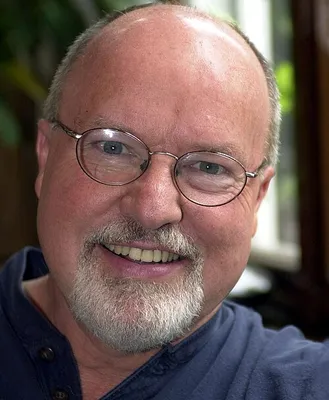
Richard Rohr is a Franciscan priest and author exploring Christian mysticism, perennial philosophy, and the 'true self'.
Richard Rohr, born in 1943, is an American Franciscan priest and influential writer on spirituality. Ordained in 1970, he founded the New Jerusalem Community and later the Center for Action and Contemplation (CAC) in Albuquerque, New Mexico. PBS recognized him as a prominent global spirituality figure. His teachings are deeply rooted in Christian mysticism and the perennial tradition, emphasizing the inherent divine presence within all creation and the human longing for union with it. Rohr advocates for 'alternative orthodoxy,' prioritizing spiritual practice and lived experience over strict adherence to dogma. He encourages individuals to explore the depths of their own traditions to discover their 'true self' in God, drawing on thinkers like Carl Jung and concepts such as spiral dynamics and integral theory. Despite facing controversy, his work has achieved bestseller status and resonates with a diverse audience, including those outside traditional religious structures.
Core Teachings and Philosophical Roots
Rohr's spirituality is significantly informed by the perennial philosophy, which posits a universal, underlying truth connecting all spiritual traditions. He emphasizes the concept of the 'true self' as distinct from the 'false self,' viewing the journey of spiritual development as a movement towards realizing one's inherent connection to the divine. His work often explores the idea that the divine reality is immanent in all things, a perspective he identifies as panentheism, where God is within all creation and also transcends it. Rohr also engages with psychological frameworks, incorporating elements from Carl Jung and the Enneagram of Personality into his exploration of human consciousness and spiritual growth. He advocates for 'alternative orthodoxy,' a focus on orthopraxy, or right living and practice, as being more vital than mere verbal assent to doctrines.
Interpretation of Christian Tradition
Rohr offers a distinct interpretation of Christian teachings, particularly regarding the nature of salvation and the role of Jesus. He suggests that while following Jesus is a direct path to spiritual realization, formal Christian practice is not the only means. The core, for him, is cultivating a love for the divine presence, regardless of its name. He critiques traditional views of hell and damnation, which he finds alienating to many. Rohr views scripture as a human record of evolving experiences with God, describing the Bible as 'the word of God in the words of people.' He also proposes a 'third way' within Franciscan spirituality, focusing on the Gospel, justice, and compassion, positioning it as a path distinct from rigid orthodoxy or heresy. His understanding of Jesus' crucifixion and resurrection emphasizes it as a powerful illustration of transformation from the 'false self' to the 'true self'.
The Church and Inclusivity
Rohr advocates for a re-evaluation of the structure and role of the Church, suggesting that historical hierarchical models have sometimes hindered spiritual progress. He proposes a 'bottom-up' approach for the future of faith communities. He describes his position as being 'on the edge of the inside' of the Church, acknowledging its structures while also seeking to foster transformation. His work consistently promotes an inclusive and compassionate spiritual path. Rohr has publicly affirmed and welcomed LGBTQ+ individuals, stating that God's expectations of truth, faithfulness, and covenantal love apply equally to same-sex relationships as they do to heterosexual ones. This inclusive stance has been a consistent theme in his writings and public ministry.
Key Ideas
- Alternative Orthodoxy (Orthopraxy over Orthodoxy)
- Perennial Philosophy
- True Self vs. False Self
- Panentheism
- The Universal Christ
- Spiritual Practice and Lived Experience
Notable Quotes
“The Bible is an anthology of many books. It is a record of people's experience of God's self-revelation. It is an account of our very human experience of the divine intrusion into history. The book did not fall from heaven in a pretty package. It was written by people trying to listen to God. I believe that the Spirit was guiding the listening and writing process. We must also know that humans always see "through a glass darkly ... and all knowledge is imperfect" (1 Corinthians 13:12).”
“To live on the edge of the inside is different than being an insider, a "company man" or a dues paying member. Yes, you have learned the rules and you understand and honor the system as far as it goes, but you do not need to protect it, defend it or promote it. It has served its initial and helpful function. You have learned the rules well enough to know how to "break the rules" without really breaking them at all. "Not to abolish the law but to complete it" as Jesus rightly puts it (Matthew 5:17). A doorkeeper must love both the inside and the outside of his or her group, and know how to move between these two loves.”
“There is only Christ. He is everything and he is in everything”
“I believe that Jesus' death on the cross is a revelation of the infinite and participatory love of God, not some bloody payment required by God's offended justice to rectify the problem of sin. Such a story line is way too small and problem-oriented.”
“truth, faithfulness, and striving to enter into covenants of continuing forgiveness of one another.”
Books by Richard Rohr
5 free public domain books · Read online or download