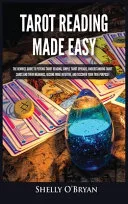
Tarot Reading Made Easy
 72
72

Tarot Reading Made Easy
Shelly O'Bryan's "Tarot Reading Made Easy" offers a commendably straightforward entry into the world of tarot. Its primary strength lies in its accessibility; O'Bryan avoids overly complex jargon, presenting historical context and card meanings in a digestible format. The book effectively demystifies the practice for absolute beginners, particularly in its explanation of the Major and Minor Arcana structure. However, the brevity with which it touches upon the deeper historical associations, such as the late 18th-century occultist interpretations, feels somewhat curtailed. While the book mentions the evolution of tarot, it could benefit from a more robust exploration of the figures and movements that shaped its esoteric trajectory beyond a superficial mention. The promotional offer of a free Kindle version with paperback purchase is a practical incentive. For those seeking a gentle, unpretentious introduction, it serves its purpose adequately.
📝 Description
72
Shelly O'Bryan's Tarot Reading Made Easy demystifies tarot for newcomers starting in 2016.
This guide introduces the fundamentals of tarot card reading for those new to the practice. It traces tarot's history, noting its evolution across cultures and time. The book discusses the variety of tarot decks, suggesting a reader's connection to a chosen deck is important. Understanding card symbolism and history helps develop intuitive reading skills. The work aims to make tarot accessible beyond esoteric circles.
This volume is for individuals seeking a structured approach to learning tarot. It suits those curious about divination, personal insight, or the history of cartomancy. Readers interested in personal development through symbolic systems will find it useful. No prior knowledge is assumed, making it a starting point for anyone drawn to tarot but unsure how to begin. It is for the hesitant novice and the spiritually curious.
The book places tarot within its historical context, acknowledging its 15th-century European origins as playing cards. It notes how figures like Antoine Court de Gébelin in the late 18th century began linking tarot to ancient Egyptian lore, a shift towards its occult associations. O'Bryan's work presents tarot not as a fixed object but as a living system that occultists and mystics have adapted over centuries. This perspective grounds the practice in a tangible past, connecting it to traditions of divination and personal insight.
💡 Why Read This Book?
• Gain foundational knowledge of tarot's structure, including the distinct roles of the Major and Minor Arcana, as detailed in the book's early chapters. • Understand the historical trajectory of tarot, from its 15th-century origins as playing cards to its later esoteric associations, providing context beyond mere divination. • Develop a practical approach to interpreting card spreads by learning how to connect individual card meanings with the narrative of the Fool's Journey, a key concept presented.
⭐ Reader Reviews
Honest opinions from readers who have explored this book.
❓ Frequently Asked Questions
What is the primary goal of Shelly O'Bryan's 'Tarot Reading Made Easy'?
The book aims to provide beginners with a clear, step-by-step guide to understanding tarot cards, their history, and how to perform personal readings. It demystifies the process for newcomers to the esoteric practice.
Does the book cover different types of tarot decks?
Yes, 'Tarot Reading Made Easy' acknowledges the variety of tarot decks available, emphasizing that readers should find one that resonates with them personally. It highlights the diversity within the tarot tradition.
What historical period is mentioned in relation to tarot's occult significance?
The book touches upon the late 18th century, a period when figures like Antoine Court de Gébelin began linking tarot to ancient occult traditions, a significant shift in its perception.
Is 'Tarot Reading Made Easy' suitable for experienced tarot readers?
This book is primarily designed for beginners. While it offers historical context, its core focus is on foundational knowledge and making the practice accessible to those new to tarot reading.
What is the 'Fool's Journey' concept discussed in the book?
The Fool's Journey is presented as a narrative arc within the Major Arcana, symbolizing the path of spiritual growth and life experiences, offering a framework for understanding the sequence of these archetypal cards.
What is the benefit of buying the paperback version?
Purchasing the paperback edition of 'Tarot Reading Made Easy' includes a complimentary Kindle version, offering readers flexibility in how they access and study the material.
🔮 Key Themes & Symbolism
Tarot as a Symbolic Language
The work frames tarot not as a deterministic fortune-telling tool, but as a rich symbolic language capable of reflecting internal states and external circumstances. O'Bryan details how each card, from the archetypal Major Arcana like The Fool to the pips of the Minor Arcana, carries layers of meaning that can be interpreted contextually. This symbolic approach encourages personal dialogue with the cards, fostering intuition and self-awareness rather than passive prediction. The diversity of decks available further emphasizes this theme, suggesting that the symbolic resonance is key to a successful reading.
Historical Evolution of Tarot
O'Bryan situates tarot within a historical continuum, tracing its transformation from 15th-century European playing cards to its later adoption by occultists and mystics. The book touches upon how figures in the late 18th century, such as Antoine Court de Gébelin, began imbuing the cards with ancient esoteric knowledge, significantly altering their cultural perception. This historical perspective underscores that tarot is not a static artifact but a living tradition that has been continuously reinterpreted and adapted by different cultures and individuals over centuries.
The Beginner's Path to Reading
A central theme is making tarot accessible to newcomers. The book systematically breaks down the components of a tarot deck, explaining the roles of the Major and Minor Arcana and the concept of the Fool's Journey. O'Bryan guides readers through the initial steps of performing readings, emphasizing intuition and personal connection with the cards. The practical advice aims to empower beginners to move beyond memorization of meanings towards developing their own interpretive skills and confidence in reading for themselves and others.
Intuition and Personal Connection
Beyond historical facts and card meanings, the book stresses the importance of intuition in tarot reading. O'Bryan suggests that while understanding traditional symbolism is crucial, a personal connection to the cards and the querent's intuition are paramount for insightful readings. The choice of a tarot deck, for instance, is presented as a personal choice based on aesthetic and energetic resonance. This emphasis encourages readers to trust their inner voice and develop a unique relationship with their chosen deck.
💬 Memorable Quotes
Direct passages from the work, attributed to the author.
“Tarot cards are plenty and there are many different decks.”
— This statement highlights the vast range of tarot imagery and tradition, suggesting that the sheer variety of decks available allows for a personalized approach to divination and self-exploration.
“A brief history of what tarot is and where it came from.”
— This indicates the book's commitment to grounding the practice of tarot in its historical origins, moving beyond purely mystical interpretations to explore its tangible evolution.
“How to get started doing your own readings.”
— This points to the practical, action-oriented nature of the book, designed to equip beginners with the necessary knowledge and confidence to immediately begin their own tarot practice.
💡 Key Ideas
Editorial paraphrase of the work's core concepts — not direct quotes.
How it has been shifted and changed throughout history.
This paraphrased concept emphasizes the dynamic nature of tarot, illustrating that its meanings and applications are not fixed but have adapted to different cultural and historical contexts over time.
A helpful guide for beginners to learn all about tarot card reading.
This summarizes the book's core purpose: to serve as an introductory resource that simplifies the complex world of tarot for those just starting their journey.
🌙 Esoteric Significance
Tradition
While not explicitly aligning with a single esoteric lineage like Hermeticism or Kabbalah, 'Tarot Reading Made Easy' engages with the broader tradition of cartomancy and divination that has been influenced by these paths. It acknowledges tarot's historical occultification, particularly from the late 18th century onwards, a period when esotericists began to imbue the cards with deeper symbolic meanings. The book fits within the modern popularization of esoteric tools, presenting tarot as a method for personal insight that draws on archetypal psychology and symbolic interpretation, common in contemporary New Age and self-help spiritualities.
Symbolism
The work introduces fundamental tarot symbolism, focusing on the archetypal figures of the Major Arcana, such as The Fool and The Magician, as representations of universal life experiences and stages of consciousness. It also touches upon the structure of the Minor Arcana, hinting at their connection to the four elements and different aspects of daily life. The concept of the Fool's Journey serves as a unifying symbolic narrative, illustrating a path of spiritual growth and self-discovery through the sequence of Major Arcana cards.
Modern Relevance
In contemporary circles, 'Tarot Reading Made Easy' appeals to the growing interest in mindfulness, self-reflection, and accessible spiritual practices. Thinkers and practitioners focused on Jungian archetypes and psychological self-discovery often utilize tarot as a tool. Its straightforward approach appeals to those exploring modern paganism, witchcraft, and various forms of intuitive development that seek practical, non-dogmatic methods for personal guidance and understanding.
👥 Who Should Read This Book
• Absolute beginners curious about tarot who feel intimidated by complex esoteric texts and seek a clear, structured introduction to the cards and their meanings. • Individuals interested in self-discovery and personal development who are looking for tools to enhance intuition and gain new perspectives on life situations. • Students of comparative spirituality or history of divination who want a foundational understanding of tarot's evolution and its place in Western esoteric thought.
📜 Historical Context
Published in 2019, Shelly O'Bryan's "Tarot Reading Made Easy" entered a contemporary landscape where tarot had long moved beyond its 15th-century origins as mere playing cards. The late 18th century, particularly the work of figures like Antoine Court de Gébelin, had cemented tarot's association with ancient mysteries and occultism, a path further explored by occultists in the 19th and 20th centuries. While O'Bryan focuses on accessibility for beginners, her work implicitly engages with this layered history. The book appears in an era where esoteric practices are increasingly mainstreamed, yet it sidesteps deeper dives into specific occult traditions or scholarly debates surrounding tarot's provenance, such as the ongoing discussions about its exact developmental stages in Renaissance Italy versus its later occult interpretations. It presents a more generalized, less controversial historical arc suitable for a broad audience.
📔 Journal Prompts
Reflect on the symbolism of The Fool's Journey and how its stages might relate to your current life path.
Consider the historical shifts in tarot's meaning from playing cards to esoteric tool. How does this evolution impact your perception?
Identify three cards from the Major Arcana whose archetypal meanings you find most compelling and why.
Explore your personal resonance with a specific tarot deck; what visual or thematic elements draw you in?
Document your initial attempts at performing a simple three-card spread, noting any intuitive insights that arose.
🗂️ Glossary
Tarot Deck
A collection of cards, typically 78, used for divination and self-reflection. It is divided into the Major Arcana and the Minor Arcana.
Major Arcana
The trump cards of a tarot deck, usually 22 in number (0-XXI), representing significant life events, spiritual lessons, and archetypal themes.
Minor Arcana
The four suits of a tarot deck (Wands, Cups, Swords, Pentacles/Coins), typically containing 14 cards each, representing everyday situations and challenges.
The Fool's Journey
A symbolic narrative arc within the Major Arcana, depicting the progression of the Fool (card 0) through various archetypal experiences and lessons.
Cartomancy
The practice of divination using cards, most commonly tarot cards or playing cards.
Divination
The practice of seeking knowledge of the future or the unknown by supernatural means.
Archetype
A universally understood symbol, character, or pattern of behavior that is part of the collective unconscious, often represented in the Major Arcana.