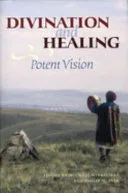
Divination and Healing
 71
71

Divination and Healing
Michael Winkelman and Philip M. Peek's *Divination and Healing* offers a substantial academic counterpoint to superficial treatments of esoteric practices. Rather than indulging in romanticized notions of ancient wisdom, the editors have assembled a collection that rigorously interrogates the cultural utility of divination in healing. A significant strength lies in the diverse ethnographic examples, which demonstrate the functional integration of these practices into community life. For instance, the exploration of how specific divinatory tools are used to diagnose spiritual imbalances causing physical ailments is particularly illuminating. However, the book's academic density, while a virtue for scholars, might present a barrier for the casual reader, occasionally burying the profound human elements within dense theoretical discourse. The analysis of shamanic healing as a form of diagnostic divination, a recurring motif, is compelling but could benefit from more explicit cross-cultural comparisons. Ultimately, *Divination and Healing* serves as a vital resource for understanding the practical, non-pharmacological healing systems that have long served humanity.
📝 Description
71
Published in 2004, Divination and Healing examines how divinatory practices function within therapeutic and diagnostic contexts globally.
Divination and Healing, a 2004 collection of essays edited by Michael Winkelman and Philip M. Peek, analyzes the roles of divinatory practices in healing and diagnosing illness across diverse cultures. Moving beyond simple descriptions, the contributors investigate how these systems operate within their societal structures. The book argues that despite modern skepticism, divination methods consistently serve communal needs for understanding sickness, guiding treatment, and resolving difficult problems. This scholarly work is aimed at academics and students of comparative religion, anthropology, and medical humanities. It will interest those studying the practical use of esoteric knowledge in non-Western societies and historical settings. Readers seeking a rigorous, evidence-based look at shamanism, ritual healing, and how cultures define well-being will find this volume especially useful.
The collection also addresses the historical endurance and cultural adaptation of divination. It notes that while Western science often dismisses these practices, their persistence points to a basic human drive for meaning and answers through ritual and symbolic interpretation. The essays place divination within broader anthropological discussions about belief, healing, and the social construction of reality. They often compare these approaches to the biomedical models prevalent in the early 21st century, highlighting different ways of understanding the world and human ailments.
This volume engages with the long tradition of divination, a practice found in nearly every culture throughout history. It situates these methods not as mere superstition, but as integral components of belief systems that seek to understand unseen forces influencing human life, health, and fortune. By examining divination's therapeutic and diagnostic applications, the book connects it to the broader field of shamanism and ritual healing, traditions that often rely on symbolic interpretation to address physical and spiritual ailments. It thus bridges the gap between anthropological inquiry and the enduring human quest for meaning and control in the face of uncertainty.
💡 Why Read This Book?
• Gain insights into the diagnostic frameworks of global healing traditions, understanding how practices like divination in specific cultures served to identify illness causes, a concept explored through various ethnographic case studies presented in the volume. • Appreciate the functional role of symbolic systems in problem-solving beyond Western medical models, learning how communities utilized divination not just for health but for broader societal issues as discussed in the text. • Explore the anthropological scholarship surrounding shamanism and altered states, recognizing how figures like Michael Winkelman have extensively researched these phenomena and their connection to healing and divination.
⭐ Reader Reviews
Honest opinions from readers who have explored this book.
❓ Frequently Asked Questions
What is the primary focus of Divination and Healing by Winkelman and Peek?
The book primarily examines the integral role of divinatory practices in diagnosing ailments, prescribing healing treatments, and resolving problems across diverse global cultures, moving beyond superficial analyses to explore functional significance.
Who are the intended readers for Divination and Healing?
It is aimed at academics, researchers, and students of anthropology, comparative religion, ethnography, and medical humanities interested in the practical and cultural applications of divination in healing contexts.
When was Divination and Healing first published?
Divination and Healing was first published in September 2004, marking a significant contribution to the scholarly study of these practices at the turn of the 21st century.
Does the book question the efficacy of divination systems?
While acknowledging skepticism, the book focuses on the persistent efficacy and functional significance of divination systems within the communities they serve, highlighting their continued importance despite external questioning.
What kind of divinatory practices are discussed in the book?
The volume discusses a range of practices including scrying, dream interpretation, oracle consultation, and other ritualistic methods, analyzing their cultural embeddedness and diagnostic application in healing.
What is the significance of the shamanic complex in relation to divination and healing?
The book explores the shamanic complex, where altered states of consciousness are often central to both the divinatory process of seeking knowledge and the subsequent healing rituals guided by that knowledge.
🔮 Key Themes & Symbolism
Diagnostic Power of Symbols
The volume emphasizes how divinatory systems, often dismissed by modern science, function as sophisticated diagnostic tools within their cultural contexts. Rather than mere superstition, these practices employ complex symbolic languages to identify the root causes of illness, which may be spiritual, social, or psychological. The analysis reveals how specific symbols or patterns are interpreted to understand the nature of affliction, guiding subsequent therapeutic interventions. This highlights a non-materialist epistemology where meaning and causality are deeply intertwined.
Ritual as Prescriptive Healing
Beyond diagnosis, *Divination and Healing* explores the prescriptive dimension of these practices. Once an ailment is identified through divination, specific rituals, ceremonies, or actions are often prescribed as the cure. This section studies how these prescribed actions are believed to restore balance, appease spiritual entities, or correct social disharmony. The work illustrates how the efficacy of healing is tied not to pharmacological action but to the symbolic and performative power of ritual within a shared cultural belief system.
The Shamanic Nexus
A significant thread running through the collection is the examination of shamanism as a prime example of the fusion of divination and healing. Shamanic practices often involve altered states of consciousness to journey into spiritual realms, retrieve lost souls, or gain knowledge about illnesses. The book details how shamans act as intermediaries, using their divinatory insights to diagnose, and then employing their ritualistic skills to heal, demonstrating a holistic approach to well-being that integrates the physical, spiritual, and social.
Cultural Universality and Specificity
The essays collectively demonstrate the near-universal presence of divination in human societies, yet they also stress the profound cultural specificity of each system. While the impulse to seek knowledge beyond the observable is common, the methods, symbols, and interpretations vary widely. The book navigates this tension, showcasing how divinatory practices are deeply embedded in local cosmologies, social structures, and historical experiences, serving unique community needs for understanding and healing.
💬 Memorable Quotes
Direct passages from the work, attributed to the author.
“Divination systems continue to serve their communities by diagnosing ailments, prescribing healing treatments, and solving problems.”
— This statement captures the functionalist perspective central to the book, asserting that despite skepticism, these practices fulfill vital societal roles in understanding and addressing human suffering and conflict.
“Despite their universality, there are relatively few comprehensive studies of divination systems.”
— This observation highlights the academic gap that the volume aims to fill, advocating for more rigorous and cross-cultural research into practices often marginalized by Western academic traditions.
“The volume seeks to fill this gap regarding the use of divination in healing.”
— This directly states the scholarly objective of the collection, emphasizing a focused exploration of how divinatory methods are intrinsically linked to therapeutic outcomes and the maintenance of community health.
“Leading authorities draw on their own field experience.”
— This points to the credibility and depth of the scholarship presented, indicating that the essays are grounded in empirical research and direct engagement with the cultures and practices being studied.
💡 Key Ideas
Editorial paraphrase of the work's core concepts — not direct quotes.
The work explores the functional significance of these systems within their societal frameworks.
This paraphrase emphasizes the analytical approach of the book, moving beyond description to understand how divination operates as a vital component of social and cultural structures, particularly in relation to health and well-being.
🌙 Esoteric Significance
Tradition
This work aligns with the broader esoteric interest in understanding ancient and non-Western forms of knowledge and healing. While not strictly adhering to a single lineage like Hermeticism or Gnosticism, it speaks to the esoteric principle that hidden knowledge (gnosis) is accessible through non-rational means, such as divination, and can lead to wholeness or healing. It complements traditions that emphasize the interconnectedness of mind, body, and spirit, offering empirical grounding for practices that many esoteric practitioners explore experientially.
Symbolism
The book implicitly engages with symbolism through its analysis of divinatory tools and methods. For example, the interpretation of patterns in thrown objects (like bones or stones), the symbolic language of dreams, or the visions obtained through altered states can be seen as a form of symbolic communication. In many esoteric traditions, these elements are not arbitrary but are understood as carrying specific archetypal or energetic meanings, providing a framework for understanding the universe and one's place within it, which directly informs the healing process.
Modern Relevance
Contemporary practitioners in fields like transpersonal psychology, integral theory, and neo-shamanism often draw upon the ethnographic and theoretical insights presented in works like *Divination and Healing*. Thinkers and practitioners exploring somatic experiencing, energy medicine, and consciousness studies can find valuable cross-cultural perspectives on how non-ordinary states and symbolic interpretation facilitate healing. The book's emphasis on the functional role of these practices in community health provides a relevant counterpoint to purely individualistic or technologically-driven approaches to well-being prevalent today.
👥 Who Should Read This Book
• Anthropology and Religious Studies scholars: Gain access to rigorous ethnographic research and theoretical frameworks for understanding the cultural logic and functional significance of divination in healing contexts. • Practitioners of alternative and complementary medicine: Discover cross-cultural perspectives on diagnostic and therapeutic methods that emphasize holistic approaches, spiritual causality, and the power of ritual. • Students of esotericism and comparative spirituality: Explore the empirical grounding and diverse manifestations of practices aimed at accessing hidden knowledge for personal and communal well-being, expanding beyond Western esoteric traditions.
📜 Historical Context
When *Divination and Healing* was published in 2004, the study of esoteric practices was increasingly gaining academic traction, moving beyond purely anthropological or religious studies frameworks. The early 21st century saw a growing interest in comparative approaches to shamanism, spurred by scholars like Michael Harner and his Foundation for Shamanic Studies. This volume contributed to that discourse by focusing specifically on the intertwined nature of divination and healing. It engaged with ongoing debates in medical anthropology regarding the cultural construction of illness and healing, often contrasting ethnographic findings with the perceived limitations of Western biomedicine. While not facing direct censorship, such works often navigated a landscape where mainstream academia could be dismissive of non-Western or non-materialist epistemologies. The collection implicitly engaged with scholars like Ioan Lewis, who had explored ecstatic religion and shamanism, by providing detailed case studies that underscored the practical, rather than purely symbolic, utility of these practices for community well-being.
📔 Journal Prompts
The diagnostic function of divination systems as community tools.
Prescriptive healing rituals derived from divinatory insights.
The shamanic complex as a nexus of divination and healing.
Interpreting symbolic patterns in personal reflection.
Cultural specificity versus universality in healing practices.
🗂️ Glossary
Divination
The practice of seeking knowledge of the future or the unknown by supernatural means. In this context, it specifically refers to methods used for diagnosing illness and solving problems within a community.
Shamanism
A religious practice characterized by the belief that shamans can mediate between the human and spirit worlds. This often involves entering altered states of consciousness to perform healing, divination, or other spiritual functions.
Ethnography
The scientific description of the customs of individual peoples and cultures, typically based on fieldwork and direct observation within a specific community.
Cosmology
The study of the origin, evolution, and eventual fate of the universe. In cultural contexts, it refers to a society's understanding of the structure and order of the cosmos and humanity's place within it.
Epistemology
The theory of knowledge, especially with regard to its methods, validity, and scope. It is the investigation of what distinguishes justified belief from opinion, particularly concerning how knowledge is acquired.
Holistic Approach
A perspective that emphasizes the interconnectedness of all parts of a system, particularly in health, where the physical, mental, emotional, and spiritual aspects of an individual are considered integral to well-being.
Altered States of Consciousness (ASC)
Any mental state significantly different from a normal waking state, often induced through practices like meditation, chanting, drumming, or the use of psychoactive substances, frequently employed in shamanic contexts.