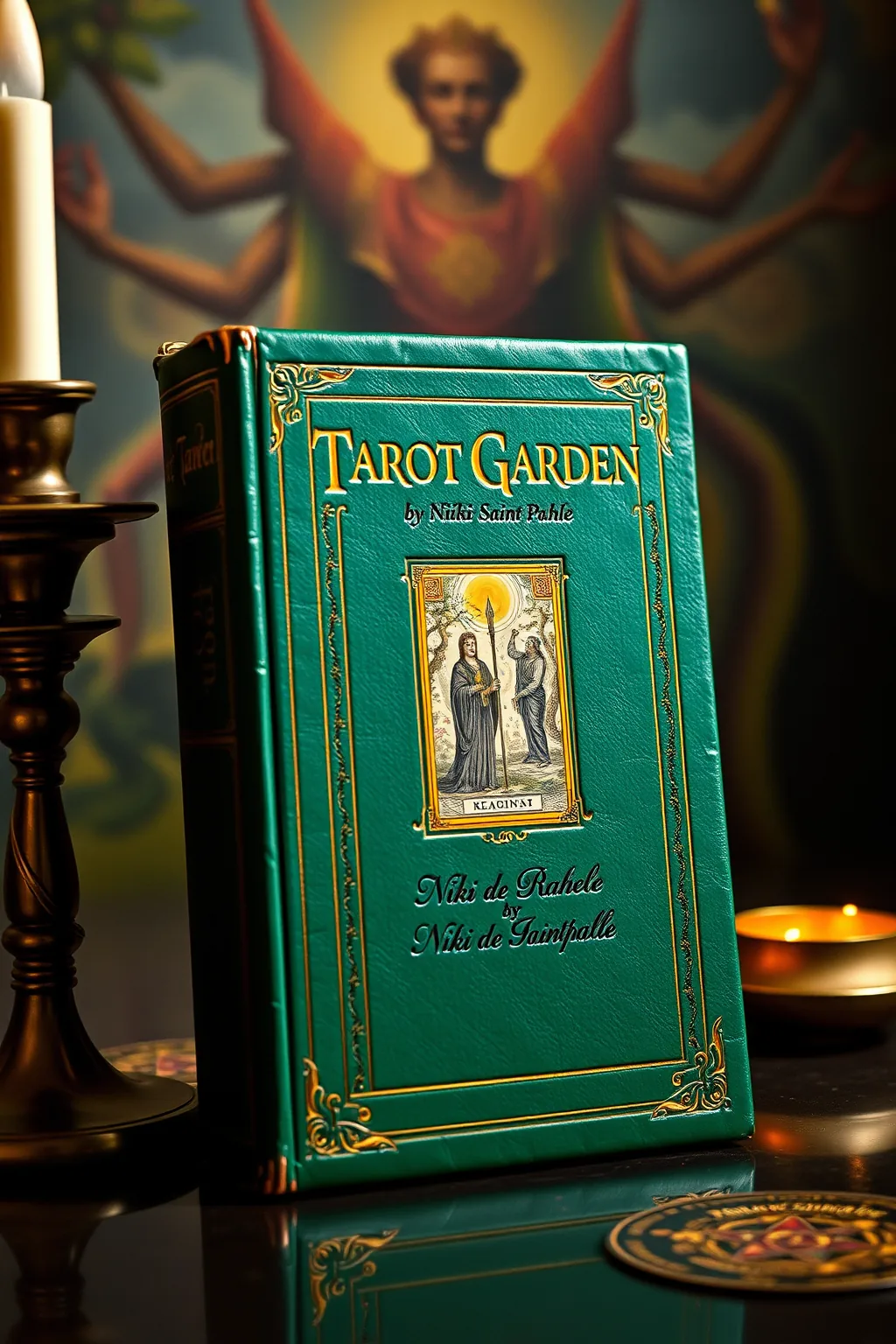
Tarot Garden
 62
62

Tarot Garden



Celeste Moreau (Divination & Symbolism Reviewer) — Niki de Saint Phalle's Tarot Garden is a monumental achievement, not just in sculpture, but in its potent embodiment of Tarot's esoteric truths. This work transcends mere representation, creating an immersive experience where the archetypes of the Major Arcana are brought to life with startling vibrancy and profound symbolism. De Saint Phalle masterfully translates the hidden wisdom of the cards into colossal, joyous forms, offering seekers a tangible connection to the energies of transformation and self-awareness. For practitioners and scholars alike, the Tarot Garden provides a unique lens through which to explore the visual language of the Tarot and its enduring relevance in the modern spiritual landscape. It is an essential text for anyone seeking to deepen their understanding of this ancient divination system.
📝 Description
62
Niki de Saint Phalle's Tarot Garden, completed in 1998, is a monumental sculpture park based on the Major Arcana.
This book examines Niki de Saint Phalle's Tarot Garden, a large-scale sculpture park in Tuscany, Italy. Completed in 1998, the garden is a physical interpretation of the 22 Major Arcana cards of the Tarot.
Each figure in the garden, covered in mosaics and vibrant colors, represents a specific Tarot archetype. The book discusses the symbolism embedded in these figures, connecting them to the traditional meanings of the cards. It also touches upon the alchemical principles and artistic techniques de Saint Phalle employed in its creation.
The Tarot Garden functions as an immersive experience, intended to engage visitors with the archetypal narratives of the Tarot. This volume aims to translate that experience for readers, revealing the layers of meaning within the artwork and de Saint Phalle's personal vision.
The Tarot Garden stands as a unique expression within the broader esoteric tradition that uses the Tarot as a system for understanding human psychology and spiritual development. Many esoteric practices see the Major Arcana not just as fortune-telling tools, but as a map of the soul's journey and a compendium of universal archetypes. De Saint Phalle's monumental art brings these abstract concepts into tangible, visual form, creating a physical space where these symbolic narratives can be experienced directly. The garden's design and imagery align with the tradition of creating sacred spaces or labyrinths intended for contemplation and personal insight.
💡 Why Read This Book?
Immerse yourself in a tangible manifestation of Tarot's deepest wisdom. Discover a unique artistic interpretation of the Major Arcana that awakens intuition and sparks profound self-reflection. Ideal for Tarot enthusiasts, art lovers, seekers of spiritual insight, and those fascinated by the intersection of art and mysticism. This book offers a visually stunning and intellectually stimulating exploration of archetypal energies.
⭐ Reader Reviews
Honest opinions from readers who have explored this book.
❓ Frequently Asked Questions
What is the Tarot Garden?
The Tarot Garden, also known as Giardino dei Tarocchi, is a monumental sculpture park created by the artist Niki de Saint Phalle in Tuscany, Italy. It is inspired by and represents the Major Arcana of the Tarot.
Who created the Tarot Garden?
The Tarot Garden was conceived and created by the renowned French-American artist Niki de Saint Phalle, with contributions from artists Jean Tinguely and Rico Weber.
What makes the Tarot Garden spiritually significant?
Its spiritual significance lies in its direct visual interpretation of the 22 Major Arcana cards, transforming abstract esoteric concepts into tangible, awe-inspiring sculptures that facilitate contemplation and personal connection to archetypal energies.
Is this book a typical Tarot deck guide?
No, this book is not a traditional guide to reading Tarot cards. Instead, it focuses on the artistic and symbolic representation of the Tarot archetypes within Niki de Saint Phalle's unique sculptural environment.
Can I visit the Tarot Garden after reading this book?
Yes, this book serves as an excellent introduction and guide, inspiring many to visit the actual Tarot Garden in Italy, allowing for a deeply immersive, real-world experience of the art and its esoteric themes.
🔮 Key Themes & Symbolism
The Major Arcana Embodied
This theme studies how Niki de Saint Phalle translated the profound symbolism of each of the 22 Major Arcana cards into monumental, tangible sculptures. It explores the visual language used to represent archetypal energies, from the transformative journey of the Fool to the wisdom of the Hierophant, offering a unique, artistic perspective on these foundational Tarot concepts. The focus is on how the physical form of the art enhances the understanding of the cards' spiritual and psychological dimensions.
Art as a Spiritual Pathway
This theme examines the Tarot Garden as a sacred space where art serves as a direct conduit to esoteric knowledge and personal transformation. It highlights how de Saint Phalle intended the garden to be an immersive experience, encouraging introspection, intuition, and a connection to universal archetypes. The text explores the alchemical principles embedded in the artwork and the garden's design, positioning it as a modern temple for spiritual exploration and awakening through aesthetic engagement.
Symbolism and Hidden Meanings
This theme focuses on the collection of symbols woven into the Tarot Garden's sculptures. It investigates the use of color, form, mosaic, and mythological references to convey deeper, often hidden, meanings associated with the Tarot. The exploration goes beyond superficial interpretation, seeking to uncover the layers of esoteric wisdom and philosophical insights that Niki de Saint Phalle embedded within her creations, offering readers a framework for deciphering this complex visual lexicon.
💬 Memorable Quotes
Direct passages from the work, attributed to the author.
“Each figure is an invocation, a dialogue with the ancient forces of the universe.”
— This highlights the spiritual and esoteric intent behind the sculptures, portraying them not merely as art objects but as conduits for connecting with primal energies and universal wisdom.
“Color sings, form breathes, and the stones whisper secrets of the soul.”
— This evocative line captures the sensory and mystical experience of the garden, suggesting that all elements contribute to a profound, almost sentient, communication of esoteric truths.
“To walk among the Tarot is to walk within oneself, confronting the archetypes that shape us.”
— This speaks to the deeply personal and introspective journey the garden facilitates, linking the external exploration of the Tarot figures with an internal exploration of the self.
💡 Key Ideas
Editorial paraphrase of the work's core concepts — not direct quotes.
The Tarot Garden is a dream made solid, a evidence of the power of imagination.
This quote emphasizes the transformative power of art and vision, suggesting that the garden is the physical manifestation of a profound inner world and a bold artistic statement.
Here, the visible world mirrors the invisible, revealing the divine in the everyday.
This quote underscores the alchemical aspect of the garden, suggesting that it serves as a bridge between the mundane and the sacred, showing how profound spiritual truths can be found in artistic expression.
🌙 Esoteric Significance
Tradition
The Tarot Garden is deeply rooted in the Western esoteric tradition, particularly drawing from Gnosticism, Kabbalah, and Hermeticism, which emphasize the importance of hidden knowledge and symbolic language for spiritual attainment. It also aligns with the Jungian archetypal psychology, which posits universal patterns of the psyche mirrored in myths and symbols. The garden's structure and imagery directly interpret the archetypal journey of the Major Arcana, a core part of many divinatory and mystical practices.
Symbolism
The symbolism within the Tarot Garden is complex and rich, drawing directly from the visual lexicon of the Tarot's Major Arcana. Each sculpture is a vibrant, allegorical representation of a card's core meaning, utilizing color, form, and intricate mosaic detailing to convey complex esoteric concepts. For instance, the 'Emperor' might embody authority and structure through imposing architecture, while the 'Star' could be depicted with luminous, flowing forms symbolizing hope and divine guidance. The garden itself acts as a macrocosm of the spiritual journey.
Modern Relevance
In an age often characterized by disconnection and superficiality, the Tarot Garden offers a powerful antidote, providing a tangible space for introspection and engagement with timeless archetypal wisdom. Its relevance lies in its ability to translate abstract spiritual concepts into accessible, awe-inspiring art, making esoteric knowledge approachable and inspiring. The garden serves as a reminder of the enduring power of symbolism, intuition, and the human need for spiritual connection, offering a sanctuary for self-discovery and a evidence of art's capacity for profound healing and transformation.
👥 Who Should Read This Book
This book is a treasure for dedicated Tarot practitioners seeking new visual interpretations and a deeper understanding of the Major Arcana's archetypal power. Scholars of art history and symbolism will find it an invaluable resource, exploring the intersection of monumental art and esoteric philosophy. Spiritual seekers and those on a path of self-discovery will be drawn to the garden's transformative potential and its ability to inspire introspection. Beginners to Tarot may find this an unconventional but profoundly inspiring introduction, experiencing the cards' essence through a unique artistic lens, making it suitable for all levels of engagement.
📜 Historical Context
Created between 1979 and 1998, Niki de Saint Phalle's Tarot Garden emerged during a period of intense artistic experimentation and a resurgence of interest in esoteric and spiritual themes in Western culture. The late 20th century saw a greater openness to exploring alternative spiritualities, mysticism, and the integration of art with personal growth. De Saint Phalle's work, deeply influenced by Surrealism, folk art, and her own personal journey with psychoanalysis and spirituality, resonated with this zeitgeist. The garden’s location in Tuscany, a region rich in artistic history and Renaissance humanism, further grounds it in a tradition of monumental artistic expression. Its creation spanned decades, reflecting a patient, dedicated effort to manifest a complex symbolic vision, mirroring the unfolding of inner wisdom and the slow but steady progress on the spiritual path.
📔 Journal Prompts
Reflect on the sculpture that most speaks to your current life path. What message does it seem to convey to you?
How does the vibrant use of color in the Tarot Garden amplify or alter your perception of the Tarot archetypes?
Consider the artist's intention to create a 'sacred space.' How does the physical environment of the Tarot Garden evoke a sense of the sacred for you?
Choose one Tarot card represented in the garden. What personal experiences or insights do you associate with its symbolic form?
Imagine you are walking through the Tarot Garden. What inner dialogue or emotional shifts does this imagined journey provoke within you?
🗂️ Glossary
Major Arcana
The 22 trump cards in a Tarot deck, representing significant life lessons, archetypal energies, and major spiritual or personal transformations. They are often seen as the narrative backbone of the Tarot's wisdom.
Archetype
In psychology and esoteric studies, a universal, primal symbol or image that is part of the collective unconscious, representing fundamental human experiences and motivations.
Esoteric
Intended for or likely to be understood by only a small number of people with a specialized knowledge or interest; relating to hidden or secret knowledge.
Alchemical Principles
Concepts derived from alchemy, often relating to transformation, purification, and the transmutation of base elements into more refined ones, metaphorically applied to spiritual and psychological development.
Divination
The practice of seeking knowledge of the future or the unknown by supernatural means. Tarot is a prominent tool used for divination and self-exploration.
This book appears in 3 collections
🔮 Readers Also Liked
Browse all →









From the “Tarot” Collection
View all →







More Free Divination & Tarot Books
View all →