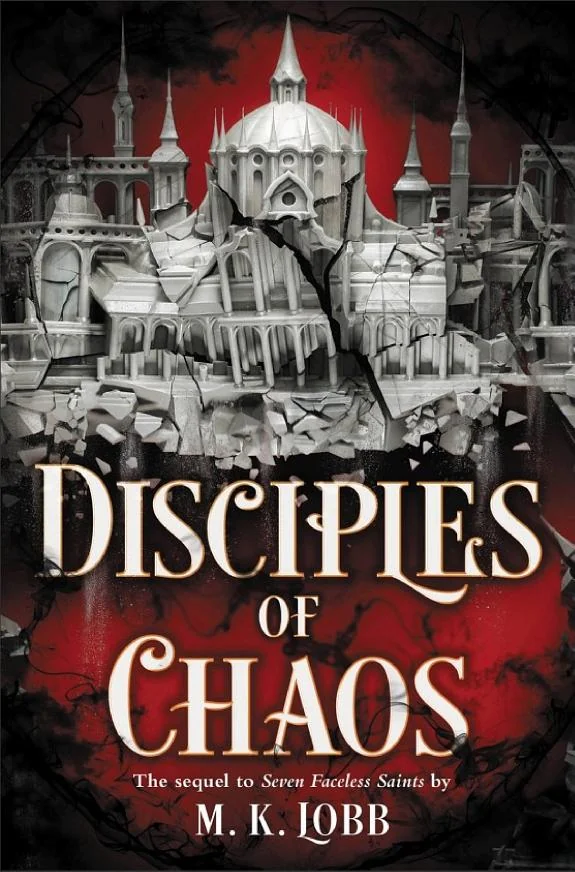
Disciples of Chaos
 78
78

Disciples of Chaos
M.K. Lobb’s *Disciples of Chaos* picks up the threads of its predecessor with an immediate immersion into a world on the precipice. The novel’s strength lies in its unflinching portrayal of Damian’s descent; his struggle with uncontrollable anger is rendered with a visceral quality that avoids easy answers. Lobb excels at depicting the psychological fracturing that accompanies immense pressure, a particularly potent aspect when the Ombrazian power structure itself is unstable. However, the pacing occasionally falters, becoming somewhat bogged down in the machinations of the ongoing war when the more compelling internal conflicts could have been further amplified. A passage where Damian confronts his own reflection, barely recognizing the rage simmering beneath, exemplifies the book’s effective character study. Ultimately, *Disciples of Chaos* is a solid, character-driven continuation that delves into the darker facets of its protagonists’ journeys.
📝 Description
78
M.K. Lobb's 2024 novel, Disciples of Chaos, follows the aftermath of Seven Faceless Saints.
Roz and Damian return in Disciples of Chaos, set against Ombrazian society's decline. A widening war and internal power struggles push the civilization to the edge. The narrative examines the mental strain of conflict and the unpredictable nature of authority. Damian's controlled facade starts to crack under mounting pressure, revealing deeper turmoil.
This dark fantasy novel is written for readers who appreciate morally gray characters and high stakes. Those who enjoy detailed world building, political maneuvering, and close studies of character psychology will find the story engaging. It will appeal to readers who like their fantasy mixed with magic, character development, and fast plots.
Disciples of Chaos emerges within a contemporary dark fantasy trend that questions traditional heroism. The novel examines societal collapse and individual struggles against oppressive systems. Its 2024 publication date places it in a period where complex narratives challenging fantasy conventions are sought after.
💡 Why Read This Book?
• You will gain insight into the psychological cost of leadership during societal upheaval, specifically through Damian’s struggle with his volatile temper, as depicted in the crumbling Ombrazian power structure. • You will explore the tension between predestined roles and personal agency, particularly in how Roz and Damian confront their fates amidst war. • You will experience a nuanced portrayal of character deterioration, moving beyond simplistic good-versus-evil narratives, as seen in Damian’s unraveling facade.
⭐ Reader Reviews
Honest opinions from readers who have explored this book.
❓ Frequently Asked Questions
What is the relationship between *Disciples of Chaos* and *Seven Faceless Saints*?
*Disciples of Chaos* is the direct sequel to *Seven Faceless Saints*. It continues the story of characters Roz and Damian, picking up after the events of the first book and delving deeper into their unfolding destinies as their world faces greater turmoil.
What kind of dark fantasy elements can I expect in *Disciples of Chaos*?
The book features a world on the brink of collapse, intense internal conflict within its characters like Damian's rage, and the backdrop of a worsening war. It explores the psychological toll of power and conflict, aligning with darker fantasy trends.
Is *Disciples of Chaos* suitable for readers new to M.K. Lobb's work?
While it is a sequel, readers new to the series might still find enjoyment if they appreciate character-driven dark fantasy. However, reading *Seven Faceless Saints* first would provide essential context for Roz and Damian's journey and the state of the Ombrazian power structure.
What are the main themes explored in *Disciples of Chaos*?
The novel primarily explores themes of destiny versus free will, the corrupting influence of power, and the psychological impact of war. Damian's internal struggle with rage and the fracturing of his persona are central to these themes.
Who are the main protagonists in *Disciples of Chaos*?
The central protagonists are Roz and Damian. Their intertwined destinies and individual challenges form the core of the narrative as they navigate a collapsing world and a worsening war.
What makes the Ombrazian power structure significant in the book?
The Ombrazian power structure is depicted as fragile and on the verge of collapse due to internal cracks and external pressures from war. Its instability mirrors the personal struggles of the characters, particularly Damian.
🔮 Key Themes & Symbolism
Internalized Conflict
The narrative meticulously details Damian’s internal battle, where suppressed anger and mounting pressure threaten to shatter his composure. This isn't just about external threats; it's about the war waged within the self. The Ombrazian power structure’s instability serves as a backdrop and a catalyst for his psychological unravelling, suggesting that societal collapse often mirrors personal fragmentation. Lobb uses this to explore the dangerous consequences of unchecked emotions when wielded by those in power.
Destiny and Agency
Roz and Damian are presented as figures grappling with predetermined fates, a classic trope in fantasy. However, *Disciples of Chaos* questions the absoluteness of destiny. The crumbling world forces them into situations where their choices, however difficult or morally grey, shape their paths. The book examines whether individuals are merely pawns of fate or if they possess the agency to forge their own way, even when facing overwhelming odds and societal decay.
Societal Collapse
The world-building in *Disciples of Chaos* centers on the disintegration of the Ombrazian power structure. This collapse is not sudden but a gradual process marked by internal cracks and the escalation of war. Lobb portrays this decay as a complex interplay of political maneuvering, rebellion fallout, and the personal failings of its leaders. The crumbling society reflects the characters' own vulnerabilities and the precariousness of order.
The Facade of Power
Damian’s journey is a study in the fragility of the 'facade' he presents to the world. As events escalate and his anger becomes harder to contain, the mask slips, revealing the turmoil beneath. This theme extends to the broader Ombrazian power structure, which also appears to be maintained through artifice rather than solid foundations. The novel questions the sustainability of power built on illusion versus genuine strength or stability.
💬 Memorable Quotes
Direct passages from the work, attributed to the author.
“Damian Venturi isn't aware of it yet, but as small shifts start to crack the foundations of the Ombrazian power structure...”
— This sets up the dual nature of the conflict: external societal destabilization mirrored by internal character development. It foreshadows that the larger world's problems will directly impact and expose Damian's personal vulnerabilities.
“Uncontrollable anger is bubbling to the surface and can't always be pushed down.”
— This directly addresses the volatile nature of Damian's character arc. It highlights his struggle with his own temper, suggesting that his internal emotional landscape is becoming as dangerous and unpredictable as the external war.
“Roz and Damian must face their destiny as the world crumbles around them amidst a worsening war.”
— This highlights the core stakes of the narrative: the protagonists are thrust into confronting their predetermined paths while their environment is in active decay. It emphasizes the epic scale of their struggle against both fate and a disintegrating world.
“The world crumbles around them...”
— This brief but potent phrase conveys the dire state of the setting. It signifies widespread destruction and chaos, setting a grim tone and underscoring the immense pressure under which the characters must operate.
💡 Key Ideas
Editorial paraphrase of the work's core concepts — not direct quotes.
Cracks are beginning to show in Damian's own facade.
This line captures the central internal conflict of the protagonist, Damian. It signals his psychological unravelling and the imminent breakdown of his carefully constructed persona under duress, hinting at the darker impulses bubbling to the surface.
🌙 Esoteric Significance
Tradition
While not explicitly tied to a single esoteric tradition, *Disciples of Chaos* engages with themes common in Western esotericism, particularly the Gnostic concept of a flawed or decaying material world and the struggle against oppressive cosmic forces. The focus on internal psychological battles, the corrupting nature of power, and the concept of hidden destinies can also find parallels in Hermetic and Kabbalistic explorations of the human condition and spiritual ascent/descent.
Symbolism
The 'crumbling power structure' functions as a potent symbol for societal and spiritual decay, common in apocalyptic or Gnostic narratives. Damian’s 'facade' and 'uncontrollable anger' symbolize the shadow self or the repressed primal forces that, when unleashed, can lead to destruction. The 'war' itself can be interpreted as the eternal conflict between opposing forces, both external and internal, reflecting a Manichaean struggle for dominance.
Modern Relevance
Contemporary dark fantasy and grimdark subgenres, which often feature morally ambiguous protagonists and bleak settings, draw heavily on the type of character deconstruction seen in *Disciples of Chaos*. Thinkers and writers exploring the psychology of power, the ethics of leadership in crisis, and the impact of trauma on individual identity find fertile ground in narratives that dissect characters like Damian. The novel's exploration of internal conflict appeals to modern discussions on mental health and the complexities of the human psyche.
👥 Who Should Read This Book
• Fans of dark fantasy and grimdark literature who appreciate morally complex protagonists and high-stakes narratives. • Readers interested in character studies focusing on psychological unraveling and the impact of power and conflict. • Followers of authors like Leigh Bardugo and Kerri Maniscalco seeking intricate world-building and character-driven plots with a darker edge.
📜 Historical Context
Published in 2024, *Disciples of Chaos* arrives at a moment when the dark fantasy genre is flourishing, with authors increasingly drawn to morally grey characters and the exploration of societal breakdown. The early 2020s have seen a consistent demand for narratives that dissect the psychological effects of conflict and the corrupting nature of power, moving away from simplistic heroic archetypes. M.K. Lobb’s work fits within this contemporary trend, offering a detailed look at internal character struggles against a backdrop of political instability. While direct engagement with specific philosophical movements isn't explicit, the themes echo existentialist concerns about choice and responsibility in a chaotic world, a current that has influenced much speculative fiction since the mid-20th century. Reception trends in the early 2020s show a strong reader preference for complex world-building and character-driven plots, which *Disciples of Chaos* aims to deliver.
📔 Journal Prompts
Damian’s fracturing facade and the Ombrazian power structure’s decay.
The protagonists’ confrontation with destiny amidst global collapse.
The nature of uncontrollable anger as a catalyst for change.
Roz and Damian's roles in a world on the brink of war.
The psychological toll of leadership within a crumbling society.
🗂️ Glossary
Ombrazian
Refers to the people, culture, or political entity associated with Ombrazia, the setting for the novel. The 'Ombrazian power structure' specifically denotes its governing and societal framework.
Facade
In the context of Damian's character, this refers to the artificial or outward appearance he presents to others, which is beginning to break down under internal and external pressures.
Rebellion's attack
An event mentioned as having destabilized the Ombrazian power structure, indicating a past conflict that has lasting repercussions within the narrative's present.
Destiny
The predetermined course of events or the fate that Roz and Damian are said to be bound to, which they must confront throughout the story.
Seven Faceless Saints
The title of the preceding novel in the series, indicating the foundational events and character introductions upon which *Disciples of Chaos* builds.
Esoteric
Pertaining to or understood by only a small number of people with a specialized interest. In this context, it refers to mystical, occult, or metaphysical literature.
Internal conflict
A struggle within a character's mind, such as battling conflicting desires or emotions, exemplified by Damian's struggle with anger.
This book appears in 1 collection
🔮 Readers Also Liked
Browse all →


![The book of magickal [sic] and occult rites and ceremonies](/img/thumb/the-book-of-magickal-sic-and-occult-rites-and-ceremonies-richard-dea-morelli.webp)




From the “Chaos Magic” Collection
View all →







More Free Magic & Ritual Books
View all →