Die Traumdeutung

 77
77

Die Traumdeutung
Freud's "Die Traumdeutung" remains a formidable cornerstone of 20th-century thought, despite its age and the evolution of psychological theory. Its strength lies in its rigorous, almost architectural, construction of a new mental paradigm. Freud’s detailed case studies, particularly his own self-analysis, provide compelling, if sometimes self-serving, evidence for his theories. The concept of dream-work, with its mechanisms of condensation and displacement, offers a powerful lens for deconstructing symbolic language, whether in dreams or other cultural expressions. However, the book's limitation is its inherent theoretical bias; concepts like the Oedipus complex are presented as universal truths rather than hypotheses, and alternative interpretations are largely dismissed. The discussion of wish fulfillment as the primary driver of all dreams, while central, can feel reductive when confronted with dreams of anxiety or trauma. Ultimately, "Die Traumdeutung" is less a definitive guide to all dreams and more a foundational argument for the meaningfulness of the unconscious.
📝 Description
77
Sigmund Freud published "Die Traumdeutung" in 1900, arguing dreams fulfill repressed wishes.
Published in 1900, Sigmund Freud's "Die Traumdeutung" presents dreams as disguised wishes, not random events. Freud details how latent thoughts become the manifest content we remember. He proposed that understanding dream mechanisms offers insight into the unconscious mind. The book emerged during a time of significant intellectual change in Vienna, contrasting with prevailing scientific views of the mind. While its initial reception was slow, its ideas eventually spread beyond clinical psychology.
Freud introduced concepts like the unconscious, repression, and wish fulfillment. He described the 'dream-work' processes—condensation, displacement, symbolization, and secondary revision—which alter unconscious material. The Oedipus complex is discussed as a key factor in early sexuality that shapes dreams. The book frames dreams as a primary method for accessing hidden desires and internal conflicts.
While Freud's work is primarily psychological, "Die Traumdeutung" touches on themes resonant with esoteric traditions that seek hidden meanings in symbols and inner experiences. The idea that dreams offer a unique access point to a deeper reality or the subconscious echoes traditions of divination and spiritual interpretation. The focus on uncovering repressed material and hidden desires can be seen as a form of psychological alchemy, transforming the unknown into understanding. This approach aligns with certain mystical philosophies that view the inner world as a complex symbolic system.
💡 Why Read This Book?
• Understand the psychoanalytic framework for dream interpretation, learning about concepts like wish fulfillment and condensation as articulated by Freud in the early 20th century. • Gain insight into the historical development of psychology by examining Freud's foundational work, published in 1900, which challenged prevailing scientific and philosophical views of the mind. • Explore Freud's method of dream analysis, including the distinction between manifest and latent content, and how he proposed dreams served as a 'royal road' to the unconscious.
⭐ Reader Reviews
Honest opinions from readers who have explored this book.
❓ Frequently Asked Questions
When was Sigmund Freud's 'Die Traumdeutung' first published?
'Die Traumdeutung' by Sigmund Freud was first published in 1900, marking a significant moment in the development of psychoanalytic theory.
What is the central thesis of Freud's 'The Interpretation of Dreams'?
The central thesis is that dreams are disguised fulfillments of repressed wishes, serving as a 'royal road' to understanding the unconscious mind and its hidden desires.
What are the main mechanisms of dream-work according to Freud?
Freud identified four primary mechanisms of dream-work: condensation (combining elements), displacement (shifting significance), symbolization (representing ideas with images), and secondary revision (organizing the dream narrative).
Is 'Die Traumdeutung' still relevant today for understanding dreams?
While many of Freud's specific interpretations are debated, the work remains crucial for understanding the history of psychology and the concept of the unconscious, influencing subsequent dream analysis methods.
Who was Sigmund Freud?
Sigmund Freud (1856-1939) was an Austrian neurologist and the founder of psychoanalysis, a clinical method for treating psychopathology through dialogue between a patient and a psychoanalyst.
What does Freud mean by 'wish fulfillment' in dreams?
Freud proposed that the primary function of dreams is to satisfy repressed wishes, often from childhood, which are too unacceptable to be conscious and are therefore disguised within the dream content.
🔮 Key Themes & Symbolism
The Unconscious Mind
Freud posits that the majority of our mental life occurs outside conscious awareness. 'Die Traumdeutung' presents dreams as the primary method for accessing this hidden realm. The unconscious is depicted not as a void, but as a dynamic space filled with repressed desires, memories, and conflicts that actively shape our waking behavior and inner life.
Wish Fulfillment
A core part of Freudian dream theory, wish fulfillment suggests that dreams serve to satisfy unconscious desires, often those deemed unacceptable by the conscious mind or societal norms. These wishes are disguised through various psychological mechanisms to allow them passage into the dream state without waking the dreamer.
Dream-Work Mechanisms
Freud meticulously details the processes by which latent dream thoughts are transformed into manifest dream content. These include condensation, where multiple ideas are merged into a single image; displacement, where emotional significance is shifted from a central issue to a peripheral one; and symbolization, where abstract concepts are represented by concrete images.
Symbolism and Interpretation
The book explores the symbolic nature of dream imagery, suggesting that many dream elements represent universal or personal symbols for repressed concepts, particularly those related to sexuality and bodily functions. Freud's approach provides a framework for interpreting these symbols to reveal underlying unconscious meanings.
💬 Memorable Quotes
Direct passages from the work, attributed to the author.
“The interpretation of dreams is the royal road to a knowledge of the unconscious activities of the mind.”
— This statement expresses Freud's core argument: that dreams are not random but a structured, meaningful phenomenon offering outstanding access to the hidden workings of the psyche.
“A wish is directly fulfilled in a dream.”
— This highlights the central tenet of wish fulfillment, suggesting that the primary function of dreams is to satisfy repressed desires, albeit often in a disguised manner.
“The dream-work consists in the process by which the latent content of a dream is, by the dream-work, converted into the manifest content.”
— This defines the crucial concept of dream-work, outlining the psychological transformations that alter unconscious material into the dream narrative we experience.
“The dream is a substitute for the repressed wish.”
— This interpretation emphasizes the compensatory role of dreams, acting as a coded expression or fulfillment for desires that are kept from conscious awareness.
💡 Key Ideas
Editorial paraphrase of the work's core concepts — not direct quotes.
We are accustomed to say that a man is at his best when he has no wishes to fulfill.
This quote serves as a counterpoint, implicitly suggesting that the presence of wishes, particularly repressed ones, is fundamental to human psychology and manifest in dreams.
🌙 Esoteric Significance
Tradition
While Freud was a physician and scientist, "Die Traumdeutung" has been adopted and reinterpreted within various esoteric traditions. Its emphasis on hidden meanings, symbolic language, and the exploration of non-ordinary states of consciousness aligns with Hermetic principles of correspondence and the idea that "as above, so below." The uncovering of the unconscious speaks to Gnostic quests for hidden knowledge and the illumination of the soul.
Symbolism
Freud's analysis of dream symbols, such as water representing birth or the womb, or serpents symbolizing phallic desire, can be mapped onto older symbolic systems. While Freud offered clinical interpretations, esoteric practitioners might view these symbols as archetypal images carrying broader spiritual or alchemical significance, linking personal unconscious content to universal archetypes.
Modern Relevance
Contemporary depth psychology, Jungian analysis, and various forms of psychotherapy continue to draw upon Freudian dream interpretation. Esoteric practitioners in fields like ritual magic, astrology, and modern occultism often integrate Freudian concepts of the unconscious and dream symbolism into their practices, viewing them as tools for self-discovery and spiritual development.
👥 Who Should Read This Book
• Individuals seeking to understand the foundational principles of psychoanalysis and its historical impact on the study of the mind. • Scholars of psychology, philosophy, and cultural studies interested in the theoretical underpinnings of Freud's work and its influence on 20th-century thought. • Those interested in self-exploration and the interpretation of dreams, seeking a systematic, albeit clinical, approach to uncovering unconscious material.
📜 Historical Context
Sigmund Freud's "Die Traumdeutung" (The Interpretation of Dreams) emerged in 1900, an important year that marked the dawn of a new century and a radical shift in understanding the human mind. The intellectual climate in Vienna was vibrant, influenced by philosophy, literature, and burgeoning scientific inquiry. Freud’s work offered a stark contrast to the prevailing mechanistic and biological explanations of the brain, proposing instead a complex psychic apparatus driven by unconscious forces. It challenged the rationalist tradition and provided a compelling alternative to spiritual or purely neurological accounts of mental life. Competing schools of thought included the neurological approaches of physicians like Jean-Martin Charcot, whom Freud had studied under, and later, figures like Carl Jung who would diverge from Freudian orthodoxy. The book's initial reception was cautious, with many critics struggling to accept its focus on repressed sexuality and the irrationality of the unconscious, yet its influence grew exponentially, profoundly impacting psychology, art, and literature throughout the 20th century.
📔 Journal Prompts
The latent content behind the manifest dream narrative.
Freud's concept of the 'royal road' to the unconscious.
The role of wish fulfillment in a specific dream experience.
Condensation and displacement within a recalled dream.
The transformation of repressed desires into dream imagery.
🗂️ Glossary
Manifest Content
The actual storyline and imagery of a dream as remembered by the dreamer, representing the disguised form of the latent content.
Latent Content
The hidden, underlying meaning of a dream, consisting of unconscious wishes, thoughts, and desires that are transformed into the manifest content.
Dream-Work
The psychological processes (condensation, displacement, symbolization, secondary revision) that transform latent dream content into manifest dream content.
Condensation
A dream-work mechanism where multiple ideas, thoughts, or images are combined into a single, often complex, dream element.
Displacement
A dream-work mechanism where the emotional significance of an idea or image is shifted from its original context to a less important one.
Repression
The psychological process of pushing unacceptable or distressing thoughts, memories, or desires out of conscious awareness into the unconscious.
Wish Fulfillment
The theory that the primary purpose of dreams is to satisfy repressed wishes, often originating in childhood, in a disguised form.
🔮 Readers Also Liked
Browse all →









More by Sigmund Freud
All books →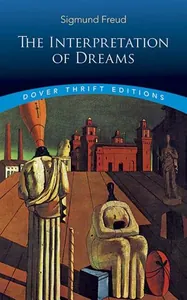





More Free Occult Philosophy Books
View all →