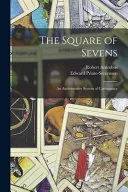
The Square of Sevens; an Authoritative System of Cartomancy
 72
72

The Square of Sevens; an Authoritative System of Cartomancy
The meticulous structure presented in *The Square of Sevens* is its most striking feature. Antrobus and Prime-Stevenson don't just offer interpretations; they provide a veritable engine for generating them, based on a grid of seven rows and seven columns. This systematic rigor, particularly the detailed breakdown of card meanings within the 'Square of Sevens' layout, is a significant departure from more generalized cartomancy guides. One finds great value in their detailed exposition of how each card interacts with its neighbors within this specific arrangement. However, the work's limitation lies in its sheer density. For newcomers, the intricate rules and specific assignments might feel overwhelming, demanding significant dedication to master. The emphasis on the 'Square' itself, while unique, can occasionally overshadow broader archetypal meanings of the cards, presenting a somewhat rigid interpretive framework. Nevertheless, for practitioners seeking a disciplined, almost algorithmic approach to card reading, *The Square of Sevens* offers a compelling, albeit demanding, methodology.
📝 Description
72
Published in 1868, The Square of Sevens codified a structured method for playing card divination.
The Square of Sevens presents a systematic approach to cartomancy, moving beyond simple intuition to establish a clear framework for interpreting playing cards. This method emphasizes reproducible results through a specific arrangement and set of interpretive rules.
This work is intended for students of cartomancy and esoteric systems who appreciate historical occult literature. It is particularly useful for those interested in understanding the mechanics of card divination as practiced by specific historical groups and the symbolic meanings assigned to standard playing cards.
The system detailed in this book focuses on a unique layout called the 'Square of Sevens.' This arrangement dictates card placement, and the relationships between cards generate meaning. It assigns specific significations to suits, numbers, and court cards within this structured context.
The Square of Sevens emerged from a late 19th-century movement to systematize divinatory practices. Authors like Robert Antrobus and Edward Prime-Stevenson sought to create a more structured form of cartomancy, influenced by contemporary occult revival trends. This effort aimed to establish a 'science' of divination, drawing parallels with organized magical systems of the time and codifying previously fluid methods into a defined framework.
💡 Why Read This Book?
• Learn a distinct cartomantic system centered on the 'Square of Sevens' layout, providing a structured alternative to intuitive methods. • Understand the specific symbolic assignments given to playing cards within this system, deepening your appreciation for the esoteric potential of standard decks. • Gain insight into late 19th/early 20th-century occultism's drive to codify divinatory practices, as exemplified by the work of Antrobus and Prime-Stevenson.
⭐ Reader Reviews
Honest opinions from readers who have explored this book.
❓ Frequently Asked Questions
What is the 'Square of Sevens' method in cartomancy?
The 'Square of Sevens' is a specific cartomantic system detailed in the book, employing a seven-by-seven grid layout. This arrangement dictates how playing cards are placed and interpreted in relation to each other, forming a structured divination technique.
Is this book about Tarot cards?
No, *The Square of Sevens* primarily focuses on divination using a standard deck of 52 playing cards, not Tarot. It assigns esoteric meanings to the suits, numbers, and court cards of a regular deck.
Who were Robert Antrobus and Edward Prime-Stevenson?
Robert Antrobus and Edward Prime-Stevenson were authors who contributed to esoteric literature, particularly in the field of cartomancy. This work presents their systematic approach to card reading.
When was *The Square of Sevens* originally published?
While this edition was published on September 10, 2021, the original conceptualization and material likely stem from the late 19th or early 20th century, a period of significant occult revival in Europe.
Can I use this book for casual card readings?
The book offers a highly systematic and detailed method, best suited for dedicated study. While its principles can inform casual readings, its strength lies in its structured approach for serious practitioners.
Is this book in the public domain?
Yes, the original work is in the public domain in the United States, meaning it can be freely copied and distributed. This edition makes it accessible to a new generation of readers.
🔮 Key Themes & Symbolism
Systematic Cartomancy
The book champions a highly structured method for card divination, moving away from purely intuitive readings. It details a specific seven-by-seven grid ('The Square of Sevens') where each card's position and relation to others generates meaning. This approach aims for consistency and a codified understanding of how playing cards can be used for divination, emphasizing the mechanical aspect of the reading process over subjective interpretation alone.
Playing Card Esotericism
Unlike many texts focusing on Tarot, *The Square of Sevens* examines the esoteric potential of a standard 52-card deck. It assigns specific symbolic meanings to each card—suits, numbers, and court figures—within the context of its unique layout. This reveals an often-overlooked layer of symbolism inherent in everyday playing cards, treating them as potent divinatory tools.
The 'Square of Sevens' Layout
The central organizing principle of the book is the 'Square of Sevens' itself. This geometrical arrangement is not merely a spread but a framework that dictates the interpretive dynamics. The book meticulously explains how to construct and read this square, illustrating how the interplay of cards within this specific grid provides a comprehensive narrative or answer.
Codification of Divination
The work reflects a broader trend in late 19th and early 20th-century occultism: the desire to systematize and 'scientificize' divinatory practices. Antrobus and Prime-Stevenson sought to establish clear rules and methodologies, making cartomancy accessible through logical application rather than solely relying on innate psychic ability, thereby creating a teachable system.
💬 Memorable Quotes
Direct passages from the work, attributed to the author.
“The method of using the common pack of fifty-two cards for divination is founded upon a system of seventy-seven readings.”
— This highlights the core claim of the book: that a comprehensive divinatory system can be built upon a standard deck of cards, specifically through a structured method involving 77 distinct interpretive points within its unique layout.
“The Kings, Queens, and Knaves, apart from their general meanings, are figures which may represent persons.”
— This points to the dual nature of court cards in the system: they possess inherent symbolic meanings but can also represent specific individuals or types of people within a reading.
“The Square of Sevens provides a comprehensive divination by the careful arrangement and study of the cards.”
— This interpretation underscores the book's central thesis: that thorough divination is achieved not through haphazard methods, but through the precise 'arrangement and study' dictated by the Square of Sevens framework.
💡 Key Ideas
Editorial paraphrase of the work's core concepts — not direct quotes.
Each card has its significations, and these are modified by the positions occupied and the cards surrounding it.
This paraphrase emphasizes the relational aspect of interpretation within the Square of Sevens. It's not just the card itself, but its context within the grid that determines its meaning, showcasing the system's complexity.
The Hearts represent the affections, and the Diamonds the material world.
This paraphrased concept illustrates the basic correspondences assigned to suits. It shows how the system grounds abstract concepts in concrete elements, providing a foundation for interpreting spreads.
🌙 Esoteric Significance
Tradition
This work fits within the Hermetic and broader Western Esoteric tradition, particularly its late 19th/early 20th-century manifestation focused on codifying magical and divinatory arts. It shares with systems like the Golden Dawn's approach a desire for structured correspondences and symbolic interpretation, applying it specifically to the common playing card deck rather than Tarot or other specialized systems.
Symbolism
The primary symbolism revolves around the playing cards themselves, with suits (Hearts for emotions, Diamonds for material world, etc.) and numbers carrying specific meanings. The 'Square of Sevens' layout is itself a symbolic structure, potentially referencing numerological significance (7) and geometric order, creating a microcosmic map for divinatory interpretation.
Modern Relevance
Contemporary practitioners interested in alternative divination methods, particularly those who find Tarot overwhelming or seek a more structured approach, can find value in *The Square of Sevens*. It informs modern cartomancy and esoteric studies by providing a historical example of systematic card interpretation and the esoteric potential of everyday objects.
👥 Who Should Read This Book
• Students of Western Esotericism interested in the historical development of divinatory systems beyond Tarot. • Cartomancers seeking to expand their repertoire with a structured, rule-based method for reading playing cards. • Researchers of occult history focusing on the late 19th and early 20th centuries' systematic approaches to divination and symbolic interpretation.
📜 Historical Context
Emerging from the fertile ground of the late 19th and early 20th-century occult revival, *The Square of Sevens* by Robert Antrobus and Edward Prime-Stevenson represents a concerted effort to systematize the art of cartomancy. This era, heavily influenced by figures like Eliphas Lévi and the burgeoning Theosophical Society, saw a proliferation of texts aiming to decode esoteric knowledge. Many sought to create structured systems, often drawing parallels between Tarot, Kabbalah, and astrology. While contemporaries like Arthur Edward Waite were revolutionizing Tarot with his Rider-Waite deck and accompanying book (1909), Antrobus and Prime-Stevenson focused on a different, yet equally rigorous, approach using standard playing cards. Their work exemplifies the period's drive to establish clear, reproducible methods for divination, moving the practice from a potentially nebulous art towards a more defined discipline, possibly as a response to skepticism or a desire for greater accessibility.
📔 Journal Prompts
The symbolism of the Diamonds suit within the Square of Sevens.
How the 'Square of Sevens' layout influences card interpretation compared to other spreads.
The role of court cards as persons versus symbolic meanings in this system.
Applying the system's principles to a specific question about material concerns.
The historical context of codifying divination practices in the era of Antrobus and Prime-Stevenson.
🗂️ Glossary
Cartomancy
The practice of divination using a deck of cards, typically playing cards or Tarot cards, to gain insight into the past, present, or future.
The Square of Sevens
The specific seven-by-seven grid layout and interpretive system detailed in this book for divining with playing cards.
Significations
The specific meanings or interpretations assigned to individual cards or symbols within a divinatory system.
Court Cards
The King, Queen, and Knave (or Jack) cards within a standard playing card deck, which often have both symbolic and person-representing roles in readings.
Suits
The four divisions of a standard playing card deck (Hearts, Diamonds, Clubs, Spades), each typically associated with specific elements or areas of life.
Divination
The practice of seeking knowledge of the future or the unknown by supernatural means or by interpreting omens.
Esotericism
Belief systems, spiritual practices, and philosophical traditions concerned with hidden knowledge, inner transformation, and the divine.