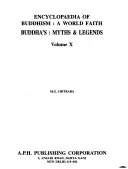
Vol. X-Buddha : Maths & Legends
 79
79

Vol. X-Buddha : Maths & Legends
M. G. Chitkara’s Vol. X-Buddha: Maths & Legends presents a bold, if at times uneven, attempt to bridge the seemingly disparate worlds of Buddhist thought and mathematical logic. The work shines when it meticulously dissects the structural similarities between the concept of Shunyata and abstract mathematical axioms, offering a novel perspective on Buddhist metaphysics. However, the integration of 'legends' feels less consistently rigorous; while the intent to find underlying order in narrative is clear, the connections sometimes strain credulity, particularly in the sections discussing early monastic rules as direct mathematical models. A standout section explores the cyclical nature of time as presented in certain Buddhist cosmologies and its echo in mathematical sequences. Despite its occasional leaps, the book provides a valuable, albeit specialized, lens for understanding the intellectual architecture of Buddhist traditions. It's a challenging but rewarding read for those prepared for its unconventional approach.
📝 Description
79
M. G. Chitkara's 1999 volume examines the connection between Buddhist philosophy and mathematical thought.
Vol. X-Buddha: Maths & Legends analyzes the relationship between Buddhist philosophy, mathematics, and historical accounts. Published in 1999, the book moves beyond simple biography to look at the logical structures that may have influenced early Buddhist ideas and how they spread. It is for students of comparative religion, the philosophy of mathematics, and Buddhist studies who want to understand the intellectual basis of spiritual traditions. The book considers how abstract reasoning and narrative coherence may have shaped Buddhist doctrines and practices.
Chitkara's work appeared in the late 20th century, a time of growing academic interest in how ideas moved across cultures, particularly from East to West. Scholars were seeking rational and structural ways to study religious traditions, rather than just devotional or anthropological views. This book adds to a larger academic discussion from the mid-20th century that looked at universal aspects of human thought and expression.
This volume engages with the esoteric dimensions of Buddhism by investigating the potential rational and structural underpinnings of its philosophical and narrative traditions. It connects concepts like Shunyata, or emptiness, to abstract mathematical thought and examines the logical architecture within monastic codes and debates. By analyzing legendary accounts of the Buddha's life through the lens of symbolic mathematics and cosmology, the book seeks to illuminate the formation of the Buddhist canon as a system with inherent intellectual coherence, rather than solely as a collection of devotional stories.
💡 Why Read This Book?
• Gain an understanding of how abstract mathematical principles might inform Buddhist philosophical concepts like Shunyata, offering a unique analytical framework not typically found in introductory Buddhist texts. • Explore the historical narrative of Buddhist legend formation, specifically how Chitkara posits that mathematical or logical structures could have influenced the stories told about the Buddha's life, as detailed in the book's analysis of narrative coherence. • Appreciate the intellectual currents of the late 20th century that sought to find rational and structural parallels across diverse fields, as exemplified by this book's approach to integrating mathematics, legend, and Buddhist philosophy.
⭐ Reader Reviews
Honest opinions from readers who have explored this book.
❓ Frequently Asked Questions
What is the primary focus of Vol. X-Buddha: Maths & Legends?
The book primarily focuses on exploring the potential connections between Buddhist philosophy, mathematical concepts, and the structure of legends associated with Buddhism. It seeks to analyze the logical and structural underpinnings of Buddhist thought and its narratives.
Who is M. G. Chitkara and when was this book first published?
M. G. Chitkara is the author of Vol. X-Buddha: Maths & Legends, which was first published in 1999. The author's work often engages with religious and philosophical traditions from an analytical perspective.
Does the book present mathematical formulas related to Buddha?
The book does not present direct mathematical formulas attributed to Buddha. Instead, it explores abstract parallels and structural similarities between mathematical logic and Buddhist philosophical concepts such as Shunyata and the organization of narratives.
What is the 'esoteric' angle of this book?
Its esoteric nature lies in its unconventional approach to understanding a major world religion. It suggests hidden structural or logical frameworks within Buddhist philosophy and narratives, moving beyond conventional religious studies to explore intellectual architecture.
Is this book suitable for beginners in Buddhist studies?
While accessible to those with some background, the book's analytical and interdisciplinary approach makes it more suited for advanced students or scholars of comparative religion, philosophy, and Buddhist studies who are interested in rigorous intellectual inquiry.
What kind of legends are discussed in the book?
The book discusses legends related to the life of the Buddha and the development of Buddhist traditions. It analyzes these narratives not just as stories, but as potentially structured by underlying logical or mathematical concepts.
🔮 Key Themes & Symbolism
Shunyata and Mathematical Abstraction
The work examines the concept of Shunyata (emptiness) within Mahayana Buddhism and draws parallels with abstract principles found in mathematics. It explores how the logical negation and conceptual void inherent in mathematical axioms might mirror the philosophical 'emptiness' that negates inherent existence in Buddhist thought. This comparison offers a framework for understanding Buddhist metaphysics through a lens of formal logic, suggesting that the intellectual architecture supporting these ideas shares common ground with abstract reasoning.
Narrative Structure in Buddhist Legends
Chitkara analyzes the legendary accounts surrounding the Buddha and early Buddhism not merely as historical or devotional narratives, but as potentially structured by underlying logical or mathematical frameworks. The focus is on how recurring patterns, symbolic representations, and sequential elements within these stories might reflect a deliberate construction, possibly influenced by an understanding of order and proportion akin to mathematical principles.
Comparative Intellectual Frameworks
This theme centers on identifying shared modes of thought across disparate disciplines. The book posits that the human mind, when grappling with profound questions about existence, reality, and the cosmos, may employ similar logical structures whether approaching them through philosophy, mathematics, or the crafting of foundational myths and legends. It seeks to uncover universal patterns in intellectual inquiry.
The Buddha as an Intellectual Figure
Beyond the spiritual icon, the work explores the intellectual dimension of the Buddha and early Buddhist tradition. It treats the teachings and narratives as products of sophisticated reasoning, suggesting that the development of doctrines and the composition of foundational stories were informed by a deep engagement with logic, structure, and conceptual analysis, rather than solely by spiritual revelation.
💬 Memorable Quotes
Direct passages from the work, attributed to the author.
“Legends often encode conceptual frameworks, not just historical events.”
— This interpretation points to the book's analytical approach to Buddhist narratives. It suggests that the stories of the Buddha and his followers may have been intentionally constructed to convey complex philosophical or logical ideas, serving as vehicles for abstract thought.
“Order in narrative can reflect an underlying mathematical or logical order.”
— This idea underscores the book's methodology. It proposes that the coherence, symmetry, and sequential progression found within religious stories are not accidental but may stem from an application of principles similar to those governing mathematical systems.
“Early Buddhist monastic rules exhibit structural coherence suggestive of logical design.”
— This statement implies that the Vinaya (monastic code) is examined not just for its ethical or practical guidance, but for its internal logic and systematic organization, which the book suggests bears resemblance to formal logical structures.
💡 Key Ideas
Editorial paraphrase of the work's core concepts — not direct quotes.
The void of Shunyata finds echoes in the abstract negation central to mathematical axioms.
This paraphrased concept highlights the book's core thesis: that the Buddhist notion of 'emptiness' or lack of inherent existence can be understood through the logical structure of mathematical 'zero' or negation, suggesting a shared intellectual foundation.
The transmission of Buddhist thought involved the shaping of ideas within intellectual paradigms.
This paraphrase emphasizes the historical and intellectual context of Buddhism. It suggests that the evolution and spread of Buddhist teachings were influenced by the prevailing intellectual currents and logical frameworks available or developed within different cultures.
🌙 Esoteric Significance
Tradition
While not strictly aligned with a single Western esoteric lineage like Hermeticism or Kabbalah, this work engages with a form of intellectual esotericism. It seeks hidden structures and underlying rational principles within a major world religion, treating its philosophical concepts and narratives as coded expressions of abstract thought. This aligns with esoteric traditions that look for deeper, often mathematical or geometric, correspondences in the manifest world and its doctrines.
Symbolism
The concept of Shunyata (emptiness) serves as a primary symbolic element, representing not a nihilistic void but a state of ultimate reality beyond conceptualization, akin to mathematical unknowns or the foundational nature of zero. Mathematical principles themselves, particularly logic and structure, function symbolically, representing universal order and the potential for rational apprehension of profound truths, even within spiritual traditions.
Modern Relevance
Contemporary thinkers exploring the intersection of consciousness, information theory, and spirituality might find traces of Chitkara's approach. Researchers in artificial intelligence and cognitive science who analyze the logical structures of belief systems could also draw upon this work's methodology. The book's emphasis on finding universal logical patterns speaks to modern quests for unified theories or cross-disciplinary understanding in both scientific and spiritual inquiry.
👥 Who Should Read This Book
• Advanced students of Buddhist philosophy: Those seeking to understand the intellectual architecture and logical underpinnings of concepts like Shunyata beyond traditional exegesis. • Scholars of comparative religion and intellectual history: Researchers interested in interdisciplinary analyses of how abstract thought, logic, and narrative intertwine across different cultural and philosophical traditions. • Philosophers of mathematics and logic: Individuals intrigued by the potential application of formal reasoning and structural analysis to non-mathematical domains, particularly religious and mythic discourse.
📜 Historical Context
Published in 1999, Vol. X-Buddha: Maths & Legends emerged within a late 20th-century academic landscape increasingly interested in interdisciplinary approaches to religion and philosophy. Scholars were actively exploring structuralism and post-structuralism, seeking underlying patterns in texts and traditions. This era saw a significant increase in the academic study of Buddhism, moving beyond purely theological or anthropological lenses. Chitkara's work can be seen as engaging with, and perhaps reacting against, purely devotional interpretations, pushing towards a more analytical understanding. Contemporaries like Wendy Doniger were exploring mythology and narrative in religion through comparative lenses, though often with different methodologies. The book's focus on mathematical logic as a framework for understanding religious thought was a less common, though not entirely unprecedented, avenue compared to the more established fields of Buddhist philosophy or history.
📔 Journal Prompts
The structural similarities between Shunyata and mathematical axioms: what parallels emerge in your contemplation?
Analyze a Buddhist legend for potential underlying logical or mathematical encoding.
How does the concept of 'emptiness' function in your personal understanding of reality?
Reflect on the role of abstract logic in shaping spiritual or philosophical beliefs.
Consider the narrative structure of a foundational myth from any tradition: what order is revealed?
🗂️ Glossary
Shunyata
A central concept in Mahayana Buddhism, often translated as 'emptiness' or 'voidness.' It refers to the doctrine that all phenomena lack inherent existence or self-nature, being dependently originated.
Mahayana Buddhism
One of the two major branches of Buddhism (the other being Theravada). Mahayana emphasizes the Bodhisattva ideal and the concept of emptiness (Shunyata) as central to its philosophy.
Axiom
A statement or proposition that is regarded as being established, accepted, or self-evidently true, forming the basis for reasoning or argument, particularly in mathematics and logic.
Vinaya
The monastic discipline or code of conduct for Buddhist monks and nuns. It outlines the rules and regulations for monastic life within the sangha.
Dependent Origination (Pratītyasamutpāda)
A core Buddhist teaching explaining the causal network through which phenomena arise and cease. It asserts that all conditioned things arise in dependence upon other things.
Hagiography
The writing of the lives of saints or revered figures. In the context of religion, it often focuses on miraculous deeds and exemplary conduct.
Cosmology
The study of the origin, evolution, and eventual fate of the universe. In religious contexts, it often includes mythological and theological explanations of the structure of the cosmos.
This book appears in 1 collection
🔮 Readers Also Liked
Browse all →









From the “Nature Spirits” Collection
View all →







More Free Occult Philosophy Books
View all →