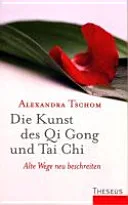
Die Kunst des Qi Gong und Tai Chi
 80
80

Die Kunst des Qi Gong und Tai Chi
Alexandra Tschom’s Die Kunst des Qi Gong und Tai Chi presents a structured approach to practices often shrouded in mystique. Her clear delineation of Qi Gong’s foundational exercises and Tai Chi’s flowing sequences offers a practical entry point. A notable strength lies in the book’s detailed anatomical and energetic explanations for specific movements, such as the subtle shifts in weight distribution during the 'Cloud Hands' transition in Tai Chi, which Tschom links directly to the stimulation of specific acupuncture meridians. However, the initial chapters, while informative, could benefit from more diverse historical accounts beyond the standard lineage narratives. The work is most effective when dissecting the mechanics of a form or exercise, providing a clear, critical perspective on the physical and energetic mechanics involved. It serves as a solid reference for dedicated students seeking clarity on the 'how' and 'why' of these disciplines.
📝 Description
80
Alexandra Tschom's 2001 book, Die Kunst des Qi Gong und Tai Chi, details the underlying principles of these ancient Chinese practices.
Alexandra Tschom's Die Kunst des Qi Gong und Tai Chi examines the core principles and methodologies of Qi Gong and Tai Chi, moving beyond simple introductions. The text details specific exercises, their effects on the body and energy, and how to incorporate them into a comprehensive health practice. It is written for practitioners who want a deeper understanding of these arts, including those interested in their philosophical and energetic aspects. Students of traditional Chinese medicine, bodywork therapists, and individuals pursuing self-cultivation will find value here. The book also addresses readers who have encountered these disciplines and wish to grasp their historical and theoretical foundations. Tschom traces the development of Qi Gong and Tai Chi from ancient Taoist roots to their contemporary forms, acknowledging their adaptation and preservation through dynasties and cultural changes. This historical context explains their lasting appeal and impact. The work systematically explains key concepts such as the flow of Qi, or vital energy, through meridians, the significance of deliberate movement, and the integration of breath and intent. Specific postures and sequences are analyzed for their energetic and therapeutic advantages, connecting physical actions to internal awareness and energy flow.
This book situates Qi Gong and Tai Chi within the broader tradition of Taoist internal alchemy and cultivation practices. It addresses the energetic body, the circulation of vital force (Qi), and the connection between physical form, breath, and mental focus. These principles are fundamental to many East Asian contemplative and martial traditions that seek to harmonize the individual with natural forces and promote longevity and well-being. The emphasis on internal states and energetic dynamics aligns with esoteric understandings of human potential and the subtle energies that govern life.
💡 Why Read This Book?
• Gain a precise understanding of the energetic pathways (meridians) and how specific Qi Gong postures, like the 'Eight Brocades' (Ba Duan Jin), are designed to stimulate them, offering a distinct physiological insight. • Learn the foundational principles of Tai Chi movement, such as the concept of 'song' (loosening) and how it facilitates the unimpeded flow of Qi, a practical application not always emphasized. • Understand the historical development of these practices, including their roots in Taoist philosophy, providing a contextual framework distinct from contemporary interpretations.
⭐ Reader Reviews
Honest opinions from readers who have explored this book.
❓ Frequently Asked Questions
What is the original publication year of Die Kunst des Qi Gong und Tai Chi?
Die Kunst des Qi Gong und Tai Chi was first published in 2012, offering a comprehensive guide to these ancient Chinese practices.
Who is the author of Die Kunst des Qi Gong und Tai Chi?
The author is Alexandra Tschom, who first published this work in 2012, providing detailed insights into Qi Gong and Tai Chi.
What are the primary subjects covered in this book?
The book primarily covers the art and practice of Qi Gong and Tai Chi, exploring their principles, movements, and energetic effects.
Is the book suitable for absolute beginners?
While it covers fundamentals, the book delves into deeper principles and historical context, making it particularly valuable for those with some prior exposure or a strong desire for in-depth study.
What distinguishes this book from other guides on Qi Gong and Tai Chi?
Its strength lies in its systematic approach, detailed explanations of energetic mechanics, and historical contextualization, moving beyond introductory techniques to a more analytical understanding.
Does the book explain specific Qi Gong forms?
Yes, the book details specific Qi Gong exercises and Tai Chi movements, analyzing their physiological and energetic impacts.
🔮 Key Themes & Symbolism
Qi and Meridian Theory
The work meticulously details the concept of Qi, or vital energy, as understood in traditional Chinese medicine. It illustrates how Qi Gong and Tai Chi exercises are designed to cultivate, circulate, and balance this energy within the body's intricate network of meridians. The text explains that blockages or deficiencies in Qi flow are often the root of imbalance and discomfort, and that specific movements and breathwork techniques aim to restore optimal circulation. This understanding forms the energetic bedrock of the practices discussed.
Mindful Movement and Intention
Central to both Qi Gong and Tai Chi is the cultivation of mindful awareness. The book emphasizes that these are not merely physical exercises but practices of integrated mind-body consciousness. It explores how directed intention, coupled with precise, fluid movements, can profoundly influence internal states and energetic states. The deliberate pacing and focus required in practices like the Tai Chi 'push hands' drills are presented as methods for developing sensitivity and internal coherence.
Holistic Health and Self-Cultivation
Die Kunst des Qi Gong und Tai Chi presents these disciplines as pathways to comprehensive well-being, encompassing physical vitality, mental clarity, and emotional equilibrium. The book frames the practices not just as therapeutic interventions but as integral components of a broader philosophy of self-cultivation. By harmonizing the body's energy, practitioners can achieve greater resilience, longevity, and a deeper connection to their inner nature, reflecting ancient Taoist ideals of living in accordance with natural principles.
Historical Lineage and Evolution
The text provides a contextual overview of Qi Gong and Tai Chi, tracing their origins and evolution through centuries of Chinese history. It acknowledges that these practices have diverse roots, often intertwined with Taoist philosophy, traditional Chinese medicine, and martial arts. The book highlights how different styles and forms emerged and were transmitted, underscoring the importance of understanding this lineage to appreciate the depth and nuances of the practices as they exist today.
💬 Memorable Quotes
Direct passages from the work, attributed to the author.
“The deliberate coordination of breath, movement, and focus is key to activating the body's inherent energetic potential.”
— This statement underscores the integrated nature of Qi Gong and Tai Chi, highlighting that true efficacy arises from the synchronized application of physical action, respiratory control, and mental concentration.
“The principle of 'song' in Tai Chi allows for yielding and redirection, essential for both martial application and energetic harmony.”
— This highlights a core Tai Chi concept, 'song' (loosening or relaxation), explaining its dual role in physical defense and the unimpeded circulation of vital energy within the practitioner.
“Specific postures in Qi Gong are designed to target and stimulate the energetic centers and pathways within the body.”
— This highlights the intentional design of Qi Gong exercises, emphasizing that each movement serves a specific purpose in influencing the body's subtle energy systems.
💡 Key Ideas
Editorial paraphrase of the work's core concepts — not direct quotes.
Understanding the flow of Qi through the meridians provides a map for energetic balance and therapeutic intervention.
This paraphrase points to the diagnostic and practical application of traditional Chinese energetic concepts, suggesting that knowledge of the meridian system is crucial for both understanding health and guiding healing practices.
Authentic practice requires patience and consistent effort, fostering internal development over time.
This paraphrase speaks to the long-term commitment needed for mastery in these arts, focusing on the gradual internal transformation that comes from sustained practice rather than quick results.
🌙 Esoteric Significance
Tradition
This work draws heavily from Taoist traditions, specifically in its exploration of Qi (vital energy) and the concept of cultivating internal harmony. It aligns with Neidan (inner alchemy) principles by focusing on transforming physical and energetic states to achieve balance and longevity. While not strictly a religious text, it interprets ancient practices through a lens that emphasizes energetic cultivation, a hallmark of many esoteric paths seeking to understand and influence the subtle domains of existence.
Symbolism
Key symbols include the Yin-Yang duality, representing the balance of opposing forces fundamental to Taoist cosmology and Chinese medicine. The concept of the Eight Trigrams (Bagua), often referenced in Tai Chi, symbolizes the fundamental principles of reality and change. The 'Eight Brocades' (Ba Duan Jin) Qi Gong form itself can be seen as a symbolic representation of the body's energetic pathways and the cyclical nature of energy flow, with each 'brocade' representing a distinct energetic or physiological benefit.
Modern Relevance
Contemporary practitioners of somatic therapies, mindfulness-based stress reduction (MBSR), and various forms of contemplative movement find resonance in Tschom's detailed explanations. Modern Qigong and Tai Chi instructors, particularly those interested in the physiological and energetic underpinnings beyond simple choreography, reference such works. The book's approach also speaks to the ongoing interest in Eastern philosophies within Western wellness and self-help movements.
👥 Who Should Read This Book
• Dedicated students of Qi Gong and Tai Chi seeking to deepen their theoretical understanding of energy circulation and anatomical mechanics. • Practitioners of Traditional Chinese Medicine (TCM) or acupuncture interested in the kinetic and energetic principles underlying these movement arts. • Individuals exploring holistic health and self-cultivation techniques who desire a structured, analytical approach to mind-body practices.
📜 Historical Context
Published in 2012, Die Kunst des Qi Gong und Tai Chi emerged during a period of renewed global interest in traditional Eastern wellness practices. Alexandra Tschom's work navigates a landscape already populated by numerous books, yet it aims for a more detailed and systematic exposition than many introductory texts. The era saw a significant academic and public engagement with concepts like mindfulness and holistic health, making the book's exploration of Qi and meridian theory particularly relevant. While not a controversial work, it contributes to the ongoing discourse on the integration of ancient Chinese physical and energetic disciplines into modern lifestyles. Its reception likely aligned with the broader appreciation for Taoist-influenced practices, drawing parallels with contemporary thinkers who explored mind-body connections, though specific academic citations or public debates surrounding this particular publication are not widely documented. The book exists within the broader context of Neidan (internal alchemy) traditions, offering accessible interpretations.
📔 Journal Prompts
The concept of Qi flow through meridians: How does this map relate to your own physical sensations?
The principle of 'song' in Tai Chi: Reflect on moments of deep relaxation and its energetic impact.
Connecting breath and intention: Detail a practice session where this connection felt strongest.
The 'Eight Brocades' (Ba Duan Jin) form: Which specific movement do you find most energetically stimulating and why?
The integration of movement and stillness: Explore the balance between active practice and internal quietude.
🗂️ Glossary
Qi (Chi)
The fundamental concept of vital life force or energy in traditional Chinese philosophy and medicine. It is believed to animate all living things and can be cultivated through specific practices.
Meridians
A network of pathways within the body through which Qi is believed to flow, connecting acupuncture points and internal organs. Essential to understanding energy circulation in TCM.
Ba Duan Jin
Literally 'Eight Brocades,' a well-known and ancient form of Qi Gong consisting of eight distinct exercises, each targeting specific organs or energy systems for health and vitality.
Song
A key principle in Tai Chi and Qi Gong, often translated as 'loosening,' 'relaxation,' or 'yielding.' It refers to a state of relaxed yet alert physical and mental posture that facilitates Qi flow.
Dantian
An important energy center in the body, typically located in the lower abdomen, considered a reservoir for Qi and a focal point for cultivation in Qi Gong and martial arts.
Mindful Movement
The practice of bringing conscious awareness to physical actions, often focusing on breath, sensation, and intention, as integral to the efficacy of practices like Qi Gong and Tai Chi.
Neidan
Taoist 'internal alchemy,' a system of practices aimed at cultivating and transforming the body's vital energies (Qi, Jing, Shen) to achieve health, longevity, and spiritual development.