Das Glasperlenspiel
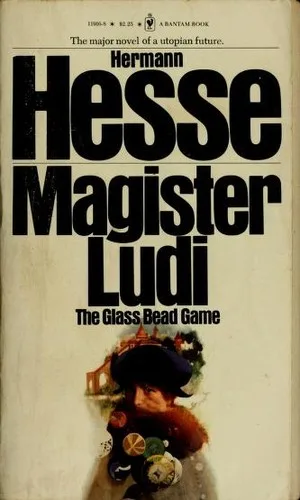
 72
72

Das Glasperlenspiel
Hesse's 'Das Glasperlenspiel' is an ambitious, if occasionally rarefied, exploration of intellectual and spiritual discipline. The novel's central conceit, the Glass Bead Game, is brilliantly conceived as a metaphor for the synthesis of all knowledge and art. Josef Knecht's journey from student to Magister Ludi is meticulously charted, offering a profound meditation on dedication and the limitations of an overly aestheticized existence. While the detailed descriptions of the game and Castalia can sometimes feel overly academic, demanding considerable reader investment, the underlying philosophical questions about meaning and purpose in a fractured world remain potent. The narrative's climax, Knecht's decision to leave his privileged position for a more direct engagement with life, provides a powerful counterpoint to the book's intellectual rigor. It's a demanding work, but one that rewards sustained attention with unique philosophical perspectives.
📝 Description
72
Hermann Hesse published his final novel, 'The Glass Bead Game,' in 1943.
'Das Glasperlenspiel' chronicles the life of Josef Knecht, Magister Ludi (Master of the Game) in the fictional society of Castalia. This isolated order dedicates itself to the intellectual and spiritual cultivation of the Glass Bead Game, an abstract synthesis of music, mathematics, and philosophy. The narrative traces Knecht's rise within Castalia, his eventual questioning of its cloistered existence, and his decision to leave the order for a life in the outside world.
The novel presents a fictional history of Castalia, detailing its founding, its intellectual rigor, and its eventual decline. The Glass Bead Game itself is a complex system of symbolic notation and meditative practice, meant to achieve intellectual and spiritual harmony. Hesse imagines this society as a refuge from the chaos of the external world, particularly relevant given its 1943 publication during World War II. Knecht's story grapples with the tension between individual intellectual pursuits and broader human connection.
Published in 1943, 'Das Glasperlenspiel' emerged from a period of intense global conflict, reflecting a desire for order and meaning through intellectual and spiritual practice. Castalia, the novel's utopian society, is dedicated to the Glasperlenspiel, a meditative discipline that synthesizes art, science, and philosophy. This pursuit of harmony through structured intellectualism echoes elements found in various esoteric traditions that seek inner balance and higher understanding, often through symbolic systems and disciplined thought. Hesse's work, while fictional, engages with the concept of a cultivated inner life as a counterpoint to external turmoil.
💡 Why Read This Book?
• You will learn about the philosophical underpinnings of a highly structured, abstract intellectual discipline, exemplified by the Glasperlenspiel, which seeks to unify all knowledge and art. • You will explore the societal implications of creating an isolated intellectual utopia like Castalia and its potential drawbacks. • You will gain insight into the personal evolution of a Magister Ludi, grappling with the balance between aesthetic contemplation and the demands of the wider world.
⭐ Reader Reviews
Honest opinions from readers who have explored this book.
❓ Frequently Asked Questions
What is the Glass Bead Game in Hermann Hesse's novel?
The Glass Bead Game (Glasperlenspiel) is a complex intellectual and artistic pursuit within the novel. It involves synthesizing knowledge from various fields—music, mathematics, philosophy—into a meditative practice that aims for spiritual and intellectual harmony.
When was 'Das Glasperlenspiel' published?
'Das Glasperlenspiel' was first published in 1943, during the latter half of World War II. Hermann Hesse completed the novel while living in Switzerland.
Who is the main character of 'The Glass Bead Game'?
The central character is Josef Knecht, who rises through the ranks of Castalian society to become the Magister Ludi, or Master of the Game. His life and intellectual development form the core of the narrative.
What is Castalia in the book?
Castalia is an imagined, utopian society within the novel, dedicated to intellectual and artistic pursuits. It serves as a refuge for scholars and artists, centered around the practice and evolution of the Glass Bead Game.
Did 'The Glass Bead Game' win any awards?
Yes, 'Das Glasperlenspiel' was a significant factor in Hermann Hesse being awarded the Nobel Prize in Literature in 1946, recognizing his diverse lyrical poetry and the affirmative force of his idealistic vision.
Is 'The Glass Bead Game' a difficult read?
The novel can be challenging due to its philosophical depth, intricate descriptions of the game, and dense prose. It requires focused attention but offers substantial rewards for engaged readers interested in intellectual and spiritual exploration.
🔮 Key Themes & Symbolism
Intellectual Synthesis
The novel posits the Glasperlenslenspiel as the ultimate form of intellectual synthesis, a method to harmonize all branches of human knowledge and art. It's not merely a game but a spiritual discipline, akin to a form of structured meditation. This practice seeks to find underlying patterns and connections between seemingly disparate fields, from music and mathematics to philosophy and history, aiming for a holistic understanding of existence that transcends specialization.
The Utopian Ideal and Its Limits
Castalia represents a meticulously constructed utopia, a society devoted solely to intellectual and spiritual pursuits, detached from the perceived chaos of the outside world. However, the narrative critically examines the potential isolation and stagnation inherent in such an ideal. The work questions whether a life solely dedicated to aesthetic and intellectual contemplation, however refined, can truly fulfill human needs or contribute meaningfully to broader human progress.
The Role of the Intellectual
Josef Knecht's journey as Magister Ludi highlights the complex role of the intellectual. He embodies the pursuit of absolute knowledge and mastery within the game, yet ultimately confronts the limitations of this detached pursuit. The narrative explores the tension between preserving esoteric knowledge and the responsibility to engage with and influence the imperfect, material world, questioning the efficacy of pure contemplation divorced from action.
Spiritual Discipline and Art
Hesse frames the Glass Bead Game as a profound spiritual discipline, where the practice itself is a path to enlightenment. It elevates art and intellectual endeavor to the level of sacred rituals, suggesting that true understanding and harmony can be achieved through the systematic cultivation of aesthetic and cognitive faculties. This perspective aligns with esoteric traditions that view creative and intellectual work as vehicles for spiritual transformation.
💬 Memorable Quotes
Direct passages from the work, attributed to the author.
“The way of the Glass Bead Game is not for everyone.”
— This statement underscores the exclusive and demanding nature of the Glasperlenspiel. It implies that participation requires a specific disposition, rigorous training, and a profound commitment to intellectual and spiritual discipline, setting it apart from more accessible forms of knowledge or recreation.
“Castalia is an experiment in the spiritual life.”
— This interpretation frames Castalia not just as a society but as a deliberate, controlled environment designed to cultivate spiritual growth. It suggests a conscious effort to create conditions conducive to higher consciousness, detached from the mundane concerns that typically impede spiritual development.
“The Magister Ludi must embody the game's highest ideals.”
— This highlights the immense responsibility placed upon the Master of the Game. It signifies that the leader must not only understand the Glasperlenspiel intellectually but must also personify its highest aspirations, serving as a living exemplar of the synthesis and harmony it seeks to achieve.
“True understanding requires both contemplation and engagement.”
— This concept, particularly evident in Knecht's later life, suggests that an isolated intellectual or spiritual existence is ultimately incomplete. It points to the necessity of bridging the gap between abstract knowledge and practical application, between the internal world and external reality, for genuine wisdom.
“Music and mathematics are the purest languages.”
— This reflects the core belief that abstract forms like music and mathematics offer direct access to universal truths and harmonious structures. They are seen as foundational elements of the Glasperlenspiel, providing the purest expressions of order and beauty that can be synthesized.
🌙 Esoteric Significance
Tradition
The work aligns with Neoplatonic and Hermetic traditions that emphasize the ascent of the soul through intellectual and aesthetic purification. The concept of Castalia as a spiritual elite and the Glasperlenspiel as a method for harmonizing knowledge echoes alchemical principles of synthesis and transformation. It departs from purely mystical traditions by grounding its spiritual aims in a highly structured, almost scientific methodology, blending intellectual rigor with esoteric aspiration.
Symbolism
The 'Glasperlenspiel' itself symbolizes the interconnectedness of all knowledge and the potential for spiritual order within complexity. The beads and their arrangements represent individual elements of truth or beauty, which, when properly sequenced, create a harmonious whole. Castalia functions as a symbol of the ideal spiritual community, a sanctuary for cultivating higher consciousness, while the figure of the Magister Ludi embodies the enlightened individual who masters and guides this process.
Modern Relevance
Contemporary thinkers in fields like Integral Theory, which seeks to synthesize diverse approaches to knowledge and consciousness, draw parallels with Hesse's vision. The novel's exploration of structured meditative practices and the quest for holistic understanding continues to influence those exploring consciousness studies, comparative mysticism, and the integration of art, science, and spirituality in personal development.
👥 Who Should Read This Book
• Students of esoteric philosophy and comparative religion seeking to understand fictionalized models of spiritual disciplines and utopian societies. • Readers interested in the intellectual history of the 20th century and how authors responded to periods of societal crisis through imaginative world-building. • Individuals drawn to contemplative literature that explores the nature of knowledge, the pursuit of meaning, and the balance between aestheticism and engagement with the world.
📜 Historical Context
Hermann Hesse's 'Das Glasperlenspiel,' completed in 1943, emerged from the intellectual crucible of mid-20th century Europe. Living in neutral Switzerland during World War II, Hesse channeled his observations of global conflict and societal fragmentation into this ambitious novel. Castalia, the novel's fictional elite intellectual order, can be interpreted as a response to the prevailing barbarism, proposing a highly ordered, almost monastic pursuit of knowledge and aesthetic harmony as an antidote. The work implicitly critiques the destructive forces of nationalism and ideological extremism by championing a universal, abstract language of the soul. Its publication was significant in post-war intellectual circles, offering a vision of spiritual and intellectual renewal. The novel’s reception was notably strong, contributing significantly to Hesse being awarded the Nobel Prize in Literature in 1946. Contemporaries like Carl Jung, whose work on archetypes and the collective unconscious shares thematic parallels with Hesse's exploration of consciousness, were part of the intellectual milieu.
📔 Journal Prompts
The structure and purpose of the Glasperlenspiel.
Josef Knecht's decision to leave Castalia.
The symbolic meaning of the Castalian elite.
The tension between aestheticism and worldly engagement.
The ideal form of intellectual and spiritual synthesis.
🗂️ Glossary
Glasperlenspiel
The Glass Bead Game. A complex intellectual and artistic practice in the novel that synthesizes music, mathematics, and philosophy, serving as a form of meditative discipline for achieving spiritual and intellectual harmony.
Castalia
An imagined, elite intellectual and spiritual community in the novel, dedicated to the cultivation of the Glasperlenspiel and detached from the concerns of ordinary society.
Magister Ludi
Master of the Game. The highest position within Castalia, responsible for leading and evolving the practice of the Glasperlenspiel. Josef Knecht holds this title.
Ordensmitglied
Member of the Order. Refers to an individual belonging to Castalia, signifying their dedication to the Order's intellectual and spiritual pursuits.
Spirituali
Spirituals. Refers to members of Castalia who are highly accomplished in the Glasperlenspiel, embodying its highest ideals and contributing to its development.
Musik
Music. A fundamental component of the Glasperlenspiel, representing abstract beauty and mathematical order, and serving as a key element in the game's synthesis.
Mathematik
Mathematics. Another core element of the Glasperlenspiel, providing the logical and structural framework for the game's complex arrangements and symbolic language.
🔮 Readers Also Liked
Browse all →







More by Hermann Hesse
All books →





More Free Occult Philosophy Books
View all →