Dictionary of the tarot

 81
81

Dictionary of the tarot
Butler's *Dictionary of the Tarot* functions less as an exposition and more as a meticulously organized lexicon. Its strength lies in its exhaustive alphabetical structure, allowing quick access to specific card meanings and related concepts. The 1987 publication date means its primary focus is on the Rider-Waite-Smith system, which, while dominant, can feel limiting to those exploring other decks. A particularly effective section is its breakdown of the Minor Arcana, detailing the progression of numbers within each suit with remarkable consistency. The primary limitation is its encyclopedic nature; it offers definitions but minimal narrative flow or comparative analysis between different Tarot traditions. Despite this, it remains a solid, fact-based reference for serious students of the Rider-Waite-Smith deck.
📝 Description
81
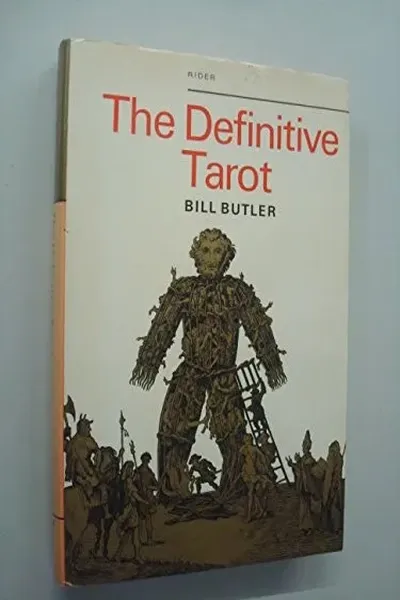
Bill Butler's 1987 *Dictionary of the Tarot* offers an alphabetical guide to the cards, their meanings, and symbolism.
Published in 1987, Bill Butler's *Dictionary of the Tarot* functions as an alphabetical reference for the Tarot cards, their meanings, and related esoteric symbolism. It is a significant resource for understanding the Rider-Waite-Smith deck, a model that became widespread in the late 20th century. The book clarifies the Tarot's complex visual language and numerological bases.
This dictionary is valuable for Tarot enthusiasts, occult researchers, and divination practitioners. It is especially useful for those who want a structured method for learning the Tarot, moving past simple intuition to a systematic grasp of each card's significance. Readers interested in the history of Tarot as a divinatory practice will also find it informative. The work systematically analyzes the Tarot's components, including the Major and Minor Arcana, suits, court cards, and individual interpretations, connecting numerology, planetary, and astrological associations to the Tarot's structure and use.
The late 20th century saw renewed interest in occult studies, with the Tarot at the forefront. Butler's work appeared when Tarot literature was often dense or highly specialized. Its 1987 release provided a more accessible, yet still informed, entry into the subject, appealing to a growing audience interested in occultism and personal mysticism. The book addresses the interconnectedness of numerological, planetary, and astrological elements within the Tarot's symbolic system.
💡 Why Read This Book?
• Gain a systematic understanding of the Rider-Waite-Smith Tarot's core symbolism, as detailed in its 1987 publication, enabling more consistent readings. • Learn the numerological progression within each suit of the Minor Arcana, a concept thoroughly explored by Butler for deeper interpretive insight. • Access clear definitions for esoteric terms and correspondences associated with each card, such as planetary rulers, directly from the dictionary's structured entries.
⭐ Reader Reviews
Honest opinions from readers who have explored this book.
❓ Frequently Asked Questions
What is the primary focus of Bill Butler's Dictionary of the Tarot?
The book primarily focuses on providing an alphabetical reference for the meanings and esoteric symbolism of the Tarot cards, with a strong emphasis on the Rider-Waite-Smith deck, as established in its 1987 initial release.
When was the Dictionary of the Tarot first published?
The Dictionary of the Tarot by Bill Butler was first published in 1987, positioning it as a key resource during the late 20th-century revival of interest in occult studies.
Does the dictionary cover Tarot decks other than Rider-Waite-Smith?
While the Rider-Waite-Smith system is the dominant framework discussed, the dictionary's comprehensive nature may offer insights applicable to understanding the archetypes present in other decks.
Is this book suitable for beginners to Tarot?
Yes, its structured, alphabetical format makes it an excellent resource for beginners seeking a systematic approach to learning Tarot meanings beyond simple intuition.
What esoteric concepts does the book explore in relation to Tarot?
The work explores numerology, planetary correspondences, and astrological associations as they pertain to the structure and interpretation of the Tarot cards.
How does Butler's dictionary differ from other Tarot books?
Its primary difference lies in its encyclopedic, alphabetical structure, offering direct access to specific card meanings and related concepts rather than a narrative approach.
🔮 Key Themes & Symbolism
Card Symbolism
The dictionary meticulously details the symbolic language of each Tarot card, from the Major Arcana's archetypal figures to the numbered cards of the Minor Arcana. It breaks down visual elements, numerological values, and traditional associations, providing a framework for understanding the Tarot as a coherent symbolic system. This approach allows for a deeper appreciation of the artistry and esoteric intent behind each card's design, particularly within the influential Rider-Waite-Smith tradition.
Esoteric Correspondences
Butler's work highlights the intricate web of correspondences that underpin Tarot divination. It systematically links each card to elements, numbers, planets, and astrological signs, demonstrating how these systems inform and enrich Tarot interpretation. This methodical mapping of esoteric knowledge provides practitioners with tools to move beyond surface-level readings and engage with the deeper, often Kabbalistically-influenced, layers of meaning within the cards.
Divinatory Practice
The dictionary serves as a practical guide for divinatory work. By offering clear, alphabetically organized interpretations, it facilitates the use of the Tarot for seeking guidance and understanding life's circumstances. The structured approach encourages a disciplined study of the cards, enabling users to build a robust personal lexicon for interpreting spreads and individual card placements with greater accuracy and insight.
Archetypal Meanings
Central to Butler's exploration are the archetypal meanings embedded within the Tarot. The book systematically unpacks the universal human experiences and psychological states represented by figures like The Fool, The Magician, and The High Priestess. This focus on archetypes allows for a profound connection to the cards, revealing them as mirrors of the collective unconscious and tools for self-discovery, a concept explored extensively in esoteric psychology.
💬 Memorable Quotes
Direct passages from the work, attributed to the author.
“The Fool represents the beginning of a cycle.”
— This concise statement captures the essence of The Fool's archetype, signifying new ventures, leaps of faith, and the unburdened potential that marks the start of any journey, whether literal or spiritual.
“The number 'four' in the Minor Arcana often relates to stability and structure.”
— This highlights the numerological significance of the number four, linking it to concepts of order, foundation, and earthly manifestation across the suits of the Minor Arcana.
“Court cards embody personality types and active forces.”
— This interpretation emphasizes the dynamic nature of the court cards (Page, Knight, Queen, King), portraying them not just as static figures but as active expressions of character and influence within a reading.
“The symbolism of The World card signifies completion and integration.”
— This points to The World as a culminating card, representing the successful conclusion of a major cycle and the harmonious integration of all elements, a profound state of fulfillment.
“Swords often deal with intellect, conflict, and truth.”
— This succinctly defines the thematic domain of the Suit of Swords, associating it with mental processes, challenges, and the pursuit or revelation of truth.
🌙 Esoteric Significance
Tradition
Butler's work firmly sits within the Western Esoteric tradition, specifically focusing on the divinatory and symbolic systems that gained prominence in the late 19th and 20th centuries. It draws heavily from the archetypal interpretations popularized by the Hermetic Order of the Golden Dawn and subsequent systems, most notably the Rider-Waite-Smith deck. The dictionary acts as a bridge, translating complex Hermetic principles and Kabbalistic structures into accessible Tarot meanings for a broader audience.
Symbolism
Key symbols thoroughly explored include the numerological progression of the Minor Arcana, where each number from Ace to Ten carries distinct symbolic weight, representing stages of development. The four suits—Wands, Cups, Swords, and Pentacles—are presented with their elemental and thematic associations. Furthermore, the dictionary details the detailed symbolism of the Major Arcana, interpreting figures like The Hierophant (representing tradition and spiritual guidance) and The Chariot (symbolizing willpower and control) within their esoteric contexts.
Modern Relevance
Contemporary practitioners of Tarot, especially those rooted in the Rider-Waite-Smith tradition, continue to find Butler's dictionary a valuable reference. Its clear, structured approach informs modern psychological interpretations and self-help applications of the Tarot. Thinkers and practitioners exploring comparative mysticism or seeking to understand the evolution of Tarot symbolism from its late 20th-century popularization often consult this work as a foundational text.
👥 Who Should Read This Book
['• Students of the Rider-Waite-Smith Tarot seeking a comprehensive alphabetical reference to card meanings and symbolism.', '• Occult researchers interested in the structured esoteric correspondences (numerology, elements, planets) applied to Tarot in the late 20th century.', '• Divination practitioners looking for a systematic dictionary to enhance their understanding and consistency in readings.']
📜 Historical Context
Bill Butler's *Dictionary of the Tarot*, published in 1987, arrived during a period of significant revival for esoteric studies in the West. The late 20th century saw a broad public embrace of occultism, spiritualism, and alternative belief systems, with the Tarot serving as a popular gateway. This era was marked by authors like Rachel Pollack, whose *Seventy-Eight Degrees of Wisdom* (published in two volumes in 1980 and 1983) had already established a sophisticated approach to Tarot interpretation, particularly focusing on psychological and Kabbalistic angles. Butler's work complemented this by offering a more direct, alphabetically structured reference, catering to those who sought a systematic, almost encyclopedic, understanding of the cards, primarily within the framework of the widely adopted Rider-Waite-Smith deck. Unlike purely intuitive or historical accounts, Butler’s dictionary emphasized the structured, symbolic language and correspondences that defined much of the occult milieu of the time.
📔 Journal Prompts
The symbolism of The Magician's tools and their representation of focused will.
Reflecting on the numerological progression from the Ace to the Ten of Cups.
Interpreting the archetypal journey of The Fool through the Major Arcana.
The elemental associations of the Suit of Swords and their impact on challenges.
The meaning of stability suggested by the number four in the Pentacles suit.
🗂️ Glossary
Major Arcana
The 22 trump cards of the Tarot deck, representing significant life lessons, archetypal energies, and spiritual milestones.
Minor Arcana
The 56 cards of the Tarot deck, divided into four suits (Wands, Cups, Swords, Pentacles), which typically represent everyday events and circumstances.
Rider-Waite-Smith Deck
A highly influential Tarot deck first published in 1909, known for its intricate symbolism and its complete pictorial representations on all 78 cards, particularly the Minor Arcana.
Numerology
The study of the mystical significance of numbers, used in Tarot to interpret the inherent meaning of each card based on its numerical value.
Correspondences
The system of linking Tarot cards to other esoteric elements such as planets, astrological signs, elements, and Kabbalistic paths.
Suit of Wands
Associated with the element of Fire, representing inspiration, creativity, passion, and action.
Suit of Cups
Associated with the element of Water, representing emotions, relationships, intuition, and the subconscious.
🔮 Readers Also Liked
Browse all →







More by Bill Butler
All books →

More Free Divination & Tarot Books
View all →