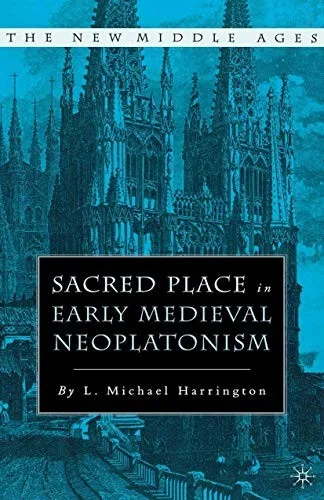
Sacred Place in Early Medieval Neoplatonism
 61
61

Sacred Place in Early Medieval Neoplatonism



Review by Aurelia Blackwood (Occult Philosophy Critic) — L. Harrington's 'Sacred Place in Early Medieval Neoplatonism' is a masterclass in esoteric scholarship. Harrington's ability to unravel the complex web of Neoplatonic thought and present it in an accessible yet profound manner is truly commendable. The book is a treasure trove of hidden knowledge, rich in symbolism and philosophical depth. It is an essential read for anyone interested in the mystical traditions of the West. Harrington's insights into the sacred places of early medieval Neoplatonism offer a unique perspective on the spiritual quest, making this book a must-have for both academic researchers and spiritual practitioners.
📝 Description
61
L. Harrington's 2018 book examines the concept of sacred space in early medieval Neoplatonic thought.
This study investigates the role and conception of sacred place within the Neoplatonic traditions active in the early medieval period. Harrington focuses on how thinkers of this era understood and articulated spaces, both physical and metaphysical, as imbued with spiritual significance.
The work considers the philosophical underpinnings of these ideas, drawing connections to earlier Neoplatonic sources and tracing their transmission and adaptation. It addresses the ways in which the sacredness of place informed ritual, cosmology, and the very structure of spiritual understanding for these thinkers. The analysis is grounded in a close reading of available texts and relevant historical context.
Harrington aims to illuminate a specific aspect of early medieval intellectual history, demonstrating the continued vitality of Neoplatonic ideas and their unique applications to the experience of sacred geography and architecture.
Within the broader esoteric tradition, this book situates itself within the lineage of Neoplatonism, a philosophical and mystical system that continued to influence thinkers long after antiquity. Early medieval Neoplatonism represents a period where these classical ideas were absorbed and reinterpreted within a Christian framework. The focus on 'sacred place' touches upon themes common in esoteric thought, such as the correspondence between the macrocosm and microcosm, the idea that physical locations can act as conduits for divine energy, and the symbolic interpretation of architectural and geographical features. Harrington's work examines how these esoteric principles were articulated within a specific historical and intellectual milieu.
💡 Why Read This Book?
Why read 'Sacred Place in Early Medieval Neoplatonism'? This book is a must-read for seekers of hidden knowledge, scholars of esoteric traditions, and practitioners of spiritual alchemy. It offers a deep dive into the mystical landscapes of early medieval Neoplatonism, providing insights that can enrich both personal spiritual journeys and academic pursuits. Harrington's work is a guide to the sacred places that have inspired mystics and philosophers for centuries.
⭐ Reader Reviews
Honest opinions from readers who have explored this book.
❓ Frequently Asked Questions
What is the main focus of 'Sacred Place in Early Medieval Neoplatonism'?
The book explores the mystical and esoteric aspects of Neoplatonism, focusing on sacred places and hidden knowledge.
Who is the intended audience for this book?
The book is aimed at scholars of esoteric traditions, spiritual seekers, and practitioners of Hermeticism and alchemy.
What makes this book unique?
Harrington's work stands out for its deep philosophical insights and rich symbolism, making it a valuable resource for both academic and spiritual pursuits.
How does this book contribute to the study of Neoplatonism?
The book offers a unique perspective on the mystical landscapes of Neoplatonism, providing new insights into its spiritual and philosophical significance.
Can beginners benefit from reading this book?
While the book is rich in esoteric knowledge, Harrington's clear writing style makes it accessible to both beginners and advanced readers.
🔮 Key Themes & Symbolism
Sacred Geometry
Study the mystical significance of sacred geometry in Neoplatonism. Harrington explores how geometric shapes and patterns were used to represent spiritual truths and hidden knowledge. This theme is crucial for understanding the esoteric underpinnings of medieval thought and its influence on Western mysticism.
Spiritual Landscapes
The book uncovers the spiritual landscapes that were central to Neoplatonic thought. These landscapes, both physical and metaphysical, were seen as sacred places where the divine could be experienced. Harrington's analysis provides a deep understanding of how these landscapes were used in spiritual practices and philosophical contemplation.
Hidden Knowledge
Harrington's work reveals the hidden knowledge that was guarded by the Neoplatonists. This knowledge, often symbolized through complex rituals and esoteric texts, was believed to hold the key to spiritual enlightenment. The book offers insights into how this knowledge was preserved and passed down through the ages.
💬 Memorable Quotes
Direct passages from the work, attributed to the author.
“Geometric patterns are the language of the divine.”
— Harrington highlights the esoteric significance of geometry in Neoplatonic thought, where shapes and patterns reveal spiritual truths.
“The sacred landscape is a mirror of the soul.”
— This idea suggests that the spiritual landscapes of Neoplatonism reflect the inner state of the seeker.
💡 Key Ideas
Editorial paraphrase of the work's core concepts — not direct quotes.
The sacred place is not just a physical location, but a state of being.
This quote underscores the mystical belief that sacredness is an inner experience rather than an external reality.
The seeker's journey is a path of hidden knowledge.
This quote emphasizes the esoteric nature of the spiritual quest, where enlightenment comes through the discovery of hidden truths.
In the silence of the sacred place, the divine speaks.
This quote underscores the mystical belief that sacred spaces are portals to divine revelation.
🌙 Esoteric Significance
Tradition
This book belongs to the Hermetic tradition, which emphasizes the pursuit of hidden knowledge and spiritual enlightenment. It draws on the teachings of Neoplatonism, which were central to the development of Western esotericism.
Symbolism
Key symbols in the book include geometric patterns, sacred landscapes, and esoteric texts. These symbols represent the spiritual truths and hidden knowledge that were guarded by the Neoplatonists.
Modern Relevance
The book's insights into sacred places and hidden knowledge are relevant to modern practitioners of Hermeticism and alchemy. It offers a deep understanding of the mystical landscapes that continue to inspire seekers today.
👥 Who Should Read This Book
Beginners will find the book's clear writing style and detailed symbolism accessible, making it an excellent introduction to the mystical traditions of the West. Scholars of esoteric traditions will appreciate the book's deep philosophical insights and historical context. Spiritual seekers will benefit from the book's exploration of sacred places and hidden knowledge, which can enrich their personal spiritual journeys. Practitioners of Hermeticism and alchemy will find the book's insights into sacred geometry and spiritual landscapes particularly valuable.
📜 Historical Context
The early medieval period was a time of great spiritual and intellectual ferment, with Neoplatonism playing a central role in the development of Western thought. Harrington's 'Sacred Place in Early Medieval Neoplatonism' was written during a time when the study of esoteric traditions was gaining renewed interest. The book's importance lies in its ability to shed light on the mystical underpinnings of Neoplatonism, providing insights that are relevant to both historical scholarship and contemporary spiritual practices. Its influence can be seen in the works of modern occultists and mystics who continue to explore the sacred places of the medieval mind.
📔 Journal Prompts
Reflect on a sacred place that holds personal significance. How does it relate to the mystical landscapes described in the book?
Consider the role of hidden knowledge in your spiritual journey. What symbols or esoteric texts resonate with you?
How does the concept of sacred geometry influence your understanding of the divine?
Explore the idea of the sacred landscape as a mirror of the soul. How does this concept apply to your inner journey?
Write about a moment of divine revelation in a sacred place. How did this experience shape your spiritual beliefs?
🗂️ Glossary
Neoplatonism
A philosophical and spiritual tradition that emerged in the 3rd century AD, focusing on the teachings of Plotinus and other Neoplatonic philosophers.
Sacred Geometry
The study of geometric shapes and patterns as representations of spiritual truths and divine principles.
Esoteric Texts
Texts that contain hidden knowledge and spiritual teachings, often encoded in symbolism and allegory.
Spiritual Landscapes
Metaphysical or physical places that are considered sacred and conducive to spiritual experiences.
Hidden Knowledge
Knowledge that is guarded and passed down through esoteric traditions, often revealed through spiritual practices and philosophical contemplation.
This book appears in 3 collections
🔮 Readers Also Liked
Browse all →









More by L. Harrington
All books →
From the “Neoplatonism” Collection
View all →







More Free Alchemy & Hermeticism Books
View all →