Touch Blue
 62
62

Touch Blue



Silas Hawthorne, Hermetic Studies Editor — Lillian Morrison's "Touch Blue" is a rare gem, a concise yet profound exploration of divination's roots in folklore and superstition. Morrison possesses a keen eye for the esoteric currents that flow beneath the surface of human belief. She distills complex ideas into potent, epigrammatic truths, revealing the universal archetypes that underpin seemingly disparate practices. This book is particularly valuable for its clarity and its ability to connect the ancient wisdom of divination with the intuitive capacities of the modern reader. It serves as an essential primer for those seeking to understand the philosophical underpinnings of intuitive arts, offering a pathway to deeper self-awareness and connection with the subtle energies of the cosmos.
📝 Description
62
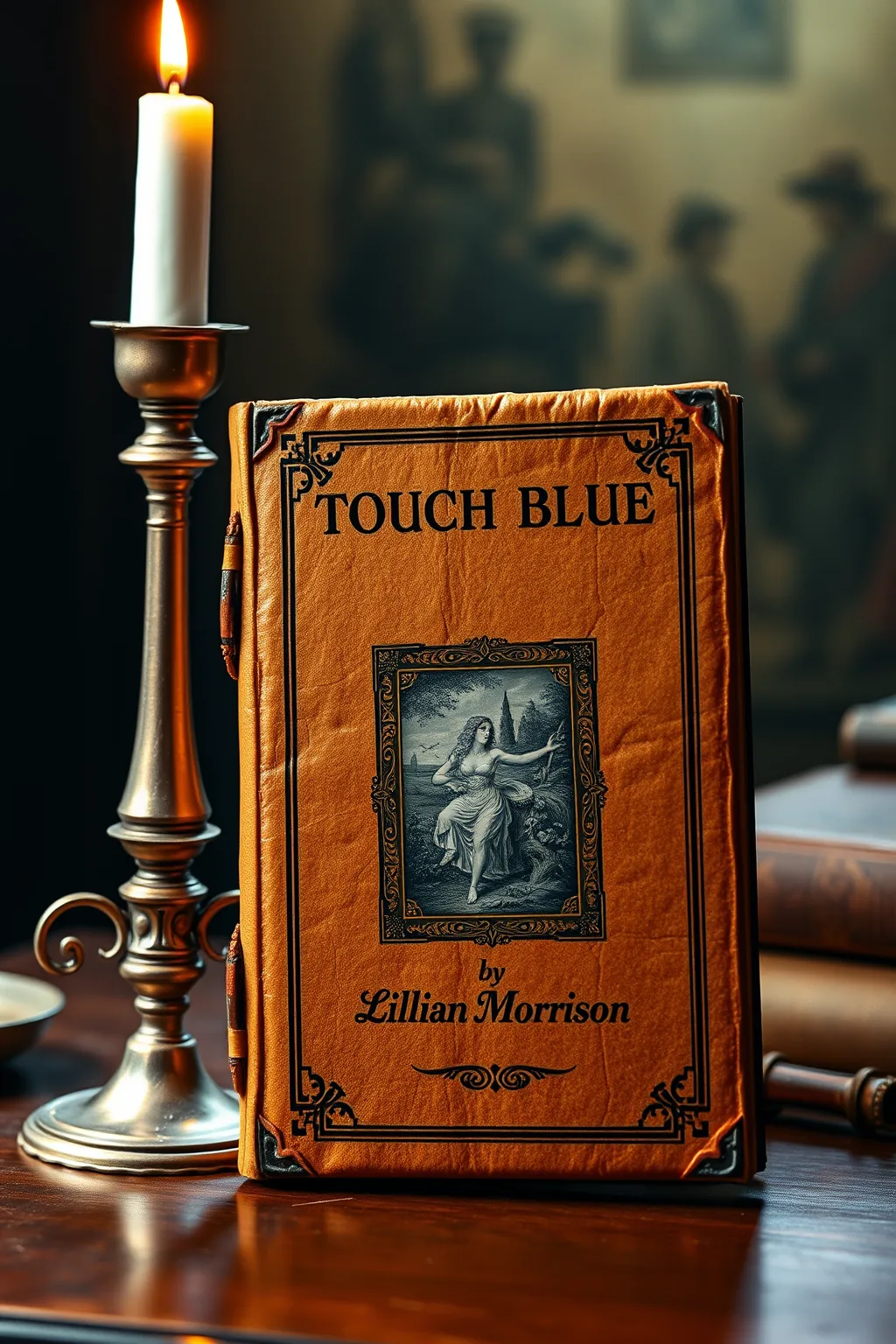
Lillian Morrison's 'Touch Blue' examines folk beliefs and divination practices.
Published in 1963, Lillian Morrison's 'Touch Blue' examines the intersection of folklore, superstition, and divination. The book draws on traditional beliefs and the symbolic meaning found in ordinary events. Morrison connects these elements to intuitive knowledge, suggesting a link between the human spirit and the unseen world. She presents insights and folkloric examples that create a cohesive whole. 'Touch Blue' aims to guide readers toward understanding the veil between the ordinary and the extraordinary. It appeals to those who find wisdom in less common areas of human experience, such as persistent superstitions and the interpretation of omens. The work encourages readers to develop their intuition and recognize the subtle magic present in everyday life, focusing on intuitive understanding and the lasting impact of old beliefs.
Morrison's approach highlights how superstitions and folk customs can offer a different kind of knowledge. She looks at how these traditions are passed down and how they continue to influence perception. The book is not about formal magical systems but about the everyday magic perceived through intuition and cultural memory. It invites a closer look at the signs and symbols that many might overlook, suggesting they hold a deeper significance. 'Touch Blue' encourages a personal connection with these ideas, fostering a sense of wonder about the less tangible aspects of life.
Lillian Morrison's 'Touch Blue' fits within the broader tradition of Western esotericism that seeks to understand hidden correspondences and intuitive ways of knowing. It aligns with folkloric studies that analyze the symbolic weight of popular beliefs and practices, often seen as remnants of older worldviews. Unlike strictly academic studies, it emphasizes the personal experience of divination and superstition as valid paths to insight. The book reflects a mid-20th-century interest in exploring psychological and spiritual dimensions beyond the purely rational, connecting common folk practices to a deeper, perhaps unconscious, understanding of the world.
💡 Why Read This Book?
Uncover the ancient origins of intuitive practices and the hidden wisdom embedded in folklore and superstition. "Touch Blue" offers concise, epigrammatic insights that illuminate the symbolic language of divination. Ideal for seekers of esoteric knowledge, students of folklore, and practitioners looking to deepen their understanding of the intuitive arts. Read this to connect with timeless wisdom and unlock your own perceptive abilities.
⭐ Reader Reviews
Honest opinions from readers who have explored this book.
❓ Frequently Asked Questions
What is the primary focus of "Touch Blue"?
"Touch Blue" primarily focuses on the intersection of folklore, superstition, and divination, exploring how ancient beliefs inform intuitive practices and the discernment of hidden knowledge.
Who is Lillian Morrison?
Lillian Morrison is an author known for her insightful explorations of esoteric themes, folklore, and the subtle arts, often bridging traditional wisdom with contemporary understanding.
Is this book suitable for beginners in divination?
Yes, "Touch Blue" is highly suitable for beginners due to its clear, accessible language and its focus on foundational concepts within folklore and superstition that inform divination.
What kind of "hidden knowledge" does the book discuss?
The book discusses hidden knowledge as it relates to intuitive perception, the interpretation of omens, the symbolism within cultural beliefs, and the deeper meanings embedded in folk wisdom.
Can I find practical divination techniques in "Touch Blue"?
While "Touch Blue" lays a strong philosophical and folkloric foundation for divination, its strength lies more in understanding the *why* and the *context* of intuitive arts rather than providing step-by-step technical guides.
🔮 Key Themes & Symbolism
The Alchemy of Folklore and Superstition
Explore how seemingly simple folk tales and ingrained superstitions are not mere remnants of the past, but potent repositories of archetypal wisdom and intuitive guidance. Morrison reveals how these cultural narratives act as a symbolic language, offering keys to understanding the hidden currents of life. This theme explores the psychological and spiritual significance of these enduring beliefs, demonstrating their role in shaping our perception of reality and our capacity for intuitive insight. It's about recognizing the magic woven into the fabric of everyday life, waiting to be deciphered by the discerning mind.
The Epigrammatic Path to Intuitive Truths
Discover the power of concise, profound statements – epigrams – as tools for accessing intuitive wisdom. Lillian Morrison employs this form to distill complex esoteric concepts into memorable insights, acting as potent seeds for contemplation and self-discovery. This theme highlights how brevity can unlock deeper understanding, bypassing intellectual barriers to touch upon direct, intuitive knowing. It's about learning to perceive the layered meanings within short, impactful phrases, fostering a direct connection to the subtle realms and the inner oracle that resides within each individual.
Divination as a Language of the Unseen
Journey into the heart of divination, not as a mere predictive art, but as a sophisticated language for communicating with the deeper currents of existence. "Touch Blue" illuminates how the practices of divination are intrinsically linked to understanding patterns, symbols, and the energetic resonance of the universe. Morrison unpacks the philosophical underpinnings, emphasizing intuition, synchronicity, and the symbolic dialogue between the inner and outer worlds. This theme encourages a holistic view of divination as a means of fostering self-awareness, navigating life's mysteries, and attuning oneself to the subtle guidance that permeates all things.
💬 Memorable Quotes
Direct passages from the work, attributed to the author.
“Superstition is but folklore's echo in the soul.”
— This frames superstition not as irrationality, but as a deeply ingrained, resonant aspect of collective human experience, a feeling or instinct passed down through generations.
“An epigram is a seed of knowing, planted in fertile silence.”
— This emphasizes the potent, condensed nature of wisdom found in short sayings, capable of germinating profound understanding when contemplated deeply.
“To touch blue is to glimpse the infinite horizon.”
— This evocative phrase links the color blue, often associated with the divine or the vast, to an experience of expansive perception and connection to something boundless.
“The threads of fate are spun in the loom of forgotten tales.”
— This metaphor connects destiny and the unfolding of life's events to the enduring power and wisdom contained within ancient stories and collective memory.
💡 Key Ideas
Editorial paraphrase of the work's core concepts — not direct quotes.
The blue of the sky whispers secrets to the earth.
This quote suggests a profound, unseen connection between the celestial and the terrestrial, hinting at a cosmic dialogue accessible through intuition and observation.
🌙 Esoteric Significance
Tradition
While not strictly adhering to a single dogma, "Touch Blue" resonates deeply with hermetic principles and Neoplatonic thought, emphasizing the interconnectedness of all things and the hidden correspondences between the macrocosm and the microcosm. Its exploration of folklore and superstition aligns with animistic and folk magic traditions, suggesting that the universe is imbued with intelligence and accessible through intuitive means. The book champions the idea of the 'as above, so below,' viewing everyday phenomena and ancient tales as symbolic reflections of deeper spiritual truths.
Symbolism
The titular 'blue' serves as a central symbol, representing the ethereal, the divine, the vastness of the sky, and the intuitive mind's capacity for deep perception. Folklore and superstitions act as symbolic narratives, each carrying archetypal meanings and offering coded wisdom about human nature and the cosmos. Epigrams function as symbolic keys, their concise form unlocking profound, multi-layered significances. The book encourages readers to see symbolism not just in explicit occult imagery but in the fabric of everyday life and cultural memory.
Modern Relevance
In an increasingly digitized and often fragmented world, "Touch Blue" offers a vital re-connection to primal wisdom and intuitive intelligence. Its emphasis on folklore and superstition reminds us of the enduring human need for meaning, narrative, and a sense of belonging to something larger than ourselves. The book's exploration of divination as an intuitive art is more relevant than ever, as individuals seek tools for self-understanding, navigating uncertainty, and fostering a deeper connection to their inner guidance systems. It provides a philosophical grounding for those exploring contemporary mindfulness, intuition development, and the integration of ancient wisdom into modern life.
👥 Who Should Read This Book
"Touch Blue" is a compelling read for the curious soul, the budding mystic, and the seasoned scholar alike. Beginners in divination will find a clear, accessible entry point into the foundational concepts of folklore and superstition that underpin intuitive arts. Scholars of mythology, cultural anthropology, and esoteric studies will appreciate the book's insightful analysis of symbolic language and ancient beliefs. For seekers of personal growth and deeper self-awareness, "Touch Blue" offers profound contemplation and practical encouragement to trust one's inner knowing. Practitioners of various divinatory systems will find renewed perspective, enriching their understanding of the 'why' behind their craft.
📜 Historical Context
Published in an era often marked by a reawakening of interest in esoteric traditions and the occult, Lillian Morrison's "Touch Blue" emerged as a significant voice within the burgeoning metaphysical literature scene. This period saw a cultural shift where individuals began to look beyond purely rationalistic explanations, seeking deeper meaning and connection through ancient wisdom, psychology, and the exploration of consciousness. The book taps into a long-standing fascination with folklore, superstition, and the intuitive arts that has ebbed and flowed throughout history but often experiences a resurgence during times of societal introspection. "Touch Blue" reflects this turn inward, offering a bridge between archaic beliefs and a modern yearning for understanding the subtle forces that influence human experience, positioning itself as a guide for those reading through the mysteries of the unseen.
📔 Journal Prompts
Reflect on a personal superstition. What might be its folkloric root, and what intuitive message could it hold for you now?
Consider the color blue in your life and dreams. What emotions, ideas, or connections does it evoke?
Write an epigram (a short, witty saying) that expresses a piece of wisdom you have gained recently.
Identify a common folk tale or saying. How could its underlying symbolism be interpreted as a form of divination or guidance?
How does your understanding of 'fate' or 'destiny' connect with the 'forgotten tales' mentioned in the book? Explore this connection in your journal.
🗂️ Glossary
Epigram
A concise, witty, and often profound statement expressing a single thought or observation. In "Touch Blue," epigrams serve as potent seeds for intuitive contemplation and understanding.
Divination
The practice of seeking knowledge of the future or the unknown by supernatural means. In this context, it's explored as an intuitive art rooted in symbolic interpretation and pattern recognition.
Folklore
The traditional beliefs, customs, and stories of a community, passed through the generations by word of mouth. It serves as a rich source of symbolic wisdom and archetypal narratives.
Superstition
An irrational belief that certain events or actions will bring good or bad luck. Morrison explores these as traces of deeper, often intuitive, understandings embedded in cultural memory.
Archetype
A recurring symbol, character type, or motif found in myths, dreams, and stories across cultures, representing fundamental human experiences and patterns of behavior.
This book appears in 3 collections
🔮 Readers Also Liked
Browse all →








From the “Augury” Collection
View all →




More Free Divination & Tarot Books
View all →