Banaras

 74
74

Banaras
Diana L. Eck's *Banaras* remains a foundational text for understanding Varanasi not merely as a city, but as a living cosmos. Eck's meticulous research, particularly her focus on the lived religious experience of its inhabitants, sets this work apart. A passage detailing the daily rituals along the Ganges, describing the interplay of the mundane and the divine, vividly illustrates the book's strength: its capacity to render the sacred tangible. However, the sheer density of scholarly material, while a strength for academics, might present a challenge for the casual reader seeking a more introductory overview. Despite this, *Banaras* stands as an indispensable examination of a city that is itself a spiritual center of gravity.
This is an authoritative, essential study of Varanasi.
📝 Description
74
Diana L. Eck's 1984 book, *Banaras*, is an ethnographic study of the sacred Indian city.
Published in 1984, Diana L. Eck's *Banaras* offers a detailed ethnographic examination of the sacred Indian city, known to Hindus as Banaras. The book moves past simple description to analyze the living religious traditions and the complex spiritual environment of Varanasi. Eck's research was completed during a time of growing global interest in Eastern religions, but her work stood out due to its direct anthropological fieldwork.
This study corrects a scholarly tendency to view Indian spirituality from a Western perspective. Instead, Eck centers the experiences of the city's residents and pilgrims, giving voice to their lived realities. The book unpacks core concepts of Hindu cosmology and practice, including dharma, karma, and moksha. It also considers the Ganges River's importance and the city's function as a mandala, a cosmic diagram, and a center of spiritual power. The text further describes the various ascetic groups, or sadhus, and religious communities that populate its sacred areas.
This work situates itself within the study of Hindu mysticism and contemplative practices, specifically focusing on Varanasi as a locus of spiritual energy. It examines how concepts like dharma, karma, and moksha are lived and embodied within a specific urban context. The book also touches upon the yogic and ascetic traditions that have long been associated with the region, presenting them not as abstract doctrines but as active components of the city's sacred life.
💡 Why Read This Book?
• Gain an understanding of Varanasi as a living mandala, a concept central to Hindu cosmology, as detailed in Eck's ethnographic work, revealing how urban design mirrors spiritual order. • Learn about the specific practices of pilgrims at the Ganges, understanding the river's multifaceted religious significance beyond its geographical presence, as described in the book's early chapters. • Explore the diverse ascetic traditions within Varanasi, including the varied roles and philosophies of different sadhu orders, providing insight into the human element of this sacred city.
⭐ Reader Reviews
Honest opinions from readers who have explored this book.
❓ Frequently Asked Questions
What is the primary focus of Diana L. Eck's book 'Banaras'?
The book's primary focus is the sacred Indian city of Varanasi (Banaras), examined through its religious traditions, pilgrimage practices, and the lived spiritual experiences of its inhabitants. It explores the city's role as a major Hindu pilgrimage destination.
When was 'Banaras' by Diana L. Eck first published?
Diana L. Eck's 'Banaras' was first published in 1984. This initial publication date is significant for understanding its place within scholarship on Indian religions at the time.
What makes Varanasi a significant religious site according to Eck's book?
According to Eck, Varanasi is significant due to its ancient association with Lord Shiva, its status as a primary pilgrimage site for Hindus seeking moksha (liberation), and the sacredness attributed to the Ganges River flowing through it.
Does the book discuss the Ganges River in relation to Banaras?
Yes, the book extensively discusses the Ganges River, detailing its profound religious importance for pilgrims in Banaras. Eck explores the rituals performed along its ghats and its symbolic role in Hindu beliefs.
Who would benefit most from reading 'Banaras'?
Scholars of South Asian religions, anthropology, comparative religious studies, and those interested in the sociology of pilgrimage and sacred geography would benefit most from this detailed ethnographic study.
What is the concept of 'moksha' as it relates to Banaras?
In the context of Banaras, moksha refers to liberation from the cycle of birth and death. Hindus believe that dying in Varanasi, particularly near the Ganges, can facilitate achieving this ultimate spiritual goal.
🔮 Key Themes & Symbolism
Sacred Geography and Urban Mandala
Eck elucidates Varanasi's design as a cosmic mandala, where the city's layout and sacred sites are understood to mirror the divine order. This theme explores how physical space becomes imbued with spiritual significance, acting as a map for religious devotion and a locus for cosmic energies. The text details how streets, temples, and ghats are not mere urban features but integral components of a divinely ordained structure, guiding pilgrims through a spiritual landscape.
The Ganges as Divine Mother
The book emphasizes the paramount importance of the Ganges River (Ganga Ma) in the spiritual life of Banaras. Eck describes the river not just as a body of water but as a divine entity, believed to purify sins and offer spiritual merit. Pilgrims' rituals, bathing practices, and funeral ceremonies are analyzed in relation to their deep-seated faith in the Ganga's transformative power and its role in facilitating liberation (moksha).
Pilgrimage and the Pursuit of Moksha
Central to Eck's study is the concept of pilgrimage to Banaras as the ultimate path to moksha, or liberation from the cycle of rebirth. The work details the various types of pilgrims, their motivations, and the rigorous spiritual disciplines they undertake. It examines how the city itself acts as a powerful magnet for those seeking to shed karmic burdens and achieve spiritual release, making it a focal point for intense religious aspiration.
Asceticism and Religious Practice
Eck provides rich ethnographic accounts of the diverse ascetic traditions (sadhus) that populate Banaras. It explores their renunciation, their unique spiritual paths, and their integration into the city's religious fabric. The book illustrates how these renunciates, through their extreme lifestyles and spiritual pursuits, embody and propagate the city's esoteric sanctity and its role as a center for spiritual seeking.
💬 Memorable Quotes
Direct passages from the work, attributed to the author.
“The city itself is a divine space, a manifestation of the cosmic order.”
— This interpretation highlights the book's central thesis that Banaras is not merely a physical location but a sacred cosmos, meticulously designed and imbued with divine purpose, reflecting Hindu cosmological principles.
“The Ganges is the divine mother, offering purification and spiritual solace.”
— This captures the personification of the Ganges River as a maternal deity, essential to the spiritual practices in Banaras. It signifies the river's role in cleansing sins and providing spiritual comfort to devotees.
“Varanasi is a city where the sacred and the mundane are inextricably intertwined.”
— This interpretation points to the book's ethnographic realism, showing how daily life in Banaras is saturated with religious meaning and ritual, blurring the lines between the ordinary and the divine for its inhabitants and visitors.
“The presence of ascetics signifies the city's deep spiritual potency.”
— This highlights the significance of sadhus within Banaras, suggesting that their renounced lives and spiritual practices actively contribute to and signify the city's profound sacred character and its reputation as a spiritual nexus.
💡 Key Ideas
Editorial paraphrase of the work's core concepts — not direct quotes.
Pilgrims come to Banaras seeking not just merit, but liberation from the cycle of existence.
This paraphrased concept underscores the profound goal of pilgrimage to Varanasi, emphasizing that adherents aim for moksha (spiritual liberation) rather than temporary spiritual benefits, a core aspiration explored in the text.
🌙 Esoteric Significance
Tradition
While *Banaras* is primarily an ethnographic and historical study, it engages deeply with the Indic traditions, particularly Hinduism. It explores concepts like dharma, karma, and moksha, which are foundational to Hindu philosophy and its esoteric dimensions. The work fits within a lineage of scholarship that seeks to understand the practical manifestation of these profound metaphysical concepts in a specific, highly charged spiritual geography, moving beyond purely philosophical discourse to reveal the lived experience of these traditions.
Symbolism
The city of Banaras itself functions as a potent symbol, often described as a mandala, representing cosmic order and divine presence. The Ganges River is another paramount symbol, signifying purification, divine grace, and the path to liberation. The numerous ghats, or steps leading to the river, symbolize the journey from the material world to the spiritual realm, acting as liminal spaces where the sacred is accessed and experienced by pilgrims.
Modern Relevance
Contemporary scholars of religion, urban studies, and South Asian culture continue to cite Eck's *Banaras* as a foundational text. Its detailed ethnographic approach remains a model for understanding how sacred sites function as living centers of religious practice and identity. Modern thinkers exploring the intersection of spirituality, urbanism, and cultural heritage draw upon its insights into the enduring power of pilgrimage and the symbolic field of Varanasi.
👥 Who Should Read This Book
• Scholars of Hinduism and South Asian Religions: They will find Eck's meticulous ethnographic data and historical analysis important for understanding Varanasi's religious ecosystem. • Students of Comparative Religion and Mythology: This book offers a deep case study of how sacred geography and pilgrimage shape religious belief and practice, providing rich comparative material. • Readers interested in Urban Studies and Sacred Spaces: Those seeking to understand the profound connection between a city's physical form and its spiritual significance will find this work useful.
📜 Historical Context
Diana L. Eck's *Banaras*, first published in 1984, emerged during a period of burgeoning Western interest in Hinduism, often filtered through Orientalist perspectives or New Age spiritualism. Eck's rigorous anthropological methodology provided a crucial counterpoint, grounding the study in extensive fieldwork and scholarly analysis. The book's emphasis on lived religion and the complex social dynamics of Varanasi distinguished it from more abstract theological or philosophical treatments. It gained significant traction within academia, cited by scholars like Wendy Doniger, who was also exploring Hindu traditions. While not facing overt censorship, the work contributed to a more nuanced understanding of Indian sacred cities, challenging earlier, often romanticized, Western notions. It arrived at a time when scholars were increasingly advocating for ethnographic depth in religious studies, moving beyond textual analysis alone.
📔 Journal Prompts
The concept of Banaras as a mandala: how does this spatial metaphor inform spiritual practice?
Reflect on the symbolic role of the Ganges River for pilgrims described in the text.
Analyze the motivations of pilgrims seeking moksha in Banaras, as presented by Eck.
Consider the significance of the various sadhu traditions within the city's religious life.
How does the interweaving of the sacred and the mundane impact daily life in Banaras?
🗂️ Glossary
Banaras
The ancient and sacred city in northern India, also known as Varanasi, revered as one of Hinduism's holiest sites, particularly for pilgrimage and liberation (moksha).
Varanasi
The modern name for the sacred city, often used interchangeably with Banaras, a major pilgrimage destination situated on the banks of the Ganges River.
Mandala
A spiritual and ritual symbol in Indian religions, representing the universe or a cosmic diagram, often used in the design and conceptualization of sacred spaces like cities.
Ganges
The sacred river in Hinduism, considered a divine entity (Ganga Ma), whose waters are believed to possess purifying properties and offer spiritual merit to those who bathe in them.
Ghats
The steps or embankments leading down to a river or body of water, particularly prominent in Banaras along the Ganges, serving as sites for bathing, rituals, and cremations.
Moksha
Liberation from the cycle of birth, death, and rebirth (samsara); the ultimate spiritual goal in Hinduism, often believed to be attainable through dying in sacred places like Banaras.
Sadhu
An ascetic or holy person in Hinduism, who has renounced worldly life to pursue spiritual realization, often living in remote places or holy cities like Banaras.
🔮 Readers Also Liked
Browse all →








More by Diana L. Eck
All books →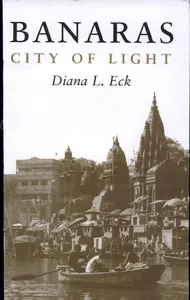

More Free Occult Philosophy Books
View all →