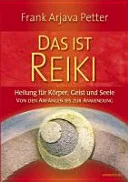
Das ist Reiki
 80
80

Das ist Reiki
Frank Arjava Petter’s 'Das ist Reiki' offers a rigorous examination of the Reiki healing system, steering clear of New Age platitudes. The author grounds the practice in its Japanese origins, particularly the work of Mikao Usui and the establishment of the Usui Reiki Ryoho Gakkai in the early 20th century. Petter’s strength lies in his detailed approach, dissecting the energetic mechanics and symbolic language that often get overlooked in popular Reiki manuals. A point of contention, however, might be the dense academic tone, which, while informative, could alienate newcomers seeking a more accessible entry. The section on the 'Gokai', the five principles, while crucial, is presented with a scholarly gravity that demands focused study rather than casual perusal. Ultimately, 'Das ist Reiki' is an indispensable resource for serious students of energy healing, providing a robust, historically informed perspective.
📝 Description
80
Frank Arjava Petter's 2009 book, Das ist Reiki, examines the Japanese energy healing practice.
'Das ist Reiki' by Frank Arjava Petter offers a detailed examination of the Japanese practice of Reiki. First published in 2009, the book moves beyond superficial applications to explore the technique's origins, principles, and methods for channeling universal life force energy. Petter meticulously explains the structure of the system, including the different levels of attunement and the symbolic language involved.
The work is suited for practitioners of energy healing, especially those interested in Reiki's deeper philosophical aspects and historical development. It is for individuals who wish to understand the energetic and spiritual dimensions of the practice, moving past basic hand positions. Readers curious about the historical spread of Reiki, its connection to Western esoteric thought, and comparative spirituality will find this exposition valuable.
The book discusses the concept of 'Ki,' the vital life force present in all living things, and elaborates on the Usui Reiki Ryoho Gakkai, the original society founded by Mikao Usui in Japan. It also details the 'Gokai,' or the five principles of Reiki.
Published in 2009, 'Das ist Reiki' addresses a period of widespread interest in alternative therapies. The book aims to situate Reiki within its Japanese roots and the teachings of Mikao Usui, contrasting this with its numerous Western adaptations. It traces the evolution and dissemination of Reiki systems, particularly in Europe, and touches upon its connections to Western esoteric traditions. The text investigates the energetic and spiritual dimensions of the practice, aligning with broader discussions in comparative spirituality and holistic health.
💡 Why Read This Book?
• Understand the energetic mechanics of Reiki, including the flow of 'Ki' and the purpose of 'Reiju' (attunements), which provides a deeper appreciation for the transmitted energy beyond simple hand placement. • Explore the historical lineage of Reiki by examining the founding of the Usui Reiki Ryoho Gakkai in Japan, offering context that illuminates the practice's original intent and structure. • Engage with the 'Gokai' (the five principles) as presented by Petter, moving beyond mere affirmations to understand their role as a spiritual path for self-development and energetic balance.
⭐ Reader Reviews
Honest opinions from readers who have explored this book.
❓ Frequently Asked Questions
When was 'Das ist Reiki' first published?
'Das ist Reiki' was first published in 2009, providing a comprehensive look at the Reiki system.
Who is the author of 'Das ist Reiki'?
The author is Frank Arjava Petter, known for his in-depth research into Reiki's origins and practices.
What does 'Ki' mean in the context of Reiki?
'Ki' refers to the universal life force energy that Reiki practitioners learn to channel for healing and well-being.
What is the Usui Reiki Ryoho Gakkai?
The Usui Reiki Ryoho Gakkai was the original Reiki society founded by Mikao Usui in Japan, which this book explores.
Are the 'Gokai' (Reiki principles) central to the book?
Yes, the 'Gokai', or the five principles of Reiki, are presented as integral to both healing and personal spiritual development within the book.
What is 'Reiju' in Reiki?
'Reiju' is a spiritual blessing or attunement used in Reiki practice to empower practitioners and facilitate the flow of energy.
🔮 Key Themes & Symbolism
The Nature of Ki
The book posits 'Ki' not as a mystical force but as the fundamental animating energy present in all existence, akin to Prana in yogic traditions. Petter explains how Reiki practice is about learning to consciously direct this universal life force through one's own being and into another. The work emphasizes that understanding Ki is crucial for grasping the efficacy of Reiki, moving beyond mere ritual to a tangible energetic exchange. This concept is central to differentiating superficial energy work from a profound connection with the vital essence of life itself.
Usui's Original System
A significant portion of 'Das ist Reiki' is dedicated to reconstructing and explaining the original system developed by Mikao Usui. This includes details about the Usui Reiki Ryoho Gakkai, its structure, and Usui's approach to teaching and attunement ('Reiju'). Petter aims to present Reiki as Usui intended, focusing on spiritual development alongside healing. This theme challenges later interpretations that may have diverged from the founder's core philosophy and practices, urging a return to the source.
The Five Principles (Gokai)
Petter treats the 'Gokai' not as simple affirmations but as daily practices for cultivating a balanced and harmonious state of being. The book explores how living in accordance with these principles—just for today: do not anger, do not worry, be grateful, work diligently, be kind—is foundational to effective Reiki practice and personal transformation. Each principle is analyzed for its energetic implications and its role in purifying the mind and spirit, essential for channeling pure Reiki energy.
Attunement and Energetic Transmission
The concept of 'Reiju', or attunement, is presented as the critical method for initiating a person into the practice of Reiki. Petter elucidates how these transmissions are not just symbolic ceremonies but actual energetic adjustments that open and enhance the practitioner's ability to channel Ki. The book details the process and its significance in establishing a lasting connection to the Reiki energy, emphasizing that genuine attunement is key to the system's transmission across generations.
💬 Memorable Quotes
Direct passages from the work, attributed to the author.
“Ki is the vital energy that animates all things.”
— This statement expresses the fundamental premise of Reiki: that healing and well-being are facilitated by working with the universal life force energy.
“The Gokai are not just words, but a way of living.”
— This interpretation highlights that the five principles of Reiki are intended as active guidelines for daily life, not passive platitudes, essential for spiritual growth.
“Reiju opens the channels for the flow of Reiki.”
— This points to the attunement process as the crucial gateway through which individuals become capable of channeling Reiki energy effectively.
“Mikao Usui founded the Usui Reiki Ryoho Gakkai to share this practice.”
— This emphasizes the historical context and the organized structure that Usui established to disseminate Reiki, underscoring its origins as a formal discipline.
“Understanding the energy is as important as the hand positions.”
— This underscores the book's focus on the theoretical and energetic underpinnings of Reiki, suggesting that knowledge complements practical application.
🌙 Esoteric Significance
Tradition
This work fits within the broader lineage of Japanese energetic practices and esoteric healing, drawing parallels with concepts like Prana and Qi. While Usui's system is distinct, its emphasis on cultivating inner energy and spiritual development aligns with principles found in Taoism, Buddhism, and various Hermetic traditions that explore the relationship between the microcosm (human) and macrocosm (universe). Petter's meticulous research places Reiki within this expansive esoteric framework, presenting it as a practical path to energetic and spiritual refinement.
Symbolism
Key symbols such as the Kanji characters for Reiki (spiritual energy) and Ki (life force) are explored for their profound meaning. The 'Cho Ku Rei' symbol, often used to increase power, is analyzed for its function in amplifying the flow of energy. The 'Sei Hei Ki' symbol, associated with harmony and healing emotional imbalances, is discussed for its role in balancing the mind and spirit, demonstrating how these visual representations are integral to the energetic mechanics of the practice.
Modern Relevance
Contemporary practitioners of energy healing, mindfulness, and somatic therapies often draw upon the foundational principles outlined in works like 'Das ist Reiki'. Thinkers and practitioners exploring the integration of Eastern energetic concepts with Western psychological and physiological understanding find Petter's research valuable. The book's emphasis on the 'Gokai' (five principles) also appeals to modern wellness movements focused on stress reduction, gratitude, and ethical conduct, highlighting Reiki's enduring relevance beyond a purely physical healing technique.
👥 Who Should Read This Book
• Beginning students of energy healing interested in the authentic origins and principles of Reiki, moving beyond superficial techniques to grasp the energetic foundations. • Advanced Reiki practitioners seeking to deepen their understanding of Mikao Usui's original teachings and the historical context of the Usui Reiki Ryoho Gakkai. • Comparative spirituality scholars and practitioners interested in the intersection of Japanese esoteric traditions with universal concepts of life force energy (Ki/Qi/Prana).
📜 Historical Context
Published in 2009, 'Das ist Reiki' emerged during a period when Reiki had become a globally recognized healing modality, yet often existed in a fragmented state of understanding. Frank Arjava Petter's work arrived as a corrective, seeking to anchor the practice in its Japanese origins and the teachings of Mikao Usui. This was significant as many Western adaptations had emerged since Hawayo Takata began popularizing Reiki in the United States in the mid-20th century. Petter's detailed approach aimed to counter the dilution of Usui's original system, referencing the Usui Reiki Ryoho Gakkai founded in Japan circa 1922. His work engaged with the ongoing discourse within the Reiki community regarding authenticity and lineage, implicitly addressing the proliferation of various Reiki 'styles' that had sprung up, such as Karuna Reiki or Seichim, by emphasizing a return to foundational principles.
📔 Journal Prompts
The concept of 'Ki' as the universal life force energy.
Mikao Usui's founding of the Usui Reiki Ryoho Gakkai in Japan.
The energetic implications of the 'Gokai' (five principles) in daily life.
Reflecting on the purpose and effect of 'Reiju' (attunements).
Personal interpretation of the 'Cho Ku Rei' symbol's power.
🗂️ Glossary
Ki
The universal life force energy that permeates all living things and is channeled through Reiki practice for healing and well-being.
Reiki
A Japanese technique for stress reduction and relaxation that also promotes healing. It is 'spiritually guided life energy'.
Usui Reiki Ryoho Gakkai
The original Reiki society founded by Mikao Usui in Japan around 1922, dedicated to the practice and teaching of Reiki.
Gokai
The five principles of Reiki, intended as ethical guidelines and daily practices for spiritual growth and well-being.
Reiju
A spiritual blessing or attunement given by a Reiki master to a student, intended to open and enhance their ability to channel Reiki energy.
Cho Ku Rei
A primary Reiki symbol often translated as 'Place the power here', used to amplify and focus Reiki energy.
Sei Hei Ki
A Reiki symbol often translated as 'God and I are one in harmony', used for emotional healing and balance.