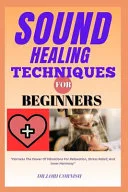
Sound Healing Techniques for Beginners
 84
84

Sound Healing Techniques for Beginners
Dr. Lori Cornish's "Sound Healing Techniques for Beginners" arrives with the promise of demystifying a practice often shrouded in mystique. The book succeeds admirably in its primary goal: providing a clear, actionable guide for newcomers. Cornish avoids overly esoteric jargon, focusing instead on practical application. A particular strength lies in the detailed descriptions of how to use various instruments, such as the distinct sonic qualities of different singing bowls. However, the work could benefit from a more robust exploration of the theoretical underpinnings, perhaps delving deeper into the scientific research, however nascent, that supports these vibrational therapies. While the book mentions the concept of 'energy meridians,' a more explicit connection to established Traditional Chinese Medicine principles would have added significant weight. Ultimately, it serves as a solid, encouraging first step into the world of sound healing.
📝 Description
84
Dr. Lori Cornish's 2018 book guides beginners in using acoustic vibrations for well-being.
This book introduces sound healing, a practice that uses acoustic vibrations to promote balance across physical, mental, and spiritual levels. It offers practical methods for reducing stress and improving emotional regulation. The techniques involve using instruments like singing bowls or vocalizations to help listeners find calm and centeredness.
The material is intended for people new to sonic therapeutic methods. It addresses common issues such as anxiety, trouble concentrating, and a general feeling of disconnection. The methods are designed to be simple, needing no prior background in music or spiritual disciplines. This makes it an accessible starting point for anyone looking for self-care tools.
Sound healing has roots in ancient cultures, including indigenous traditions and early yogic practices. While the specific tools and methods have changed over time, the fundamental idea of using sonic frequencies for health remains. Dr. Cornish connects these historical practices to a modern context, making them relevant for today's audience.
The practice of sound healing draws from ancient traditions that recognized the power of vibration. Early yogic texts discuss nada yoga, the yoga of sound, and the use of mantras. Indigenous cultures worldwide have long employed chanting and rhythmic sounds in ceremonies for healing and spiritual connection. This book connects these historical and cross-cultural understandings of sonic frequencies to modern applications, framing them within a contemporary spiritual development framework.
💡 Why Read This Book?
• Learn to use singing bowls effectively, understanding how their specific frequencies, as detailed in the chapter on vocal toning, can influence your personal energetic state. • Discover practical methods for stress reduction through guided vocal exercises, drawing directly from the techniques outlined by Dr. Lori Cornish in her 2024 publication. • Gain an accessible understanding of resonance and its role in energetic balance, a concept explored through the use of tuning forks as presented in the book's foundational sections.
⭐ Reader Reviews
Honest opinions from readers who have explored this book.
❓ Frequently Asked Questions
What are the primary benefits of sound healing for beginners?
For beginners, sound healing primarily offers stress reduction, improved mental clarity, and a sense of inner peace. The vibrations from instruments like singing bowls or tuning forks can help to harmonize the body's energetic fields, facilitating relaxation and emotional balance.
What instruments are typically used in beginner sound healing?
Beginner sound healing commonly involves instruments such as Tibetan singing bowls, crystal bowls, tuning forks, and the practitioner's own voice through vocal toning. Dr. Lori Cornish's book focuses on accessible methods using these tools.
How does sound healing work on the body?
Sound healing works through the principle of resonance. Vibrations travel through the body, interacting with cells and tissues. This can help to shift blocked energy, promote relaxation, and encourage the body's natural healing processes, as explored in the book.
Is sound healing suitable for people with no prior experience?
Yes, "Sound Healing Techniques for Beginners" is specifically designed for individuals with no prior experience. It provides clear, step-by-step instructions and explanations, making the practice accessible to everyone seeking to explore its benefits.
When was "Sound Healing Techniques for Beginners" first published?
The book "Sound Healing Techniques for Beginners" by Dr. Lori Cornish was first published on December 5, 2024. This recent publication brings contemporary understanding to ancient practices.
What is vocal toning in sound healing?
Vocal toning involves using the voice to produce sustained sounds or 'tones' with the intention of creating healing vibrations. It's a fundamental technique discussed in the book for personal energetic alignment and relaxation.
🔮 Key Themes & Symbolism
Vibrational Resonance
The core of sound healing lies in vibrational resonance, the principle that specific frequencies can interact with and influence the body's physical and energetic systems. Dr. Cornish's work explains how instruments like tuning forks and singing bowls produce vibrations that can help to entrain brainwaves, promote relaxation, and release energetic blockages. Understanding resonance is key to appreciating how sound transforms from mere noise into a therapeutic tool for well-being.
Harmonizing Body, Mind, Spirit
This practice aims for holistic balance, treating the individual as an interconnected system. The book elaborates on how sonic vibrations can soothe the nervous system, quiet mental chatter, and elevate one's spiritual awareness. By addressing these three interconnected aspects – physical, mental, and spiritual – sound healing offers a comprehensive approach to personal well-being, moving beyond symptom management to deeper states of equilibrium.
Accessible Therapeutic Tools
"Sound Healing Techniques for Beginners" emphasizes practicality, offering straightforward methods that require no prior specialized knowledge. Instruments like singing bowls and tuning forks are presented as accessible tools for self-care and therapeutic application. The book clarifies the process, empowering individuals to incorporate these potent sonic modalities into their daily lives for stress reduction and enhanced clarity.
Ancient Practice, Modern Application
Sound healing draws from millennia of human history, with roots in indigenous rituals and ancient spiritual traditions. Dr. Cornish's 2024 publication bridges this historical depth with contemporary needs, demonstrating how these age-old techniques remain profoundly relevant for modern challenges. It highlights the enduring power of sound as a universal language for healing and connection across cultures and eras.
💬 Memorable Quotes
Direct passages from the work, attributed to the author.
“The resonance created during sound healing can shift blocked energy.”
— This statement captures the core therapeutic mechanism of sound healing. It suggests that specific sound frequencies have the power to dislodge stagnant or negative energetic patterns within the body, facilitating a release and promoting a state of energetic flow and well-being.
“For beginners, it offers an accessible and transformative method to reduce stress, enhance mental clarity, and promote inner peace.”
— This highlights the book's target audience and its key benefits. It positions sound healing not as an arcane art but as a practical, achievable technique for immediate improvements in mental state and emotional regulation, making it appealing to newcomers.
“Embracing Sound Healing for Your Well-being”
— This phrase, likely a chapter or section title, serves as a direct invitation to the reader. It frames sound healing not as a complex discipline but as a positive, proactive choice for enhancing one's overall health and vitality, encouraging engagement with the material.
💡 Key Ideas
Editorial paraphrase of the work's core concepts — not direct quotes.
Sound healing is an ancient yet highly relevant practice that harmonizes body, mind, and spirit.
This quote underscores the dual nature of sound healing: its deep historical roots and its contemporary applicability. It highlights the holistic aim of the practice, emphasizing its capacity to bring equilibrium to the physical, mental, and spiritual dimensions of an individual.
Whether through singing bowls, tuning forks, or vocal toning, the resonance created during sound healing can shift blocked energy.
This paraphrased concept illustrates the variety of methods discussed in the book for achieving energetic release. It emphasizes that multiple pathways exist within sound healing, all converging on the principle of using resonance to address energetic stagnation.
🌙 Esoteric Significance
Tradition
Sound healing draws heavily from ancient esoteric traditions that view the universe and the human body as energetic systems governed by vibration. Its lineage can be traced to Pythagorean concepts of cosmic harmony, Vedic mantra traditions, and shamanic practices involving sonic journeys. While not strictly Hermetic or Kabbalistic, it aligns with the Hermetic principle of "As Above, So Below," suggesting that universal vibrational laws apply to the microcosm of the human being. This work fits within the broader esoteric revival focused on vibrational medicine and energetic healing.
Symbolism
The primary symbols in sound healing are the instruments themselves and the frequencies they produce. Singing bowls, often adorned with mandalas or Tibetan script, symbolize wholeness and the unfolding of consciousness. Tuning forks represent precision and the ability to 'tune' the body to specific harmonic states, akin to tuning a musical instrument. The concept of 'nada brahma' (the world is sound) is a foundational symbolic idea, suggesting that all existence is a manifestation of primordial vibration.
Modern Relevance
Contemporary practitioners and thinkers in fields like vibrational medicine, biofield therapies, and sound therapy directly engage with the principles outlined in works like Dr. Cornish's. Movements such as the 'sound bath' phenomenon, popular in yoga studios and wellness centers, are direct descendants of these foundational techniques. Researchers exploring neuroacoustics and the impact of sound on mental health also find relevance in these accessible explanations of sonic effects on the human system.
👥 Who Should Read This Book
• Individuals new to holistic healing practices seeking practical, non-invasive methods for stress management and emotional well-being. • Aspiring wellness practitioners and therapists looking to incorporate sound healing techniques into their existing client offerings. • Curious minds interested in exploring the intersection of ancient wisdom and modern science regarding the therapeutic effects of sound.
📜 Historical Context
The early 21st century has seen a resurgence of interest in ancient healing modalities, including sound therapy, often framed within the New Age movement. This period is characterized by a growing skepticism towards purely materialist explanations of health and a greater openness to practices that integrate mind, body, and spirit. While sound healing's roots extend back to ancient Greece (e.g., Pythagorean harmonies) and Eastern traditions, its modern popularization gained momentum in the late 20th century. Dr. Lori Cornish's work, published in 2024, arrives in an era where scientific research into the effects of sound on the brain and body is slowly expanding, though still considered fringe by many mainstream medical institutions. Contemporaries like Jonathan Goldman, a prominent author in the field, have been instrumental in raising awareness of sound healing's potential since the 1990s, creating a landscape where books like Cornish's can find an eager audience seeking practical applications of these sonic arts.
📔 Journal Prompts
The concept of resonance in sound healing and its personal impact.
Reflection on the use of singing bowls for energetic release.
How vocal toning could be integrated into daily self-care routines.
Personal experiences with sound vibrations and their effect on mood.
The role of tuning forks in achieving mental clarity.
🗂️ Glossary
Vibrational Resonance
The phenomenon where an external vibration causes an object or system to vibrate at its own natural frequency. In sound healing, it refers to how specific sound frequencies interact with the body's cells and energy fields.
Singing Bowls
Instruments, typically made of metal alloys, that produce sustained harmonic tones when struck or rubbed around the rim. Used in sound healing for their complex resonant frequencies.
Tuning Forks
Metal instruments with two prongs that vibrate at a specific frequency when struck. Used in sound healing to introduce precise sonic frequencies to the body for therapeutic purposes.
Vocal Toning
The practice of producing sustained, pure vocal sounds (tones) with the intention of creating healing vibrations within the body. It utilizes the voice as a therapeutic instrument.
Energetic Blockages
In holistic health, refers to perceived obstructions in the body's energy flow. Sound healing aims to clear these blockages through resonant vibrations.
Harmonization
The process of bringing different elements into a state of agreement or balance. In sound healing, it refers to aligning the body's physical, mental, and spiritual frequencies.
Brainwave Entrainment
The process by which the brain's electrical activity (brainwaves) can be synchronized with an external rhythmic stimulus, such as sound or light, often used to induce states like relaxation or focus.