Autobiography of a Yogi

 73
73

Autobiography of a Yogi
Paramahansa Yogananda’s autobiography is more than a spiritual memoir; it’s a narrative that attempts to bridge Eastern yogic traditions with Western understanding. The strength lies in its vivid descriptions of Indian spiritual culture and its array of saints and yogis, presented with a disarming sincerity. Yogananda’s account of his early life and his training under Sri Yukteswar Giri is particularly compelling, offering a glimpse into a structured spiritual discipline. However, the narrative sometimes verges on hagiography, with less critical examination of the extraordinary events described. The section detailing his travels and lectures in America, following his arrival in Boston in 1920, showcases his dedication to spreading his teachings but can feel repetitive in its focus on his reception.
Overall, the book serves as a foundational text for many in the West seeking to understand yoga beyond its physical postures.
📝 Description
73
Paramahansa Yogananda's autobiography, published in 1946, tells of his life and spiritual path.
Autobiography of a Yogi recounts the life of Paramahansa Yogananda, from his childhood in India to his mission in the West. It describes his encounters with saints and yogis, including his guru, Swami Sri Yukteswar Giri. The book details Yogananda's spiritual training and his experiences with yogic phenomena. He explains these as manifestations of yogic science, accessible to sincere practitioners. The narrative covers his early life in Gorakhpur and his eventual arrival in America to spread the teachings of Kriya Yoga.
The work discusses core spiritual concepts like karma, reincarnation, and the nature of divine realization. Yogananda emphasizes the guru-disciple relationship as central to spiritual growth. He also highlights the fundamental unity he perceived across different religious paths. The book aims to present yogic philosophy and practices in a way that resonates with a Western audience, moving beyond mere folklore.
Published in 1946, Yogananda's autobiography arrived as Western interest in Eastern spiritual traditions grew. It introduced many to the concepts of Vedanta and yogic philosophy through the lens of a specific lineage. The book connects the spiritual practices of India with the pursuit of direct experience of God, presenting yoga as a science for spiritual development. It follows a tradition of spiritual autobiographies that aim to demonstrate the efficacy of a particular path through personal testimony.
💡 Why Read This Book?
• Gain insight into the life and teachings of Paramahansa Yogananda, understanding his mission to bring Kriya Yoga to the West after his arrival in America in 1920. • Explore the spiritual landscape of early 20th-century India through Yogananda’s encounters with figures like Sri Yukteswar Giri and his descriptions of yogic practices. • Understand the core tenets of yogic philosophy, such as the guru-disciple dynamic and the concept of divine realization, as presented in the book's extensive discussions.
⭐ Reader Reviews
Honest opinions from readers who have explored this book.
❓ Frequently Asked Questions
When was Autobiography of a Yogi first published?
Autobiography of a Yogi was first published in 1946 by the Philosophical Library in New York City.
Who was Yogananda's guru?
Yogananda's primary guru was Swami Sri Yukteswar Giri, a disciple of Lahiri Mahasaya and a master in the Kriya Yoga lineage.
What is Kriya Yoga as described in the book?
Kriya Yoga is presented as an ancient yogic technique for accelerating spiritual evolution, involving specific breathing and meditation methods passed down through a guru-disciple lineage.
Where did Yogananda establish his spiritual work in the West?
Yogananda established his Self-Realization Fellowship (SRF) in Los Angeles, California, after years of lecturing and teaching across the United States starting in 1920.
Does the book discuss other spiritual traditions?
Yes, the autobiography frequently draws parallels between yogic philosophy and the teachings of Christ and other world religions, emphasizing a universal spiritual truth.
Are there specific spiritual centers mentioned?
Key locations include Yogananda's childhood home in Gorakhpur, India, his ashram in Ranchi, and later his Self-Realization Fellowship headquarters in Los Angeles.
🔮 Key Themes & Symbolism
Guru-Disciple Lineage
The book strongly emphasizes the necessity of a living guru for spiritual guidance. Yogananda details his own profound connection with Sri Yukteswar Giri, illustrating how the guru transmits spiritual energy and wisdom. This relationship is portrayed not merely as mentorship but as a vital energetic and consciousness link essential for progressing on the yogic path, a concept central to the Kriya Yoga tradition.
Yogic Science and Miracles
Yogananda presents yogic abilities, often perceived as miracles, as natural extensions of spiritual development and mastery over the body and mind. He describes phenomena like levitation, materialization, and instantaneous travel, attributing them to advanced yogic science rather than supernatural intervention. This framing aims to explain these occurrences for a Western audience, presenting them as attainable through dedicated practice and divine grace.
Unity of Religions
A recurring theme is the underlying unity of diverse religious paths. Yogananda frequently draws parallels between the teachings of Jesus Christ and the yogic traditions of India. He posits that different religions are essentially different expressions of the same ultimate truth, advocating for a universal spiritual understanding that transcends sectarian differences.
Spiritual Evolution
The autobiography maps out a path of spiritual evolution, from mundane existence to divine consciousness. It outlines the principles of karma, reincarnation, and the role of yogic practices in purifying the mind and body, thereby facilitating liberation. The journey is presented as a gradual unfolding, achievable through diligent effort, devotion, and the grace of God and guru.
💬 Memorable Quotes
Direct passages from the work, attributed to the author.
“The soul is the only immortal thing.”
— This statement underscores the book's emphasis on the eternal nature of consciousness, contrasting it with the transient physical body and material world.
“You are the master of your fate, the captain of your soul.”
— This reflects the concept of individual agency and responsibility in spiritual development, highlighting the power of one's own will and choices.
“I wanted to do one thing supremely well: to be a real guru.”
— This interpretation points to Yogananda's dedication to his spiritual mission and his commitment to embodying the qualities of an authentic spiritual teacher.
“The universe is a manifestation of God's thought.”
— This idea presents a monistic view, suggesting that all existence originates from divine consciousness, linking the macrocosm of the universe to the microcosm of individual awareness.
“Where there is love for God, there is also love for all.”
— This highlights the interconnectedness of divine love with universal compassion, suggesting that true spiritual love naturally extends to all beings.
🌙 Esoteric Significance
Tradition
The work is deeply rooted in the yogic tradition of India, particularly the lineage of Kriya Yoga as passed down through Lahiri Mahasaya, Sri Yukteswar Giri, and Yogananda himself. It aligns with the broader Hindu philosophical framework of Vedanta, emphasizing the ultimate reality of Brahman and the potential for individual realization of this truth (Atman). It departs from purely ascetic traditions by advocating for spiritual engagement within the world, as Yogananda himself did in the West.
Symbolism
The serpent, often depicted coiled at the base of the spine, symbolizes Kundalini energy, the dormant spiritual force that yogis aim to awaken. The lotus flower represents purity, spiritual enlightenment, and the unfolding of consciousness, often seen as the seat of divine awareness within the body. The guru's touch or glance is a potent symbol of spiritual transmission, representing the transfer of divine grace and knowledge that accelerates a disciple's progress.
Modern Relevance
Contemporary yoga practitioners, meditation instructors, and spiritual seekers continue to draw inspiration from Yogananda's narrative. His emphasis on the integration of spiritual life with everyday activities and his articulation of yogic science have influenced numerous modern spiritual movements and teachers. Thinkers exploring consciousness studies and comparative mysticism often reference his work as a foundational text for understanding Eastern spirituality in a global context.
👥 Who Should Read This Book
• Aspiring yogis and meditators seeking a deeper understanding of the philosophical and spiritual underpinnings of their practice, beyond physical postures. • Students of comparative religion interested in the historical introduction of Indian spiritual traditions, particularly Kriya Yoga, to the Western world in the mid-20th century. • Individuals exploring personal spiritual journeys who are drawn to biographical accounts of masters and the path of devotion and self-discovery.
📜 Historical Context
Autobiography of a Yogi landed in American bookstores in 1946, a period when interest in Eastern spirituality was gaining momentum, spurred by earlier waves of interest in Vedanta and Theosophy. Figures like Swami Vivekananda had already introduced Indian philosophy to the West in the late 19th century. Yogananda’s work provided a more personal and narrative-driven account of yogic traditions, specifically Kriya Yoga, making complex spiritual concepts accessible to a broader audience. The book’s publication by the Philosophical Library, known for its intellectual and spiritual texts, signaled its reception within academic and philosophical circles. It arrived at a time when Westerners were increasingly seeking alternatives to traditional Western religious frameworks, finding resonance in the holistic approach to consciousness and self-realization offered by yogic teachings.
📔 Journal Prompts
The concept of Kriya Yoga and its role in spiritual advancement.
Yogananda's early encounters with spiritual figures in India.
The significance of the guru-disciple relationship described.
Reflections on the unity of religions as presented by Yogananda.
The pursuit of divine realization through yogic practices.
🗂️ Glossary
Kriya Yoga
An ancient yogic technique of meditation and breath control taught by Yogananda, designed to accelerate spiritual evolution and bring about union with the divine.
Guru
A spiritual teacher or master in Hinduism, revered for their wisdom and ability to guide disciples on the path to enlightenment.
Ashram
A spiritual hermitage or monastery in India, often serving as a center for religious instruction and practice.
Saints
Individuals recognized for exceptional holiness and spiritual attainment, often believed to possess divine powers or insights.
Karma
The law of cause and effect, where actions in this life and past lives determine future circumstances and spiritual destiny.
Reincarnation
The belief that the soul is reborn into a new physical body after death, continuing its spiritual journey through multiple lifetimes.
Self-Realization Fellowship (SRF)
The spiritual organization founded by Paramahansa Yogananda in 1920 to disseminate his teachings on yoga and meditation worldwide.
🔮 Readers Also Liked
Browse all →









More by Yogananda Paramahansa
All books →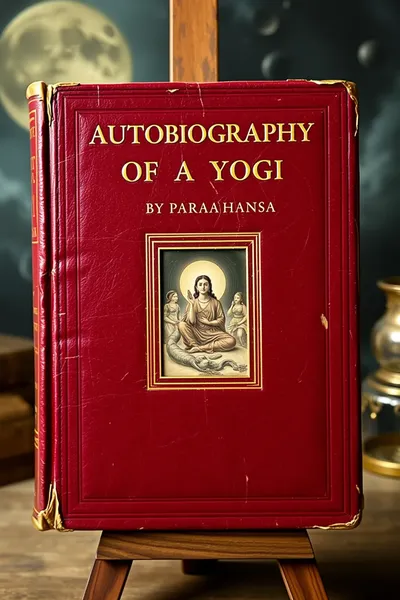





More Free Occult Philosophy Books
View all →