Contemporary Esotericism
 83
83

Contemporary Esotericism
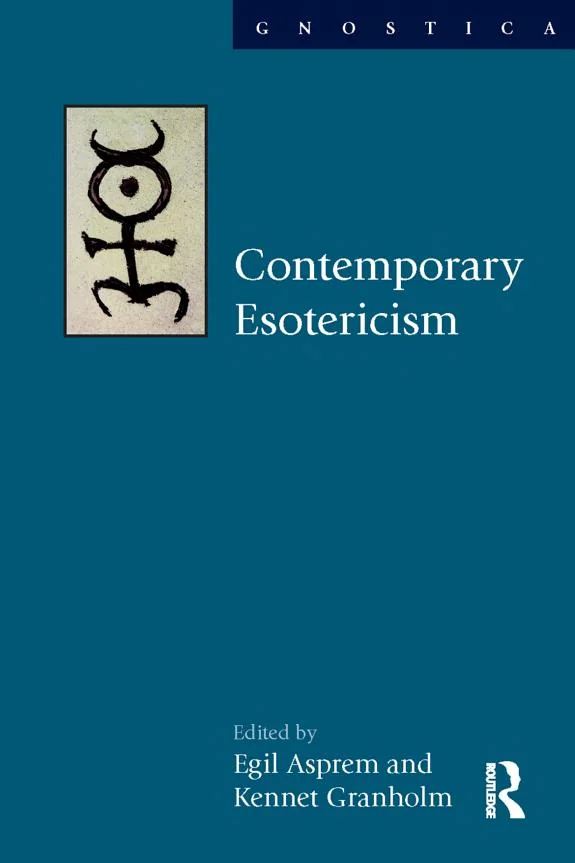
The academic field of Western esotericism has long been fascinated with its historical roots, but Egil Asprem and Kennet Granholm's edited volume, *Contemporary Esotericism*, pivots sharply to the present. The collection provides a much-needed survey of esoteric thought as it exists and evolves today, moving beyond retrospective analysis. Its strength lies in its interdisciplinary approach, drawing from social sciences to offer fresh perspectives on phenomena like online spiritual communities and the globalization of esoteric ideas. A particular standout is the exploration of how concepts like chaos magic adapt and spread. However, the collection occasionally suffers from the inherent fragmentation of an edited volume; some essays feel more developed than others. The work's commitment to assessing current discourse is its primary contribution, offering a robust starting point for understanding the ongoing life of esoteric traditions.
📝 Description
83
Published in 2014, Contemporary Esotericism examines the current state of Western esoteric thought.
This 2014 collection, edited by Egil Asprem and Kennet Granholm, addresses a gap in scholarly work by focusing on how Western esoteric traditions manifest and evolve today. It gathers contributions from various academics, offering different approaches to understanding contemporary esotericism. The book moves past purely historical accounts to analyze esoteric ideas and practices as living, changing phenomena in the modern world. It is aimed at academics studying Western esotericism and religious studies, as well as advanced students. Serious practitioners and enthusiasts interested in a critical look at their subject matter will also find value here. The work is useful for those who study the intersection of social sciences and religion, especially concerning less conventional spiritual movements.
The academic study of Western esotericism has a history, with earlier work by scholars like Frances Yates and Antoine Faivre. However, much of that research looked at older movements. Contemporary Esotericism was created to fill the need for a study of current esoteric discourse. It appeared at a time when online communities and global connections were quickly changing how esoteric ideas and practices formed and spread, a shift not yet fully captured by established academic methods. The volume directly confronts this changing environment.
The academic study of Western esotericism gained momentum in the late 20th century, building on earlier historical research. Contemporary Esotericism emerged in 2014 to specifically address the understudied *current* state of esoteric discourse. It was published during a period of rapid transformation for esoteric practices and ideas, driven by online communities and globalization. This volume confronts the challenge of understanding these evolving phenomena within established academic frameworks, moving beyond historical surveys to analyze living traditions.
💡 Why Read This Book?
• Learn how social science theories, particularly from the mid-2010s, can be applied to understand contemporary esoteric movements, moving beyond purely historical analysis as seen in discussions of modern magical orders. • Gain an understanding of the impact of digital media and globalization on the dissemination and practice of esoteric ideas, a key focus following the book's 2014 publication. • Discover new academic methodologies for studying fluid, decentralized spiritual phenomena, a crucial takeaway for anyone interested in the academic study of esoteric discourse.
⭐ Reader Reviews
Honest opinions from readers who have explored this book.
❓ Frequently Asked Questions
What academic disciplines are most represented in the study of contemporary esotericism?
The study of contemporary esotericism draws heavily from religious studies and sociology. It also incorporates anthropology, cultural studies, and media studies to analyze the social, cultural, and technological factors influencing esoteric movements since the early 2000s.
How does contemporary esotericism differ from historical Western esotericism?
Contemporary esotericism is characterized by its adaptation to modern technologies, globalization, and secularization. Unlike historical forms often tied to specific cultural contexts or secret societies, contemporary esotericism is more decentralized, accessible, and often synthesized from diverse sources.
What is the significance of the book's publication date, 2014?
Published in 2014, the book captures a pivotal moment when the internet had significantly reshaped esoteric communication and practice, and the academic study of Western esotericism was beginning to mature. It addresses the evolving nature of these traditions.
Does the book discuss specific contemporary esoteric traditions or movements?
Yes, the work explores a range of contemporary esoteric phenomena, including new religious movements, online spiritual communities, and the adaptation of older traditions like Hermeticism and occultism to modern contexts.
What are some of the challenges in studying contemporary esotericism?
Challenges include the fluid and often non-institutional nature of contemporary groups, the difficulty in accessing private practices, and the need for new theoretical frameworks to analyze phenomena shaped by digital media and globalization.
Who are Egil Asprem and Kennet Granholm?
Egil Asprem and Kennet Granholm are scholars specializing in the academic study of Western esotericism. They co-edited this volume to provide a comprehensive overview of the field's contemporary state, reflecting on scholarship from the early 21st century.
🔮 Key Themes & Symbolism
Academic Study of Esotericism
This volume positions itself within the growing academic discipline of Western esotericism, arguing for a greater focus on contemporary manifestations rather than solely historical movements. It champions the use of social scientific methodologies, such as those employed in analyzing new religious movements, to understand the living traditions of esotericism. The work addresses the challenges of defining and categorizing esoteric phenomena in the early 21st century, moving beyond outdated classifications and embracing the complexity of modern spiritual landscapes.
Globalization and Digital Dissemination
A significant theme is how globalization and digital technologies have reshaped esoteric practices and communities since the late 20th century. The book examines the internet's role in creating virtual esoteric networks, facilitating the syncretism of diverse traditions, and accelerating the spread of occult and magical ideas. It analyzes how geographical boundaries have become less relevant, allowing for unprecedented cross-cultural exchange and the formation of decentralized, online-centric esoteric groups.
Modernization and Esoteric Belief
The collection investigates the relationship between modernity, secularization, and the persistence or adaptation of esoteric beliefs. It explores how individuals engage with esoteric ideas in a world often characterized by scientific rationalism, questioning whether esotericism represents a retreat from or a transformation of modern sensibilities. The work considers how esoteric traditions offer alternative frameworks for understanding the self, the cosmos, and the sacred in contemporary life.
Methodological Innovations
Contemporary Esotericism advocates for innovative research methods to adequately study its subject matter. It calls for moving beyond traditional historical-critical approaches to embrace theories and tools from sociology, anthropology, and media studies. This includes analyzing online discourse, virtual communities, and the performative aspects of contemporary esoteric practice, thereby offering new possibilities for scholarly inquiry into these dynamic spiritual fields.
💬 Memorable Quotes
Direct passages from the work, attributed to the author.
“The study of contemporary esoteric discourse has hitherto been a largely neglected part of the new academic field of Western esotericism.”
— This statement highlights the book's central thesis: that academic attention has historically favored older esoteric traditions, leaving the vibrant, evolving range of modern esotericism under-examined. It underscores the volume's aim to rectify this scholarly imbalance.
“Combining historiographical analysis with theories and methodologies from the social sciences, the volume explores new problems and offers new possibilities for the study of esoterica.”
— This points to the book's interdisciplinary approach, blending historical research with sociological and anthropological frameworks. It signals an intent to develop novel analytical tools for understanding the complex phenomena of contemporary esoteric movements.
“The complex world of Western esoteric thought today.”
— This phrase emphasizes the complex and intricate nature of modern esoteric beliefs and practices. It suggests that the book aims to map this complex terrain, acknowledging its diverse expressions and internal dynamics.
“Provides a broad overview and assessment of the complex world of Western esoteric thought today.”
— This signifies the book's dual purpose: to offer a comprehensive survey of current esoteric trends and to critically evaluate them using scholarly analysis. It promises a balanced perspective on the subject matter.
💡 Key Ideas
Editorial paraphrase of the work's core concepts — not direct quotes.
Contemporary Esotericism studies the period since the 1...
This quote, though incomplete in the blurb, indicates the book's focus on recent history and present-day developments in esotericism, marking a distinct departure from scholarship concentrating solely on earlier centuries.
🌙 Esoteric Significance
Tradition
This work engages with the broad lineage of Western esotericism, encompassing traditions from Hermeticism and Gnosticism to modern occultism and New Age spirituality. It represents a shift within this lineage towards self-reflexive academic study, moving beyond the internal doctrines of specific traditions to analyze their contemporary forms and social impact. It fits within the tradition by documenting its ongoing evolution, while departing by prioritizing sociological and media-based analysis over purely doctrinal or historical accounts.
Symbolism
While the book's focus is on discourse and practice, it implicitly engages with symbols crucial to modern esotericism. Concepts like the "chaos" in chaos magic, representing the unformed potential from which reality emerges, are central. The digital realm itself can be seen as a modern symbolic space where new forms of ritual and community manifest, often reinterpreting ancient symbols like the Ouroboros or the Tree of Life through a contemporary lens.
Modern Relevance
Contemporary thinkers and practitioners involved in fields such as digital occultism, comparative religion, and the sociology of spirituality draw heavily on this volume. Its assessment of how esoteric ideas function in a globalized, technologically mediated world remains highly relevant for understanding contemporary spiritual seekers, online communities, and the ongoing adaptation of esoteric traditions in the 21st century.
👥 Who Should Read This Book
• Researchers in religious studies and cultural history seeking to understand the current range of Western esoteric movements beyond historical surveys. • Students of sociology and anthropology interested in applying social scientific theories to analyze contemporary spiritual and subcultural phenomena. • Practitioners and enthusiasts of occultism, magic, and alternative spiritualities who desire a critical, academic perspective on the evolution and dissemination of their fields since the early 2000s.
📜 Historical Context
Emerging in 2014, *Contemporary Esotericism* arrived at a time when the academic study of Western esotericism, pioneered by scholars like Antoine Faivre and Wouter J. Hanegraaff, was solidifying its place in universities. However, much of this scholarship remained rooted in historical analysis, focusing on figures like Swedenborg or movements like Theosophy. The early 21st century, marked by the rapid expansion of the internet and increased globalization, had seen esoteric ideas proliferate and transform in unprecedented ways. This volume sought to bridge the gap between historical scholarship and the lived reality of modern esoteric practices, which were often decentralized and digitally mediated. While established occult orders continued their work, new forms of magic and spirituality were flourishing online, presenting a challenge to existing analytical frameworks. The book engaged with these shifts, proposing new ways to understand phenomena that defied easy categorization.
📔 Journal Prompts
The academic field of Western esotericism and its contemporary focus.
Globalization's impact on esoteric discourse and practice.
Methodological challenges in studying decentralized spiritual groups.
The relationship between modernization and the persistence of esoteric belief.
The role of digital media in disseminating esoteric ideas since 2000.
🗂️ Glossary
Western Esotericism
A broad academic category encompassing diverse spiritual, mystical, and magical traditions originating in Europe and the Mediterranean, including Hermeticism, Kabbalah, alchemy, and modern occultism, particularly as they have evolved since the Renaissance.
Esoteric Discourse
The language, concepts, and communication patterns employed within esoteric traditions, including their scholarly analysis, public representation, and internal dialogues.
Historiographical Analysis
The study of the history of historical writing itself, examining how historical accounts of esoteric movements have been constructed, interpreted, and debated over time.
Social Sciences
Disciplines such as sociology, anthropology, psychology, and political science that study human society and social relationships, applied here to understand the social dimensions of esoteric groups.
New Religious Movements (NRMs)
A term used in religious studies to describe religious or spiritual groups that are relatively new, distinct from established religions, and sometimes face societal suspicion or controversy.
Syncretism
The merging or blending of different, often seemingly contradictory, religious or philosophical beliefs, symbols, and practices into a new, cohesive system.
Disenchantment
A concept, often associated with sociologist Max Weber, describing the process in modern societies where traditional beliefs, magic, and supernatural explanations are replaced by rational, scientific, and bureaucratic modes of thought.
This book appears in 1 collection
🔮 Readers Also Liked
Browse all →








From the “Western Esotericism” Collection
View all →







More Free Occult Philosophy Books
View all →