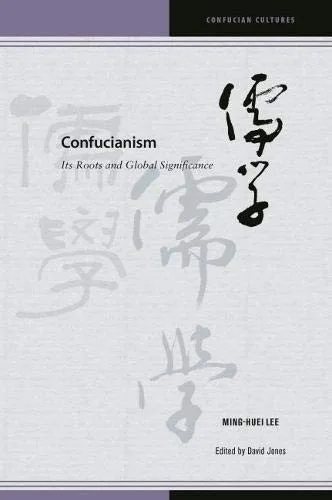
Confucianism
 83
83

Confucianism
Ming-huei Lee, David Edward Jones, and Roger T. Ames's "Confucianism" offers a sober and comprehensive overview, eschewing sensationalism for scholarly rigor. The strength lies in its meticulous unpacking of core concepts like *li* and *ren*, grounding them in specific textual references. For instance, the discussion on the rectification of names provides a clear lens through which to understand Confucian political philosophy. However, the book’s academic tone, while commendable for its depth, can occasionally feel dense for the casual reader. A more direct engagement with how these ancient ideas might be adapted to contemporary, non-Chinese contexts could have enhanced its practical appeal. Nonetheless, it serves as a solid academic resource for understanding the foundational elements of this influential tradition.
📝 Description
83
Published in 2010, this volume examines Confucianism not just as history, but as a living ethical framework.
This book presents Confucianism as a practical ethical and social system, not solely a historical philosophy. It scrutinizes the core texts and principles, detailing the development and ongoing relevance of Confucian thought for personal growth and societal harmony. The work is intended for a serious academic audience, including students of philosophy, comparative religion, and East Asian studies who need a thorough grasp of the subject. It also speaks to those interested in the philosophical foundations of ethics and governance, especially when examining traditions outside the Western canon.
The origins of Confucianism lie in China's Spring and Autumn period (771–476 BCE), a time of great social and political change. Confucius, born in 551 BCE, aimed to reestablish order and moral conduct by revitalizing older values. His teachings, mainly recorded in the Analects, became a central part of Chinese thought, shaping governance, education, and social customs for over two thousand years. This volume places Confucianism within this broad historical context, noting its transformations across dynasties and its engagement with other schools of thought such as Taoism and Buddhism.
While not strictly an esoteric text in the Western sense, Confucianism functions as a profound system for ordering both the cosmos and the self. Its emphasis on cultivating virtue, understanding one's role in society, and harmonizing human relationships can be seen as a form of practical gnosis. The meticulous study of ritual (*li*) and the cultivation of benevolence (*ren*) serve as methods for aligning the individual with a larger cosmic and social order, a common aim in many traditions that seek inner transformation through structured practice and ethical living.
💡 Why Read This Book?
• Gain a precise understanding of *ren* (benevolence) and *li* (ritual propriety) as defined within the foundational texts, offering insights into ethical frameworks distinct from Western philosophy. • Explore the concept of the rectification of names, as discussed in the text, to grasp the Confucian view on the relationship between language, social roles, and political order. • Comprehend the historical development of Confucianism from its origins in the Spring and Autumn period, providing context for its enduring influence on East Asian societies.
⭐ Reader Reviews
Honest opinions from readers who have explored this book.
❓ Frequently Asked Questions
What is the primary focus of the 'Confucianism' book by Lee, Jones, and Ames?
The book offers a comprehensive academic examination of Confucian philosophy, focusing on its foundational texts, key ethical concepts like *ren* and *li*, and its historical development from Confucius's era through its societal influence.
When was Confucianism first published?
The work 'Confucianism' by Ming-huei Lee, David Edward Jones, and Roger T. Ames was first published in 2017, providing a modern scholarly perspective on the ancient tradition.
Who are the main authors of this scholarly work on Confucianism?
The authors are Ming-huei Lee, David Edward Jones, and Roger T. Ames, who bring their expertise to present a detailed analysis of Confucian thought and its historical impact.
What are some key concepts explored in the book concerning Confucianism?
The book delves into essential Confucian ideas such as *ren* (benevolence), *li* (ritual propriety), *xiao* (filial piety), and *zhi* (wisdom), explaining their roles in personal cultivation and social harmony.
Is this book suitable for beginners in philosophy?
While comprehensive, the book is written with an academic audience in mind. Beginners might find it dense, but dedicated readers seeking a deep, scholarly introduction to Confucianism will find it valuable.
How does the book address the historical context of Confucianism?
It situates Confucianism within the Spring and Autumn period (starting around 771 BCE), highlighting Confucius's efforts to restore order and tracing the philosophy's evolution and influence over centuries.
🔮 Key Themes & Symbolism
Ethical Cultivation and Social Harmony
The work meticulously details the Confucian emphasis on self-cultivation as the foundation for societal order. Concepts like *ren* (humaneness) and *li* (propriety) are presented not as abstract ideals but as practical disciplines for individual development. The authors explain how personal ethical growth, particularly through the practice of filial piety (*xiao*), extends outwards to create harmonious family structures and, by extension, a stable state. This interconnectedness underscores the Confucian belief that a well-ordered society begins with the cultivated individual.
The Role of Ritual and Propriety (Li)
A central theme is the significance of *li*, often translated as ritual, propriety, or etiquette. This book argues that *li* is more than mere ceremony; it is the structured expression of respect, social order, and moral awareness. The authors examine how *li* functions to regulate human interactions, define social roles, and cultivate virtue. Understanding *li* is presented as crucial for comprehending how Confucianism sought to establish a predictable and ethical social fabric, guiding individuals in their conduct across various relationships and situations.
Governance and the Rectification of Names
The book explores the Confucian approach to governance, highlighting the principle of the 'rectification of names' (正名, zhèngmíng). This concept, rooted in the idea that words and titles should correspond to reality, is crucial for effective leadership and social order. The authors explain how Confucius believed that rulers must embody their titles and that clear definitions of roles and responsibilities are essential. This theme connects personal ethics with political philosophy, arguing that a just state requires leaders who act virtuously and citizens who understand their duties.
The Importance of Education and Wisdom (Zhi)
Education and the pursuit of wisdom (*zhi*) are presented as indispensable elements within the Confucian framework. The work discusses how Confucius viewed learning not merely as the acquisition of knowledge but as a process of moral development and self-discovery. The authors illustrate how education, coupled with the cultivation of virtues like benevolence and righteousness, enables individuals to understand their place in the cosmos and contribute to the well-being of society. This theme emphasizes the active, lifelong commitment to learning that Confucianism advocates.
💬 Memorable Quotes
Direct passages from the work, attributed to the author.
“Benevolence (*ren*) is the fundamental virtue of humaneness and compassion.”
— This interpretation defines *ren*, a central concept in Confucianism. It emphasizes that *ren* is the essence of being human, encompassing empathy, kindness, and a deep concern for the welfare of others, forming the bedrock of ethical conduct.
“Ritual propriety (*li*) provides the structure for moral expression.”
— This interpretation explains *li* as more than just rules. It frames ritual and propriety as the essential forms and practices through which moral intentions are manifested and social relationships are properly maintained and cultivated.
💡 Key Ideas
Editorial paraphrase of the work's core concepts — not direct quotes.
The rectification of names means that words and their meanings must align with reality.
This paraphrased concept highlights a core Confucian political and social principle. It asserts that for society and governance to function effectively, official titles, social roles, and spoken words must accurately reflect the actual status and responsibilities of individuals.
Filial piety (*xiao*) is the root of virtue.
This paraphrased statement underscores the foundational importance of *xiao* in Confucian ethics. It suggests that respect, obedience, and care for one's parents and elders are the primary training ground for developing all other moral qualities.
Wisdom (*zhi*) involves understanding the Way (Dao).
This paraphrased concept connects *zhi* to a broader understanding of cosmic and moral order. It implies that true wisdom in Confucianism is not just intellectual but involves discerning and aligning oneself with the proper course of action and existence.
🌙 Esoteric Significance
Tradition
While Confucianism is primarily considered a socio-ethical and philosophical tradition rather than an explicitly esoteric one, its emphasis on self-cultivation, the alignment of the individual with cosmic order (the Way or Dao), and the pursuit of sagehood can be interpreted through an esoteric lens. It shares with traditions like Hermeticism and Neoplatonism a focus on inner transformation as a means to achieve a higher state of being and contribute to universal harmony. Its structured approach to virtue and ritual can be seen as a practical path towards spiritual refinement.
Symbolism
Key symbols in Confucianism, though often secular, carry profound meaning. The character for *ren* (仁), representing benevolence, is composed of 'person' (人) and 'two' (二), symbolizing the harmonious relationship between individuals. *Li* (禮), ritual propriety, can be seen as a symbolic language of social order, where each gesture and observance signifies respect and one's place within the community. The concept of the *junzi* (君子), the noble person or gentleman, symbolizes the ideal of cultivated virtue and ethical leadership, serving as an aspirational archetype.
Modern Relevance
Contemporary thinkers and practitioners in East Asian studies, comparative ethics, and even some strands of self-help literature draw upon Confucian principles. The focus on ethical leadership, the importance of community and social responsibility, and the practice of mindfulness through ritualized behavior resonate with modern concerns about societal fragmentation and personal well-being. Scholars continue to re-examine Confucian texts for insights into governance, education, and interpersonal relationships in a globalized world, demonstrating its continued relevance beyond its historical origins.
👥 Who Should Read This Book
• Students of East Asian philosophy and history seeking a foundational understanding of Confucian thought and its historical impact. • Comparative religion scholars interested in ethical systems and their societal applications beyond the Western canon. • Individuals interested in the philosophical underpinnings of governance, social order, and personal cultivation.
📜 Historical Context
Emerging from the turbulent Spring and Autumn period (771–476 BCE), Confucianism arose as a response to widespread social and political disorder in ancient China. Confucius (551–479 BCE) sought to revive the moral and ethical principles of earlier dynasties, emphasizing personal virtue, filial piety, and good governance. His teachings, primarily recorded in the Analects, profoundly shaped Chinese civilization, influencing its bureaucratic system, educational practices, and social norms for over two millennia. This work situates Confucianism within this vast historical trajectory, acknowledging its evolution through successive dynasties and its ongoing dialogue with other philosophical traditions like Taoism. While not facing overt censorship in the same way as some Western philosophical texts, its dominance sometimes led to the marginalization of competing schools of thought, though it frequently integrated elements from them. The enduring legacy of Confucius is undeniable, making this study vital for understanding East Asian intellectual history.
📔 Journal Prompts
The concept of *ren* (benevolence) as the root of humaneness.
The function of *li* (ritual propriety) in shaping social interactions.
The principle of the rectification of names in governance.
The role of filial piety (*xiao*) in personal and social ethics.
The Confucian ideal of the *junzi* (noble person).
🗂️ Glossary
Ren (仁)
Often translated as benevolence, humaneness, or goodness. It is considered the core virtue in Confucianism, representing the ideal relationship between people and the essence of being human.
Li (禮)
Encompasses ritual, propriety, etiquette, and custom. It refers to the norms of social conduct and ceremonial practices that govern human interactions and cultivate moral character.
Xiao (孝)
Filial piety; the virtue of respect for one's parents, elders, and ancestors. It is considered a fundamental principle of Confucian ethics and the root of all other virtues.
Zhi (智)
Wisdom or knowledge. In Confucianism, it refers to the understanding of moral principles and the ability to apply them in practical situations.
Junzi (君子)
Literally 'son of a ruler,' often translated as 'noble person' or 'gentleman.' It represents the ideal cultivated individual who embodies Confucian virtues and ethical conduct.
Rectification of Names (正名, zhèngmíng)
A principle emphasizing that names, titles, and words should correspond accurately to the reality of the roles and responsibilities they represent for social and political order.
Spring and Autumn period
An era in Chinese history (771–476 BCE) characterized by political fragmentation and warfare, during which Confucius lived and developed his philosophy to restore social order.
🔮 Readers Also Liked
Browse all →









More Free Occult Philosophy Books
View all →