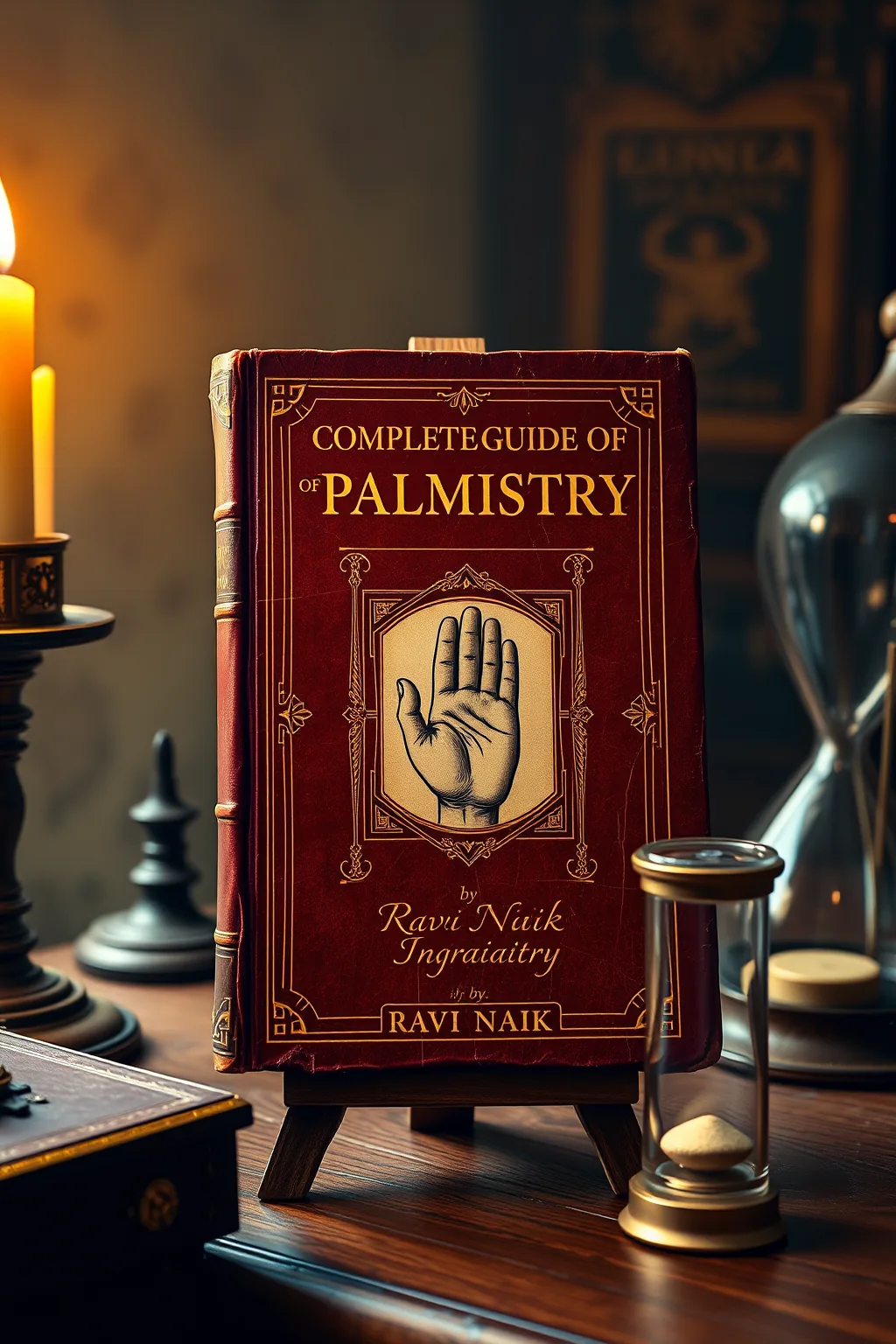
Complete Guide of Palmistry
 61
61

Complete Guide of Palmistry



Cassian Rothmann (Senior Critic, Ancient Wisdom) — Ravi Naik's 'Complete Guide of Palmistry' is a triumphant resurgence of classical chiromantic knowledge. It transcends the superficial, delving into the deep symbolic resonance of each palmographic feature. Naik's exposition is both rigorous and poetically rendered, illuminating the profound metaphysical underpinnings of this ancient art. He skillfully bridges the gap between historical practice and contemporary relevance, offering practitioners a potent toolkit for self-discovery and guidance. This is an essential volume for serious students of divination, a beacon for those seeking to understand the intricate interplay of fate and free will as inscribed upon our hands.
📝 Description
61
Ravi Naik's 'Complete Guide of Palmistry' explains how palm lines, mounts, and shapes connect to destiny.
This book examines chiromancy, the art of palm reading. It details how the lines, mounts, and shapes on a person's hand are thought to reflect their character and future. Naik presents palmistry not just as a method for predicting events, but as a tool for gaining self-understanding. The text aims to make the symbolic language of the hand clear to both new students and experienced practitioners.
Readers will find explanations of how to interpret the various physical features of the palm. The book connects these physical attributes to broader concepts of personal purpose and potential. It encourages a reflective approach to understanding one's life path through the lens of palmistry, linking earthly experiences with celestial ideas.
Palmistry, or chiromancy, is an ancient form of divination that has roots in Hellenistic astrology and Indian Vedic traditions. It posits that the physical characteristics of the hand, including the lines, mounts, and overall shape, are a map of an individual's life, personality, and destiny. This practice is part of a broader esoteric interest in physiognomy and divination, seeking to understand hidden truths and cosmic influences through observable physical traits. Naik's work situates itself within this long tradition of esoteric interpretation.
💡 Why Read This Book?
Unlock the silent language of your destiny. 'Complete Guide of Palmistry' offers profound insights into your personality, potential, and life path, revealed through the intricate markings on your hands. Ideal for spiritual seekers, aspiring diviners, and anyone curious about the ancient wisdom embedded in chiromancy. Discover a powerful tool for self-understanding and personal growth.
⭐ Reader Reviews
Honest opinions from readers who have explored this book.
❓ Frequently Asked Questions
What is palmistry?
Palmistry, or chiromancy, is an ancient art of divination that interprets the lines, mounts, shapes, and other features of the hand to gain insights into a person's character, potential, and future.
Are palmistry readings definitive?
Palmistry reveals tendencies and potentials, not fixed destinies. It offers guidance and self-awareness, emphasizing that free will plays a significant role in shaping one's path.
Can anyone learn palmistry?
Absolutely. With dedication and the right guidance, such as provided in this comprehensive guide, anyone can learn to interpret the language of the hands.
What are the main lines on the palm?
The principal lines are the Life Line, Head Line, Heart Line, and Fate Line. Each carries distinct symbolic meanings related to health, intellect, emotions, and life's journey, respectively.
How does palmistry relate to other esoteric practices?
Palmistry shares roots with astrology, numerology, and tarot, all seeking to understand universal patterns and offer insights into the human condition through symbolic interpretation.
🔮 Key Themes & Symbolism
The Hand as a Cosmic Mirror
This theme explores the profound concept of the hand as a microcosm reflecting the macrocosm of the universe. Each line, mount, and marking is viewed not as a random imprint, but as a divine inscription carrying cosmic resonance. Naik suggests that the patterns on our palms are woven from the same energetic threads that govern the stars and planets, offering a tangible link between our personal journey and universal truths. Understanding these celestial correspondences allows for a deeper appreciation of the interconnectedness of all things.
Decoding the Language of Fate
Here, the focus shifts to the symbolic language of palmistry, treating the hand as a living text waiting to be deciphered. We examine the archetypal meanings of the major lines and mounts, understanding how they narrate the story of our life, our innate talents, our emotional landscapes, and the challenges we may encounter. This theme emphasizes that 'fate' in palmistry is not a rigid decree, but rather a series of potentials and inclinations that can be understood, navigated, and even influenced through conscious awareness and action.
Chiromancy for Self-Actualization
This crucial theme positions palmistry as a powerful tool for personal growth and self-actualization. By understanding the insights revealed in the palm, individuals are empowered to recognize their strengths, address their weaknesses, and make more aligned choices. Naik presents chiromancy not as a passive prediction of the future, but as an active path towards understanding one's true potential and living a more purposeful and fulfilling life. It encourages introspection, self-acceptance, and the proactive shaping of one's destiny.
💬 Memorable Quotes
Direct passages from the work, attributed to the author.
“The hand is a sacred scroll, penned by destiny's own hand.”
— This evocative line suggests that our palms are not random, but carry profound significance, acting as a divine map of our life's journey and inherent potentials.
“To read the hand is to read the soul's silent song.”
— This profound statement equates palmistry with a deep form of introspection, suggesting that the hand reveals our innermost essence and spiritual aspirations.
“The mounts rise like sacred peaks, charting the terrain of our spirit.”
— This metaphor beautifully illustrates how the fleshy mounds on the palm represent areas of passion, power, and personality, guiding us through our inner landscape.
💡 Key Ideas
Editorial paraphrase of the work's core concepts — not direct quotes.
Within these lines lie the elements of past lives and whispers of future paths.
This quote speaks to the timeless wisdom within palmistry, hinting at karmic influences and the fluid nature of destiny, visible on the palm.
Know thyself, not through mirrors, but through the lines etched by the cosmos.
This quote positions palmistry as a superior form of self-knowledge, connecting personal understanding to universal, cosmic forces.
🌙 Esoteric Significance
Tradition
Palmistry is deeply embedded within the Hermetic and Neoplatonic traditions, which emphasize the principle of 'As Above, So Below.' It aligns with the hermetic axiom that the universe is a unified whole, and that the patterns found in the celestial realm are mirrored in the microcosm of the human body, particularly the hand. It also draws from ancient Vedic thought, which views the body as a repository of karma and spiritual potential, accessible through symbolic interpretation.
Symbolism
The palm is a collection of symbolism. Lines represent energetic pathways and life experiences (e.g., the Heart Line for emotional flow, the Head Line for mental currents). Mounts symbolize planetary influences and innate human qualities (e.g., Venus for love, Mars for courage). Fingers represent elemental forces and personal attributes. The overall shape of the hand speaks to elemental affinities and core personality types, transforming the physical hand into a cosmic map.
Modern Relevance
In contemporary esoteric circles, palmistry is revered as a potent tool for self-awareness, psychological insight, and spiritual guidance. Beyond mere fortune-telling, it offers a framework for understanding personal strengths, challenges, and life purpose, fostering empowerment and conscious decision-making. Its enduring appeal lies in its ability to provide tangible, visual metaphors for complex inner states, making the esoteric accessible and actionable for modern seekers.
👥 Who Should Read This Book
This comprehensive guide is a treasure for a diverse audience. Beginners will find a clear, step-by-step introduction to the fundamental principles and symbols of palmistry. Scholars of esoteric traditions will appreciate the deep dive into the historical and philosophical underpinnings of chiromancy. Spiritual seekers and those on a path of self-discovery will find invaluable tools for introspection and understanding their life's purpose. Practitioners of divination arts, such as tarot or astrology, will discover a complementary system to enrich their readings and deepen their holistic approach to guidance.
📜 Historical Context
Palmistry, or chiromancy, boasts an lineage stretching back millennia, with roots intertwined in ancient Indian Vedic traditions, Chinese physiognomy, and Hellenistic occult philosophies. Its practice flourished across various cultures, from the scholarly pursuits of Greek philosophers like Aristotle and Pliny the Elder, who documented its principles, to its integration within medieval European grimoires and Renaissance occult studies. During periods of fervent spiritual inquiry and the burgeoning interest in divination, palmistry was often studied alongside astrology and other esoteric arts. It served not only as a means of fortune-telling but as a complex system of understanding character, health, and destiny, reflecting a worldview where the human form was seen as a direct reflection of cosmic order.
📔 Journal Prompts
Examine the dominant line on your palm and reflect on how its meaning manifests in your daily life.
What does the shape of your palm suggest about your elemental nature? How does this influence your actions and perceptions?
Consider the mounts on your palm. Which are most prominent, and what do they reveal about your core passions and strengths?
Trace the path of your Life Line. What potential challenges or periods of significant growth does it suggest, and how have you navigated them?
Reflect on a specific marking or feature on your palm that intrigues you. What personal meaning or intuition does it evoke?
🗂️ Glossary
Chiromancy
The ancient art and practice of interpreting the lines, mounts, and other features of the palm to gain insights into character, destiny, and potential.
Mounts
The fleshy, raised pads on the palm, each associated with a planet and representing specific human qualities, desires, and areas of life.
Life Line
The arc that runs around the base of the thumb, typically interpreted as relating to vitality, physical health, and significant life experiences.
Head Line
The horizontal line across the palm, usually above the Life Line, symbolizing intellect, communication, and mental processes.
Heart Line
The horizontal line across the upper palm, typically below the fingers, representing emotions, relationships, and the capacity for love.
This book appears in 3 collections
🔮 Readers Also Liked
Browse all →








From the “Remote Viewing” Collection
View all →





More Free Divination & Tarot Books
View all →