Complete Chinese horoscopes

 73
73

Complete Chinese horoscopes
Man-Ho Kwok’s *Complete Chinese Horoscopes* is a remarkably thorough primer on a system often simplified for Western consumption. Its strength lies in its systematic presentation of the twelve animals and the five elements, particularly how they interplay. The section on compatibility, for instance, moves beyond simplistic pairings to explore nuanced interactions based on elemental balances, offering a more sophisticated interpretive tool. However, the book occasionally suffers from a dry, encyclopedic tone that, while informative, can make the deeper philosophical underpinnings feel somewhat detached. For instance, the explanation of the 'Heavenly Stems' and 'Earthly Branches' is accurate but lacks the evocative language one might expect when discussing ancient cosmological principles. Despite this, Kwok provides a foundational text for anyone serious about understanding the mechanics of Chinese astrology. It serves as a solid, if unadorned, reference.
📝 Description
73
Man-Ho Kwok's 1995 book details the twelve Chinese zodiac animals and their elemental influences.
Published in 1995, *Complete Chinese Horoscopes* by Man-Ho Kwok details the twelve animals of the Chinese zodiac. The book explains the characteristics, strengths, weaknesses, and compatibilities associated with each sign. It also examines the relationships between the five elements—Wood, Fire, Earth, Metal, and Water—and how they affect each zodiac animal annually. Kwok offers a structured way to understand time's cycles and their role in Chinese cosmology.
This work is suitable for those new to Chinese astrology and for more experienced practitioners. Beginners can find a clear introduction to the zodiac's principles. Intermediate readers can learn more about elemental interactions and detailed readings. The book is also useful for anyone interested in comparative astrology, divination studies, or gaining personal insight through Chinese cosmic views. Readers curious about their own birth year animal will find specific details within its pages.
Man-Ho Kwok's *Complete Chinese Horoscopes* arrived in 1995 amidst a growing Western interest in Eastern philosophies. While Western astrology had a long academic and popular presence, the complex calculations of Chinese astrology were less known. Kwok's book provided a systematic guide, simplifying concepts that were previously unfamiliar to many outside of Chinese cultures. It contributed to a wider engagement with Chinese astrological systems.
💡 Why Read This Book?
• Gain a structured understanding of the twelve Chinese zodiac animals and their inherent traits, moving beyond superficial stereotypes, as detailed in the Animal Sign profiles. • Learn how the Five Elements (Wood, Fire, Earth, Metal, Water) interact with each animal sign, providing deeper insights into personality and destiny, a core concept Kwok elucidates. • Explore relationship compatibility based on elemental balance and animal sign dynamics, offering a more nuanced approach than simple year-based pairings, as presented in the compatibility sections.
⭐ Reader Reviews
Honest opinions from readers who have explored this book.
❓ Frequently Asked Questions
What is the primary difference between Chinese and Western astrology as presented in this book?
This book highlights that Chinese astrology operates on a 12-year cycle of animal signs, each influenced by five elements, whereas Western astrology is based on a 12-month solar calendar and planetary positions relative to constellations.
How does the concept of the Five Elements affect a person's horoscope in Chinese astrology?
The Five Elements (Wood, Fire, Earth, Metal, Water) are crucial; they are believed to imbue each animal sign with specific characteristics and influence compatibility and destiny. Their balance or imbalance is key to interpretation.
Can this book help me understand the influence of my birth year animal?
Yes, the book provides detailed descriptions for each of the twelve animal signs, explaining their typical traits, strengths, weaknesses, and how they might interact with other signs and elements based on your birth year.
Is the book suitable for someone with no prior knowledge of Chinese culture?
Absolutely. Man-Ho Kwok's work is designed to be accessible, explaining the core concepts of Chinese astrology clearly without requiring prior cultural immersion. It introduces terms and ideas systematically.
What are the 'Heavenly Stems' and 'Earthly Branches' mentioned in Chinese astrology?
These are ancient Chinese cosmological terms representing cycles of time. The Earthly Branches correspond to the 12 zodiac animals, while the Heavenly Stems are a set of ten symbols that interact with the branches to create 60-year cycles.
Does the book discuss the influence of the lunar calendar on Chinese horoscopes?
Yes, the Chinese zodiac is intrinsically linked to the lunar calendar, which dictates the start of the astrological year and influences the cycles of the animal signs and elements discussed throughout the book.
🔮 Key Themes & Symbolism
The Twelve Animal Signs
The foundational element of Chinese astrology, each of the twelve animals (Rat, Ox, Tiger, Rabbit, Dragon, Snake, Horse, Goat, Monkey, Rooster, Dog, Pig) represents a year in a repeating 12-year cycle. Kwok details the personality traits, strengths, and potential challenges associated with each sign, viewing them not as fixed destinies but as energetic influences. Understanding your birth year animal is presented as the first step to interpreting one's character and life path according to this system.
The Five Elements (Wu Xing)
Beyond the animals, the interplay of the Five Elements—Wood, Fire, Earth, Metal, and Water—is critical. These elements are not static but dynamic forces that interact with each other in creative and destructive cycles. The book explains how each element is associated with specific animal signs, influencing their characteristics and compatibility. For example, a Dragon born in a Wood year will have different nuances than one born in a Metal year, adding layers of complexity to horoscope readings.
Yin and Yang Principles
Complementing the animal signs and elements are the principles of Yin and Yang. These represent dualistic, complementary forces inherent in all phenomena. The book illustrates how Yin and Yang manifest within each animal sign and element, further refining personality profiles and predictive interpretations. This dualistic framework is essential for a complete understanding of the energetic balance that governs Chinese cosmology and its astrological applications.
Compatibility and Relationships
A significant focus of *Complete Chinese Horoscopes* is on how different animal signs and elemental combinations interact in relationships. Kwok provides detailed analyses of harmonious and challenging pairings, explaining the underlying reasons based on elemental cycles and inherent characteristics. This aspect of the book offers practical guidance for understanding interpersonal dynamics, from friendships and family ties to romantic partnerships and professional collaborations.
💬 Memorable Quotes
Direct passages from the work, attributed to the author.
“Each animal sign possesses inherent traits that shape personality and destiny.”
— This highlights the core belief in Chinese astrology that one's birth year animal is a significant determinant of character, offering a framework for self-understanding and prediction.
“The Five Elements are not independent but interact in complex cycles.”
— This points to the dynamic nature of Wu Xing in Chinese cosmology, where the productive and destructive cycles of Wood, Fire, Earth, Metal, and Water constantly influence each other and the zodiacal energies.
“Understanding the year of your birth animal is the first step in astrological interpretation.”
— This emphasizes the foundational importance of the 12-year cycle in Chinese astrology, positioning the animal sign as the primary key to unlocking one's personal horoscope.
“Yin and Yang provide a complementary layer to elemental and animal sign analysis.”
— This indicates that the dualistic forces of Yin and Yang are integral to a complete astrological reading, adding nuance to the understanding of energies and their balance.
💡 Key Ideas
Editorial paraphrase of the work's core concepts — not direct quotes.
Compatibility between signs is determined by elemental harmony and inherent natures.
This summarizes the approach to relationship analysis, suggesting that successful pairings result from complementary elemental energies and character traits between individuals' zodiac signs.
🌙 Esoteric Significance
Tradition
This work is firmly rooted in traditional Chinese cosmology and metaphysics, a lineage distinct from Western Hermetic, Gnostic, or Kabbalistic traditions. It draws upon Taoist principles, particularly the concepts of Yin and Yang and the Five Elements (Wu Xing), which are central to understanding the cyclical nature of the universe and human destiny. Kwok's approach aligns with a long-standing Chinese practice of divination and self-understanding through astronomical and calendrical observation.
Symbolism
Key symbols include the twelve animals of the zodiac, each representing archetypal energies and personality types derived from ancient Chinese folklore and astronomical cycles. The Five Elements (Wood, Fire, Earth, Metal, Water) are also paramount symbols, representing fundamental forces that interact dynamically, influencing all aspects of existence. The cyclical nature of time itself, marked by the lunar calendar and the interplay of these elements and animals, is a pervasive symbolic motif.
Modern Relevance
Contemporary practitioners of Chinese metaphysics, Feng Shui consultants, and those interested in comparative astrology continue to draw on the foundational knowledge presented in works like Kwok's. It serves as a clear introduction for individuals exploring personal development through Eastern philosophical lenses or seeking to integrate Chinese astrological insights into modern life, complementing practices like TCM (Traditional Chinese Medicine) which also relies heavily on Wu Xing theory.
👥 Who Should Read This Book
• Individuals new to Chinese astrology seeking a clear, systematic introduction to the twelve animal signs and their characteristics. • Students of comparative mythology and cultural studies interested in understanding diverse systems of divination and cosmology. • Those interested in personal growth and self-discovery who wish to explore insights from traditional Chinese philosophy regarding personality and destiny.
📜 Historical Context
Man-Ho Kwok's *Complete Chinese Horoscopes*, first published in 1995, arrived at a time when interest in Eastern esoteric traditions was burgeoning in the West. While Western astrology had a long academic and popular history, the intricacies of Chinese astrology, with its lunar cycles, animal signs, and Five Elements (Wu Xing), were less accessible. Kwok's work offered a systematic and detailed guide, contributing to the broader trend of cultural exchange in metaphysical studies. This period saw figures like Stephen Skinner publishing works that introduced Western audiences to diverse divination systems. The book emerged in an environment where comparative studies of cosmology and divination were gaining traction, making it a valuable resource for those seeking to understand a complex system outside the dominant Western astrological paradigm. Its publication helped clarify Chinese astrological concepts for a wider readership.
📔 Journal Prompts
Reflect on the dominant element associated with your birth year animal and its potential influence on your core traits.
Consider the compatibility dynamics between your birth animal and those of close family members or friends.
Analyze how the Yin and Yang principles might manifest in your personal strengths and challenges.
Explore the cyclical nature of the 12-year animal cycle and its potential parallels in your life's progression.
How might the interactions of the Five Elements, as described in the book, explain recurring patterns in your relationships?
🗂️ Glossary
Chinese Zodiac
A classification scheme based on the twelve-year cycle of the Chinese lunar calendar, where each year is associated with an animal sign possessing distinct characteristics and influences.
Five Elements (Wu Xing)
The fundamental forces in Chinese cosmology: Wood, Fire, Earth, Metal, and Water. They are believed to interact in cycles, influencing personality, destiny, and the natural world.
Yin and Yang
Complementary, dualistic forces representing opposing but interconnected principles (e.g., passive/active, dark/light) that are fundamental to understanding balance in Chinese philosophy and astrology.
Animal Sign
One of the twelve animals (Rat, Ox, Tiger, etc.) assigned to a specific year in the Chinese lunar calendar, determining a person's basic astrological identity.
Compatibility
The degree of harmony or conflict between different Chinese zodiac signs, often analyzed based on their inherent characteristics and elemental interactions.
Lunar Calendar
A calendar based on the phases of the moon, which forms the basis for the Chinese zodiac and its annual cycles.
Earthly Branches
The twelve symbols (corresponding to the zodiac animals) that represent divisions of the terrestrial cycle in traditional Chinese timekeeping and astrology.
🔮 Readers Also Liked
Browse all →








More by Man-Ho Kwok
All books →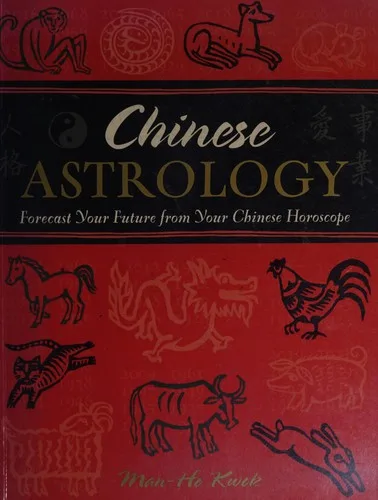





More Free Astrology & Cosmology Books
View all →