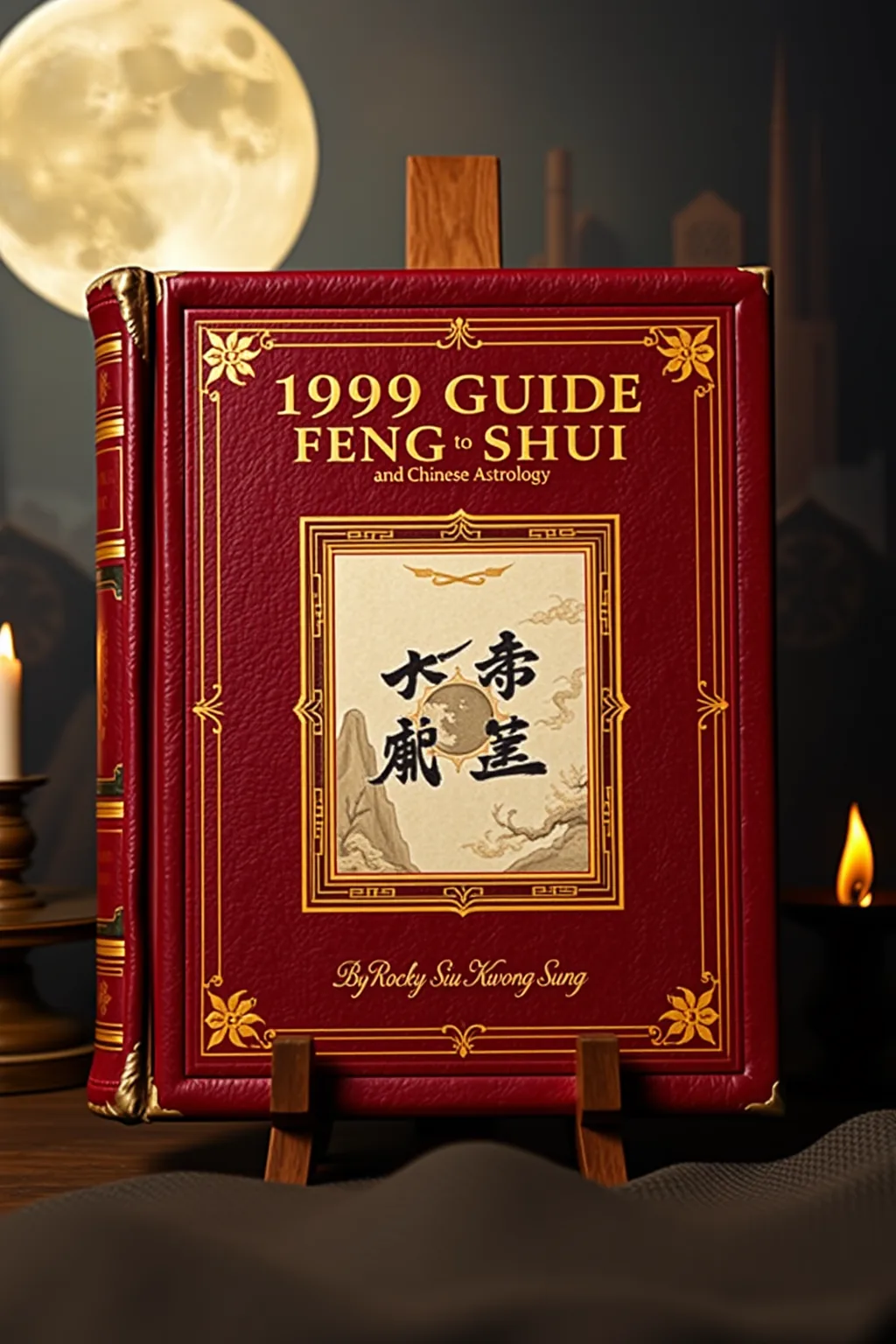
1999 Guide to Feng Shui and Chinese Astrology
 61
61

1999 Guide to Feng Shui and Chinese Astrology


Alaric Kestrel, Metaphysical Studies Reviewer — Rocky Siu Kwong Sung's '1999 Guide to Feng Shui and Chinese Astrology' stands as a beacon of practical esoteric knowledge. It elegantly bridges the seemingly disparate realms of astrological prediction and spatial harmonization, revealing their profound symbiosis. Sung's exposition is both deeply insightful and remarkably accessible, demystifying complex principles for the dedicated student. This guide excels in providing actionable strategies, empowering readers to actively engage with the cosmic energies that influence their environment and personal destiny. It is an indispensable resource for anyone seeking to cultivate a more intentional and harmonious existence.
📝 Description
61
Published in 1999, Rocky Siu Kwong Sung's guide connects Feng Shui principles with Chinese Astrology.
This 1999 volume by Rocky Siu Kwong Sung examines the relationship between Feng Shui and Chinese Astrology. It details how the life force, Qi, influences personal well-being and prosperity. The book explains the symbolism of the Chinese zodiac and the practice of Feng Shui, drawing on a cosmology that has shaped cultures for centuries. It aims to help readers understand the interconnectedness of the world and ancient philosophies.
The guide is intended for those seeking deeper knowledge of these practices, whether they are practitioners or scholars. It focuses on revealing the underlying patterns that shape destiny and fostering a balanced life in harmony with universal principles. The text provides insights into the methods used to interpret these influences and apply them practically.
This book sits within the tradition of Chinese metaphysical arts, which view the universe as an interconnected system of energies. Feng Shui, the art of arranging spaces to harmonize with natural forces, and Chinese Astrology, which maps celestial influences on human lives, are both rooted in Taoist philosophy. Together, they form a complex system for understanding destiny, fortune, and the flow of Qi, aiming to achieve balance and well-being.
💡 Why Read This Book?
This book is an essential read for seekers yearning to understand the subtle forces governing their lives. It offers a unique synthesis of astrological insights and Feng Shui principles, providing practical tools for enhancing luck, health, and relationships. Ideal for beginners curious about ancient wisdom and seasoned practitioners looking to deepen their practice, it unlocks the potential for a more balanced and prosperous existence through the art of cosmic alignment.
⭐ Reader Reviews
Honest opinions from readers who have explored this book.
❓ Frequently Asked Questions
What is the primary focus of this 1999 guide?
The primary focus is on the intricate connection between Chinese Astrology and Feng Shui, offering readers practical guidance on harmonizing their environment and understanding their destiny based on celestial influences and the flow of Qi.
Is prior knowledge of Feng Shui or astrology required?
While prior knowledge can be beneficial, the guide is structured to be accessible to newcomers. It provides foundational explanations of key concepts and symbolism.
How can this book help me improve my life?
By understanding your personal astrological chart and applying Feng Shui principles to your living and working spaces, you can identify and mitigate negative influences, enhance positive energies, and attract greater fortune, health, and happiness.
What makes the 1999 edition significant?
The 1999 edition is particularly relevant for understanding the specific energies and astrological configurations of the turn of the millennium, a period of significant global transition.
Who is Rocky Siu Kwong Sung?
Rocky Siu Kwong Sung is a respected author and practitioner in the fields of Feng Shui and Chinese Astrology, known for his insightful and practical approach to these ancient arts.
🔮 Key Themes & Symbolism
The Dance of Qi: Life Force and Environmental Harmony
This theme looks at the fundamental concept of Qi, the vital life force that permeates the universe and all living beings. The book illustrates how the flow of Qi is influenced by both the celestial movements described in Chinese Astrology and the physical layout and design of one's environment, as governed by Feng Shui. Readers will learn to identify sources of positive and negative Qi, understand how they impact personal well-being, and discover techniques to balance and enhance this essential energy for greater health, prosperity, and spiritual growth.
Astrological Blueprints and Destiny's Threads
Explore the profound wisdom of Chinese Astrology, where birth dates and times are meticulously mapped onto a complex system of animal signs, elements, and celestial patterns. This section unravels how these astrological blueprints offer insights into individual personalities, inherent strengths, potential challenges, and the overarching trajectory of one's life path. The guide illuminates the interconnectedness of astrological cycles with personal destiny, providing a framework for understanding karmic influences and opportunities for personal evolution.
Harmonizing the Microcosm and Macrocosm
This core theme emphasizes the symbiotic relationship between the individual (microcosm) and the universe (macrocosm). The book presents Feng Shui as the art of aligning one's personal space – home, office, and surroundings – with the natural cosmic order dictated by astrological principles. It teaches readers how to create environments that resonate with auspicious energies, neutralize discordant influences, and foster a profound sense of balance and well-being, ultimately leading to a life lived in greater harmony with the grander cosmic design.
💬 Memorable Quotes
Direct passages from the work, attributed to the author.
“Balance is not a static state, but a dynamic dance between opposing forces.”
— This emphasizes that achieving harmony, whether in Feng Shui or life, requires constant adjustment and awareness. It's not about eliminating challenges, but about skillfully navigating them.
“Your environment is a mirror reflecting the state of your inner universe.”
— This points to the power of Feng Shui in manifesting internal states externally. It suggests that by consciously shaping our surroundings, we can positively influence our psychological and spiritual well-being.
“To understand your destiny is to hold the map of your soul's journey.”
— This highlights the empowering nature of astrology, framing it as a tool for self-discovery and conscious navigation of one's life path, rather than a rigid predetermined fate.
💡 Key Ideas
Editorial paraphrase of the work's core concepts — not direct quotes.
The stars whisper secrets of the soul, and the earth carries the wisdom of the heavens.
This quote captures the book's central thesis: the profound interconnectedness between celestial influences and our terrestrial existence. It highlights the idea that cosmic patterns hold keys to understanding our inner nature and external circumstances.
The wisdom of the ancients is not lost, but waiting to be rediscovered within the currents of time.
This quote inspires readers to engage with the text, suggesting that the profound knowledge of Feng Shui and astrology is timeless and accessible to those who seek it with an open mind.
🌙 Esoteric Significance
Tradition
This work is deeply rooted in the Taoist tradition, drawing extensively from its principles of Yin and Yang, the Five Elements, and the concept of Qi (life force). It also incorporates the intricate systems of Chinese Astrology (Bazi) and the geomantic art of Feng Shui, both of which are integral components of Taoist cosmology and practice, aiming to align human life with the natural order of the universe.
Symbolism
Key symbols include the twelve animals of the Chinese Zodiac, each representing unique characteristics and elemental influences, and the Five Elements (Wood, Fire, Earth, Metal, Water), illustrating the dynamic interplay of forces. The Ba Gua (Eight Trigrams) and its application in Feng Shui are also central, symbolizing fundamental cosmic principles and guiding the arrangement of spaces for optimal energy flow and auspicious outcomes.
Modern Relevance
In an age of increasing stress and environmental disconnect, the principles of Feng Shui and Chinese Astrology offer a profound pathway to re-establishing balance and harmony. This guide provides timeless wisdom for individuals seeking to enhance their well-being, navigate personal challenges, and cultivate more auspicious circumstances. Its relevance lies in its ability to empower readers with practical tools to create supportive environments and understand their unique energetic blueprint, fostering greater self-awareness and intentional living.
👥 Who Should Read This Book
This clear guide is a treasure for a diverse range of readers. **Beginners** will find clear explanations of fundamental concepts, making the intricate worlds of Feng Shui and Chinese Astrology accessible for the first time. **Scholars** and **practitioners** will appreciate the depth of knowledge and the practical applications offered, serving as a valuable reference for deepening their understanding and refining their techniques. **Seekers** of personal growth and spiritual insight will discover a profound framework for understanding their life path and cultivating greater harmony and prosperity.
📜 Historical Context
Published in the cusp of a new millennium, the '1999 Guide to Feng Shui and Chinese Astrology' emerged during a period of intense global interest in esoteric and metaphysical practices. The late 20th century saw a resurgence of ancient wisdom traditions as many sought deeper meaning and spiritual grounding amidst rapid technological advancement and societal change. This era was marked by a growing desire to understand the forces that shape human destiny beyond purely material explanations. The book taps into this zeitgeist, offering a comprehensive yet accessible bridge between the ancient philosophies of China and the modern seeker's quest for harmony, prosperity, and self-understanding. Its timely publication provided a valuable resource for reading through the perceived energetic shifts associated with the turn of the century.
📔 Journal Prompts
Reflect on the dominant elements in your birth chart and how they manifest in your personality and current life circumstances.
Identify areas in your home or workspace that feel energetically stagnant or 'stuck.' How might this relate to the flow of Qi?
Consider a recent challenge you faced. How might your astrological influences or environmental energies have played a role?
What is one specific Feng Shui adjustment you can make this week to enhance the Qi in a particular area of your life (e.g., career, relationships)?
How does your understanding of your birth animal's characteristics resonate with your own lived experiences?
🗂️ Glossary
Qi (Chi)
The fundamental life force or vital energy that flows through all things in the universe. In Feng Shui, its harmonious flow is essential for well-being and prosperity.
Bazi (Eight Characters)
A Chinese astrological system that uses a person's birth date and time to create a chart of eight characters, revealing their inherent nature, destiny, and potential life path.
Five Elements
The fundamental forces of Wood, Fire, Earth, Metal, and Water, which interact in cycles of generation and control, forming the basis of much of Chinese cosmology and medicine.
Ba Gua
An octagonal diagram used in Feng Shui, representing eight fundamental trigrams that symbolize universal principles and are used to map energy patterns in a space.
Yin and Yang
The complementary and opposing forces that represent the dualistic nature of reality, such as feminine/masculine, dark/light, passive/active, which are seen as interdependent and constantly transforming.
This book appears in 2 collections
🔮 Readers Also Liked
Browse all →








From the “Astrology” Collection
View all →





More Free Astrology & Cosmology Books
View all →