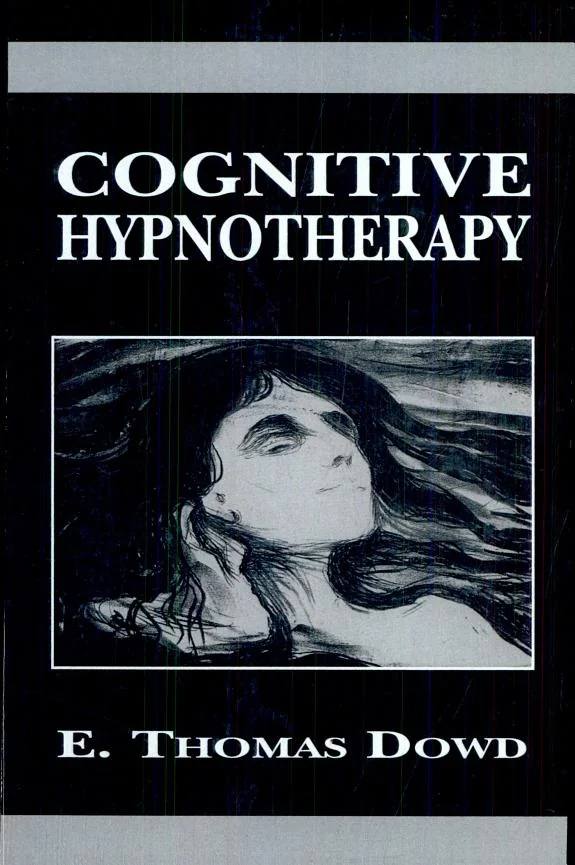
Cognitive Hypnotherapy
 79
79

Cognitive Hypnotherapy
E. Thomas Dowd's Cognitive Hypnotherapy presents a pragmatic fusion of two established therapeutic schools. Its primary strength lies in its clear articulation of how hypnotic states can be employed to directly modify the cognitive schemata that Aaron Beck and Albert Ellis identified as central to psychological distress. The book's detailed illustrations of hypnotic routines for altering self-statements are particularly effective, moving beyond vague suggestions to concrete techniques. However, the academic tone, while precise, occasionally feels dense, potentially creating a barrier for readers less familiar with the foundational theories of cognitive therapy or advanced hypnotherapy. The exploration of tacit cognitive structures, while ambitious, could benefit from further elaboration on its practical application in diverse clinical scenarios. Despite this, Dowd's work provides a valuable, systematic guide for therapists aiming to enhance cognitive restructuring through hypnosis.
📝 Description
79
E. Thomas Dowd's 2000 book, Cognitive Hypnotherapy, details a method for merging cognitive therapy with hypnosis.
Published in 2000, Cognitive Hypnotherapy by E. Thomas Dowd presents a structured approach for combining cognitive therapy principles with hypnotic techniques. The book explains how to alter self-defeating thought patterns, including internal dialogue, processing distortions, and tacit cognitive structures. It expands upon existing imagery methods used in cognitive therapy, developing them into a complete hypnotherapeutic system.
This work is intended for mental health practitioners and advanced students looking to expand their therapeutic skills. It is especially relevant for those interested in science-backed methods that unite cognitive behavioral ideas with the states of consciousness hypnosis can induce. The principles discussed can help those working with negative self-talk, unhelpful thought processes, and fixed belief systems.
Dowd's book emerged as the fusion of different therapeutic approaches was becoming more common. While cognitive therapy, founded by Aaron Beck in the 1960s, concentrated on identifying and changing dysfunctional thoughts, hypnotherapy provided another way to access and modify psychological material. Dowd's contribution bridges these two potent methods, offering a practical guide for therapists.
While this book focuses on therapeutic application, its engagement with hypnosis situates it within traditions that explore altered states of consciousness for personal transformation. Hypnotherapy, as a practice, has historical links to mesmerism and various forms of mind-body healing that seek to access subconscious processes. Dowd's method, by employing focused mental states to reshape cognition, touches upon the broader esoteric interest in the power of the mind to influence reality and well-being.
💡 Why Read This Book?
• Learn specific hypnotic routines to directly alter negative self-statements, a core technique detailed in the book's practical illustrations. • Understand how to extend imagery work from cognitive therapy into a comprehensive hypnotherapeutic approach, as demonstrated by Dowd's integrated methodology. • Gain insight into modifying tacit cognitive structures using hypnotic principles, a key concept elaborated upon in the work's systematic framework.
⭐ Reader Reviews
Honest opinions from readers who have explored this book.
❓ Frequently Asked Questions
What is the primary goal of Cognitive Hypnotherapy as presented by E. Thomas Dowd?
The primary goal is to integrate cognitive therapy principles with hypnotherapy to help individuals change negative and self-defeating cognitions into more positive and adaptive ones, by altering self-statements and cognitive processing distortions.
When was Cognitive Hypnotherapy first published?
Cognitive Hypnotherapy by E. Thomas Dowd was first published in 2000.
Who is the author of Cognitive Hypnotherapy?
The author of Cognitive Hypnotherapy is E. Thomas Dowd.
What are the main components that Cognitive Hypnotherapy integrates?
It integrates cognitive therapy with hypnotherapy, focusing on changing cognitive self-statements, cognitive processing distortions, and tacit cognitive structures.
How does this approach extend existing cognitive therapy techniques?
It extends the imagery work previously used in cognitive therapy into a complete and comprehensive hypnotherapeutic approach for changing negative cognitions.
What types of cognitive issues does this book aim to address?
The book aims to address negative and self-defeating cognitions, including internal self-statements and distortions in cognitive processing.
🔮 Key Themes & Symbolism
Cognitive Restructuring via Hypnosis
This work meticulously details how the altered state of consciousness achieved through hypnosis can be a powerful tool for cognitive restructuring. Unlike purely cognitive approaches, it leverages hypnotic suggestion and imagery to directly access and modify underlying belief systems and habitual thought patterns. The book provides concrete examples of how to guide individuals to reframe negative self-statements and challenge cognitive distortions that contribute to psychological distress. It's about actively engaging the subconscious mind to facilitate lasting cognitive change, a principle that appeals to many esoteric traditions focused on inner transformation.
Integration of Therapeutic Modalities
Cognitive Hypnotherapy stands as an exemplar of therapeutic synthesis, bridging the gap between the analytical framework of cognitive therapy and the experiential depth of hypnotherapy. This integration is not merely additive; it represents a synergistic approach where each modality enhances the efficacy of the other. By grounding hypnotic techniques within a structured cognitive model, Dowd offers a systematic method that appeals to practitioners seeking evidence-based yet profound interventions. This mirrors a broader esoteric tendency to synthesize disparate wisdom traditions to achieve a more holistic understanding and practice.
Tacit Cognitive Structures
A significant contribution of this book is its focus on 'tacit cognitive structures' – the deeply ingrained, often unconscious, belief systems that underpin conscious thought. Dowd proposes that hypnotherapy offers a unique pathway to identify and reshape these foundational structures, which are notoriously difficult to address through purely cognitive means. This exploration into the deeper layers of the psyche aligns with esoteric philosophies that seek to understand and transform the hidden architecture of the mind, aiming for fundamental shifts in perception and being.
Imagery and Self-Statements
The book emphasizes the transformative power of guided imagery and the strategic use of self-statements within a hypnotic context. Dowd illustrates how carefully crafted hypnotic scripts can help individuals replace self-defeating internal dialogues with constructive affirmations. This focus on the internal narrative and its energetic imprint is a concept found across various esoteric disciplines, from mantra recitation in Eastern traditions to the power of focused intention in Western occultism. The work provides a practical, therapeutic application for these ancient principles.
💬 Memorable Quotes
Direct passages from the work, attributed to the author.
“Principles and illustrations of hypnotic routines that can be used in changing cognitive self-statements, cognitive processing distortions, and tacit cognitive structures.”
— This captures the book's core objective: providing practical, actionable techniques for using hypnosis to directly address and modify problematic thought patterns and underlying beliefs.
“It extends the imagery work previously used in cognitive therapy into a complete and comprehensive hypnotherapeutic approach.”
— This highlights the book's innovation, showing how it builds upon established cognitive therapy methods by integrating them with a full-fledged hypnotherapeutic system.
“Help people change negative and self-defeating cognitions into more positive and adaptive ones.”
— This states the ultimate therapeutic goal, emphasizing the shift from destructive internal narratives to constructive and functional ways of thinking and perceiving.
“Dr. Dowd demonstrates the use of c”
— This incomplete sentence suggests a detailed exposition by the author on specific applications or methods within Cognitive Hypnotherapy, likely focusing on practical implementation.
“The work explores the modification of cognitive self-statements and processing distortions.”
— This points to the book's focus on specific targets within the cognitive system – the internal dialogue and the way individuals process information.
🌙 Esoteric Significance
Tradition
While primarily a clinical psychology text, Cognitive Hypnotherapy intersects with esoteric traditions through its focus on the power of the mind to shape reality and its exploration of altered states of consciousness. It can be seen as a modern, secular interpretation of principles found in Hermeticism and certain forms of Western Esotericism, particularly those emphasizing mental alchemy and the transformation of consciousness through directed will and focused intention. The book provides a structured, psychological framework for techniques that esoteric practitioners might recognize as analogous to visualization, affirmation, and deep meditative states.
Symbolism
The core 'symbols' in this work are not external icons but internal cognitive structures and imagery. The 'cognitive self-statement' acts as a mantra or personal creed, shaping one's inner landscape. 'Cognitive processing distortions' represent the shadows or illusions within the psyche that obscure truth, akin to the veils of Maya in Eastern thought or the deceptive illusions described in Gnostic texts. The process of 'imagery work' itself can be viewed as a form of internal templating or psychic architecture, where new mental constructs are visualized and solidified, mirroring alchemical processes of refinement and transmutation.
Modern Relevance
Contemporary thinkers and practitioners in fields like neuro-linguistic programming (NLP), consciousness studies, and even modern therapeutic hypnosis often draw upon the principles Dowd articulates. His systematic integration of cognitive science with hypnotic techniques provides a robust model for those exploring the mind-body connection and the potential for self-directed psychological change. The emphasis on transforming internal narratives through targeted mental interventions remains highly relevant for coaches, therapists, and individuals interested in personal development and the esoteric pursuit of self-mastery.
👥 Who Should Read This Book
['• Therapists and counselors seeking to integrate hypnotherapy techniques into their cognitive-behavioral practice, gaining specific tools for altering self-statements.', '• Students of psychology and hypnotherapy looking for a systematic, evidence-informed approach to cognitive restructuring, understanding the foundational principles from 2000.', "• Individuals interested in the esoteric application of mental discipline and consciousness alteration for personal transformation, who can view the book's techniques through a modern, psychological lens."]
📜 Historical Context
Published in 2000, E. Thomas Dowd's Cognitive Hypnotherapy arrived during a period of increasing interest in the integration of psychotherapeutic modalities. Cognitive Behavioral Therapy (CBT), heavily influenced by figures like Aaron Beck and Albert Ellis from the mid-20th century onwards, had established itself as a dominant force in evidence-based psychology. Simultaneously, hypnotherapy, with a history stretching back centuries and championed by figures like Milton H. Erickson in the 20th century, was finding renewed acceptance in clinical settings, often viewed with skepticism by the more rigidly empirical branches of psychology. Dowd's work sought to bridge this divide, offering a systematic approach that validated hypnotic techniques within a cognitive framework. It addressed a need for practitioners who recognized the limitations of purely cognitive interventions for deeply ingrained patterns and sought more direct methods for accessing and reshaping the psyche, a sentiment shared by many working with Jungian or psychodynamic approaches.
📔 Journal Prompts
Cognitive self-statements: identify three habitual negative phrases and brainstorm their hypnotic reframing.
Tacit cognitive structures: reflect on a deeply held belief and consider how hypnotic imagery might challenge it.
Cognitive processing distortions: analyze a current challenge through the lens of common distortions discussed in the text.
The integration of cognitive therapy and hypnotherapy: what potential synergies do you observe for your own inner work?
Imagery work: design a brief hypnotic script to cultivate a specific adaptive cognition.
🗂️ Glossary
Cognitive Hypnotherapy
A therapeutic approach that integrates principles from cognitive therapy with hypnotherapy techniques to modify maladaptive thought patterns and beliefs.
Cognitive Self-Statements
The internal dialogue or self-talk individuals engage in, which can be positive or negative and significantly impact mood and behavior.
Cognitive Processing Distortions
Errors in thinking or reasoning that lead to inaccurate perceptions of reality, such as overgeneralization or all-or-nothing thinking.
Tacit Cognitive Structures
Deeply ingrained, often unconscious, beliefs, assumptions, and schemas that form the foundation of an individual's worldview and cognitive patterns.
Imagery Work
The use of mental visualization and sensory experiences within therapy, often guided, to evoke emotions, memories, or facilitate change.
Hypnotherapy
The therapeutic use of hypnosis to induce a trance-like state, making individuals more receptive to suggestion for psychological or medical treatment.
Cognitive Therapy
A form of psychotherapy focused on identifying and changing dysfunctional thinking patterns that influence emotions and behavior.
This book appears in 1 collection
🔮 Readers Also Liked
Browse all →








From the “Hypnosis” Collection
View all →








More Free Occult Philosophy Books
View all →