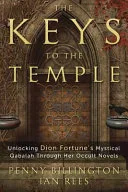
The Keys to the Temple
 71
71

The Keys to the Temple
Billington and Rees offer a commendable effort to demystify Dion Fortune’s allegorical fiction, presenting her novels as practical manuals for spiritual advancement. The book succeeds admirably in its primary goal: to connect the narrative threads of Fortune’s stories directly to the structure of the Tree of Life. One particular strength is the detailed mapping of characters like Vivante from "The Goat and Compasses" to specific Qabalistic concepts, making abstract ideas tangible. However, the text occasionally leans towards over-interpretation, sometimes forcing connections where Fortune’s own intent might have been more fluid or personal. A limitation is the somewhat dry academic tone that, while precise, can detract from the inherent magic of Fortune’s subject matter. The section detailing the "inner planes" as depicted through specific fictional settings is particularly insightful, demonstrating the authors' deep engagement with Fortune’s cosmology. "The Keys to the Temple" is a valuable, if sometimes overly literal, guide for serious Fortune students.
📝 Description
71
Published in 2017, "The Keys to the Temple" decodes Dion Fortune's fiction as spiritual guides.
Penny Billington and Ian Rees's 2017 volume, "The Keys to the Temple," acts as a practical guide to the esoteric fiction of Dion Fortune. The authors demonstrate how Fortune's novels, including "The Sea Priestess" and "Moon Magic," serve as allegorical narratives for spiritual development and magical work. They meticulously unpack the symbolic language and character archetypes within these stories, showing them to be more than mere fiction; they are frameworks for understanding complex metaphysical ideas.
The book is mainly for students and practitioners of Western Esotericism, especially those already familiar with Dion Fortune's writing and "The Mystical Qabalah." It offers a way for readers to understand Qabalistic principles through a story-based method. Individuals interested in applying esoteric philosophy practically, integrating inner growth with outer magical action, and interpreting literary symbolism will find this work valuable.
Billington and Rees place their work within the tradition established by Dion Fortune, a prominent occultist and author active in the early to mid-20th century. This period saw widespread interest in spiritualism, Theosophy, and Qabalistic studies. Fortune's novels, often published in the 1930s, were intended to reinforce her non-fiction teachings by making them more digestible. This 2017 book revisits Fortune's methods, bridging her historical context with contemporary esoteric practice.
💡 Why Read This Book?
• Understand Dion Fortune's novels as practical magical guides, learning how characters like those in "The Sea Priestess" represent specific Qabalistic principles, a unique approach not found in standard literary criticism. • Gain direct insight into the concept of "the keys to the temple" as articulated by Fortune, and discover how to apply these metaphorical keys to your own inner development, offering a tangible method for self-exploration. • Explore the integration of the Tree of Life into narrative structure, a core element of Fortune’s unique literary method, which Billington and Rees dissect, providing a specific analytical framework applicable to her 1930s works.
⭐ Reader Reviews
Honest opinions from readers who have explored this book.
❓ Frequently Asked Questions
How does "The Keys to the Temple" relate to Dion Fortune's "The Mystical Qabalah"?
This book acts as a practical guide to Fortune's esoteric novels, showing how they can be used alongside "The Mystical Qabalah" (published 1935) to understand and integrate Qabalistic concepts through narrative and character.
What specific esoteric tradition does this book focus on?
It concentrates on the Western Esoteric tradition, specifically the Qabalistic system as interpreted and presented by Dion Fortune, a prominent occultist of the early 20th century.
Can someone new to Dion Fortune's work benefit from this book?
While it assumes some familiarity with Fortune's novels and "The Mystical Qabalah," the book's explanations of characters and symbolism can still offer an entry point for dedicated newcomers interested in Qabalistic allegory.
What does "the keys to the temple" refer to in the context of this book?
It refers to metaphorical keys, derived from Dion Fortune's teachings and fictional works, that unlock higher consciousness, spiritual understanding, and direct experience of the divine, as explored by the authors.
What is the publication year of the original edition of "The Keys to the Temple"?
The original publication date for "The Keys to the Temple" by Penny Billington and Ian Rees was April 8, 2017.
Are there practical exercises or meditations suggested in the book?
The book focuses on interpreting Fortune's novels as guides, implying that the 'practice' involves understanding the allegorical connections and applying them to one's inner development, rather than explicit step-by-step exercises.
🔮 Key Themes & Symbolism
Narrative as Esoteric Pedagogy
This book argues that Dion Fortune intentionally crafted her novels, such as "The Demon Lover" and "The Winged Life," not just as stories but as sophisticated teaching tools. Billington and Rees demonstrate how specific plot devices and character arcs directly mirror Qabalistic principles and stages of spiritual development. The authors highlight how readers can engage with these fictional narratives to achieve a visceral understanding of complex esoteric concepts, treating the stories as allegorical maps for the inner journey toward self-realization and divine connection.
The Qabalistic Tree of Life in Fiction
A central theme is the explicit correlation between the characters and events in Fortune's fiction and the ten Sephiroth of the Qabalistic Tree of Life. The authors meticulously map narrative elements to specific spheres and paths, showing how figures like "The Goat and Compasses" protagonist, Vivante, embody distinct aspects of this sacred geometry. This approach transforms the reading of Fortune's novels into an active Qabalistic study, revealing the hidden structure that underpins her imaginative worlds and mystical explorations.
Achieving "Keys to the Temple"
The concept of "the keys to the temple" is presented as the ultimate goal of Fortune's system: attaining direct spiritual experience and conscious union with the divine. Billington and Rees interpret this phrase as representing specific stages of awareness and magical attainment that can be achieved through diligent study and application of the principles embedded within Fortune's allegorical fiction. The book guides readers on how to identify and utilize these 'keys' within themselves and their practice.
Inner Development and Magical Practice
This work emphasizes the seamless integration of inner psychological development with outward magical practice, a hallmark of Dion Fortune's teachings. The authors illustrate how Fortune's fictional explorations of relationships, challenges, and spiritual quests serve as models for personal growth. By understanding the symbolic language of her stories, practitioners can learn to navigate their own inner landscapes more effectively and engage in magical work with greater clarity and purpose, fostering a holistic approach to esoteric attainment.
💬 Memorable Quotes
Direct passages from the work, attributed to the author.
“Fortune’s novels are guides to magic and inner development.”
— This core assertion frames the book's entire purpose: to re-contextualize Dion Fortune's fiction not as mere entertainment, but as structured pedagogical tools for occult students seeking practical application of esoteric principles.
“Characters can help you integrate the secrets of the Tree of Life.”
— This highlights the book's central methodology – using the archetypal figures and narrative actions within Fortune's stories as allegorical representations to make the abstract concepts of Qabalah more accessible and applicable to personal growth.
“Discover what Fortune called ‘the keys to the temple.’”
— This points to the ultimate objective of Fortune's system and, by extension, this book: unlocking higher consciousness and direct spiritual perception, presented as attainable goals through understanding her literary and philosophical framework.
“Use Fortune’s brilliant insights to gain a direct sense of being present.”
— This emphasizes the practical, experiential outcome of engaging with Fortune's work as presented by Billington and Rees – achieving a heightened state of present-moment awareness and embodied spiritual connection.
💡 Key Ideas
Editorial paraphrase of the work's core concepts — not direct quotes.
The stories and characters can help you integrate the secrets of the Tree of Life.
This paraphrased concept underscores the book's approach, suggesting that Fortune's fictional worlds provide a relatable and engaging medium through which readers can systematically learn and internalize complex Qabalistic teachings.
🌙 Esoteric Significance
Tradition
This work is firmly rooted in the Western Esoteric tradition, specifically drawing from Hermeticism and Qabalism as popularized and reinterpreted by Dion Fortune. It operates within the lineage of Theosophical-influenced occultism but offers a distinct emphasis on practical psychology and the integration of the spiritual self through narrative allegory. Unlike purely theoretical Qabalistic texts, Fortune's approach, as detailed here, prioritizes experiential understanding facilitated by her fictional works.
Symbolism
Key symbols explored include the Tree of Life, serving as the fundamental structure for understanding Fortune's cosmology and character archetypes. The 'temple' itself is a potent symbol of the human body as a vessel for divine consciousness and a sacred space for inner work. Additionally, symbols related to lunar and solar forces, often present in Fortune's novels, are interpreted as representing dualistic principles of manifestation and spiritual attainment within the Qabalistic framework.
Modern Relevance
Contemporary practitioners of Western Esotericism, particularly those interested in Qabalistic studies and the practical application of occult philosophy, continue to draw on Dion Fortune's foundational texts. Billington and Rees's analysis makes Fortune's unique approach more accessible to modern students and teachers within various esoteric organizations and independent study groups. The focus on narrative as a vehicle for spiritual learning aligns with current trends in experiential and embodied approaches to esoteric practice.
👥 Who Should Read This Book
• Students of Dion Fortune seeking to deepen their understanding of her fictional works as practical esoteric manuals, gaining specific insights into character allegories and plot structures. • Practitioners of Qabalah interested in alternative methods for integrating the principles of the Tree of Life, moving beyond purely theoretical study to a more narrative-driven comprehension. • Comparative religion and esoteric studies researchers looking to analyze the unique pedagogical methods employed within 20th-century occult literature, specifically Fortune's blend of fiction and esoteric instruction.
📜 Historical Context
Published in 2017, "The Keys to the Temple" engages with the legacy of Dion Fortune, a significant figure in 20th-century Western Esotericism. Fortune’s own work flourished during a period of intense interest in occultism, following Helena Blavatsky and preceding the New Age movement. Her novels, often written in the 1930s, were part of a broader effort by figures like Aleister Crowley and W. B. Yeats to synthesize esoteric traditions. While Crowley focused on ceremonial magic and initiatory orders, Fortune aimed to make Qabalistic and magical principles accessible through narrative and psychological exploration. Her approach offered a distinct alternative to the more dogmatic or overtly ritualistic paths. The reception of Fortune’s work during her lifetime was generally positive within esoteric circles, though often overlooked by mainstream academia. Billington and Rees's book serves to re-evaluate and re-present Fortune's fictional works as deliberate, practical guides for contemporary students, situating her contributions within the ongoing discourse of Hermetic studies.
📔 Journal Prompts
The archetypal journey of Vivante in "The Goat Compasses" and its relation to the Sephiroth.
How do Fortune’s fictional portrayals of magical challenges mirror the process of inner development?
Reflect on the meaning of "the keys to the temple" in the context of your personal spiritual path.
Identify a character from a Fortune novel and map their symbolic representation onto a specific Qabalistic concept.
Consider the "direct sense of being present" Fortune aimed for; how can her narratives facilitate this?
🗂️ Glossary
Dion Fortune
Pseudonym for Violet Mary Firth (1890–1946), a prominent British occultist, novelist, and founder of the Fraternity of the Inner Light, known for her writings on Qabalah and magical theory.
The Mystical Qabalah
Dion Fortune's seminal 1935 non-fiction work that systematically explains the Qabalistic Tree of Life and its associated principles, intended as a practical guide for spiritual development.
Tree of Life
A central diagram in Qabalistic cosmology, representing the structure of the universe and the divine emanations, consisting of ten interconnected spheres (Sephiroth) and pathways.
Sephirah (plural: Sephiroth)
One of the ten divine emanations or attributes of God in Qabalistic teachings, each represented by a sphere on the Tree of Life, with distinct symbolic meanings and correspondences.
Esoteric Fiction
Literary works that use narrative, characters, and plot to allegorically convey complex spiritual, mystical, or occult teachings, often intended for practitioners or students of esoteric traditions.
Inner Development
The process of psychological and spiritual growth aimed at self-understanding, integration of the personality, and the realization of one's higher potential, often a key goal in esoteric practices.
Keys to the Temple
A metaphorical concept, central to Dion Fortune's teachings, referring to the understanding and practical application of esoteric principles that unlock higher consciousness and direct spiritual experience.