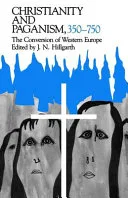
Christianity and Paganism, 350-750
 80
80

Christianity and Paganism, 350-750
J. N. Hillgarth’s Christianity and Paganism, 350-750 provides an indispensable, if dense, account of one of history’s most significant religious shifts. The author’s strength lies in his meticulous sourcing; the inclusion of translated documents, such as exorcism formulae and legal texts, offers a granular view of the conversion process previously inaccessible to many readers. His discussion of the cult of relics, for example, effectively demonstrates how a distinctly Christian devotional practice was integrated and adapted within existing sacred landscapes. However, the book's academic rigor sometimes comes at the expense of narrative flow, potentially making it challenging for the general reader. The sheer weight of evidence presented, while academically sound, can obscure the broader patterns of change. Hillgarth’s detailed analysis of the missions to northern Europe, particularly the challenges posed by the distinct cultural contexts encountered, remains a compelling aspect of the work. This is essential scholarship for understanding the foundations of medieval Europe, best approached with focused intent.
📝 Description
80
J. N. Hillgarth's 1986 book examines Christianity's supplanting of pagan beliefs in Western Europe.
Christianity and Paganism, 350-750 by J. N. Hillgarth analyzes the shift from polytheistic traditions to Christianity in Western Europe. Hillgarth uses primary sources such as sermons, exorcism rites, saints' lives, and legal documents to show how Christianization occurred. The book details the methods and obstacles involved in this religious transformation.
The period from 350 to 750 CE saw Christianity become the Roman state religion and spread among Germanic tribes. Hillgarth places this change within the context of the Roman Empire's decline and the formation of new European societies. He discusses the relationship between the Church and state, and how the Church interacted with non-Christian groups. The work is useful for scholars of late antiquity and the early Middle Ages, students of religion, and anyone interested in how societies change their beliefs.
This book is part of the scholarly tradition that studies the historical development of religious systems. It focuses on the practical and social aspects of how one dominant religion, Christianity, absorbed or replaced older pagan practices and beliefs in a specific historical period. It treats these shifts as cultural phenomena shaped by human agency and societal forces, rather than supernatural events.
💡 Why Read This Book?
• Gain specific insights into the practical methods of Christian conversion by examining the use of sermons and exorcism rites, as detailed in the book's primary source analysis, which offers a view of early missionary tactics not found elsewhere. • Understand the development of the cult of relics and its role in popular Christianity through Hillgarth's specific discussion of its integration into existing sacred sites and practices during the 4th-8th centuries. • Appreciate the complex relationship between the Christian Church and the Roman state, particularly concerning policies towards 'barbarian' populations, as documented in the book's exploration of legal and administrative documents from the period.
⭐ Reader Reviews
Honest opinions from readers who have explored this book.
❓ Frequently Asked Questions
What primary sources does J. N. Hillgarth utilize in 'Christianity and Paganism, 350-750'?
Hillgarth draws upon a diverse range of primary materials, including sermons, exorcism texts, biographies of saints, inscriptions, autobiographical accounts, and legal documents from the period between 350 and 750 CE.
What is the chronological scope of 'Christianity and Paganism, 350-750'?
The book focuses on the critical centuries from 350 to 750 CE, a period marked by the significant transformation of Western Europe from a predominantly pagan society to one increasingly dominated by Christianity.
What specific regions are covered in Hillgarth's study?
The study primarily examines Western Europe, including the former Roman territories and the areas influenced by the migration of Germanic peoples, with specific attention to missions in northern Europe.
How does the book address the interaction between Christianity and paganism?
It details how the Christian Church navigated the conversion of pagan populations by analyzing the adaptation of Christian practices, the confrontation with existing beliefs, and the integration of elements from older traditions.
Who was J. N. Hillgarth?
J. N. Hillgarth was a distinguished historian specializing in the late antique and early medieval periods, known for his extensive research on the intellectual and religious history of Europe.
When was 'Christianity and Paganism, 350-750' first published?
The original publication date for J. N. Hillgarth's 'Christianity and Paganism, 350-750' was 1986.
🔮 Key Themes & Symbolism
Missionary Strategies
The work meticulously details the many-sided approaches the Christian Church employed to evangelize Western Europe. This includes not only theological instruction but also the pragmatic use of exorcisms to demonstrate divine power over pagan spirits and the careful adaptation of existing sacred sites and festivals to Christian meanings. Hillgarth illustrates how these methods were tailored to different cultural contexts, from the remnants of Roman society to the newly established kingdoms of Germanic peoples.
The Cult of Relics
A significant focus is placed on the rise and proliferation of the veneration of relics within popular Christianity. Hillgarth examines how relics of saints became focal points for devotion, pilgrimage, and the establishment of ecclesiastical authority. This practice served to legitimize the new religion by associating it with sacred power and historical continuity, often in direct competition with pagan sacred objects and places.
Church and State Relations
The book analyzes the evolving dynamics between the Christian Church and secular authorities, particularly the Roman state and later the emerging barbarian kingdoms. It explores how imperial patronage influenced the Church's growth and how the Church, in turn, sought to shape political and social norms, including attitudes towards non-Christian populations and the integration of Christian law.
Pagan Persistence and Transformation
Hillgarth does not present conversion as a simple replacement but as a complex process of negotiation. The work highlights the persistence of pagan customs and beliefs, and how these were often syncretized with Christian practices. The book examines the challenges faced by missionaries in eradicating deeply ingrained traditions and the gradual, often incomplete, assimilation of new religious frameworks.
💬 Memorable Quotes
Direct passages from the work, attributed to the author.
“The Christian church went about the formidable task of converting western Europe.”
— This statement expresses the central challenge Hillgarth addresses: the monumental effort and complex strategies required to supplant established pagan traditions with Christianity across a vast and diverse continent.
“Using sermons, exorcisms, letters, biographies of the saints, inscriptions, autobiographical and legal documents.”
— This phrase underscores the book's methodological foundation, emphasizing the reliance on a wide spectrum of primary source materials to reconstruct the historical reality of religious change.
“The book covers such topics as the relationship between the Church and the Roman state, Christian attitudes toward the barbarians, and the missions to northern Europe.”
— This highlights the broad scope of Hillgarth's inquiry, touching upon crucial political, social, and geographical dimensions of Christianity's expansion and establishment in late antiquity and the early medieval period.
“It documents as well the cult of relics in popular Christianity.”
— This points to a key area of focus: the development and significance of relic veneration as a central component of lay Christian devotion and its role in the broader religious landscape.
“Some of which are translated nowhere else.”
— This emphasizes the unique scholarly contribution of the book, suggesting that it makes vital, previously inaccessible primary source material available to a wider academic audience.
🌙 Esoteric Significance
Tradition
While not explicitly aligned with a specific esoteric tradition like Hermeticism or Gnosticism, Hillgarth's work is useful for understanding the historical matrix from which many later esoteric ideas and practices emerged. The period studied is crucial for the formation of Western Christianity, a tradition that later informed numerous occult and mystical paths. Understanding the mechanisms of religious conversion and the assimilation of pagan elements provides context for how symbols and rituals were transmuted and preserved.
Symbolism
The book implicitly touches upon potent symbolic transformations. The Christianization of pagan sacred sites, for instance, represents a symbolic overlaying of Christian meaning onto existing loci of power, akin to how esoteric traditions reinterpret older symbols. The cult of relics, while a historical phenomenon, also carries symbolic weight, representing the tangible presence of the divine and the miraculous in the material world—a concept echoed in various forms of sympathetic magic and artifact veneration within esoteric practices.
Modern Relevance
Contemporary practitioners of Western Esotericism, particularly those interested in the historical roots of Christian mysticism, Qabalah, or ceremonial magic, can find crucial context in Hillgarth's work. Understanding how Christianity absorbed and transformed pagan elements illuminates the complex lineage of symbols and concepts that are often reinterpreted or repurposed in modern esoteric systems. It provides a grounded historical perspective on the very traditions that many esotericists seek to revive or understand.
👥 Who Should Read This Book
['• Scholars of Late Antiquity and Early Medieval History: Will gain a comprehensive understanding of the religious and cultural shifts that shaped post-Roman Europe, supported by extensive primary source analysis.', '• Students of Comparative Religion: Can explore the dynamics of religious conversion, syncretism, and the interaction between dominant and subordinate belief systems using concrete historical examples.', "• Researchers of Christian History and Theology: Will benefit from detailed insights into the practical implementation of doctrine, the development of early Christian practices like relic veneration, and the Church's engagement with secular power."]
📜 Historical Context
Published in 1986, J. N. Hillgarth's 'Christianity and Paganism, 350-750' emerged during a period of renewed scholarly interest in the late antique and early medieval transitions. The late 20th century saw historians like Peter Brown re-evaluating the perceived 'fall' of Rome and emphasizing the continuities and transformations of the era. Hillgarth's work contributed significantly to this reassessment by providing a detailed, source-driven account of religious conversion. It engaged with, and sometimes challenged, earlier narratives that presented a more abrupt or monolithic shift from paganism to Christianity. The book's meticulous examination of diverse primary sources, including previously untranslated materials, offered a granular counterpoint to more generalized historical accounts, solidifying its place as a foundational text for understanding this important era.
📔 Journal Prompts
The transformation of pagan sacred sites into Christian ones: What does this process reveal about the negotiation of belief?
Christian attitudes toward the 'barbarians': How did perceptions evolve, and what were the consequences for conversion efforts?
The role of exorcisms in missionary work: Analyze specific examples and their impact on demonstrating Christian authority.
The cult of relics: Reflect on its function in popular piety and its relationship to older forms of veneration.
The documented use of legal documents: How do these texts illuminate the institutional aspects of Christianization?
🗂️ Glossary
Paganism
A broad term historically used by Christians to refer to polytheistic religions and indigenous belief systems prevalent in Europe before and during the period of Christianization, encompassing a wide variety of deities, rituals, and cosmologies.
Exorcism
A ritual or ceremony intended to expel demons or evil spirits from a person or place. In the context of Christianization, exorcisms were often used to demonstrate the superior power of the Christian God over local deities or spirits.
Cult of Relics
The veneration and worship of relics, which are physical objects associated with saints or divine figures (e.g., bones, clothing). This practice became a significant aspect of popular Christianity, serving as focal points for devotion and pilgrimage.
Syncretism
The merging or attempted merging of different religions, cultures, or schools of thought. In this context, it refers to the blending of pagan beliefs and practices with Christian doctrines and rituals during the conversion process.
Barbarians
A term used by Greco-Romans to refer to peoples perceived as foreign or uncivilized, often including Germanic tribes and others who migrated into or interacted with the Roman Empire. Christian attitudes towards these groups varied significantly.
Sermons
Formal public speeches or religious instruction, often based on scripture. Sermons were a key tool for Christian missionaries to convey doctrine, morality, and theological arguments to both converts and potential converts.
Inscriptions
Writings or engravings on durable materials such as stone, metal, or pottery. Inscriptions from this period can provide valuable evidence for religious practices, political structures, and social customs.