A witches' Bible

 75
75

A witches' Bible
Janet and Stewart Farrar's "A Witches' Bible" functions as a meticulously organized manual for those initiated into or studying the Gardnerian and Alexandrian streams of Wicca. Its strength lies in its systematic presentation of ritual structures and theoretical underpinnings, making complex practices accessible. The detailed descriptions of the Sabbats and Esbats, for instance, offer a clear framework for observing the Wiccan year. However, the book's focus on established, often coven-centric practices can feel prescriptive to solitary practitioners or those exploring more eclectic paths. A notable passage is the extensive explanation of the "Great Rite," which, while crucial to its lineage, might be a point of contention or misunderstanding for outsiders. The work's value is undeniable as a historical document and practical guide for its intended audience, though its interpretation of witchcraft is specific to a particular lineage.
📝 Description
75
Janet and Stewart Farrar published "A Witches' Bible" in 1996, consolidating Wiccan practices.
This book presents a detailed guide to modern Wiccan ritual and philosophy, first appearing in 1996. It covers essential information for practitioners, including explanations of rituals, spells, and the core beliefs of witchcraft. The work is structured to assist those actively involved in or interested in understanding contemporary Wiccan traditions.
It serves practitioners at various levels. Beginners can find clear direction, while experienced witches may use it as a reference for seasonal celebrations like the Wheel of the Year, coven organization, and the historical roots of ritual forms. The book appeals to those who prefer a systematic approach to magical practice.
"A Witches' Bible" emerged during a time of growth in Neopagan and Wiccan movements. Following earlier works that brought Wicca to greater public attention, the Farrars synthesized established practices into an accessible format. This addressed a growing need for organized information as Wicca became more visible.
The Farrars' work synthesized and codified practices within the Gardnerian and Alexandrian streams of Wicca. Published in 1996, it arrived as these traditions were solidifying their place within the broader Neopagan movement. The book provided a clear manual for rituals, ethics, and magical practice, drawing on earlier foundational texts but presenting them in a structured way for a growing number of practitioners.
💡 Why Read This Book?
• Learn the foundational rituals and beliefs of Gardnerian and Alexandrian Wicca, including the structured observance of the Sabbats and Esbats as detailed in the book's sections on the Wheel of the Year. • Gain practical instruction on essential magical techniques such as consecrating tools and casting a circle, providing a clear operational methodology for spellwork. • Understand the historical development of modern Wicca through the Farrar's synthesis of earlier traditions, offering context for the practices outlined since the book's 1996 publication.
⭐ Reader Reviews
Honest opinions from readers who have explored this book.
❓ Frequently Asked Questions
What specific Wiccan traditions does "A Witches' Bible" focus on?
The book primarily details practices and beliefs associated with Gardnerian and Alexandrian Wicca, two significant traditions within modern witchcraft that emerged in the mid-20th century.
Is "A Witches' Bible" suitable for complete beginners with no prior knowledge of witchcraft?
While it offers foundational information, its depth and specific focus on established coven rites make it most beneficial for those seriously investigating or practicing Wicca, perhaps after initial exposure to more general introductions.
What is the significance of the "Wheel of the Year" mentioned in the book?
The Wheel of the Year represents the cyclical progression of the eight major Wiccan festivals (Sabbats) throughout the year, marking seasonal changes and significant points in the natural world, as extensively outlined in the book.
Does the book explain the Wiccan Rede?
Yes, "A Witches' Bible" explains the "Wiccan Rede," a key ethical and moral guideline within Wicca, often summarized by the phrase 'An it harm none, do what ye will.'
Who are Janet and Stewart Farrar in the context of Wicca?
Janet and Stewart Farrar were influential high priestess and priest, respectively, who played a significant role in documenting and disseminating Gardnerian and Alexandrian Wiccan practices, co-authoring several key texts including this one.
When was "A Witches' Bible" first published?
The book was first published in 1996, making it a relatively modern synthesis of older Wiccan traditions.
🔮 Key Themes & Symbolism
Ritual Structure and Practice
This theme encompasses the detailed step-by-step instructions for various Wiccan rituals, including casting circles, invoking deities, and performing the "Great Rite." The book meticulously outlines the structure of both Sabbats (seasonal festivals) and Esbats (lunar celebrations), providing a clear operational framework. It emphasizes the importance of precise wording, gestures, and the use of consecrated tools, reflecting a highly structured approach to magickal work inherited from traditions like Gardnerian Wicca.
The Wheel of the Year
Central to the book is the concept of the Wheel of the Year, representing the eight major festivals celebrated by Wiccans throughout the annual cycle. Each Sabbat is explained in terms of its historical roots, symbolic meaning, and associated deities and rituals. The text illustrates how these festivals mark the changing seasons and correspond to the life cycle of nature, offering a framework for connecting with natural energies and divine forces.
Deities and Divine Polarity
The work explores the Wiccan understanding of divinity, primarily focusing on the duality of the Goddess and the God. It details their respective roles, symbolism, and how they are honored in ritual. The book explains the concept of divine polarity and its significance in creation and manifestation, presenting the Goddess often as the source of life and the God as her consort and manifestation of nature's power.
Ethics and The Rede
Integral to the practice outlined is the "Wiccan Rede," a moral and ethical code that guides practitioners' actions. The book presents the Rede's core tenets, emphasizing personal responsibility and the principle of "An it harm none, do what ye will." This theme underscores the importance of intention, consequence, and living in harmony with natural and spiritual laws within the Wiccan framework.
💬 Memorable Quotes
Direct passages from the work, attributed to the author.
“The Wiccan Rede: An it harm none, do what ye will.”
— This is the central ethical principle in Wicca, emphasizing personal freedom and responsibility. It suggests that magical actions and personal choices should not cause harm to oneself or others.
“The Great Rite is the symbolic union of the Goddess and God.”
— This highlights a core ritual practice in many Wiccan traditions, representing sacred sexuality and the divine masculine and feminine principles coming together to create and manifest energy.
“The Wheel of the Year turns, bringing the Sabbats and Esbats.”
— This phrase captures the cyclical nature of the Wiccan year, marked by eight seasonal festivals (Sabbats) and lunar phases (Esbats), connecting practitioners to natural rhythms.
“Consecrate your tools to the Craft.”
— This refers to the ritual process of dedicating magical implements, such as athames, wands, and chalices, for sacred use within witchcraft practice, imbuing them with spiritual significance.
“Casting the circle creates a sacred space.”
— This describes the foundational ritual act of defining and consecrating a ritual space, often visualized as a dome of energy, to contain and focus magical workings.
🌙 Esoteric Significance
Tradition
This work is deeply rooted in the Gardnerian and Alexandrian traditions of modern Wicca, which themselves draw from earlier occult revivals and ceremonial magic. It functions as a primary text for understanding these specific lineages, emphasizing ritual structure, initiation, and the veneration of the Triple Goddess and the Horned God. It departs from purely solitary or eclectic paths by detailing coven-based practices and a codified system of belief and ritual that became influential in the late 20th century.
Symbolism
Key symbols include the Pentacle, representing the five elements and the human form, often used for invocation and grounding; the Athame, a ritual dagger symbolizing will and the element of fire, used for directing energy and cutting through illusion; and the Chalice, representing the element of water and the Goddess, used for invoking and for drinking the "cup of life.". These symbols are integral to the rituals and cosmology presented.
Modern Relevance
Contemporary Wiccan practitioners, particularly those in Gardnerian or Alexandrian covens, continue to rely on "A Witches' Bible" as a core reference. Its clear exposition of ritual mechanics and the Wheel of the Year informs the practice of many who seek a structured approach to witchcraft. Furthermore, its historical documentation is valuable for scholars and practitioners studying the evolution of Western Esotericism and Neopaganism since the mid-20th century.
👥 Who Should Read This Book
• Individuals seriously investigating or practicing Gardnerian or Alexandrian Wicca, seeking detailed ritual instructions and theoretical explanations. • Students of Western Esotericism and religious studies interested in the development and codification of modern witchcraft traditions post-1950s. • Experienced Witches looking for a comprehensive reference text on established coven rites, Sabbats, and Esbats from a specific historical lineage.
📜 Historical Context
Published in 1996, "A Witches' Bible" by Janet and Stewart Farrar arrived at a time when Wicca was experiencing significant public visibility, moving beyond the more clandestine circles of the mid-20th century. This era saw a proliferation of books attempting to codify and explain Neopagan practices. The Farrar's work built upon the foundations laid by figures like Gerald Gardner and Doreen Valiente, who had introduced Gardnerian Wicca to the public decades earlier. Unlike the more individualistic or eclectic paths that were also emerging, the Farrar's text focused on the structured, hierarchical practices characteristic of Gardnerian and Alexandrian traditions. Their work was contemporary with and often engaged with the writings of authors like Raymond Buckland, who also played a key role in popularizing Wicca, particularly in America. The book provided a comprehensive manual for a specific lineage, offering a counterpoint to less formalized or more modern interpretations of witchcraft.
📔 Journal Prompts
Reflect on the symbolism of the Pentacle as described in the book and its personal meaning.
Consider the structure of a Sabbat ritual as presented; how might you adapt one element for solitary practice?
Analyze the concept of the Wiccan Rede; in what contemporary situation does 'An it harm none' present a complex ethical choice?
Examine the role of the Athame in ritual as detailed; what other tools could serve a similar purpose in your practice?
How does the book's depiction of the Goddess and God contrast with other pantheons you are familiar with?
🗂️ Glossary
Sabbat
One of the eight major seasonal festivals celebrated in Wicca, marking significant points in the agricultural and solar year, such as Samhain, Yule, and Beltane.
Esbat
A ritual or celebration held in honor of the Moon, typically coinciding with the full moon, distinct from the solar-based Sabbats.
Athame
A ritual dagger, typically double-edged, used for directing energy, casting circles, and commanding spirits, but not for physical cutting. It symbolizes will and the element of fire.
Wiccan Rede
A set of ethical guidelines for Wiccans, most famously expressed as 'An it harm none, do what ye will,' emphasizing personal responsibility and non-harm.
Casting the Circle
The ritual act of creating a sacred, protected space for magical workings, often visualized as a dome of energy, by invoking the elements and deities.
Great Rite
A symbolic ritual union, often enacted through specific gestures or the symbolic joining of the Athame (phallus) and Chalice (vulva), representing the sacred marriage of the God and Goddess.
Wheel of the Year
A diagram representing the cycle of eight seasonal festivals (Sabbats) observed in Wicca, reflecting the annual progression of seasons and natural energies.
🔮 Readers Also Liked
Browse all →





More by Janet Farrar
All books →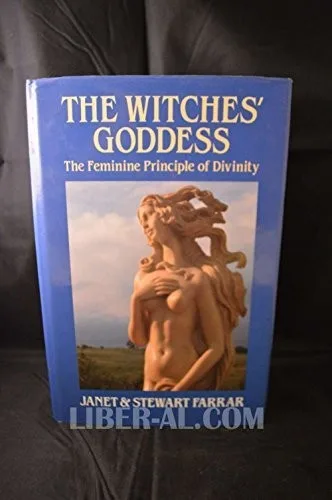





More Free Witchcraft & Paganism Books
View all →