Christian Divination in Late Antiquity
 84
84

Christian Divination in Late Antiquity
Wisniewski's examination of Christian attitudes toward divination in Late Antiquity offers a nuanced corrective to simplistic narratives. The work excels in detailing the theoretical proscriptions against divination, juxtaposed with the evident practical applications found within Christian communities. A particular strength lies in the meticulous reconstruction of how various Christian authors and groups attempted to reconcile or circumvent these proscriptions, often by reinterpreting existing practices through a Christian lens. The chapter discussing the manipulation of biblical texts for oracular purposes is especially illuminating. A limitation, perhaps inherent in the source material, is the occasional difficulty in definitively separating genuine Christian innovation from the adoption and adaptation of existing pagan methods. The book's exploration of how Christians wrestled with the efficacy of divinatory methods, acknowledging their potential power while theoretically forbidding their use, forms a compelling core argument. Wisniewski's analysis makes clear that early Christians were not monolithic in their approach, presenting a complex picture of belief and practice. This is essential reading for understanding the lived religion of the era.
📝 Description
84
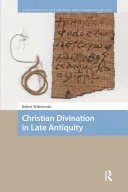
Robert Wisniewski's 2018 book examines Christian engagement with divination in Late Antiquity.
Robert Wisniewski's "Christian Divination in Late Antiquity" investigates the complex relationship between early Christian communities and the divinatory practices of their time. The book details how individuals within these growing religious groups sought knowledge of future, past, and present events, even when official doctrine cautioned against such inquiries. It moves beyond a simple acceptance or rejection narrative, showing a range of ways these occult arts were used. This scholarly work is for academics, advanced students of religious studies, history, and classical antiquity, and serious practitioners of esoteric traditions interested in the historical roots of divination in Western religious thought. It assumes a basic understanding of Late Antiquity and early Christian history, offering detailed analysis instead of introductory material. The period of Late Antiquity, roughly from the 3rd to the 6th centuries CE, was a time of diverse spiritual and intellectual currents. Christianity was solidifying its doctrines and expanding its influence, while interacting with established Hellenistic, Roman, and other syncretic traditions. Divination, including astrology, haruspicy, and oneiromancy (dream interpretation), was a part of the cultural fabric. Wisniewski situates Christian engagement with these practices against intellectual debates with Neoplatonists like Porphyry, who also wrote on divinatory arts, and internal Christian theological discussions about divine knowledge and prophecy.
This work engages with the historical development of divinatory practices that have long been part of esoteric traditions. It situates the early Christian reception of these arts within the broader cultural and intellectual milieu of Late Antiquity, a period that saw the formation of many spiritual systems. By examining how Christians interacted with astrology, dream interpretation, and other forms of seeking hidden knowledge, the book connects to a lineage of practices concerned with understanding divine will and future events.
💡 Why Read This Book?
• Gain insight into the specific methods of oneiromancy (dream interpretation) as utilized by Christians in Late Antiquity, understanding how these practices were integrated or rejected within the evolving religious framework. • Learn about the theoretical conflicts surrounding divination within early Christianity, as detailed in discussions around figures like Augustine of Hippo and his views on magic and prophecy. • Discover how biblical texts were reinterpreted or employed as tools for divination, a unique adaptation of scripture discussed in the book's analysis of Late Antique Christian hermeneutics.
⭐ Reader Reviews
Honest opinions from readers who have explored this book.
❓ Frequently Asked Questions
What specific divinatory practices are explored in Christian Divination in Late Antiquity?
The book examines various methods including oneiromancy (dream interpretation), sortition (casting lots), and the interpretation of omens. It explores how these practices were viewed, adopted, or rejected by Christian communities and theologians during the period.
Who were some key figures discussed in relation to Christian divination?
Robert Wisniewski discusses influential figures such as Augustine of Hippo, whose complex views on magic and divination are analyzed. The work also touches upon the broader intellectual landscape involving contemporary philosophers and theologians.
What was the general Christian stance on divination in Late Antiquity?
The official or theoretical stance often discouraged divination, aligning it with pagan practices or demonic influence. However, the book highlights that in practice, individuals and communities engaged with divination in diverse and often contradictory ways.
What time period does 'Late Antiquity' refer to in this book?
Late Antiquity, as discussed in the book, generally spans from the 3rd to the 6th centuries CE. This era was crucial for the development of Christian doctrine and its interaction with existing cultural and religious practices.
How did Christians adapt existing divinatory methods?
Christians often sought to adapt existing divinatory methods by reinterpreting them through a theological lens, sometimes finding Christian meaning in dreams or using biblical texts for sortition. The book details these attempts at integration or subversion.
Does the book cover specific Christian denominations or movements?
The book focuses on the broader early Christian movement as it coalesced and established itself during Late Antiquity. It examines a range of attitudes and practices found across various emerging Christian communities rather than strictly defined denominational lines.
🔮 Key Themes & Symbolism
Theological Ambivalence Towards Divination
The work meticulously details the paradoxical position early Christians held regarding divination. While acknowledging the potential efficacy of these practices, official doctrine often condemned them. This tension is explored through the writings of key Church Fathers and the practical realities faced by believers. The book illustrates how this ambivalence led to diverse responses, from outright rejection to subtle integration and reinterpretation of divinatory methods within a Christian framework, challenging simplistic notions of prohibition.
Oneiromancy and Christian Dream Interpretation
A significant focus is placed on oneiromancy, the interpretation of dreams. The book investigates how Christian communities engaged with dreams as potential sources of divine revelation or demonic deception. It examines the methods used to discern the origin and meaning of dreams, often drawing parallels with biblical narratives of prophetic dreams. This theme highlights the psychological and spiritual range of Late Antiquity, where the boundary between the mundane and the divine was frequently navigated through the subconscious.
Sortition and Biblical Oracles
The practice of sortition, or casting lots, is analyzed as a method for seeking divine guidance. Wisniewski explores how Christians applied this technique, sometimes using biblical texts ( Bibliomancy ) as the objects of the draw. This theme reveals the innovative ways early Christians sought to legitimize divinatory practices by grounding them in scriptural precedent, thereby attempting to reconcile them with a theology that emphasized God's will and providence.
Syncretism and Adaptation
The book underscores the pervasive influence of Hellenistic and Roman divinatory traditions on early Christianity. It details how Christian practitioners often adapted existing pagan methods, re-casting them with Christian symbolism and theological justifications. This process of syncretism demonstrates the dynamic cultural exchange of Late Antiquity, where religious ideas and practices were fluid and subject to negotiation and transformation.
💬 Memorable Quotes
Direct passages from the work, attributed to the author.
“Christians acknowledged that divinatory methods could work, but theoretically were not allowed to use them.”
— This statement expresses the central paradox explored in the book: the tension between the perceived effectiveness of divination and its theological proscription within early Christianity. It sets the stage for understanding the varied practical responses.
“Some resorted to old practices regardless of the consequences.”
— This highlights the adherence to traditional divinatory customs even within Christian communities, suggesting a pragmatic approach that sometimes prioritized perceived utility over strict doctrinal adherence during Late Antiquity.
“A third option was to construct divinatory methods that were...”
— This points to the creative and adaptive strategies employed by Christians, seeking to develop or modify divinatory techniques that aligned more closely with their religious beliefs, thus working through the complex theological landscape.
“The theoretical prohibition of divination often clashed with the lived experience of seeking divine knowledge.”
— This interpretation emphasizes the gap between abstract theological rules and the practical, human desire for certainty about the future and the divine will, a core conflict addressed throughout the book.
💡 Key Ideas
Editorial paraphrase of the work's core concepts — not direct quotes.
The book explores the spectrum of Christian engagement with divinatory arts.
This paraphrased concept suggests that Wisniewski avoids presenting a uniform Christian response, instead detailing a range of attitudes from rejection to cautious adoption and adaptation of various occult practices.
🌙 Esoteric Significance
Tradition
This work engages with the historical underpinnings of Western esoteric traditions that often draw from early Christian mystical thought, Gnosticism, and Hermeticism. While not strictly an esoteric text itself, it illuminates the roots of practices and beliefs that later informed movements like Christian Kabbalah or Rosicrucianism. By examining how early Christians integrated or rejected divinatory frameworks, Wisniewski provides crucial historical context for understanding the development of Western occultism and its complex relationship with orthodox religious structures.
Symbolism
The book implicitly explores symbols related to divine communication and hidden knowledge. Dreams (oneiromancy) function as symbolic landscapes of the subconscious and the spiritual realm. The casting of lots (sortition), particularly using biblical texts, represents a symbolic act of surrendering to divine will while actively seeking its manifestation. These symbolic acts reveal a desire to perceive underlying divine order and guidance within the perceived chaos of earthly existence.
Modern Relevance
Contemporary esoteric practitioners, particularly those interested in Christian mysticism, demonology, or historical divination techniques, find significant value in Wisniewski's research. Thinkers and groups exploring the intersection of religion and occultism, or those seeking to understand the historical evolution of practices like dream interpretation and scrying, can draw upon the detailed historical analysis. It provides a scholarly foundation for understanding the lineage of certain divinatory arts within a Western religious context.
👥 Who Should Read This Book
• Students of Late Antiquity and early Christianity: This book offers a detailed examination of a specific, often overlooked, aspect of religious life, providing crucial context for understanding the period's intellectual and spiritual currents. • Scholars of Comparative Religion and Esotericism: Researchers interested in the historical development of divination, magic, and occult practices within a major Western religious tradition will find this work invaluable. • Practitioners seeking historical context: Individuals involved in modern esoteric practices who wish to understand the historical roots and theological challenges associated with divination within a Christian framework will gain significant insight.
📜 Historical Context
Robert Wisniewski's "Christian Divination in Late Antiquity" situates itself within a crucial period of religious and intellectual transformation, roughly spanning the 3rd to 6th centuries CE. Christianity was evolving from a persecuted sect into the dominant religion of the Roman Empire, a process marked by intense theological debate and cultural negotiation. Divination, a widespread practice rooted in Hellenistic, Roman, and Near Eastern traditions, presented a complex challenge. While figures like Porphyry, a prominent Neoplatonist philosopher, engaged with and wrote about divinatory techniques, many Christian authorities viewed these practices with suspicion, often associating them with paganism or demonic influence. However, as the book details, the theoretical proscriptions did not always align with the lived realities of believers. Early Christians, like their contemporaries, sought guidance about the past, present, and future, leading to a spectrum of engagement with divination. The reception of these ideas was not monolithic; while some church leaders like Augustine of Hippo wrestled intensely with the implications of divination, others may have been more pragmatic or less concerned with strict adherence to theoretical condemnations. This era saw the consolidation of Christian doctrine, but also its adaptation to diverse cultural contexts, making the study of practices like divination essential for understanding the period's religious landscape.
📔 Journal Prompts
The practical use of sortition by Christians in Late Antiquity.
Augustine of Hippo's theoretical struggles with divination.
The interpretation of dreams (oneiromancy) as a divine or demonic sign.
Reconciling scriptural authority with personal divinatory inquiry.
How the concept of Providence influenced Christian views on the future.
🗂️ Glossary
Oneiromancy
The practice of divination by interpreting dreams. This was a common method in antiquity, and the book explores its specific reception and application within Christian communities.
Sortition
The practice of selecting something or someone by chance, often through drawing lots. In this context, it refers to using random methods to discern divine will or make decisions.
Late Antiquity
A period in history generally spanning from the 3rd to the 6th centuries CE, characterized by significant religious, social, and political transitions, including the rise of Christianity and the decline of the Western Roman Empire.
Bibliomancy
A form of divination in which one obtains spiritual guidance by randomly selecting a passage from a book, typically the Bible, and interpreting it. This is a specific application of sortition discussed in the text.
Theological Proscription
The act of formally forbidding or condemning a practice based on religious doctrine or belief. The book details the theological reasons Christians often cited for prohibiting divination.
Syncretism
The merging or attempted merging of different religions, cultures, or schools of thought. The book explores how Christian practices sometimes syncretized with existing pagan divinatory traditions.
Augustine of Hippo
A highly influential theologian and philosopher (354–430 CE) whose writings addressed numerous theological issues, including magic, divination, and the nature of prophecy, providing key insights into Christian attitudes of the era.

![CIA Reading Room cia-rdp78t05439a000400230090-7: MENSURATION OF THE [ ]-BUKHARA CANAL, USSR](/img/thumb/cia-reading-room-cia-rdp78t05439a000400230090-7-mensuration-of-the-bukhara-canal-ussr-cia-reading-room.webp)