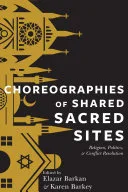
Choreographies of Shared Sacred Sites
 79
79

Choreographies of Shared Sacred Sites
Elazar Barkan and Karen Barkey’s "Choreographies of Shared Sacred Sites" offers a vital, if sometimes dense, exploration of how humans manage – or fail to manage – the intimate proximity of differing sacred traditions. The strength of this collection lies in its granular examination of specific locales, such as the contested religious geography of Cyprus, moving beyond abstract theory to ground its arguments in palpable realities. A particular strength is the analysis of how local "choreographies" of ritual and access, developed over centuries, can be violently disrupted by nationalist agendas, as seen in the Israeli-Palestinian context. However, the anthology occasionally suffers from a degree of academic detachment; while meticulously researched, some essays could benefit from more direct engagement with the lived experiences of those directly involved. The exploration of the "logic of sharing" is compelling, but the policy implications, while present, feel somewhat underdeveloped. Ultimately, the book provides a rigorous, if challenging, framework for understanding the enduring human struggle over sacred ground.
📝 Description
79
Published in 2014, Choreographies of Shared Sacred Sites examines interactions at religiously shared spaces.
This 2014 anthology, edited by Elazar Barkan and Karen Barkey, collects essays that analyze how different groups manage religiously significant sites. The contributors look at the ways local and national stakeholders negotiate cooperation and conflict, coexistence and competition in these contested areas. The book moves past simple descriptions, examining the reasons and historical patterns behind these difficult relationships.
It grew from academic interest in how sacred spaces are managed in conflict zones. Following global events and tensions in places like Palestine/Israel and the Balkans, scholars wanted to understand historical sharing patterns and what causes them to break down. The work connects to earlier studies on religious pluralism and territorial disputes, placing its findings within current geopolitical situations. The essays offer detailed case studies for those interested in how coexistence and conflict play out at these sites.
While not strictly esoteric in the occult sense, this collection engages with a tradition of understanding deep, often hidden, patterns of human interaction. It views the management of sacred sites as a 'choreography'—a set of patterned movements and negotiations, reflecting an esoteric interest in the underlying structures and symbolic meanings of social phenomena. The book seeks the 'logic of sharing,' suggesting that beneath overt conflicts lie consistent, albeit complex, principles governing how groups interact around shared spiritual and territorial claims.
💡 Why Read This Book?
• Gain an understanding of the "logic of sharing" as a concept, learning how centuries of coexistence at sites like those in the Balkans were historically maintained before being disrupted by modern conflicts. • Analyze the specific "choreographies" of interaction at shared sacred sites, discovering how ritual practices and local customs in places like Palestine/Israel shape intergroup dynamics. • Explore the impact of national and local stakeholders on religious sites, understanding how their competing interests, as documented in case studies from Algeria and Turkey, can lead to either cooperation or conflict.
⭐ Reader Reviews
Honest opinions from readers who have explored this book.
❓ Frequently Asked Questions
What is meant by 'choreographies of shared sacred sites'?
The term refers to the complex, often unspoken rules, rituals, and spatial arrangements that govern how different religious communities interact at a single sacred location. It highlights the dynamic, patterned nature of their coexistence and potential conflicts.
Which regions are primarily covered in the book?
The anthology focuses on shared sacred sites in Turkey, the Balkans, Palestine/Israel, Cyprus, and Algeria, offering diverse examples of religious coexistence and conflict.
What is the historical period explored in the essays?
The essays examine historical patterns of sharing and conflict across centuries, but are particularly focused on understanding contemporary dynamics and the recent past leading up to the book's publication in 2014.
Who are the main contributors to the anthology?
The book features contributions from numerous scholars, with Elazar Barkan and Karen Barkey serving as the editors. Specific contributors are detailed within the text, representing diverse academic backgrounds.
How does the book address the concept of coexistence?
It explores coexistence not as a static state, but as a dynamic process shaped by local negotiations, historical precedents, and external political pressures. The essays analyze when and why coexistence succeeds or fails.
What are the policy implications discussed?
The book examines the consequences for policy and governance arising from the management of shared sacred sites. It considers how understanding local 'choreographies' can inform more effective conflict resolution strategies.
🔮 Key Themes & Symbolism
The Logic of Sharing
This theme investigates the underlying principles and historical frameworks that have enabled disparate religious groups to share sacred spaces over extended periods. It moves beyond simple tolerance to examine the practical, often unwritten rules and mutual understandings that constitute this 'logic.' The work probes how these arrangements, developed through centuries of interaction in regions like Cyprus, create a fragile equilibrium that can be disrupted by external forces or internal shifts in power dynamics, offering a nuanced view of religious coexistence.
Stakeholder Negotiation
The anthology critically examines the roles and motivations of various 'stakeholders'—local communities, national governments, religious authorities, and international bodies—in managing shared sacred sites. It highlights how these actors maneuver between cooperation and competition, influencing the stability of coexistence. Case studies from Palestine/Israel and Algeria illustrate how differing agendas, from preserving tradition to asserting political control, shape the 'choreographies' of interaction and can either reinforce or shatter long-standing arrangements.
Conflict and Disruption
A central focus is understanding the triggers and dynamics of conflict that interrupt or dissolve periods of shared use at sacred sites. The book analyzes how nationalistic narratives, political opportunism, or shifts in demographic balance can destabilize established 'choreographies.' By examining instances where sharing breaks down, the contributors illuminate the inherent fragility of interreligious harmony in contested territories and the lasting impact on both local populations and broader geopolitical stability.
Spatial Choreography
This theme conceptualizes the interactions at shared sacred sites as deliberate, patterned 'choreographies.' It emphasizes the spatial dimensions—who can access which areas, when, and under what conditions—as crucial to understanding religious dynamics. The essays demonstrate how these spatial negotiations, often evolving organically over centuries in places like the Balkans, are not merely practical arrangements but are imbued with symbolic meaning and political significance, revealing the performative nature of coexistence.
💬 Memorable Quotes
Direct passages from the work, attributed to the author.
“Where local and national stakeholders maneuver between competition and cooperation, coexistence and conflict.”
— This phrase expresses the core tension explored in the anthology. It suggests that interactions at shared sacred sites are not static but involve active negotiation and strategic maneuvering by various groups with often conflicting interests.
“Contributors probe the notion of coexistence and the logic that underlies centuries of 'sharing.'”
— This highlights the book's analytical approach, moving beyond mere observation to investigate the fundamental principles and historical precedents that permit religious groups to share significant spaces, questioning the very foundations of such arrangements.
“These essays map the choreographies of shared sacred space.”
— This statement emphasizes the methodological contribution of the work, presenting the complex interactions at religious sites as patterned 'dances' or sequences of actions that can be analyzed and understood spatially and temporally.
“Exploring when and why sharing gets interrupted—or not—by conflict.”
— This points to the book's focus on the dynamics of stability and instability. It seeks to identify the specific factors—political, social, or religious—that lead to the breakdown of peaceful coexistence at sacred sites.
“The work explores the dynamics of shared religious sites.”
— A straightforward summary of the book's subject matter, indicating its focus on the ongoing interactions, relationships, and power plays that characterize religiously significant locations used by multiple groups.
🌙 Esoteric Significance
Tradition
While not strictly within a single esoteric lineage like Hermeticism or Kabbalah, this work engages with the esoteric principle of understanding hidden patterns and underlying logics that govern human behavior and societal structures. It approaches the sacred not just as doctrine but as lived, spatial, and performative reality, akin to how some esoteric traditions view the manifestation of spiritual principles in the material world. The focus on unseen 'choreographies' and the 'logic of sharing' reflects an esoteric interest in uncovering the subtle dynamics that shape collective experience.
Symbolism
The primary 'symbolism' explored is the sacred site itself, which functions as a focal point where divine claims intersect with human territoriality and identity. The act of 'sharing' can be seen as a symbolic representation of potential universal interconnectedness, often tested by divisive human constructs like nationalism. The 'choreography' itself symbolizes the ritualistic and performative aspects of faith, how abstract beliefs are made manifest in physical movement and spatial claims, revealing the embodied nature of spirituality.
Modern Relevance
Contemporary thinkers in critical geography, peace studies, and comparative religion draw upon the work's methodology. Scholars examining urban sacred spaces, interfaith initiatives, and the politics of heritage sites often reference the anthology's framework for analyzing stakeholder dynamics and spatial negotiations. Its insights remain relevant for understanding ongoing conflicts where religious sites are central, such as in Jerusalem or various Balkan regions, informing approaches to conflict resolution and heritage management in the 21st century.
👥 Who Should Read This Book
• Academic researchers in religious studies, anthropology, and political science seeking in-depth case studies on interfaith relations and conflict management in diverse geographical contexts. • Policymakers and diplomats involved in international relations, particularly in regions with significant religious diversity and historical tensions, who require nuanced understandings of local dynamics. • Students of comparative religion and sociology interested in the practicalities of religious coexistence and the historical development of shared sacred spaces.
📜 Historical Context
Published in 2014, "Choreographies of Shared Sacred Sites" emerged during a period of heightened global attention to religious conflicts and the management of contested territories. The anthology addressed an academic discourse increasingly focused on the role of identity politics and historical grievances in contemporary disputes. It built upon earlier anthropological and historical studies of religious pluralism, particularly in the Mediterranean and Balkan regions, while engaging with emerging scholarship on securitization and post-conflict reconstruction. The work implicitly contrasted with more simplistic narratives of inevitable conflict, instead highlighting the complex, often long-standing, traditions of coexistence. Key contemporaries in related fields included scholars like Thomas Asbridge, who wrote on historical crusades and interfaith relations, and ongoing analyses of the Israeli-Palestinian conflict by numerous academics. The book's focus on the practical 'choreographies' offered a novel lens, distinct from purely theological or political analyses.
📔 Journal Prompts
The 'logic of sharing' at a specific sacred site: what underlying principles permit coexistence?
Analyze the 'stakeholders' involved in managing a shared sacred space. Whose interests prevail?
Reflect on how 'choreographies' of ritual can either reinforce or disrupt peace at contested sites.
Consider the impact of national narratives versus local traditions on the sanctity of shared sites.
When does cooperation at a sacred site transition to competition or conflict?
🗂️ Glossary
Choreographies of Shared Sacred Space
The patterned, often ritualistic, interactions, movements, and spatial negotiations employed by different religious groups when using the same sacred site. It refers to the dynamic 'dance' of coexistence and conflict.
Logic of Sharing
The set of historical precedents, social norms, unwritten rules, and mutual understandings that enable disparate religious communities to utilize a single sacred location over extended periods, often despite underlying tensions.
Stakeholders
Individuals, groups, or institutions (local, national, or international) who have an interest in or influence over the management and use of a shared sacred site.
Coexistence
The state or practice of living peacefully together, particularly between different religious or ethnic groups at a shared sacred site, often involving negotiation and compromise.
Competition
Rivalry between different religious groups for access, control, or symbolic dominance within a shared sacred space, potentially leading to increased tensions.
Conflict
Overt disagreement or struggle arising from competing claims or interests over a shared sacred site, leading to the disruption of peaceful coexistence.
National Stakeholders
Governmental bodies or nationalistic movements that seek to assert control or influence over shared sacred sites, often aligning them with state ideology or national identity.