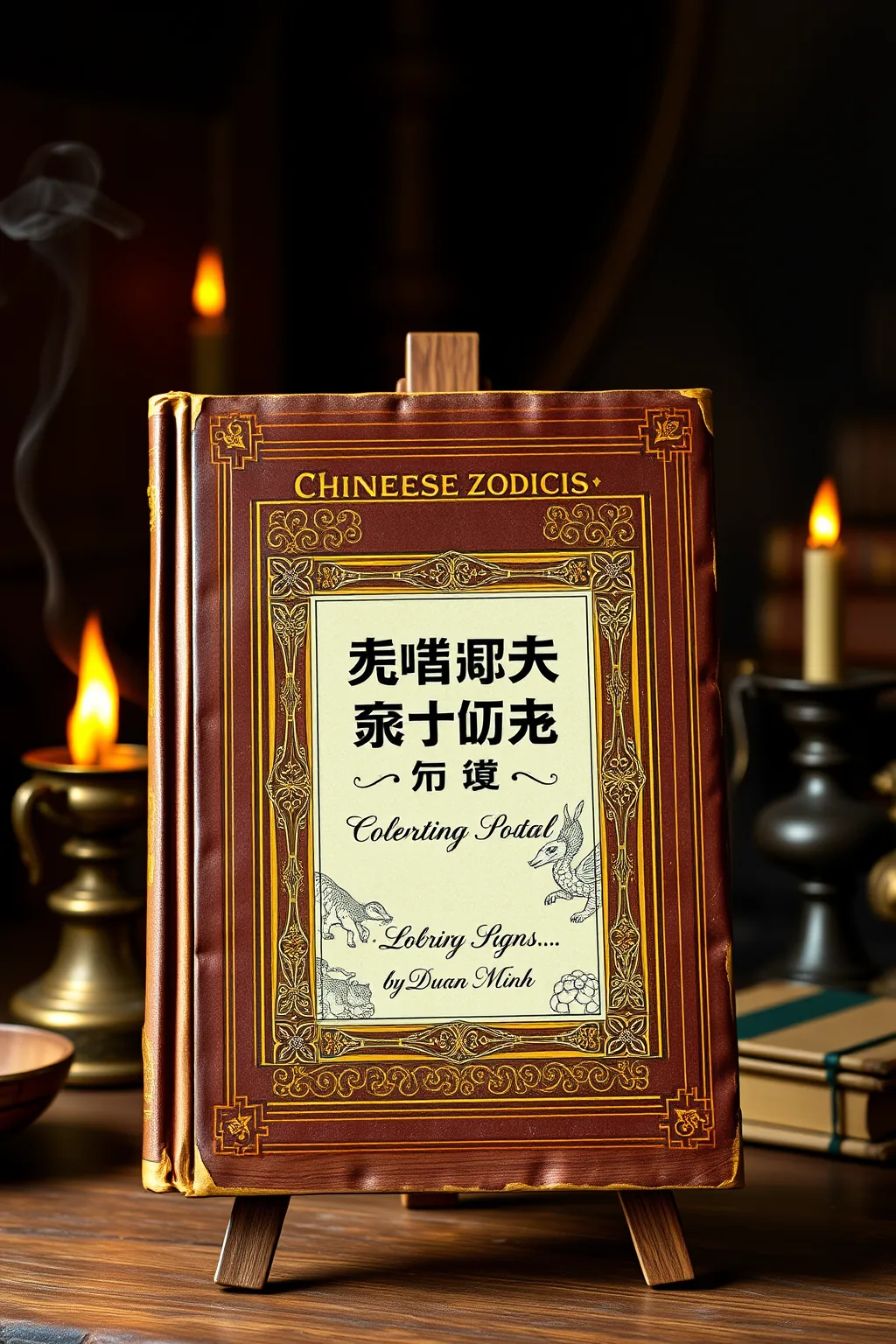
Chinese Zodiac Signs Coloring Book and Notebook for Children
 61
61

Chinese Zodiac Signs Coloring Book and Notebook for Children


Marcus Thorne (Esoteric Sciences Reviewer): Duan Minh's 'Chinese Zodiac Signs Coloring Book and Notebook' offers a surprisingly profound entry point into the intricate world of Eastern astrological symbolism. While presented in an accessible format for children, the book thoughtfully captures the essence of each zodiac animal's archetypal energies and their associated elemental and directional influences. The dual nature of coloring and journaling encourages a holistic engagement, allowing young practitioners to not only visualize but also internalize the wisdom of the zodiac. This is an excellent tool for introducing foundational concepts of cosmic harmony and personal destiny in a tangible and engaging manner, serving both as an educational resource and a creative outlet for budding seekers.
📝 Description
61
Published in 2023, Duan Minh's book introduces children to the Chinese Zodiac through coloring and writing.
This coloring book and notebook, by Duan Minh, aims to connect young readers with the Chinese Zodiac. It presents the twelve animal signs as figures to be colored, encouraging creative engagement. Alongside the coloring pages, a notebook section allows children to record their thoughts, dreams, or any personal connections they make with the zodiac animals.
The book intends for children to learn about the lore and philosophical ideas behind the zodiac system as they color. It seeks to foster an awareness of cyclical time and the symbolic meanings of the animals. The combination of art and writing is meant to provide a way for children to understand aspects of human nature and destiny through this ancient framework.
The Chinese Zodiac is a system with roots in Chinese astrology and cosmology. It assigns an animal and its reputed attributes to each year in a repeating 12-year cycle. This system is used in Chinese culture to understand personality traits, compatibility, and fortune. This book adapts these concepts for children, using coloring and writing to introduce the archetypal energies associated with each animal sign.
💡 Why Read This Book?
This book invites children to explore the mystical wisdom of the Chinese Zodiac through interactive coloring and reflective journaling. It’s an ideal resource for introducing young minds to ancient cosmological systems, fostering creativity, and encouraging a deeper connection to symbolic meanings. Seekers of all ages will find joy in discovering the archetypal energies of each sign and nurturing their own intuitive understanding of celestial influences.
⭐ Reader Reviews
Honest opinions from readers who have explored this book.
❓ Frequently Asked Questions
What age group is this coloring book suitable for?
This coloring book and notebook is primarily designed for children aged 6-12. However, its engaging designs and informative content can also be enjoyed by younger children with adult supervision or older individuals seeking a simple introduction to the Chinese Zodiac.
Does the book explain the meaning of each zodiac sign?
Yes, while the focus is on creative engagement, the book subtly introduces the core characteristics and symbolic associations of each of the twelve Chinese zodiac animals, providing a foundational understanding for young readers.
What are the benefits of coloring for children?
Coloring enhances fine motor skills, promotes focus and concentration, reduces stress, and encourages creative self-expression. It allows children to engage with visual information and develop their own interpretations.
How can the notebook section be used?
The notebook pages provide space for children to draw their own interpretations of the zodiac animals, write about their feelings or dreams, or jot down interesting facts they learn, fostering personal connection and creative exploration.
Is this book suitable for learning about astrology?
This book serves as an excellent, playful introduction to the fundamental concepts of the Chinese Zodiac, a significant branch of astrology. It lays the groundwork for a lifelong interest in cosmic patterns and self-discovery.
🔮 Key Themes & Symbolism
The Twelve Archetypal Animals
This theme examines the profound symbolism of the twelve animals of the Chinese Zodiac – Rat, Ox, Tiger, Rabbit, Dragon, Snake, Horse, Goat, Monkey, Rooster, Dog, and Pig. Each creature embodies unique personality traits, elemental associations, and cosmic influences that shape human destiny and character. Exploring these archetypes allows for a deeper understanding of oneself and others, revealing inherent strengths, challenges, and life paths. The book invites young minds to connect with these powerful symbols through visual representation and creative interpretation, fostering an intuitive grasp of their energetic signatures and their place within the grand cosmic cycle.
Cycles of Time and Destiny
The Chinese Zodiac is intrinsically linked to the ancient understanding of cyclical time, governed by the lunar calendar and the interplay of celestial bodies. This theme explores how the twelve-year cycle of the zodiac animals represents a continuous flow of energy, influencing not only individual lives but also broader societal trends. The book encourages contemplation on the concept of destiny as a dynamic force, shaped by both cosmic alignments and personal choices. By coloring and reflecting on these signs, children begin to perceive the interconnectedness of all things and the subtle, yet powerful, rhythm of the universe, fostering a sense of harmony and acceptance.
Creative Expression and Inner Wisdom
This theme highlights the powerful synergy between artistic creation and the cultivation of inner wisdom. The act of coloring is presented not merely as a pastime, but as a meditative practice that opens channels for intuition and self-discovery. The accompanying notebook provides a sacred space for children to externalize their thoughts, feelings, and nascent understandings of the zodiacal lore. Through this dual engagement, the book empowers young individuals to tap into their own inner reservoirs of creativity and insight, encouraging them to trust their perceptions and to develop a personal relationship with the ancient wisdom they are exploring.
💬 Memorable Quotes
Direct passages from the work, attributed to the author.
“Each animal holds a key to the cosmos.”
— This suggests that the zodiac animals are not just symbols, but conduits to understanding universal energies and patterns.
“Where art meets ancient wisdom.”
— This highlights the book's approach of blending creative expression with the profound knowledge of the Chinese Zodiac.
“The cycle begins with you.”
— This emphasizes personal agency and the idea that individual awareness is the starting point for understanding cosmic cycles.
“Unfold the magic of the zodiac.”
— This invites the reader to start a path of reading of discovery, uncovering the hidden wonders and enchantment of the zodiac system.
💡 Key Ideas
Editorial paraphrase of the work's core concepts — not direct quotes.
Color your destiny, write your dreams.
This quote expresses the book's dual purpose: to engage with the visual representation of fate (color) and to actively shape one's aspirations (write).
🌙 Esoteric Significance
Tradition
The Chinese Zodiac is deeply embedded within Taoist philosophy and traditional Chinese cosmology. It represents a microcosmic reflection of the macrocosm, where the celestial influences are believed to manifest in earthly affairs and individual lives. Within this tradition, the zodiac is a tool for understanding the energetic currents (Qi) that flow through time and space, influencing destiny and character. It's a practical application of observing natural cycles and their corresponding human archetypes, aiming for harmony between humanity and the universe.
Symbolism
Each of the twelve animals is rich with symbolic meaning, often derived from their perceived characteristics and their role in ancient Chinese folklore and daily life. For instance, the Dragon symbolizes power, strength, and good fortune, while the Rabbit embodies gentleness, grace, and longevity. These symbols are not static; they are imbued with elemental associations (Wood, Fire, Earth, Metal, Water) and directional correspondences, creating a complex interplay of energies that informs personality, compatibility, and prognostications.
Modern Relevance
In the modern world, the Chinese Zodiac continues to offer a compelling framework for self-understanding and cultural connection. It provides a non-dogmatic system for exploring personality traits, relationships, and life patterns, resonating with individuals seeking meaning beyond conventional psychology. Its cyclical nature offers a sense of continuity and perspective in a rapidly changing world. Furthermore, it serves as a vital link to cultural heritage and a means of engaging with ancient wisdom in an accessible and enjoyable format, fostering a sense of identity and shared human experience.
👥 Who Should Read This Book
This book is a treasure for young seekers aged 6-12, offering a playful yet insightful introduction to the mystique of the Chinese Zodiac. It's ideal for children who are curious about astrology, mythology, or simply love to color and create. Parents and educators will find it a valuable tool for sparking conversations about symbolism, cultural heritage, and the interconnectedness of the universe. For anyone interested in introducing foundational esoteric concepts in an engaging and accessible manner, this book provides a delightful starting point for exploring ancient wisdom through art and reflection.
📜 Historical Context
The Chinese Zodiac, or Shengxiao, has roots stretching back over two millennia, deeply interwoven with ancient Chinese cosmology, philosophy, and agrarian life. Its origins are often linked to early astronomical observations and the need to track time in a society reliant on agricultural cycles. The twelve animal signs – Rat, Ox, Tiger, Rabbit, Dragon, Snake, Horse, Goat, Monkey, Rooster, Dog, and Pig – are believed to have been assigned based on their perceived importance or characteristics within ancient Chinese culture and mythology. This system was not merely a calendar but a comprehensive framework for understanding human personality, relationships, fortune-telling, and even governance. Its influence permeated art, literature, folklore, and daily life, shaping cultural identity and providing a lens through which the universe and one's place within it were understood. The enduring popularity of the zodiac speaks to its profound ability to offer meaning and structure to human experience.
📔 Journal Prompts
If you were born in the Year of the [Insert Animal Here], what special abilities do you think you would have?
Draw your favorite zodiac animal and write three words that describe its personality.
Think about the animal that represents your birth year. What is one thing you admire about that animal?
Imagine you could combine the traits of two zodiac animals. Which would they be and why?
Write a short story about an adventure featuring one of the Chinese zodiac animals.
🗂️ Glossary
Zodiac
A belt of the heavens extending about 8 degrees on either side of the ecliptic, divided into twelve equal parts, each named after a constellation or group of stars formerly in that sector.
Archetype
A universal, archaic pattern or image that derives from the collective unconscious and is inherited in the makeup of the psyche. In this context, the zodiac animals represent fundamental human characteristics.
Cosmology
The branch of philosophy and theology that deals with the origin and structure of the universe. It explores the fundamental nature of reality and the cosmos.
Symbolism
The use of symbols to represent ideas and qualities. In the Chinese Zodiac, each animal has rich symbolic meanings related to personality, fortune, and destiny.
Intuition
The ability to understand something immediately, without the need for conscious reasoning. This book encourages developing intuition through creative engagement.
This book appears in 2 collections
🔮 Readers Also Liked
Browse all →








More by Duan Minh
All books →
From the “Astrology” Collection
View all →








More Free Astrology & Cosmology Books
View all →