Duan Minh
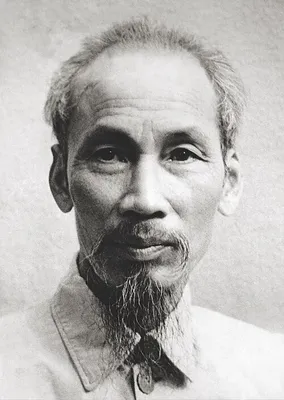
Hồ Chí Minh was a Vietnamese revolutionary, statesman, writer, and poet who led Vietnam's independence movement and served as its first president.
Hồ Chí Minh, born Nguyễn Sinh Cung in 1890, was a pivotal figure in Vietnamese history, serving as a revolutionary and statesman. He founded the Democratic Republic of Vietnam in 1945 and was its first president until his death in 1969. A dedicated Marxist-Leninist, Hồ was instrumental in the establishment and leadership of Vietnam's Communist Party. His early life and movements before gaining power are marked by uncertainty, with numerous aliases and varying accounts of his birth and early experiences. He traveled extensively, living and working in France, the United States, and the United Kingdom, where he engaged with various political and intellectual circles. During his time abroad, he was involved in advocating for Vietnamese independence and became a recognized figure in anti-colonial movements.
Returning to Vietnam in 1941, Hồ led the Việt Minh independence movement against Japanese occupation and later against French colonial rule. He proclaimed Vietnam's independence in 1945, initiating the First Indochina War. His leadership also saw the implementation of land reform campaigns. Following the division of Vietnam in 1954, he remained president of North Vietnam throughout the Vietnam War, supporting the insurgency in the South via the Ho Chi Minh trail until his passing in 1969. His legacy includes the eventual reunification of Vietnam and the renaming of Saigon to Ho Chi Minh City.
Early Life and Education
Born Nguyễn Sinh Cung in 1890 in Nghệ An province, French Indochina, Hồ Chí Minh's early life is subject to varying accounts. He received a traditional Confucian education from his father, Nguyễn Sinh Sắc, a scholar and imperial magistrate, and also learned Chinese characters and colloquial Vietnamese. He later attended the Collège Quốc học in Huế, a French-style secondary school, where future political figures like Ngô Đình Diệm also studied. Hồ's father, while a patriot, also collaborated with the French colonial administration. Hồ's early life was marked by a spirit of adventure and intellectual curiosity, though specific details of his activities and potential involvement in early protests remain debated among historians due to conflicting sources.
International Travels and Political Awakening
From 1911, Hồ Chí Minh embarked on extensive travels abroad, working in various capacities on ships and residing in countries including France, the United States, and the United Kingdom. Under aliases such as Văn Ba, he worked as a kitchen helper and cook, visiting major cities like Marseille, New York, and Boston. While in the U.S., he may have had contact with Korean nationalists and was influenced by figures like Marcus Garvey. In France, he became involved in political activism, joining groups advocating for Vietnamese independence and co-founding the French Communist Party in 1920. His writings and petitions during this period, particularly under the pseudonym Nguyễn Ái Quốc, established him as a prominent voice for Vietnamese self-determination.
Leadership of Independence Movements
Upon returning to Vietnam in 1941, Hồ Chí Minh founded and led the Việt Minh independence movement, spearheading resistance against the Japanese occupation. In 1945, he led the August Revolution, overthrowing the Vietnamese monarchy and declaring the independence of the Democratic Republic of Vietnam. Following the re-establishment of French colonial power, Hồ led the Việt Minh in guerrilla warfare, initiating the First Indochina War. His leadership also encompassed significant domestic policies, including a land reform campaign between 1953 and 1956. The Việt Minh's victory over the French at the Battle of Điện Biên Phủ in 1954 was a crucial turning point.
Presidency and Vietnam War
After the 1954 Geneva Conference divided Vietnam, Hồ Chí Minh served as president of North Vietnam, leading the country through the Vietnam War. He supported the Viet Cong insurgency in the South and oversaw the logistical operations of the Ho Chi Minh trail. He remained the president and party leader until his death from heart failure in 1969. His leadership was central to North Vietnam's eventual victory in 1975 and the subsequent reunification of Vietnam in 1976. In his honor, Saigon was renamed Ho Chi Minh City.
Key Ideas
- Vietnamese nationalism and independence
- Marxism-Leninism and socialist revolution
- Anti-colonialism and self-determination
- Guerrilla warfare and people's war strategy
Books by Duan Minh
2 free public domain books · Read online or download