Anthroposophy
 83
83

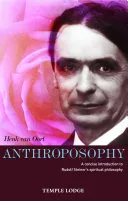
Anthroposophy
Henk van Oort's "Anthroposophy" succeeds admirably in its stated goal: to present Rudolf Steiner's comprehensive spiritual philosophy with clarity. The book’s strength lies in its systematic approach, breaking down Steiner's intricate cosmology into digestible components. Van Oort’s background in teaching introductory courses is evident, making complex ideas like the fourfold human constitution (physical, etheric, astral bodies, and the 'I') understandable without oversimplification. A particularly effective passage is the explanation of the etheric body's role in life processes, a concept often misunderstood. However, the book occasionally feels so condensed that it leaves the reader wishing for more elaboration on certain practical applications, such as the nuances of biodynamic agriculture beyond a brief mention. Despite this, "Anthroposophy" serves as a solid, informative primer for anyone encountering Steiner's work for the first time. It is a valuable introduction for the uninitiated.
📝 Description
83
Henk van Oort's Anthroposophy clarifies Rudolf Steiner's spiritual philosophy in 2023.
Henk van Oort's book provides a clear overview of Rudolf Steiner's spiritual philosophy. It breaks down complex ideas for readers new to Steiner's thought. The work examines the structure of human existence, looking at the connections between physical, soul, and spiritual elements.
Van Oort's book aims to show the basic principles behind Steiner's practical initiatives. It is written for people interested in the spiritual roots of movements such as Waldorf education, biodynamic agriculture, and anthroposophic medicine. Students of esoteric philosophy, comparative religion, or anyone wanting a structured view of Steiner's writings will find this book helpful. Those who look for explanations of the human makeup beyond material views will also gain from it.
Anthroposophy, developed by Rudolf Steiner in the early 20th century, grew from Theosophy. Steiner sought a spiritual path with a rigorous, investigative method. His ideas influenced practical fields like education and agriculture, creating distinct movements. Van Oort's book places these developments in their historical context, explaining their origins and influence within the broader esoteric tradition.
💡 Why Read This Book?
• Gain a foundational understanding of Rudolf Steiner's spiritual science, specifically the concept of the fourfold human being (physical, etheric, astral bodies, and the 'I'), which forms the basis for many practical applications. • Grasp the core principles of reincarnation and karma as presented by Steiner, offering a framework for understanding life's challenges and personal development. • Appreciate the historical context of anthroposophy's emergence in the early 20th century, and its relationship to initiatives like the Waldorf school movement, which began in 1919.
⭐ Reader Reviews
Honest opinions from readers who have explored this book.
❓ Frequently Asked Questions
What are the main branches of Rudolf Steiner's work discussed in "Anthroposophy"?
The book highlights major practical outgrowths of Steiner's philosophy, including the Waldorf school movement, biodynamic agriculture, and anthroposophic medicine. It aims to show the spiritual underpinnings of these initiatives.
Is "Anthroposophy" by Henk van Oort suitable for complete beginners?
Yes, van Oort's book is specifically designed as a concise presentation for those new to Steiner's thought, based on years of teaching introductory courses on the subject.
What is the concept of 'body, soul, and spirit' in Anthroposophy?
Van Oort's work explores Steiner's view of humans as comprising not just a physical body, but also soul and spirit components, which interact and evolve through earthly lives.
When was "Anthroposophy" by Henk van Oort first published?
The book "Anthroposophy" by Henk van Oort was first published in 2008.
Does the book explain the spiritual hierarchy in Anthroposophy?
While focusing on the human constitution, the book touches upon the spiritual realms and the evolutionary path of human consciousness, which implies a broader cosmic order.
How does "Anthroposophy" connect to Rudolf Steiner's broader philosophy?
Henk van Oort's book provides an overview of key aspects of Steiner's thought, linking his philosophical concepts to tangible movements and practices that emerged from his teachings.
🔮 Key Themes & Symbolism
The Fourfold Human Being
Van Oort elucidates Rudolf Steiner's concept of the human constitution as a composite of four distinct members: the physical body (mineral-like), the etheric body (life forces), the astral body (consciousness and feeling), and the 'I' or ego (individuality and spirit). This framework is fundamental to understanding Steiner's view of health, education, and spiritual development, differentiating it from purely materialistic or vitalistic perspectives prevalent in the early 20th century.
Spiritual Evolution and Karma
The book outlines Steiner's perspective on human and cosmic evolution, viewing earthly existence as a crucial phase for developing the individual spirit. It introduces the principles of karma and reincarnation not as fatalistic doctrines, but as a dynamic process of learning and spiritual growth, where actions in one life influence future experiences and development.
Practical Manifestations of Anthroposophy
Van Oort connects the abstract philosophical concepts to concrete initiatives founded by Rudolf Steiner. The text explains how principles of anthroposophy inform the pedagogical methods of Waldorf schools (initiated in 1919), the ecological approach of biodynamic agriculture, and the holistic understanding of illness in anthroposophic medicine, showcasing the practical outworking of a spiritual worldview.
The Role of Christ in Spiritual Science
A significant aspect covered is Steiner's unique interpretation of Christ's significance, not merely as a historical or religious figure, but as a central spiritual impulse in Earth's evolution. The book explores the 'Christ event' as a cosmic occurrence impacting human consciousness and spiritual development, distinct from traditional theological interpretations.
💬 Memorable Quotes
Direct passages from the work, attributed to the author.
“The comprehensive spiritual philosophy behind these movements is not so well known.”
— This statement highlights a central challenge addressed by van Oort's work: the disconnect between the popular recognition of Steiner-inspired initiatives (like Waldorf schools) and a deeper understanding of their underlying philosophical and spiritual basis.
“He deals with concepts such as body, soul, and spirit.”
— This points to the book's focus on the anthroposophical understanding of human nature, which posits a multi-layered constitution beyond the purely physical, emphasizing the distinct yet interconnected roles of the physical, soul, and spiritual aspects of being.
“based on years of teaching introductory courses on the subject”
— This phrase indicates the book's pedagogical approach. It suggests that the content has been refined through practical experience in explaining complex anthroposophical ideas to newcomers, aiming for clarity and accessibility.
“Rudolf Steiner's work largely because of initiatives such as the worldwide Waldorf school movement”
— This identifies a key entry point for public awareness of Steiner's influence. The mention of the Waldorf school movement, founded in 1919, serves as a concrete example of how anthroposophy has manifested in practical, widespread educational reform.
“biodynamic agriculture, and anthroposophic medicine”
— These examples showcase the breadth of anthroposophy's practical application beyond education. They represent distinct fields where Steiner's spiritual-scientific principles have been applied to agriculture and healing, demonstrating the philosophy's impact on various aspects of life.
🌙 Esoteric Significance
Tradition
Anthroposophy, as presented by van Oort, arises from the Western esoteric tradition, specifically evolving from Theosophy. It positions itself as a 'spiritual science,' aiming to apply rigorous, observational methods to the study of spiritual realities, akin to empirical science but with expanded faculties. It departs from Theosophy by emphasizing a more individualized, Christ-centered spiritual path and a distinct cosmology and anthropology.
Symbolism
While van Oort's work is more philosophical exposition than symbolic analysis, key motifs represent deeper concepts. The human being's threefold or fourfold structure (body, soul, spirit, 'I') symbolizes a graduated existence, with each level possessing its own laws and developmental potential. The concept of 'karma' functions symbolically as a principle of cause and effect operating across lifetimes, guiding spiritual evolution and the balancing of forces.
Modern Relevance
Contemporary movements continue to draw from anthroposophy. The Waldorf education system remains a significant global force. Biodynamic agriculture, pioneered by Steiner, influences organic farming practices. Anthroposophic medicine offers a complementary approach to healthcare. Furthermore, thinkers in consciousness studies and integral philosophy often engage with Steiner's concepts of spiritual development and human potential.
👥 Who Should Read This Book
["• Students of Rudolf Steiner's work seeking a structured, introductory overview of his core philosophical and cosmological ideas.", '• Educators, parents, and therapists interested in the principles behind Waldorf education and anthroposophic approaches to development and healing.', '• Researchers in comparative religion and esoteric traditions looking to understand a major spiritual movement of the 20th century and its practical manifestations.']
📜 Historical Context
Henk van Oort's "Anthroposophy" engages with the intellectual field of the early 20th century, a period marked by burgeoning interest in spiritual and esoteric movements. Rudolf Steiner, emerging from the Theosophical Society (which he led until 1913), developed anthroposophy as a distinct spiritual science. This era saw figures like C.G. Jung exploring the psyche through myth and symbolism, and thinkers like Albert Einstein revolutionizing physics, creating a climate where both radical scientific and spiritual inquiries were potent. Steiner's work was influential, yet also met with skepticism and occasional opposition from materialist circles and established religious institutions. Van Oort situates Steiner's distinct path within this context, explaining how anthroposophy offered a unique synthesis of scientific thinking and spiritual exploration, leading to tangible outcomes like the first Waldorf school in Stuttgart in 1919.
📔 Journal Prompts
The concept of the etheric body's role in life processes.
The principles of karma and reincarnation as presented.
The foundational ideas behind the Waldorf school movement.
The distinction between Steiner's spiritual science and traditional religion.
The 'I' as the bearer of spiritual individuality.
🗂️ Glossary
Anthroposophy
A spiritual philosophy founded by Rudolf Steiner, seeking to understand the spiritual nature of the human being and the cosmos through methods he termed 'spiritual science'.
Rudolf Steiner
Austrian esotericist, philosopher, and social reformer (1861-1925) who founded anthroposophy and inspired movements like Waldorf education and biodynamic agriculture.
Physical Body
In anthroposophy, the mineral-like, perishable component of the human being, governed by physical laws.
Etheric Body
The subtle body responsible for life forces, growth, and reproduction; it organizes the physical body and disintegrates after death.
Astral Body
The vehicle of consciousness, feeling, and sensation; it is responsible for subjective experience and dissolves after death, leaving the 'I'.
The 'I' (Ego)
The spiritual core of individuality, the immortal self that reincarnates and develops through successive earthly lives, bearing karmic consequences.
Karma
The law of cause and effect applied to spiritual development, governing the process of reincarnation and the unfolding of individual destiny.