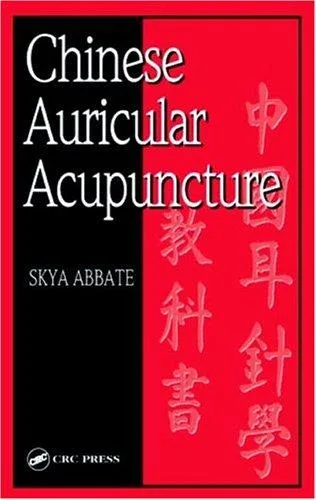
Chinese auricular acupuncture
 82
82

Chinese auricular acupuncture
Skya Abbate's "Chinese Auricular Acupuncture" offers a precise, if somewhat dry, exposition of its subject. The strength lies in its systematic detailing of auricular points and their correspondences, a valuable resource for practitioners. Abbate's approach, while rooted in TCM principles, acknowledges the modern development of the field, implicitly referencing figures like Paul Nogier without extensive elaboration. A limitation is the lack of extensive case studies or discussion of energy dynamics, which might leave readers seeking more nuanced clinical application feeling somewhat underserved. The section on diagnosing via the ear, however, provides clear, actionable guidance. Ultimately, it serves as a competent, fact-heavy manual rather than an inspirational guide.
📝 Description
82
Skya Abbate's Chinese auricular acupuncture, published in 2018, details the diagnostic and therapeutic uses of ear points.
This book focuses on auricular acupuncture, a specific modality within Traditional Chinese Medicine. It explains how stimulating points on the ear, the auricle, can affect physiological and energetic systems throughout the body. The text maps the ear's anatomical landmarks and their connections to different somatic and visceral areas.
The work is aimed at acupuncture practitioners and TCM students wanting to understand microsystems in healing. It will also interest those in complementary and alternative medicine who are curious about non-invasive diagnostics and localized treatments. Individuals studying the history and development of acupuncture will find it a useful resource. The core idea is that the ear acts as a microsystem representing the entire body, with specific points correlating to organs, limbs, joints, and emotional states.
Auricular acupuncture draws from the ancient Chinese medical concept of correspondences, where a part reflects the whole. While its systematic modern mapping owes much to Paul Nogier's work in the mid-20th century, the book situates this within the broader esoteric tradition of TCM's energetic pathways and their reflection on external body surfaces. It views the ear not just anatomically, but as a vital map for diagnosing and treating distant conditions through the body's subtle energy system.
💡 Why Read This Book?
• Gain a foundational understanding of how the ear acts as a microsystem reflecting the entire body, a core principle of auricular acupuncture, as detailed in the text's anatomical mappings. • Learn specific point locations and their corresponding somatic and visceral connections, allowing for targeted therapeutic interventions distinct from other acupuncture modalities. • Appreciate the historical trajectory of auricular diagnosis and treatment, understanding its place within both ancient Chinese medicine and its mid-20th-century revitalization.
⭐ Reader Reviews
Honest opinions from readers who have explored this book.
❓ Frequently Asked Questions
What is the primary diagnostic method discussed in Chinese auricular acupuncture?
The primary diagnostic method involves observing and palpating specific points on the ear (auricle) for tenderness, changes in color, or other anomalies that correspond to imbalances in the body's organs and systems.
When was the modern systematic mapping of auricular points largely developed?
The modern systematic mapping of auricular points, which forms the basis for much contemporary practice, was significantly developed in the mid-20th century, notably through the work of French physician Paul Nogier.
Are there different methods for stimulating auricular points?
Yes, the book likely covers various stimulation methods, including the insertion of fine needles (acupuncture), applying pressure (acupressure), using electrical stimulation, or even utilizing seeds or beads placed on specific points.
How does auricular acupuncture relate to Traditional Chinese Medicine (TCM)?
Auricular acupuncture is considered a microsystem within TCM. It applies TCM principles of Qi, meridians, and organ correspondences to diagnostic and therapeutic points located on the ear.
Can auricular acupuncture be used for conditions beyond pain management?
Yes, the practice is often applied to a wide range of conditions, including digestive issues, stress, sleep disorders, neurological problems, and gynecological complaints, by addressing their corresponding auricular points.
What is the earliest known mention of ear-based therapy in Chinese medicine?
Early references to treating the ear for health purposes can be found in ancient Chinese medical texts such as the 'Huangdi Neijing' (The Yellow Emperor's Inner Canon), indicating a long historical tradition.
🔮 Key Themes & Symbolism
The Ear as a Microsystem
This work emphasizes the profound concept of the auricle as a complete map of the human body. Each section of the ear corresponds to specific organs, limbs, or physiological functions. The text details how to identify these correspondences, enabling practitioners to diagnose and treat systemic issues by focusing solely on auricular points. This principle allows for precise, localized interventions that influence distant parts of the body, a core part of its therapeutic efficacy.
Diagnostic and Therapeutic Point Mapping
A central theme is the meticulous mapping of diagnostic and therapeutic points on the ear. Abbate outlines specific locations, their anatomical landmarks, and the energetic channels they belong to within the TCM framework. The book guides readers on how to accurately palpate these points, detect subtle signs of imbalance, and select appropriate points for treatment protocols, illustrating the diagnostic precision achievable through auricular examination.
Integration of Ancient and Modern Practice
The book bridges ancient Chinese medical theory with more contemporary developments in auricular acupuncture. While grounding the practice in classical texts like the 'Huangdi Neijing', it also incorporates modern understandings of somatotopic representations of the body on the ear, influenced by mid-20th-century research. This integration showcases the evolution of the modality and its continued relevance in contemporary healthcare settings.
Holistic Treatment Modality
Chinese auricular acupuncture is presented not merely as a technique but as a holistic approach to healing. By addressing the interconnectedness between the ear and the entire body, the practice aims to restore balance and promote well-being systemically. The work highlights how stimulating specific auricular points can influence Qi flow, alleviate pain, and regulate organ function, contributing to overall health.
💬 Memorable Quotes
Direct passages from the work, attributed to the author.
“The ear reflects the body's entire topography.”
— This concise statement captures the core principle of auricular acupuncture: the ear acts as a miniature representation of the whole person, with specific areas correlating to different organs and body parts.
“Palpable tenderness at an auricular point indicates a corresponding somatic imbalance.”
— This highlights the diagnostic utility of the ear. It suggests that physical sensitivity or pain when pressing certain ear points can serve as a direct indicator of a problem in the related area of the body.
“Stimulation of the Shen Men point calms the spirit.”
— This refers to a specific, potent point on the ear known as 'Shen Men' (Spirit Gate), which is traditionally used to pacify the mind, reduce anxiety, and promote emotional equilibrium.
“Auricular diagnosis precedes auricular therapy.”
— This emphasizes the procedural importance of assessment. Before initiating treatment on the ear, a thorough diagnostic examination of the auricular points is necessary to identify the correct treatment strategy.
“The tragus corresponds to the head and brain.”
— This is an example of the specific anatomical correspondences detailed in the text. It indicates that the tragus, a small flap of cartilage at the ear's entrance, is linked to the head and its neurological functions.
🌙 Esoteric Significance
Tradition
Auricular acupuncture, while deeply embedded in the empirical framework of Traditional Chinese Medicine (TCM), carries significant esoteric undertones. TCM itself is a system that views the body not just as a physical machine but as an energetic and spiritual entity. The concept of Qi (vital energy) flowing through meridians, and the ear points acting as conduits or reflections of this flow, aligns with broader esoteric traditions that posit interconnected energetic grids within the human form and the cosmos.
Symbolism
The ear itself becomes a potent symbol in this practice, representing microcosm mirroring macrocosm. Specific points, such as 'Shen Men' (Spirit Gate), symbolize access to inner peace and mental clarity, acting as a locus for calming the 'spirit' or 'mind'. The overall mapping of the auricle can be seen as a symbolic representation of the human form, where the ear's structure visually encodes the body's layout, akin to other symbolic cartographies found in Hermetic or Kabbalistic traditions.
Modern Relevance
Contemporary thinkers and practitioners in integrative medicine and energy healing frequently draw upon auricular acupuncture. Its non-invasive nature and effectiveness in areas like pain management, addiction treatment, and stress reduction have made it a valuable tool. Modern schools of thought focusing on psychosomatic connections and mind-body medicine often incorporate auricular techniques, seeing the ear as a direct interface for influencing emotional and psychological states through physical stimulation.
👥 Who Should Read This Book
• Acupuncturists and TCM practitioners seeking to expand their toolkit with a specialized microsystem for diagnosis and treatment. • Students of alternative medicine interested in learning precise, localized therapeutic techniques rooted in energetic principles. • Health enthusiasts curious about non-pharmacological approaches to pain relief, stress management, and holistic well-being through ear-based therapies.
📜 Historical Context
Published in 2003, Skya Abbate's "Chinese Auricular Acupuncture" entered a field with a rich, albeit debated, history. While auricular therapy has roots in ancient Chinese medical texts like the 'Huangdi Neijing' (circa 2nd century BCE), its modern systematization owes a considerable debt to the work of French physician Paul Nogier, who presented his findings on the ear's somatotopic representation in the 1950s. This development in Europe, often referred to as auriculotherapy, ran somewhat parallel to, yet also diverged from, its traditional Chinese counterpart. Abbate's work seeks to synthesize these perspectives. The reception of auricular acupuncture has varied; while embraced by many TCM practitioners and complementary therapists, it has faced skepticism from some within Western biomedical science due to challenges in standardizing research methodologies and explaining its mechanisms within conventional physiology. Nonetheless, it gained traction alongside the broader interest in acupuncture and TCM in the late 20th and early 21st centuries.
📔 Journal Prompts
Reflect on the concept of the ear as a microsystem mirroring the entire body.
Analyze the diagnostic significance of tenderness at the tragus point.
Consider the energetic implications of stimulating the Shen Men point for emotional balance.
Map the correspondences between auricular points and major organ systems.
Explore how the historical development of auricular acupuncture influences its modern application.
🗂️ Glossary
Auricle
The external, visible part of the ear, composed of cartilage and skin, which serves as the primary site for auricular acupuncture points.
Microsystem
A smaller area on the body (like the ear, hand, or foot) that is believed to reflect and correspond to the entire body, allowing for diagnosis and treatment of distant parts.
Shen Men
A crucial point on the auricle, often translated as 'Spirit Gate' or 'Divine Gate,' known for its calming, analgesic, and anti-inflammatory effects, widely used for stress and anxiety.
Qi (Chi)
In TCM, the vital life force or energy that flows through the body, maintaining health. Imbalances in Qi are believed to cause illness.
Tragus
A small, pointed eminence of cartilage projecting backward over the opening of the ear canal. It is associated with the head, brain, and central nervous system in auricular maps.
Somatotopic Representation
The principle that specific points on a body map (in this case, the ear) correspond to specific anatomical regions or organs of the body.
Meridian
In TCM, pathways or channels through which Qi circulates in the body. Auricular points are often located along or near these pathways.
🔮 Readers Also Liked
Browse all →
![Serrano Miguel Adolf Hitler The Ultimate Avatar [ 2000]](/img/thumb/serrano-miguel-adolf-hitler-the-ultimate-avatar-2000.webp)








More Free Occult Philosophy Books
View all →