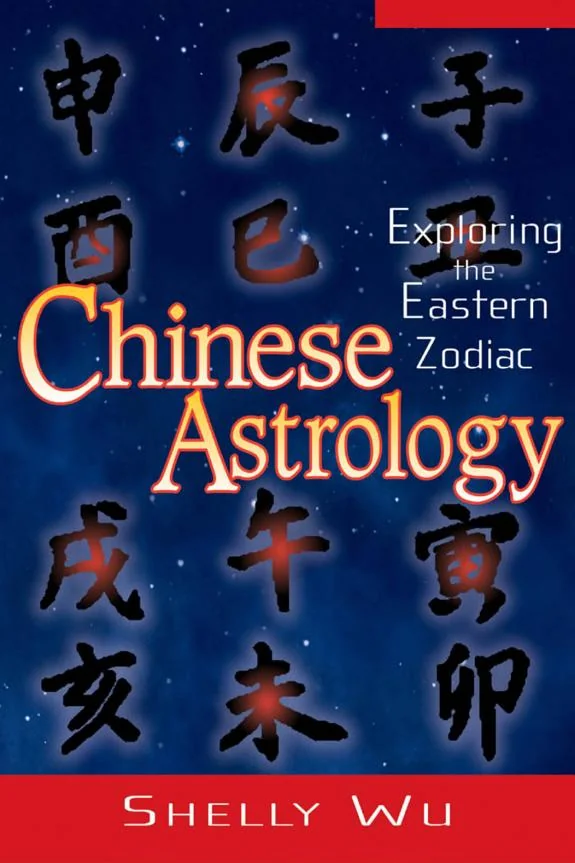
Chinese Astrology
 81
81

Chinese Astrology
Shelly Wu's "Chinese Astrology" presents the intricate system of the Eastern zodiac with admirable clarity. The strength of the book lies in its systematic breakdown of the elemental cycles and their interplay with the twelve animal signs, moving beyond superficial descriptions to explain the underlying mechanics. Wu's explanation of the "birth-hour companion" is particularly insightful, adding a dimension often overlooked in more generalized treatments of the subject. A limitation, however, is the book's occasional tendency towards definitive pronouncements; astrology, by its nature, deals with tendencies and potentials, and a more nuanced exploration of these probabilities would have been welcome. The section detailing the destructive cycle of the five elements, while informative, could benefit from more concrete examples of how these cycles manifest in personal relationships or career trajectories. Despite this, the work serves as a solid introduction to a complex system.
📝 Description
81
Shelly Wu's 2019 book explains the Chinese zodiac's twelve animal signs and five elements.
Shelly Wu's "Chinese Astrology" examines the traditional Eastern zodiac, detailing the twelve animal archetypes and their influence on personality and destiny. The work also covers the five elements—Wood, Fire, Earth, Metal, and Water—and their cyclical interactions, which are central to understanding an individual's astrological makeup. Wu further introduces the concept of the Chinese birth-hour "companion," showing how the specific time of birth adds another dimension to one's astrological profile.
This book is suitable for newcomers to Chinese astrology, as well as those interested in comparative astrology or understanding their own birth chart from an Eastern perspective. Readers drawn to personality archetypes, cyclical timekeeping, and the role of elemental forces in human life will find it informative. It is especially useful for anyone curious about astrological systems outside the Western tradition and their potential for self-insight.
Developed over millennia, Chinese astrology is deeply connected to traditional Chinese medicine, philosophy, and its lunisolar calendar. Unlike Western astrology, which tracks planets, this system primarily observes the cycles of Jupiter and the five planets linked to the elemental phases. This tradition has shaped cultural practices for centuries, influencing decisions from personal relationships to governance, and its principles continue to spread globally.
💡 Why Read This Book?
• Gain a foundational understanding of the twelve Chinese zodiac animals and their associated personality traits, as detailed in the animal sign descriptions. • Learn how the five elements (Wu Xing) interact in generative and destructive cycles, a core concept for interpreting astrological compatibility and life path. • Discover the significance of your Chinese birth-hour animal, offering a more personalized astrological profile beyond just your birth year.
⭐ Reader Reviews
Honest opinions from readers who have explored this book.
❓ Frequently Asked Questions
When was Shelly Wu's "Chinese Astrology" first published?
Shelly Wu's "Chinese Astrology" was first published on January 1, 2005, introducing its insights into the Eastern zodiac to a contemporary audience.
What are the five elements in Chinese astrology?
The five elements are Wood, Fire, Earth, Metal, and Water. These are crucial in Chinese astrology, influencing personality, relationships, and destiny, and interacting in complex cycles.
How does the Chinese birth-hour companion work?
The Chinese birth-hour companion refers to the animal sign associated with the two-hour period of your birth within a 24-hour day. This adds a more nuanced layer to your astrological profile, complementing your birth year animal.
Is Chinese astrology based on planets like Western astrology?
While Jupiter and the five planets associated with the elements are considered, Chinese astrology primarily relies on the cycles of Jupiter and the observed movements of the moon, differing significantly from Western astrology's focus on planetary positions.
What is the significance of the 60-year cycle in Chinese astrology?
The 60-year cycle is formed by the combination of the twelve animal signs and the five elements (each with Yin and Yang aspects). It represents a complete cosmic cycle used for calendrical and astrological calculations.
Can Chinese astrology predict love compatibility?
Yes, Chinese astrology, particularly through the analysis of animal signs and elemental interactions, offers insights into compatibility in romantic relationships, suggesting harmonious or challenging pairings.
🔮 Key Themes & Symbolism
The Twelve Animal Signs
The foundational archetypes of Chinese astrology, each animal—Rat, Ox, Tiger, Rabbit, Dragon, Snake, Horse, Goat, Monkey, Rooster, Dog, Pig—represents a year and carries distinct personality traits, strengths, and weaknesses. The book elaborates on the characteristics associated with each sign, offering a framework for understanding individual temperaments and life trajectories based on birth year.
The Five Elements (Wu Xing)
Beyond the animal signs, the five elements (Wood, Fire, Earth, Metal, Water) are crucial. Wu Xing theory describes how these elements interact in generative (e.g., Wood fuels Fire) and destructive (e.g., Water extinguishes Fire) cycles. This elemental interplay significantly influences personality, health, relationships, and destiny, creating a more complex astrological interpretation than just the animal sign alone.
Birth-Hour Companions
The book introduces the concept of the Chinese birth-hour animal, which corresponds to the two-hour periods of the day. While the birth year animal represents outward traits, the birth-hour animal signifies inner characteristics, hidden talents, and a more private aspect of one's personality. Understanding this companion offers a deeper, more personalized astrological reading.
Elemental Cycles and Destiny
Shelly Wu details how the combination of an animal sign and its ruling element, along with the interplay of Yin and Yang principles, shapes one's destiny. The 60-year cycle, formed by these combinations, provides a grander cosmological map. This aspect of the book explores how elemental energies influence life events and personal development over time.
💬 Memorable Quotes
Direct passages from the work, attributed to the author.
“The elemental nature of your birth year profoundly shapes your core personality.”
— This statement highlights the central tenet that one's inherent disposition is not solely determined by the animal sign of their birth year, but significantly by the associated element (Wood, Fire, Earth, Metal, or Water).
“Your birth hour animal reveals the hidden self, distinct from your year sign.”
— This emphasizes the dual nature of Chinese astrology, where the time of day one is born adds a crucial layer of interpretation, signifying internal traits that may differ from the more public persona associated with the birth year animal.
“Compatibility between signs is governed by elemental interactions, not just animal likeness.”
— This points to the complex dynamics of relationships in Chinese astrology, suggesting that harmonious or conflicting pairings are understood through the principles of how the five elements support or oppose each other.
“The cycles of the five elements create patterns of fortune and challenge throughout life.”
— This interpretation underscores the dynamic aspect of Chinese astrology, where life's journey is seen as influenced by the continuous flow and interaction of elemental energies, leading to periods of growth and difficulty.
“Understanding your birth element offers a key to self-awareness and personal growth.”
— This suggests a practical application of Chinese astrological knowledge, positioning the understanding of one's elemental influence as a tool for introspection and the cultivation of personal development.
🌙 Esoteric Significance
Tradition
Chinese astrology belongs to a distinct cosmological tradition rooted in ancient Chinese philosophy, particularly Taoism and Confucianism. It is not directly aligned with Western esoteric lineages like Hermeticism or Kabbalah but shares a universal pursuit of understanding cosmic order and its reflection in human life. Its emphasis on cyclical time, elemental balance (Wu Xing), and Yin/Yang duality places it within a macrocosm-microcosm framework common to many ancient wisdom systems.
Symbolism
Key symbols include the twelve animals, each embodying specific archetypal energies and cycles of nature. The five elements (Wood, Fire, Earth, Metal, Water) are fundamental, representing not just physical substances but also phases, directions, and energetic qualities. The concepts of Yin (passive, dark, feminine) and Yang (active, light, masculine) are also critical symbolic dualities that structure the interactions within the zodiac and elemental systems, creating a dynamic balance.
Modern Relevance
Contemporary practitioners of holistic wellness, mindfulness, and comparative spirituality often incorporate elements of Chinese astrology into their practices. Therapists and coaches may use its archetypes for client self-discovery, similar to how Jungian psychology uses archetypes. Its principles of balance and cyclical understanding also find echoes in modern ecological thought and systems thinking, demonstrating its enduring relevance beyond fortune-telling.
👥 Who Should Read This Book
• Individuals curious about alternative systems of self-understanding who have explored Western astrology and wish to compare it with Eastern traditions. • Students of comparative mythology and cultural studies seeking to understand the role of cyclical time and animal symbolism in global belief systems. • Those interested in practical applications for understanding personal relationships, career paths, and life challenges through the lens of elemental interactions and zodiac signs.
📜 Historical Context
Published in 2005, "Chinese Astrology" emerged during a period of growing global interest in Eastern philosophies and esoteric practices, following the New Age movement's popularization of various spiritual traditions. While Chinese astrology has a lineage dating back at least to the Han Dynasty (206 BCE – 220 CE), its systematic presentation in works like Wu's aimed to make its complex principles accessible to a Western audience. This coincided with a broader academic and popular engagement with comparative mythology and religion. The work entered a landscape where Western tropical astrology was dominant, offering a distinct cosmological framework. Contemporary authors like Stephen Karcher were also exploring Chinese cosmology, though Wu's focus remained specifically on the astrological applications of the zodiac and elements.
📔 Journal Prompts
The qualities of your birth year animal and birth hour companion.
The generative and destructive cycles of the five elements.
An instance where your birth element's characteristics manifested.
The relationship between your animal sign and another's.
How the Chinese concept of cyclical time influences your life.
🗂️ Glossary
Wu Xing
The Chinese term for the Five Elements: Wood, Fire, Earth, Metal, and Water. They are central to Chinese philosophy and astrology, describing dynamic interactions and cycles that influence all phenomena.
Yin and Yang
The fundamental concept of complementary opposites in Chinese philosophy. Yin represents passive, dark, and feminine qualities, while Yang represents active, light, and masculine qualities. They are interdependent and constantly interacting.
Birth Year Animal
The Chinese zodiac animal assigned to a person based on their birth year. It is considered to represent their outward personality, general disposition, and life path.
Birth Hour Companion
The Chinese zodiac animal associated with the two-hour period of a person's birth. This influences their inner characteristics, hidden talents, and a more private aspect of their personality.
Generative Cycle
A sequence within the Wu Xing where one element creates or supports another (e.g., Wood fuels Fire, Fire creates Earth from ash). This cycle represents constructive and harmonious interactions.
Destructive Cycle
A sequence within the Wu Xing where one element overcomes or destroys another (e.g., Metal chops Wood, Water extinguishes Fire). This cycle represents conflict, control, and necessary transformations.
60-Year Cycle
A complete cycle in the Chinese calendar and astrology, formed by the combination of the twelve animal signs and the sixty possible pairings of the five elements (each with Yin and Yang aspects).
This book appears in 1 collection
🔮 Readers Also Liked
Browse all →


![Animadversio astrologica: or, a discourse touching astrology. To which are added, these considerations, I. of the mutability of sublunary beings. ... IV. The causes of several phaenomena's [sic] ... By D. Irish, ... 1701](/img/thumb/animadversio-astrologica-or-a-discourse-touching-astrology-to-which-are-added-these-considerations-i-of-the-mutability-of-sublunary-beings-iv-the-causes-of-several-phaenomena-s-sic-by-d-irish-1701-iri.webp)






From the “Chinese Astrology” Collection
View all →






More Free Astrology & Cosmology Books
View all →