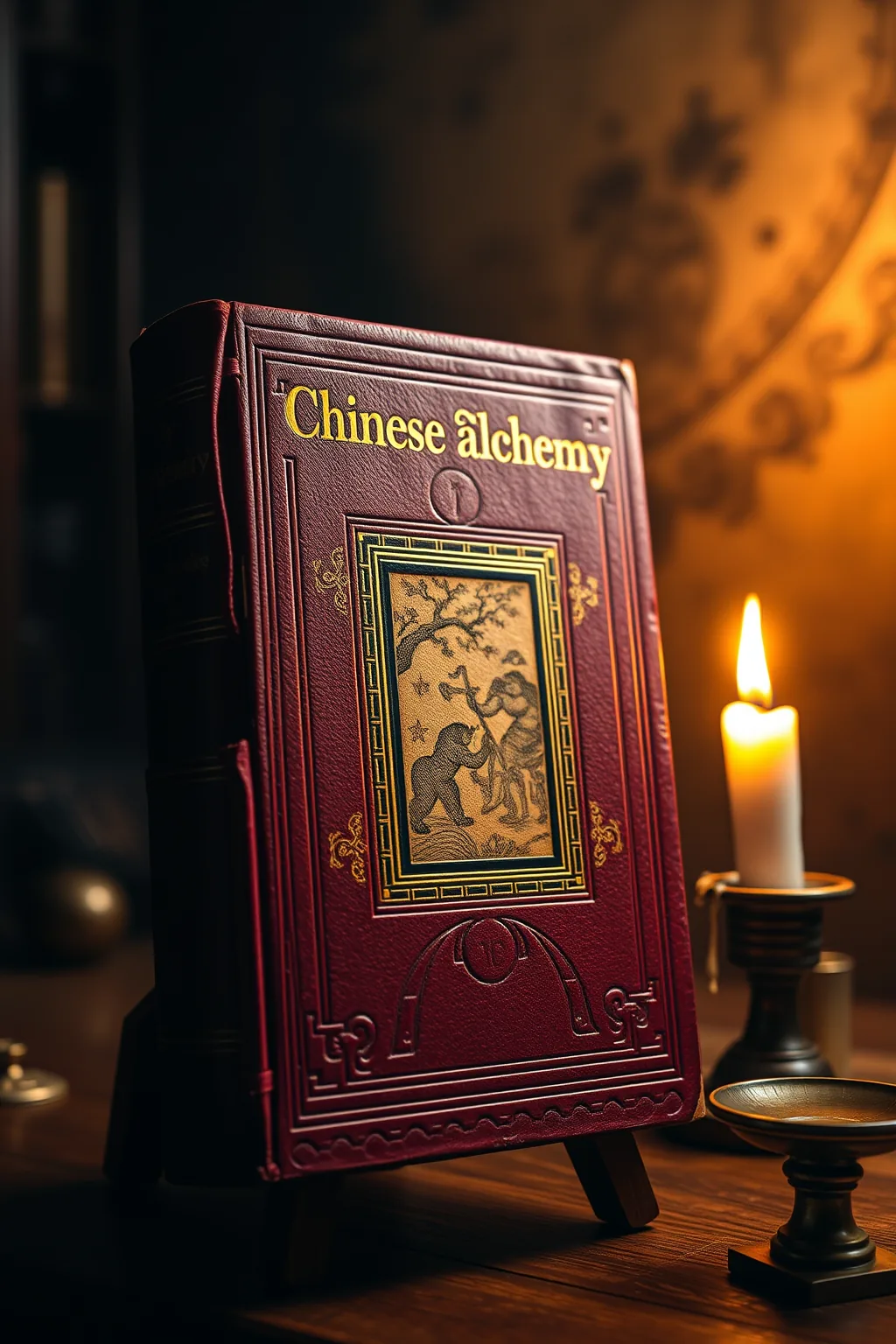
Chinese alchemy
 61
61

Chinese alchemy


Review by Silas Hawthorne (Hermetic Studies Editor) — Tenney L. Davis' 'Chinese Alchemy' is a seminal work that stands as a beacon of esoteric insight into the alchemical traditions of ancient China. Davis masterfully weaves together historical context, philosophical depth, and mystical symbolism, making this book an essential read for anyone interested in the hermetic arts. The strength of this work lies in its ability to bridge the gap between ancient practices and modern understanding, offering readers a unique perspective on the transformative power of alchemy. Whether you are a seasoned scholar or a curious seeker, 'Chinese Alchemy' provides a wealth of knowledge that will enrich your spiritual journey.
📝 Description
61
Tenney L. Davis's 'Chinese Alchemy' was published in 1940, detailing historical practices.
Tenney L. Davis's 'Chinese Alchemy' examines the historical development and theoretical underpinnings of Chinese alchemical traditions. The book addresses the dual aims of Chinese alchemy: the transformation of base metals into gold and the spiritual purification of the individual. Davis discusses the complex symbolic language and philosophical concepts that informed these practices, drawing connections between alchemy, Taoism, and other spiritual disciplines within ancient Chinese culture.
The work aims to present a systematic overview of the subject, moving beyond sensationalized accounts of transmutation. It covers the materials, processes, and ultimate goals as understood by practitioners. The book is structured to provide an understanding of alchemy not merely as a proto-chemistry, but as a comprehensive system of self-cultivation and cosmological understanding.
Chinese alchemy, or *waidan* (external alchemy) and *neidan* (internal alchemy), represents a distinct lineage within the broader spectrum of alchemical traditions. Unlike its Western counterpart, which often focused on the Magnum Opus and the Philosopher's Stone, Chinese alchemy was deeply interwoven with Taoist cosmology and practices aimed at achieving longevity, immortality, or spiritual liberation. The symbolic language used often drew from classical Chinese philosophy, medicine, and divination, creating a rich system that aimed for both physical and spiritual refinement. Davis's work situates this tradition within its cultural and philosophical milieu.
💡 Why Read This Book?
Read 'Chinese Alchemy' to uncover the hidden knowledge of ancient Chinese alchemists and their quest for spiritual transformation. This book is ideal for seekers of esoteric wisdom, scholars of the occult, and practitioners of alchemical traditions who wish to deepen their understanding of the mystical arts.
⭐ Reader Reviews
Honest opinions from readers who have explored this book.
❓ Frequently Asked Questions
What is the primary focus of 'Chinese Alchemy'?
The primary focus is the exploration of ancient Chinese alchemical practices and their mystical significance, providing deep insights into the transformative power of alchemy.
Who would benefit most from reading this book?
Seekers of hidden wisdom, scholars of the occult, and practitioners of alchemical traditions will find this book particularly enriching.
What makes 'Chinese Alchemy' unique?
The book's unique blend of historical context, philosophical depth, and mystical symbolism sets it apart, offering a profound journey into the heart of Chinese mysticism.
Is this book suitable for beginners?
While it offers deep insights, beginners may find it challenging due to its esoteric content, but it is an invaluable resource for those serious about exploring the mystical arts.
What are the key themes in 'Chinese Alchemy'?
Key themes include the transformative power of alchemy, the quest for spiritual enlightenment, and the symbolism and rituals of ancient Chinese alchemists.
🔮 Key Themes & Symbolism
The Transformative Power of Alchemy
This theme studies the alchemists' belief that through the transmutation of metals, one could achieve spiritual enlightenment and inner transformation. The book explores the symbolic and ritualistic practices that underpin this mystical quest.
The Quest for Spiritual Enlightenment
Chinese alchemy is not just about the physical transformation of substances but also about the spiritual journey of the alchemist. This theme highlights the philosophical and mystical aspects of the alchemical process, emphasizing the pursuit of spiritual awakening.
Symbolism and Rituals in Alchemy
The book provides a rich exploration of the symbols and rituals that are central to Chinese alchemy. From the use of specific substances to the performance of esoteric rituals, these elements are integral to the alchemists' quest for hidden knowledge and spiritual transformation.
💡 Key Ideas
Editorial paraphrase of the work's core concepts — not direct quotes.
The alchemist seeks not just gold, but the transmutation of the soul.
This quote underscores the deeper, spiritual goals of alchemy, emphasizing the transformative power of the mystical arts.
In the crucible of the mind, base metals become pure.
This line highlights the alchemists' belief in the purification of the spirit through the alchemical process.
The path to enlightenment is hidden in symbols and rituals.
This passage emphasizes the esoteric nature of alchemy, where hidden knowledge is revealed through mystical practices.
The quest for the philosopher's stone is a journey of the soul.
This quote underscores the spiritual significance of the alchemists' search for the elusive philosopher's stone.
Alchemy is the art of transforming the self through the transmutation of substances.
This line captures the essence of Chinese alchemy, where the physical and spiritual realms are intertwined.
🌙 Esoteric Significance
Tradition
This book belongs to the Hermetic tradition, which emphasizes the transformative power of alchemy as a path to spiritual enlightenment. The text studies the mystical practices and symbolism of Chinese alchemy, offering insights into the esoteric arts.
Symbolism
Key symbols in 'Chinese Alchemy' include the philosopher's stone, the transmutation of metals, and the crucible, all of which represent the spiritual journey and transformation of the alchemist. These symbols are rich in esoteric meaning, reflecting the hidden knowledge of the mystical arts.
Modern Relevance
Today, 'Chinese Alchemy' remains relevant to modern practitioners of the esoteric arts, offering a deep understanding of the alchemical process and its spiritual significance. Many contemporary alchemists and seekers of hidden wisdom continue to study and apply the principles outlined in this book.
👥 Who Should Read This Book
Beginners may find 'Chinese Alchemy' challenging due to its esoteric content, but it is an invaluable resource for those serious about exploring the mystical arts. Scholars of the occult will appreciate the depth of historical and philosophical insights, while spiritual seekers will find inspiration in the quest for spiritual enlightenment. Practitioners of alchemical traditions will benefit from the rich exploration of symbols and rituals, gaining a deeper understanding of the transformative power of alchemy.
📜 Historical Context
Written in an era when the mysteries of the East were just beginning to be explored by the West, 'Chinese Alchemy' by Tenney L. Davis provides a window into the ancient alchemical traditions of China. The book was instrumental in introducing Western readers to the esoteric practices and philosophical depth of Chinese alchemy, influencing generations of scholars and seekers. Its publication marked a significant step in the cross-cultural exchange of mystical knowledge, bridging the gap between Eastern and Western esoteric traditions.
📔 Journal Prompts
Reflect on the concept of spiritual transformation through alchemy. How does this resonate with your own spiritual journey?
Consider the symbolism of the philosopher's stone in your life. What does it represent to you?
Explore the idea of the crucible as a metaphor for personal growth. How have you experienced transformation in your life?
Think about the role of rituals in your spiritual practice. How do they help you connect with the divine?
Reflect on the quest for hidden knowledge. What mysteries are you seeking to uncover in your own life?
🗂️ Glossary
Philosopher's Stone
A mythical substance in alchemy believed to transform base metals into gold and grant eternal life.
Transmutation
The alchemical process of transforming one substance into another, often symbolizing spiritual transformation.
Crucible
A container used in alchemy to melt and transform substances, symbolizing the purification of the spirit.
Alchemical Symbolism
The use of symbols and rituals in alchemy to represent hidden knowledge and spiritual truths.
Spiritual Enlightenment
The ultimate goal of alchemy, representing the attainment of inner peace and spiritual awakening.
This book appears in 3 collections
🔮 Readers Also Liked
Browse all →









From the “Hermeticism” Collection
View all →


![The alchemy of happiness, tr. from the Turk. [abridgement] by H.A. Homes](/img/thumb/the-alchemy-of-happiness-tr-from-the-turk-abridgement-by-h-a-homes-ab-mid-mu-ammad-b-mu-ammad-ghazz-l.webp)



More Free Alchemy & Hermeticism Books
View all →