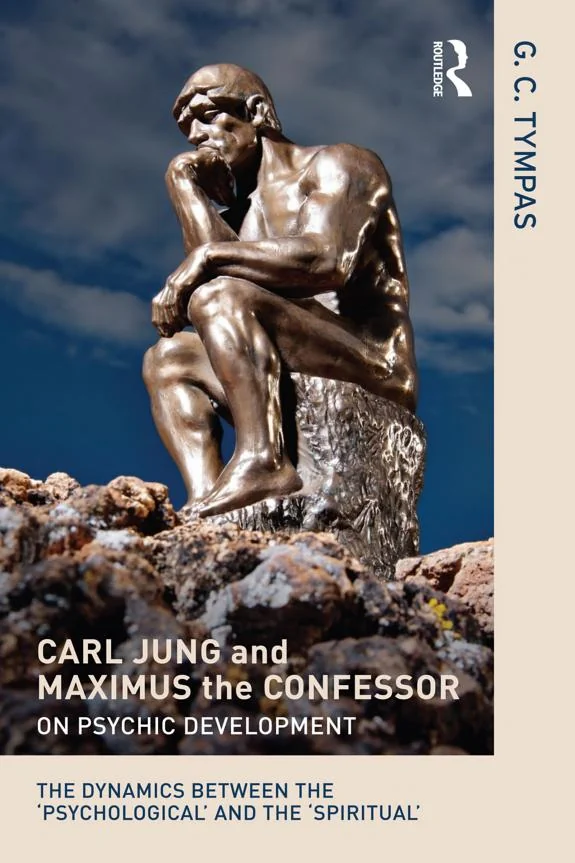
Carl Jung and Maximus the Confessor on Psychic Development
 77
77

Carl Jung and Maximus the Confessor on Psychic Development
Tympas's comparative analysis of Jung and Maximus the Confessor is a rigorous academic undertaking, meticulously charting the terrain between psychological individuation and spiritual *theosis*. The strength of the book lies in its detailed exegesis of both thinkers, demonstrating how seemingly disparate systems can address similar human aspirations for wholeness. Tympas avoids facile syncretism, instead highlighting crucial distinctions while proposing a novel 'evolutional' framework. A limitation, however, is the dense academic prose, which may present a barrier to readers less familiar with theological or philosophical jargon. The discussion on Maximus's concept of *apatheia* and its potential parallel with Jung's integration of the shadow is particularly illuminating, showing how both traditions grapple with the management of internal psychic states for higher development. The book offers a valuable, if demanding, perspective on the human drive for growth, bridging the empirical and the transcendent.
📝 Description
77
G. C. Tympas's 2014 book compares Carl Jung's psychic development with Maximus the Confessor's spiritual ascent.
This 2014 study by G. C. Tympas examines the parallels and differences between Carl Jung's theories on psychic development and Maximus the Confessor's model of spiritual ascent. The author probes how 'psychic development' in depth psychology relates to 'spiritual progress' within Orthodox Christian asceticism. Tympas specifically compares Jung's concept of individuation with Maximus's idea of theosis, or deification. The book considers how Jung's archetypes and the collective unconscious might correspond with, or diverge from, Maximus's hierarchical understanding of the soul's journey toward God.
This work is aimed at advanced students and scholars in comparative religion, the psychology of religion, and esoteric studies. It will interest those exploring the connections between depth psychology and early Christian thought. Jungian analysts will find historical and theological parallels, while theologians and spiritual practitioners may find psychological frameworks for understanding spiritual experience. A prior understanding of both Jungian psychology and Christian mystical theology is beneficial for readers.
Tympas's work joins a growing academic interest in comparing modern psychological concepts with ancient spiritual traditions. It situates Jungian thought, particularly its engagement with religious experience, alongside the contemplative practices and theology of early Christian figures like Maximus the Confessor. This dialogue reflects an ongoing effort to bridge the understanding of the human psyche between contemporary psychological theory and historical mystical traditions, exploring potential convergences in the pursuit of self-knowledge and spiritual transformation.
💡 Why Read This Book?
• Learn how Carl Jung's theory of individuation, a process of psychological integration, compares with Maximus the Confessor's model of *theosis*, or deification, as detailed in the comparative analysis. • Understand the 'evolutional' relationship proposed between psychological development and spiritual progress, offering a dynamic interpretation of spiritual experience beyond 2014 publication. • Gain insight into the specific theological concepts of Maximus the Confessor, such as *apatheia* and *gnosis*, and their potential parallels within Jungian psychology.
⭐ Reader Reviews
Honest opinions from readers who have explored this book.
❓ Frequently Asked Questions
What is the primary goal of comparing Jung and Maximus the Confessor in this book?
The book aims to explore the differences and potential connections between psychological development, as theorized by Carl Jung, and spiritual progress, as articulated by Maximus the Confessor, within a trans-disciplinary framework.
When was G. C. Tympas's book "Carl Jung and Maximus the Confessor on Psychic Development" first published?
The book was first published on March 26, 2014.
What specific aspect of spiritual development does Maximus the Confessor represent?
Maximus the Confessor represents a model of spiritual progress within Orthodox Christian asceticism, focusing on *theosis* or deification as the ultimate aim of the spiritual life.
What is Carl Jung's central concept of psychic development discussed in the book?
Carl Jung's central concept of psychic development explored is individuation, the process of psychological integration and self-realization.
What kind of relationship between psychological and spiritual development is proposed?
An 'evolutional' relationship is proposed, suggesting a dynamic and interconnected interpretation of how psychological and spiritual experiences interact and develop.
What academic fields does this book bridge?
The book bridges depth psychology, particularly Jungian psychology, with Orthodox Christian theology and patristic studies.
🔮 Key Themes & Symbolism
Individuation vs. Theosis
The central theme is the comparative analysis of Carl Jung's concept of individuation – the lifelong psychological process of integration and self-realization – with Maximus the Confessor's understanding of *theosis*, the Orthodox Christian doctrine of deification or becoming like God. Tympas explores how both frameworks address the human journey toward wholeness, albeit from distinct ontological starting points. The work examines Jung's archetypes and the collective unconscious alongside Maximus's ascent of the soul through stages of purification and contemplation.
Psychic vs. Spiritual Experience
This theme directly addresses the book's core question: how do psychological and spiritual development differ, and how do their respective experiences diverge or converge? Tympas investigates the nature of psychic experience as understood through depth psychology, focusing on the ego, the shadow, and the self, and contrasts it with spiritual experience as described in patristic literature, emphasizing divine encounter and transformation. The book proposes a framework for understanding these as potentially complementary rather than mutually exclusive domains.
Evolutional Interrelation
Tympas posits an 'evolutional' relationship between the psychological and the spiritual, moving beyond simple parallels or contrasts. This dynamic interpretation suggests that psychic development can be seen as a precursor or a co-occurring process that facilitates or informs spiritual progress, and vice versa. The book argues for a holistic view where the immanent processes of the psyche and the transcendent aims of the spirit are not separate but part of a continuous developmental arc, offering a novel lens for understanding religious and psychological growth.
Trans-Disciplinary Framework
The book's methodology is rooted in creating a trans-disciplinary framework to analyze these two complex thinkers. By bringing together the analytical psychology of the 20th century with the early medieval Christian thought of Maximus the Confessor, Tympas seeks to transcend the boundaries of individual academic disciplines. This approach allows for a richer, more nuanced understanding of human development, integrating empirical psychological observation with theological contemplation and mystical tradition.
💬 Memorable Quotes
Direct passages from the work, attributed to the author.
“The work proposes an 'evolutional' relationship between the 'psychological' and the 'spiritual'.”
— This suggests that psychic development and spiritual progress are not static or entirely separate but are interconnected and mutually influencing processes, evolving in tandem over time. It implies a dynamic interplay where one can inform or facilitate the other.
“Distinguishing psychological development from spiritual development.”
— This highlights the book's central inquiry into the fundamental differences between the aims and experiences of internal psychic integration (Jung) and the pursuit of divine union (Maximus).
“Comparing Carl Jung’s theory of psychic development and Maximus the Confessor’s model of spiritual progress.”
— This captures the core comparative task undertaken by the author, meticulously examining the theoretical frameworks of two distinct thinkers from different eras and traditions.
“An 'evolutional' relationship between the 'psychological' and the 'spiritual' is proposed.”
— This signifies the author's unique contribution: a model suggesting that psychological growth and spiritual advancement are not parallel tracks but a developing, integrated pathway.
“A dynamic interpretation of spiritual experience.”
— This points to the book's aim to offer a fresh perspective on how we understand spiritual experiences, viewing them not as purely otherworldly but as deeply intertwined with our psychological realities.
🌙 Esoteric Significance
Tradition
While Maximus the Confessor is a central figure in Orthodox Christian theology, his ascetical and mystical writings have often been adopted and reinterpreted within broader esoteric traditions, including Christian Hermeticism and mystical paths emphasizing inner transformation. Tympas's work bridges this gap by framing Maximus's *theosis* within a psychological paradigm that speaks to esoteric interests in spiritual development and self-realization, common in post-Jungian esoteric discourse.
Symbolism
The book implicitly engages with the symbolic language of both traditions. For Jung, symbols are keys to the unconscious, particularly through archetypes like the Self. For Maximus, spiritual ascent involves symbolic understanding of creation and divine revelation. While not explicitly detailing specific symbols, the work operates on the symbolic level of interpreting psychic structures (Jung) and spiritual states (Maximus) as metaphorical or actual pathways towards ultimate reality.
Modern Relevance
Contemporary thinkers and practitioners interested in integral spirituality, depth psychology, and contemplative practices find Tympas's work highly relevant. It informs discussions on the integration of psychological well-being with spiritual growth, appealing to those who seek to understand the human psyche's role in spiritual pursuits, particularly within Christian contemplative traditions but also in broader psychospiritual contexts.
👥 Who Should Read This Book
• Advanced students of comparative religion and psychology of religion seeking to understand the nuanced interplay between psychological and spiritual frameworks. • Jungian analysts and psychotherapists interested in exploring the theological underpinnings and historical parallels of psychic development within a Christian mystical context. • Theologians and scholars of patristic studies who wish to examine how modern psychological theories can illuminate the concepts of spiritual progress and deification as presented by Maximus the Confessor.
📜 Historical Context
Published in 2014, G. C. Tympas's "Carl Jung and Maximus the Confessor on Psychic Development" emerged at a time when interdisciplinary studies, particularly between psychology and theology, were gaining significant traction. The work engages with a legacy of scholarship that has explored the psychological dimensions of religion, building on figures who have previously linked Jungian concepts with Christian mysticism. While Jung himself engaged with various religious traditions, including Gnosticism, this book specifically focuses on a rigorous comparison with a key figure of Byzantine theology. The intellectual climate of the early 21st century, with its emphasis on comparative spirituality and the neuroscience of religious experience, provided a receptive environment for such a detailed theological-psychological synthesis. Unlike earlier, more speculative attempts at correlation, Tympas's approach is grounded in careful textual exegesis of both Jung's extensive writings and Maximus the Confessor's complex theological works, offering a scholarly counterpoint to more generalized comparative studies.
📔 Journal Prompts
Maximus the Confessor's concept of *theosis* and its relation to Jung's individuation.
The 'evolutional' relationship between psychic and spiritual development.
Distinguishing psychological experience from spiritual experience.
Jung's archetypes and Maximus's spiritual ascent.
The dynamic interpretation of spiritual experience presented.
🗂️ Glossary
Individuation
In Jungian psychology, the lifelong process of psychological integration and self-realization, aiming to differentiate the self and integrate conscious and unconscious elements into a unified whole.
Theosis
A central concept in Orthodox Christian theology, referring to the process of deification or becoming like God, achieved through union with God's divine energies.
Apatheia
A state of spiritual and psychological tranquility and freedom from destructive passions, a key goal in Maximus the Confessor's ascetic theology.
Archetypes
Universal, archaic patterns and images that derive from the collective unconscious and are the psychic conditions of the experience of the numinous.
Collective Unconscious
A concept developed by Carl Jung, referring to the part of the unconscious mind that is common to all human beings, containing inherited archetypes and instincts.
Trans-disciplinary Framework
An approach to research that integrates knowledge and methods from multiple academic disciplines to address complex problems or phenomena.
Gnosis
In a Christian context, often refers to a deeper, intuitive knowledge of spiritual truths, distinct from intellectual understanding, a concept relevant to both mystical theology and Jungian psychology.
This book appears in 1 collection
🔮 Readers Also Liked
Browse all →








From the “Psychic Development” Collection
View all →






More Free Occult Philosophy Books
View all →