A Primer of Jungian Psychology
 74
74

A Primer of Jungian Psychology
Hall and Nordby’s 1973 *Primer* attempts a Herculean task: rendering Carl Jung’s sprawling psyche into a digestible volume. It succeeds admirably in its primary goal of clarity, particularly in its dissection of the collective unconscious and archetypal figures. The authors’ methodical approach, detailing concepts like synchronicity and the process of individuation, provides a solid scaffolding for understanding Jung's divergence from Freud. However, the text occasionally feels like a meticulously organized lecture, lacking the evocative power of Jung’s own prose or the experiential depth found in later commentaries. The section on dream analysis, while informative, could benefit from more illustrative examples. Despite this, the *Primer* remains an indispensable tool for anyone needing a lucid, factual introduction to analytical psychology.
📝 Description
74
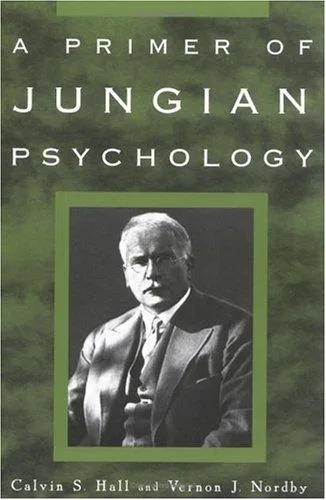
Calvin S. Hall and Vernon J. Nordby published A Primer of Jungian Psychology in 1973.
This book provides a systematic introduction to Carl Jung's theoretical framework. It breaks down Jung's core ideas, moving from basic concepts to more complex theories. The primer is designed for those who want a clear, structured understanding of Jungian thought without immediately reading Jung's own dense texts. It offers an accessible entry point for students of psychology, philosophy, and esoteric studies who want to grasp the heart of analytical psychology. Published when psychology was undergoing significant intellectual shifts, the book worked to organize and spread Jung's ideas. These ideas differed notably from the dominant Freudian psychoanalysis of the time. The authors aimed to present Jung's contributions in a format that a wider academic and public audience could digest.
While rooted in psychology, Jung's work deeply engages with symbolic systems and the unconscious, areas often explored within esoteric traditions. Concepts like the collective unconscious and archetypes resonate with Gnostic ideas of universal patterns and the hidden depths of the human spirit. The focus on individuation, the process of becoming a whole self, aligns with spiritual paths that emphasize personal transformation and the integration of conscious and unconscious elements. This primer makes those connections accessible to a broader audience interested in the psychological dimensions of spiritual development.
💡 Why Read This Book?
• Gain a structured understanding of core Jungian concepts like the collective unconscious and archetypes, as detailed in the book's explanation of Jung's seminal 1934 work, *Archetypes of the Collective Unconscious*. • Grasp the process of individuation, presented systematically, offering a framework for understanding personal psychological development distinct from other schools of thought. • Learn about Jung's specific theoretical contributions, such as the functions of thinking, feeling, sensation, and intuition, as laid out in the book's early chapters.
⭐ Reader Reviews
Honest opinions from readers who have explored this book.
❓ Frequently Asked Questions
What is the primary goal of *A Primer of Jungian Psychology*?
The book's primary goal is to provide a clear, systematic, and accessible introduction to the core theories and concepts of Carl Jung's analytical psychology for students and general readers.
When was *A Primer of Jungian Psychology* first published?
The book was first published in 1973, a period when Jungian thought was gaining wider academic and public traction.
Who are the authors of *A Primer of Jungian Psychology*?
The authors are Calvin S. Hall and Vernon J. Nordby, who collaborated to synthesize Jung's complex ideas into a more approachable format.
Does the book cover Jung's concept of the collective unconscious?
Yes, the book dedicates significant attention to explaining the collective unconscious, presenting it as a fundamental layer of the psyche containing inherited patterns of thought and imagery.
Is *A Primer of Jungian Psychology* suitable for beginners?
Absolutely. It is specifically designed as a primer, meaning it breaks down complex Jungian theories into understandable components, making it an excellent starting point for those new to the subject.
What is the concept of 'individuation' as explained in the book?
Individuation, as presented in the primer, is the lifelong psychological process of differentiating the self, integrating conscious and unconscious elements to achieve wholeness.
🔮 Key Themes & Symbolism
Archetypes and the Collective Unconscious
This work systematically unpacks Jung's revolutionary concept of the collective unconscious, positing a shared reservoir of ancestral memories and patterns. It meticulously details key archetypes—primordial images and themes such as the Shadow, the Anima/Animus, the Wise Old Man, and the Great Mother—explaining their function as psychic organizers that influence human behavior and perception across cultures and eras. The book clarifies how these universal patterns manifest in myths, dreams, and individual lives.
The Process of Individuation
Central to Jungian psychology, individuation is presented as the lifelong journey toward psychic wholeness. Hall and Nordby explain this as the process by which an individual becomes a distinct, indivisible unity, integrating conscious aspects with the unconscious dimensions of the self. The book outlines the stages and challenges involved in this profound developmental path, emphasizing the conscious engagement with archetypal forces and the integration of the Shadow.
Psychic Functions and Types
The primer offers a clear exposition of Jung's theory of psychological functions—thinking, feeling, sensation, and intuition—and how their different combinations lead to distinct psychological types. It explains how dominant and auxiliary functions shape an individual's perception of the world and their decision-making processes. This framework provides tools for understanding personality differences and the dynamics between various psychic orientations.
Dreams and Symbolism
The book addresses Jung's view of dreams as vital messages from the unconscious, often compensating for conscious attitudes. Hall and Nordby explain how dream imagery, rich with symbolic meaning, can guide the individuation process. They illustrate how archetypal symbols, drawn from the collective unconscious, frequently appear in dreams, offering insights into the dreamer's inner world and developmental trajectory.
💬 Memorable Quotes
Direct passages from the work, attributed to the author.
“The collective unconscious is a reservoir of latent memory traces inherited from man's ancestral past.”
— This statement captures the essence of Jung's idea that our psyche contains not just personal experiences but also the inherited psychic structures and memories of the entire human lineage.
“Archetypes are not inherited ideas, but inherited potentialities for producing certain kinds of ideas or images.”
— This interpretation clarifies that archetypes are not fixed concepts but rather innate predispositions or patterns that shape how we experience and understand the world.
“Individuation is the process by which a person becomes a psychological individual.”
— This concisely defines individuation as the journey toward becoming a fully realized, unique self, distinct from the collective and integrated in one's entirety.
“The Shadow is the 'other side' of our personality, often containing repressed or unrecognized aspects.”
— This describes the Shadow archetype as the darker, less acceptable part of ourselves that we tend to deny, but which is crucial for self-understanding and wholeness.
“Dreams are the royal road to the unconscious.”
— This highlights Jung's perspective on dreams as a primary means of accessing and understanding the contents and dynamics of the unconscious mind.
🌙 Esoteric Significance
Tradition
While rooted in depth psychology, Jung's work draws heavily from Gnostic, Hermetic, and alchemical traditions, which are often considered esoteric. *A Primer of Jungian Psychology* explicates these influences by detailing concepts like the Self, archetypes, and the individuation process, which echo ancient quests for spiritual wholeness and self-knowledge found in these lineages. The book acts as a bridge, translating esoteric psychological concepts into a modern, albeit academic, framework.
Symbolism
The work frequently engages with symbolism as the language of the unconscious. Key symbols explored include the Anima/Animus (representing the contrasexual soul-image, vital in alchemical symbolism of union), the Shadow (often depicted in esoteric traditions as the primordial chaos or the 'dark night of the soul'), and the Mandala (a universal symbol of wholeness and the integrated Self, prominent in Tantric Buddhism and various mystical traditions).
Modern Relevance
Contemporary thinkers and practitioners in fields ranging from depth psychology and transpersonal psychology to mythology studies and even certain strands of spiritual development continue to engage with Hall and Nordby's foundational presentation. The concepts of archetypes, the collective unconscious, and individuation remain vital for understanding symbolic processes, psychological integration, and the human search for meaning in diverse spiritual and therapeutic contexts.
👥 Who Should Read This Book
• Students of Jungian psychology seeking a clear, foundational text to grasp core concepts like archetypes and the collective unconscious before engaging with primary sources. • Individuals interested in comparative mythology and religious studies looking to understand the psychological underpinnings of universal symbols and narratives. • Therapists and counselors exploring alternative frameworks for understanding the psyche, particularly those who find Jung's original works dense.
📜 Historical Context
Published in 1973, *A Primer of Jungian Psychology* arrived at a time when Carl Jung's work, though influential, was still often viewed as supplementary to or a departure from the mainstream psychoanalytic tradition dominated by Freudian theory. The mid-20th century saw Jungian psychology developing its own distinct schools and interpretations, with figures like Marie-Louise von Franz and Erich Neumann expanding on his ideas. This primer served to consolidate and present Jung's complex theories in a structured manner, making them more accessible to students and scholars who might have found Jung's original works challenging. It aimed to bridge the gap between Jung's profound, often mythopoetic explorations and the more empirical demands of academic psychology. The book's publication predates the widespread internet accessibility of psychological texts, making such synthesized primers essential for disseminating specialized knowledge.
📔 Journal Prompts
The Shadow archetype and its manifestations in personal life.
Archetypal imagery encountered in dreams or active imagination.
The personal significance of the Anima/Animus projection.
Reflecting on one's current stage in the individuation process.
Analyzing the interplay of thinking and feeling functions in decision-making.
🗂️ Glossary
Collective Unconscious
A universal, inherited layer of the psyche containing archetypes and instincts common to all humanity, distinct from the personal unconscious.
Archetype
A primordial, universal pattern or image that derives from the collective unconscious and is the psychic counterpart of an inherited structure.
Individuation
The psychological process of integrating the conscious and unconscious aspects of the psyche to achieve wholeness and become a unique, indivisible self.
Shadow
The unconscious, often repressed, aspect of the personality that the conscious ego does not identify with.
Anima/Animus
The contrasexual aspect of the psyche; Anima in men (feminine inner personality), Animus in women (masculine inner personality).
Synchronicity
Meaningful coincidences that occur without a causal relationship, suggesting an acausal connecting principle.
Psychological Functions
Jung's four basic modes of perception and judgment: thinking, feeling, sensation, and intuition.
🔮 Readers Also Liked
Browse all →









More by Calvin S. Hall, Vernon J. Nordby
All books →

More Free Occult Philosophy Books
View all →