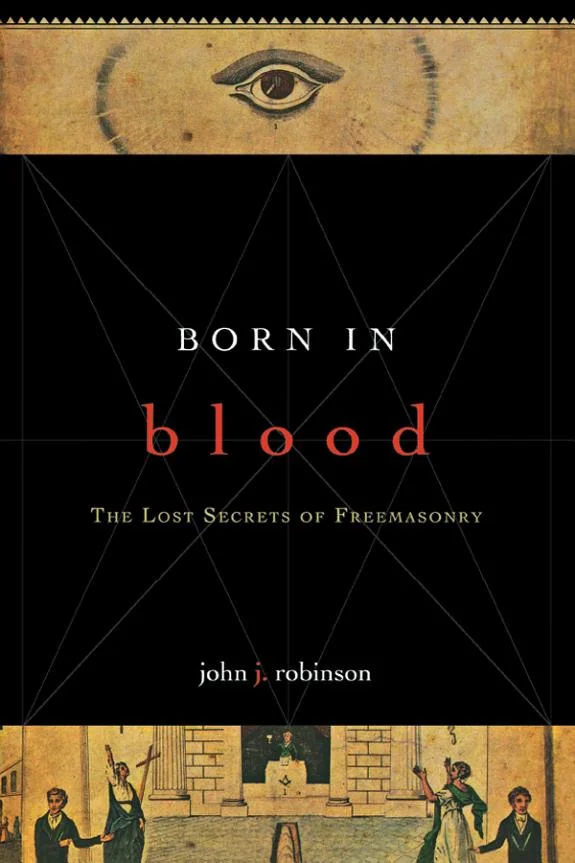
Born in Blood
 71
71

Born in Blood
Robinson's "Born in Blood" presents a compelling, albeit controversial, thesis on the origins of Freemasonry. He bypasses the more common "operative to speculative" guild transition narrative, instead positing a direct lineage from early Christian groups and the Knights Templar. The strength lies in his meticulous, if selective, citation of historical documents and his ability to connect disparate historical threads into a seemingly coherent argument. However, the work occasionally leans into speculative leaps, particularly when interpreting Templar activities as direct precursors to Masonic ritual. A notable passage explores the alleged survival of Templar secrets after their 1314 suppression, a pivotal point in his argument. While not definitive proof, Robinson offers a persuasive alternative history for those willing to consider it. It serves as a solid, if contentious, starting point for further investigation into Masonic lore.
📝 Description
71
John J. Robinson's 2009 book, "Born in Blood," traces Freemasonry's origins to ancient, clandestine societies.
John J. Robinson's "Born in Blood" investigates Freemasonry's lineage, suggesting its roots extend beyond the 1717 formal establishment of the craft to earlier, clandestine groups. The author proposes a direct connection between medieval Christian heresies, particularly the Knights Templar, and the core principles of Masonic lodges. Robinson examines the rituals and symbolism that existed before the formalization of Freemasonry, positing a continuous transmission of esoteric knowledge.
The book appeals to readers interested in the historical and symbolic foundations of Western esotericism. It addresses historical controversies surrounding Freemasonry, including its complex relationship with the Roman Catholic Church. For those curious about the evolution of secret societies and how ancient wisdom is passed down through ritual and allegory, Robinson's arguments offer a detailed perspective.
Published in 2009, "Born in Blood" engages with a tradition of Masonic scholarship that often diverges from mainstream historical accounts. Robinson connects Freemasonry not just to operative guilds but to a vessel for ancient, Gnostic-influenced traditions. The book discusses symbols and rituals allegedly passed through various secret societies, positioning Freemasonry as a continuation of these esoteric teachings. It also addresses historical condemnations of Freemasonry by religious bodies, notably the Roman Catholic Church.
💡 Why Read This Book?
• Gain a fresh perspective on Freemasonry's origins, moving beyond simple guild transitions to explore potential links with the Knights Templar and early Christian heresies, as detailed in the book's exploration of the period following 1314. • Understand the historical friction between Freemasonry and the Roman Catholic Church by examining the esoteric symbolism and rituals Robinson connects to Gnostic traditions. • Discover how ancient symbols and allegorical narratives, as presented through Robinson's analysis of Templar iconography, may have been preserved and transmitted through secret societies.
⭐ Reader Reviews
Honest opinions from readers who have explored this book.
❓ Frequently Asked Questions
What is the primary argument of John J. Robinson's 'Born in Blood'?
The book's central thesis is that Freemasonry did not emerge solely from operative stonemasons' guilds but has direct, ancient roots tracing back to early Christian groups and the Knights Templar, carrying esoteric knowledge and rituals.
When was 'Born in Blood' first published?
John J. Robinson's 'Born in Blood' was first published on September 16, 2009.
What is the historical connection between Freemasonry and the Knights Templar discussed in the book?
Robinson argues that the Templars, after their suppression in the early 14th century, preserved and transmitted their esoteric traditions, which later influenced the development of Masonic symbolism and ritual.
Why did the Roman Catholic Church historically oppose Freemasonry, according to the book?
The book suggests the Church opposed Freemasonry due to its perceived roots in heretical Christian sects and its possession of esoteric knowledge, which challenged the Church's religious authority and doctrines.
Does 'Born in Blood' focus on modern Masonic practices?
No, the book primarily focuses on the historical origins and early development of Freemasonry, examining its roots and the transmission of its symbolism and rituals from ancient times up to its formalization.
Is 'Born in Blood' considered a definitive historical account of Freemasonry?
While influential, 'Born in Blood' presents a specific, often debated, interpretation of Masonic origins. It is best viewed as a scholarly exploration and a catalyst for further research rather than a universally accepted historical fact.
🔮 Key Themes & Symbolism
Templar Legacy in Masonry
Robinson posits that the Knights Templar, far from being eradicated in the 14th century, survived by going underground, carrying their spiritual and possibly esoteric knowledge with them. This hidden lineage, he argues, directly informed the structure, symbolism, and rituals of Freemasonry. The book examines how alleged Templar traditions, particularly concerning their secrets and organizational structure, were allegedly preserved and eventually integrated into the nascent Masonic lodges after 1717, providing a more ancient and profound origin than the commonly accepted guild theory.
Esoteric Christianity and Gnosticism
A central theme is the book's exploration of Freemasonry as a repository for strains of esoteric Christianity, potentially linked to Gnostic sects. Robinson suggests that certain rituals and symbolic interpretations within Masonry echo early Christian mystical traditions that were suppressed by the orthodox Church. He connects this to the perceived threat Freemasonry posed to established religious authority, particularly from the Roman Catholic Church's perspective, which saw these practices as heretical continuations.
Symbolism of the Craft
The work looks at the symbolic language of Freemasonry, interpreting its tools and allegories not merely as operational aids but as carriers of deep spiritual and philosophical meaning. Robinson scrutinizes symbols like the square, compass, and the tracing board, suggesting they are coded expressions of ancient mysteries. He argues these symbols were consciously preserved and transmitted from earlier traditions, including those of the Templars, to impart specific teachings on morality, cosmology, and the nature of divinity.
Secrecy and Transmission of Knowledge
The nature of secrecy itself is a key theme, with Robinson examining how knowledge deemed dangerous or heretical by dominant powers has historically been preserved through clandestine organizations. The book traces the perceived transmission of this knowledge from ancient mystery schools through medieval esoteric groups like the Templars, and finally into the formalized structure of Freemasonry. This emphasis on hidden traditions highlights the role of secret societies in preserving alternative spiritual and philosophical currents.
💬 Memorable Quotes
Direct passages from the work, attributed to the author.
“The Roman Catholic Church has always been suspicious of secret societies.”
— This observation highlights a recurring theme: the historical tension between institutionalized religion and clandestine spiritual or fraternal groups. It frames the Church's opposition to Freemasonry not as arbitrary, but as a consistent pattern of defending its authority against perceived rivals.
“Freemasonry revealed itself in 1717.”
— This date marks a crucial point, signifying the formalization and public emergence of what would become known as speculative Freemasonry. It serves as a reference point against which Robinson traces earlier, hidden influences and origins.
“Rituals had been used in secret for centuries before 1717.”
— This statement underscores the book's focus on the antiquity and hidden continuity of Masonic practices. It suggests that the formal establishment in 1717 codified traditions that already possessed a long, secret history.
💡 Key Ideas
Editorial paraphrase of the work's core concepts — not direct quotes.
The origins of Freemasonry are older than the operative stonemasons' guilds.
This paraphrased concept captures Robinson's central argument, challenging the widely accepted narrative of Masonic origins solely from medieval craft guilds and pointing towards more ancient, esoteric sources.
The Knights Templar are a key link in the chain of Masonic origin.
This paraphrased concept identifies a specific, controversial element of Robinson's thesis: the direct connection he draws between the medieval military order of the Knights Templar and the subsequent development of Freemasonry.
🌙 Esoteric Significance
Tradition
Robinson's work situates Freemasonry within the broader tradition of Western Esotericism, particularly drawing connections to Gnosticism and the mystical currents within Christianity. It departs from purely historical or sociological analyses by positing a lineage of spiritual knowledge passed through clandestine channels. While not strictly adhering to a single Hermetic or Kabbalistic framework, it aligns with the concept of a preserved, ancient wisdom that informs initiatory traditions and secret societies, suggesting an unbroken chain of esoteric transmission.
Symbolism
Key symbols explored include the square and compasses, interpreted not just as tools but as representations of divine geometry and the harmonization of the material and spiritual realms. Robinson also looks at the symbolism associated with the Holy Grail and the lost Temple of Solomon, viewing them as allegorical representations of divine knowledge and spiritual perfection. The alleged Templar connection imbues these symbols with further layers of meaning related to hidden lineage and preserved mystical traditions.
Modern Relevance
Contemporary interest in conspiracy theories, alternative history, and the symbolic language of secret societies continues to fuel engagement with "Born in Blood." Thinkers and practitioners in fields like esoteric history, comparative religion, and even some contemporary Masonic scholars draw on Robinson's work as a significant, albeit debated, exploration of Masonic origins. It remains a reference point for those seeking to understand the esoteric underpinnings and historical controversies that continue to shape perceptions of Freemasonry today.
👥 Who Should Read This Book
• Students of Western Esotericism seeking to understand potential links between Freemasonry, the Knights Templar, and early Christian mystical traditions. • History enthusiasts interested in alternative interpretations of medieval and early modern European history, particularly regarding secret societies and religious conflict. • Freemasons and those curious about Masonic symbolism and ritual who wish to explore theories about the craft's deeper, more ancient origins beyond the guild narrative.
📜 Historical Context
Published in 2009, "Born in Blood" entered a literary landscape where interest in historical conspiracies and alternative interpretations of Western history, particularly concerning secret societies, was significant. Robinson's work engages with a long tradition of Masonic scholarship, often challenging the more orthodox historical accounts that emphasize the guild origins of Freemasonry. His thesis, linking Freemasonry directly to the Knights Templar and early Christian esoteric traditions, places him in dialogue with earlier speculative writers like Henry C. Lea, who documented the Church's historical views on heresy and secret rites. The book's focus on the Roman Catholic Church's historical opposition to Freemasonry, citing papal bulls and condemnations, addresses a persistent point of contention and censorship throughout Masonic history, offering a counter-narrative to official Church pronouncements.
📔 Journal Prompts
The alleged Templar legacy and its symbolic transmission into Freemasonry.
The Roman Catholic Church's historical suspicion of secret societies and its implications for Masonic origins.
Ancient rituals used in secret for centuries before 1717.
The meaning of Masonic symbols when viewed through the lens of esoteric Christianity.
The continuous chain of esoteric knowledge from ancient times to modern Freemasonry.
🗂️ Glossary
Operative Masons
Craftsmen who physically built cathedrals and other structures during the Middle Ages. Robinson explores the theory that Freemasonry originated from the guilds and secret traditions of these stonemasons.
Speculative Freemasonry
The form of Freemasonry that emerged in the late 17th and early 18th centuries, which accepted non-operative members and focused on moral and philosophical teachings rather than physical construction.
Knights Templar
A Catholic military order founded around 1119, active during the Crusades. Robinson controversially links their suppressed legacy to the origins of Freemasonry.
Gnosticism
A diverse set of religious beliefs and systems that originated in the 1st and 2nd centuries AD, emphasizing personal spiritual knowledge (gnosis) for salvation. Robinson suggests Masonic teachings may echo Gnostic ideas.
Esotericism
Belief systems and practices that focus on inner, spiritual development and often involve secret knowledge or teachings reserved for initiates. Freemasonry is often categorized within this realm.
Papal Bulls
Official decrees or pronouncements issued by the Pope. The book references historical papal bulls that condemned or warned against Freemasonry.
Allegory
A story, poem, or picture that can be interpreted to reveal a hidden meaning, typically a moral or political one. Robinson views Masonic rituals and symbols as allegorical.
This book appears in 1 collection
🔮 Readers Also Liked
Browse all →





From the “Freemasonry” Collection
View all →



More Free Freemasonry & Secret Societies Books
View all →