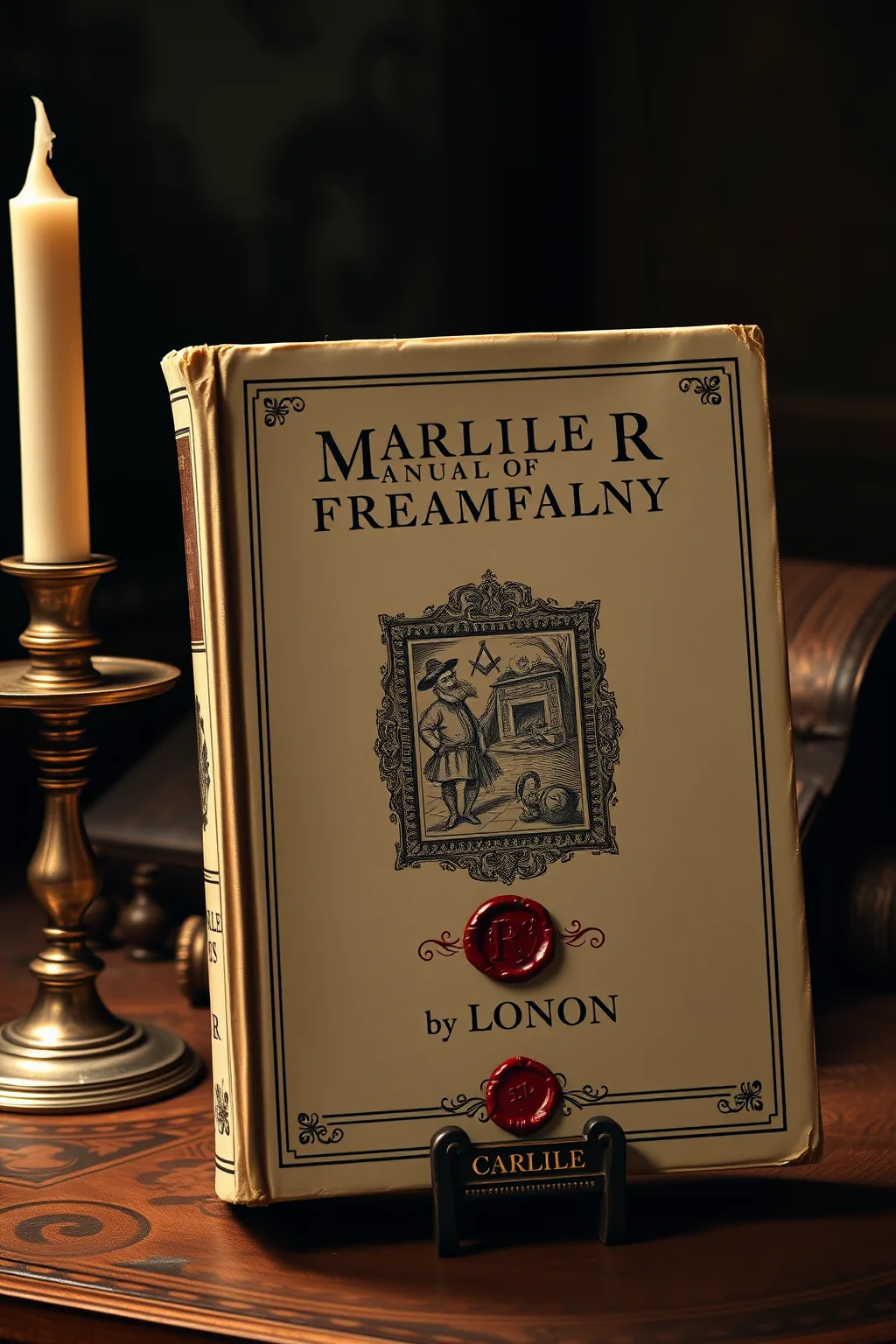
Carlile R Manual Of Freemasonry 1833 London
 80
80

Carlile R Manual Of Freemasonry 1833 London


The 'Carlile R Manual Of Freemasonry 1833 London' is a fascinating and insightful exploration of Freemasonry's esoteric traditions. Richard Carlile's work stands out for its clarity and depth, making it an invaluable resource for anyone interested in the occult and secret societies. The manual provides a detailed account of Freemasonry's rituals and symbols, offering a rare glimpse into the inner workings of this mysterious brotherhood. For modern esoteric seekers, this book is a treasure trove of knowledge, shedding light on the hidden layers of Freemasonry's teachings. Carlile's prose is engaging and thought-provoking, making the complex subject matter accessible to a wide audience. The historical context in which the book was written adds an extra layer of intrigue, as it reflects the intellectual and social upheavals of the early 19th century. Overall, the 'Carlile R Manual Of Freemasonry 1833 London' is a must-read for anyone curious about the esoteric traditions that have shaped modern thought and practice.
📝 Description
80
Published in London in 1833, the Carlile R Manual of Freemasonry offers a direct look into Masonic symbolism.
This 1833 manual from London presents Masonic teachings as understood by its anonymous author. It details the rituals and symbolism central to the fraternity, aiming to illuminate their hidden meanings for the earnest student. The text was produced in an era when such knowledge was often guarded, making its publication a significant event for those interested in the inner workings of Freemasonry.
It serves as a guide to the philosophical underpinnings of Masonic practice. Readers can find explanations for the signs, tokens, and allegories used within the degrees. The author's intent appears to be the clarification of these elements, positioning the manual as a resource for understanding the tradition's intellectual and spiritual dimensions. The book invites reflection on how these symbols connect to broader philosophical ideas.
This manual sits within the broader tradition of Western esotericism, particularly the literature surrounding Masonic orders that flourished in the 18th and 19th centuries. Such texts often sought to codify and disseminate initiatory knowledge, connecting Masonic practices to older traditions like Hermeticism and Kabbalah. The 1833 publication date places it firmly within the period when Freemasonry was widely viewed as a vehicle for moral and spiritual instruction, and its esoteric interpretations were a subject of considerable interest and debate among practitioners and observers.
💡 Why Read This Book?
Reading the 'Carlile R Manual Of Freemasonry 1833 London' today offers a unique opportunity to explore the hidden world of Freemasonry and its enduring influence on contemporary thought. This book provides valuable insights into the esoteric traditions that have captivated scholars and seekers for centuries. By delving into the rituals, symbols, and philosophical underpinnings of Freemasonry, readers can gain a deeper understanding of the occult and its role in shaping modern society. Whether you are a scholar, historian, or simply curious about the mysteries of Freemasonry, this manual is an essential resource that will enrich your knowledge and broaden your perspective.
⭐ Reader Reviews
Honest opinions from readers who have explored this book.
❓ Frequently Asked Questions
What is the 'Carlile R Manual Of Freemasonry 1833 London' about?
The book provides a detailed exploration of Freemasonry's rituals, symbols, and esoteric teachings, offering insights into the secret society's inner workings.
Who should read this book?
This book is ideal for scholars, historians, and anyone interested in the occult and secret societies.
Why is this book significant?
Published in 1833, the book offers a historical perspective on Freemasonry during a time of significant social and political upheaval in Britain.
🔮 Key Themes & Symbolism
Mystical Rituals
The Carlile R Manual Of Freemasonry 1833 London studies the mystical rituals of Freemasonry, revealing the hidden knowledge and symbolism behind its practices. These rituals are not merely ceremonial but are imbued with profound philosophical significance, offering seekers a pathway to spiritual enlightenment.
Symbolism and Hidden Knowledge
This manual is a valuable collection of symbolic meanings and hidden knowledge. It explores the body of symbols used in Freemasonry, providing insights into their esoteric significance. For those interested in the occult and hermetic arts, this book is an indispensable guide to understanding the deeper meanings behind these symbols.
Philosophical Insights
The Carlile R Manual Of Freemasonry 1833 London offers philosophical insights that are as relevant today as they were when first penned. It provides a comprehensive look into the philosophical underpinnings of Freemasonry, making it a valuable resource for scholars and practitioners of mystical arts.
💬 Memorable Quotes
Direct passages from the work, attributed to the author.
“Symbols are the language of the initiates.”
— It highlights the esoteric significance of symbols in Freemasonry's rituals.
“Secrets are the currency of the enlightened.”
— It suggests that hidden knowledge is a valuable asset in the pursuit of spiritual truth.
💡 Key Ideas
Editorial paraphrase of the work's core concepts — not direct quotes.
The true Mason values knowledge above all else.
This quote underscores the importance of hidden knowledge in Freemasonry.
The path to enlightenment is paved with mystery.
This line emphasizes the mystical journey that Freemasonry offers.
The ritual is the key to the inner sanctuary.
This quote emphasizes the importance of rituals in unlocking deeper spiritual insights.
🌙 Esoteric Significance
Tradition
The Carlile R Manual Of Freemasonry 1833 London belongs to the Hermetic tradition, emphasizing the pursuit of hidden knowledge and spiritual enlightenment through rituals and symbols. This tradition has deeply influenced Western esotericism, making this manual a valuable resource for those interested in the occult and hermetic arts.
Symbolism
Key symbols in this manual include the compass and square, the all-seeing eye, and the pillars of wisdom. These symbols are imbued with deep esoteric meanings, representing the quest for knowledge, spiritual enlightenment, and the balance between wisdom and strength.
Modern Relevance
The esoteric teachings in this manual remain relevant today, as they continue to inspire modern practitioners of mystical arts. Many contemporary seekers of hidden knowledge and spiritual enlightenment turn to this manual for insights into Freemasonry's rituals and symbols. It serves as a timeless guide to the mystical journey.
👥 Who Should Read This Book
Beginners interested in the occult and esoteric traditions will find this manual to be an invaluable introduction. Scholars of Freemasonry and hermetic arts will appreciate its depth and historical significance. Spiritual seekers looking to deepen their understanding of mystical rituals and symbols will find this book to be a rich source of insights. Practitioners of Freemasonry will benefit from the detailed exploration of its rituals and the philosophical underpinnings of its practices.
📜 Historical Context
The Carlile R Manual Of Freemasonry 1833 London was written during a time of great secrecy and intrigue in Freemasonry. Published in London in 1833, this manual captured the essence of Freemasonry's rituals and symbols, providing a comprehensive guide to its esoteric teachings. The era was marked by a fascination with the occult and hermetic arts, making this manual an important historical artifact. Its influence can still be seen today in the continued interest in Freemasonry and its mystical practices.
📔 Journal Prompts
How do the rituals described in this manual resonate with your own spiritual journey?
What symbols in Freemasonry have the deepest esoteric significance for you?
How does the pursuit of hidden knowledge influence your understanding of the mystical arts?
In what ways do the philosophical insights in this manual enrich your spiritual practices?
How can the teachings in this manual be applied to modern-day spiritual seekers?
🗂️ Glossary
Hermetic Tradition
A philosophical and spiritual tradition focused on the pursuit of hidden knowledge and spiritual enlightenment.
All-Seeing Eye
A symbol representing divine providence and the quest for spiritual knowledge.
Compass and Square
Symbols in Freemasonry representing the balance between wisdom and strength.
Esoteric Teachings
Hidden knowledge and mystical practices that are revealed only to initiates.
Pillars of Wisdom
Symbols in Freemasonry representing the foundation of knowledge and spiritual enlightenment.
This book appears in 2 collections
🔮 Readers Also Liked
Browse all →




From the “Secret Societies” Collection
View all →





More Free Freemasonry & Secret Societies Books
View all →