Cosmic Consciousness

 71
71

Cosmic Consciousness
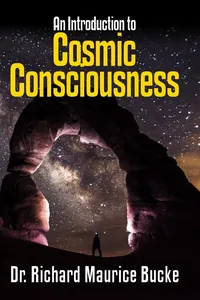
Bucke's ambitious treatise, "Cosmic Consciousness," attempts to map the topography of human spiritual evolution. His meticulous compilation of figures—from Buddha to Plato to his friend Walt Whitman—who allegedly attained this higher state is compelling, though often speculative. The strength lies in Bucke's earnest, almost evangelical, conviction that he is describing a tangible, albeit rare, human faculty. However, his reliance on biographical accounts and his own interpretations can feel subjective; the assertion that the "form-life" of an individual is suddenly perceived as "life-form" is a striking conceptualization, but one that lacks empirical grounding, characteristic of the era's speculative psychology. The work's limitation is its inherent difficulty in verification and its somewhat dated psychological framework. Nonetheless, "Cosmic Consciousness" remains a significant document in the history of consciousness studies, offering a unique perspective on transcendent experience.
📝 Description
71
Richard Maurice Bucke first published 'Cosmic Consciousness' in 1901, proposing a higher human awareness.
Richard Maurice Bucke's 1901 book, 'Cosmic Consciousness,' outlines a specific state of awareness he distinguished from ordinary intellectual or emotional consciousness. He defined this state as a sudden, intuitive illumination accompanied by a sense of immortality and moral elevation. Bucke compiled accounts of individuals, both historical and contemporary, whom he believed achieved this higher consciousness. He drew evidence from literature, religion, and philosophy to support his thesis that this state represented a potential next stage in human evolution.
The work examines individuals like Walt Whitman, whom Bucke knew personally, alongside figures from religious traditions and philosophical writings. Bucke sought to categorize the characteristics of this transcendent experience, presenting it not merely as a religious phenomenon but as a biological and evolutionary development. His approach was an ambitious effort to map the manifestations of what he considered a profound shift in human perception and being.
Published in 1901, 'Cosmic Consciousness' arrived during a period of widespread interest in spiritualism and psychical research. Bucke, a psychiatrist, placed his ideas within a context that sought to reconcile emerging scientific theories, particularly evolution, with spiritual and psychological phenomena. He engaged with the scientific positivism of his time by suggesting a biological basis for what had previously been considered purely mystical or religious insight. The book connects to traditions that explore altered states and transcendent awareness, situating them within a framework of human development.
💡 Why Read This Book?
• Gain a historical perspective on the concept of higher consciousness, as Bucke presents it through his analysis of figures like Walt Whitman, offering insights into late 19th-century spiritual thought. • Understand Bucke's specific terminology, such as "illumination" and "moral conscious," which he uses to define the distinct characteristics of cosmic consciousness, differentiating it from ordinary awareness. • Explore Bucke's evolutionary framework for consciousness, which posits cosmic consciousness as a potential future stage for humanity, a concept that influenced later esoteric and psychological thinkers.
⭐ Reader Reviews
Honest opinions from readers who have explored this book.
❓ Frequently Asked Questions
When was Richard Maurice Bucke's 'Cosmic Consciousness' first published?
Richard Maurice Bucke's seminal work, 'Cosmic Consciousness: A Study in the Evolution of the Human Mind,' was first published in 1901, following years of research and contemplation by the Canadian psychiatrist.
Who was Richard Maurice Bucke and what was his background?
Richard Maurice Bucke (1837-1902) was a prominent Canadian psychiatrist, author, and friend of Walt Whitman. His background as a physician and asylum superintendent informed his unique perspective on the evolution of human consciousness.
What is the central thesis of 'Cosmic Consciousness'?
The central thesis is that humanity is evolving towards a higher state of awareness called 'cosmic consciousness,' characterized by sudden illumination, a sense of immortality, and profound moral insight.
Does Bucke provide examples of individuals who achieved cosmic consciousness?
Yes, Bucke extensively documents numerous historical and contemporary figures, including religious leaders, philosophers, and artists like Buddha, Plato, and Walt Whitman, whom he believed exhibited signs of cosmic consciousness.
What is the significance of 'form-life' in Bucke's theory?
Bucke uses 'form-life' to describe the perception of the individual's existence as a temporary manifestation within a larger, eternal cosmic life, a key characteristic of the cosmic consciousness state.
Is 'Cosmic Consciousness' considered a scientific or spiritual work?
It bridges both, attempting a scientific, evolutionary explanation for spiritual or mystical experiences. Bucke sought to place these phenomena within a naturalistic, albeit expanded, understanding of human development.
🔮 Key Themes & Symbolism
The Evolution of Consciousness
Bucke posits that human consciousness is not static but is undergoing an evolutionary progression. He outlines three primary stages: simple consciousness (akin to animal awareness), self-consciousness (the typical human state), and the emergent cosmic consciousness. This evolutionary perspective frames his exploration of mystical and transcendent experiences not as anomalies, but as indicators of humanity's future potential, aligning spiritual development with biological progress.
Cosmic Consciousness Illumination
The core of Bucke's thesis is the concept of "cosmic consciousness," a sudden, intuitive state of awareness characterized by clear insights, a sense of immortality, and an overwhelming moral or spiritual clarity. This state is not achieved through gradual learning but through a spontaneous "illumination" that fundamentally transforms the individual's perception of self and the universe.
Historical Archetypes of Illumination
Bucke meticulously compiles biographical sketches and accounts of figures throughout history whom he identifies as having attained cosmic consciousness. This includes religious founders like Buddha and Jesus, philosophers such as Plato, and literary figures like his contemporary Walt Whitman. These examples serve as evidence for his theory, illustrating the recurring nature of this elevated state across different cultures and eras.
Moral and Immortality Aspects
A crucial component of cosmic consciousness, according to Bucke, is its inherent moral dimension. Individuals experiencing this state often report an intensified sense of benevolence and a profound understanding of ethical principles. Equally significant is the accompanying perception of immortality, a feeling of eternal existence that transcends the limitations of physical death.
💬 Memorable Quotes
Direct passages from the work, attributed to the author.
“The universe is instinct with life, and all life is conscious.”
— This statement captures Bucke's pantheistic or panpsychist view, suggesting that consciousness is a fundamental property of the cosmos, not limited to biological organisms but pervading all existence.
“Man is the animal that thinks.”
— This defines the current evolutionary stage of humanity, emphasizing the development of self-consciousness and intellectual capacity as the defining characteristic separating humans from other species.
“The man who has once experienced the illumination will scarcely be able to doubt his immortality.”
— Bucke links the experience of cosmic consciousness directly to the subjective certainty of eternal existence, suggesting this clear insights provides an undeniable inner conviction of immortality.
“The moral sense is the first and most important of all the senses.”
— This highlights the profound ethical transformation that accompanies cosmic consciousness, indicating that a heightened moral understanding is a primary and essential feature of this elevated state.
“The world is a thought of God.”
— This reflects a philosophical or spiritual interpretation of reality, suggesting that the universe originates from and is sustained by divine consciousness, aligning with Bucke's exploration of cosmic awareness.
🌙 Esoteric Significance
Tradition
Bucke's work aligns broadly with evolutionary spiritualism and New Thought movements of the late 19th and early 20th centuries. While not strictly Hermetic or Gnostic, it shares an emphasis on inner illumination and the potential for humanity to transcend its current limitations. It echoes ideas of spiritual evolution found in Theosophy but frames them through a more psychological and biological lens, seeking to naturalize ecstatic or mystical states.
Symbolism
The primary symbolic motif is the "illumination" itself, representing a sudden, divine spark or awakening that transcends ordinary cognition. The concept of "form-life" versus "life-form" acts symbolically to represent the transition from perceiving existence as a series of discrete, temporal entities to recognizing an underlying, eternal, unified consciousness. Immortality is symbolized not as a future reward, but as a present, perceived reality within the enlightened state.
Modern Relevance
Contemporary thinkers in consciousness studies, transpersonal psychology, and even some neuroscience circles exploring altered states continue to reference Bucke's foundational work. His categorization of consciousness stages and his focus on the phenomenology of mystical experience provide a historical anchor for modern investigations into non-ordinary states of awareness and the potential for human evolution.
👥 Who Should Read This Book
• Students of consciousness and altered states: Those researching the history of psychology, phenomenology of mystical experiences, or the evolution of human awareness will find Bucke's early classifications and extensive case studies valuable. • Esoteric and spiritual seekers: Individuals exploring concepts of spiritual evolution, higher consciousness, and transcendent insight will appreciate Bucke's framework and historical examples. • Biographers and literary scholars of figures like Walt Whitman: Readers interested in the spiritual and philosophical milieu of prominent 19th-century figures will find Bucke's personal insights and connections particularly relevant.
📜 Historical Context
Published in 1901, "Cosmic Consciousness" emerged in an era fascinated by evolution, psychology, and the nature of the human mind. Richard Maurice Bucke, a Canadian psychiatrist and friend of Walt Whitman, situated his work within the burgeoning field of consciousness studies, yet departed from strict materialism. While scientific positivism dominated, there was a parallel interest in spiritualism and theosophy, movements exploring non-material realities. Bucke's work can be seen as an attempt to bridge these realms, proposing a scientifically plausible, evolutionary pathway to spiritual enlightenment. His approach differed from contemporaries like William James, who explored religious experience more through empirical psychology, and figures in the occult revival, who often relied on more mystical traditions. Bucke's book was influential among early psychologists of religion and esoteric thinkers.
📔 Journal Prompts
The concept of "illumination" as described by Bucke.
The distinction between "self-consciousness" and "cosmic consciousness."
The perceived "immortality" reported by individuals experiencing cosmic consciousness.
Richard Maurice Bucke's interpretation of "form-life" versus "life-form."
The "moral conscious" aspect of cosmic consciousness.
🗂️ Glossary
Cosmic Consciousness
A higher form of human awareness characterized by sudden, intuitive illumination, a sense of immortality, and profound moral elevation, representing a potential evolutionary stage for humanity.
Illumination
The sudden, transformative flash of insight and awareness that characterizes the onset of cosmic consciousness, often described as a profound and instantaneous understanding.
Self-Consciousness
The typical state of human awareness, characterized by awareness of oneself as a distinct individual, capable of thought, reason, and introspection.
Simple Consciousness
The most basic level of awareness, akin to that possessed by animals, primarily focused on sensory input and immediate survival needs.
Moral Conscious
A heightened and intuitive understanding of ethical principles and benevolence that accompanies the experience of cosmic consciousness.
Form-life
Bucke's concept describing the perception of individual existence as a temporary manifestation within a larger, eternal, cosmic life-force or consciousness.
Life-form
In Bucke's framework, this refers to the underlying, eternal consciousness or life-force that is perceived when an individual achieves cosmic consciousness.
This book appears in 1 collection
🔮 Readers Also Liked
Browse all →









From the “Cosmic Consciousness” Collection
View all →





More Free Occult Philosophy Books
View all →