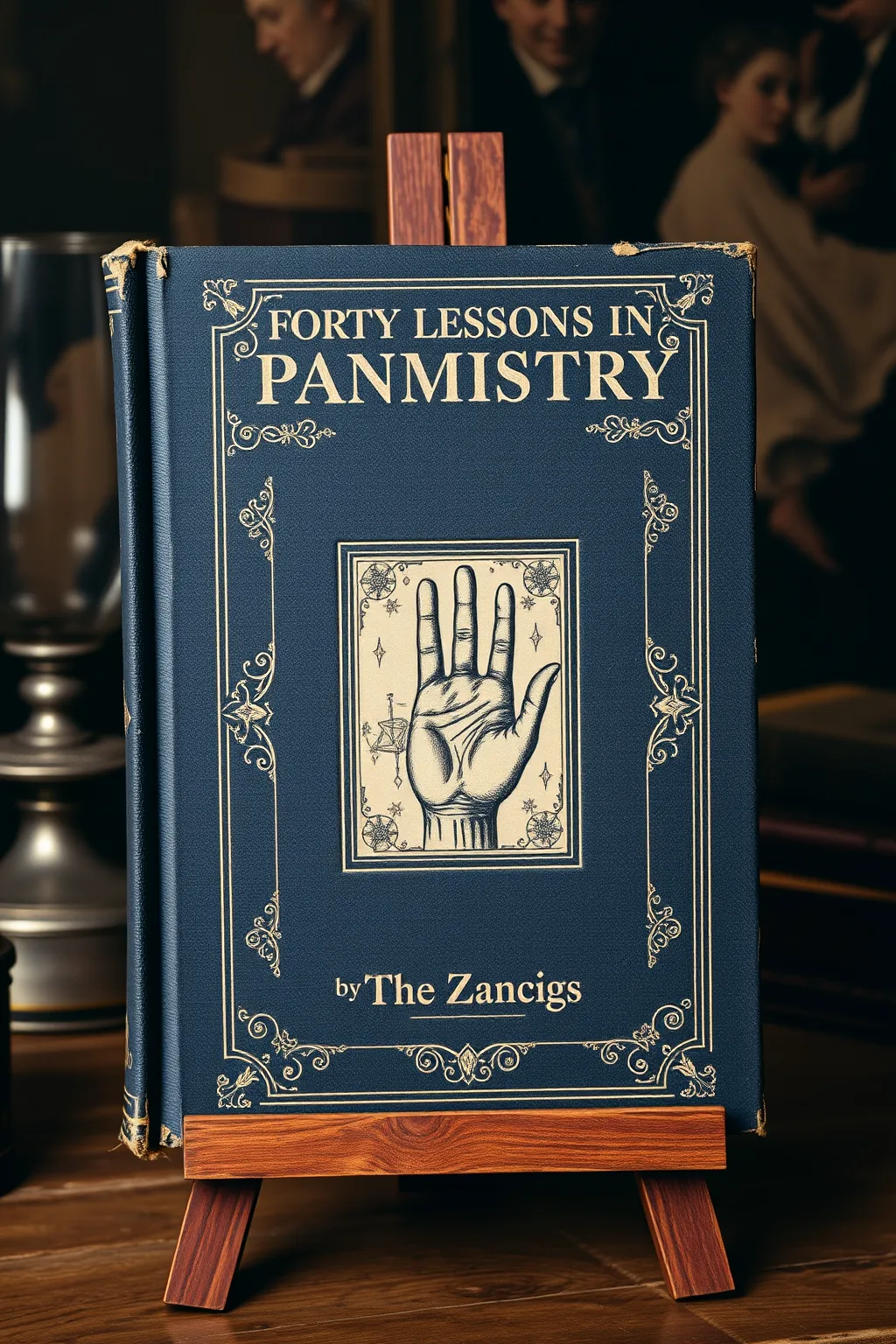
Forty Lessons in Palmistry
 61
61

Forty Lessons in Palmistry



Isolde Whitaker, Sacred Texts Editor: 'Forty Lessons in Palmistry' stands as a cornerstone in the literature of divination. The Zancigs masterfully demystify the complex art, offering a structured, accessible, yet deeply insightful approach to palmistry. This text doesn't just present techniques; it imbues the reader with an understanding of the profound philosophical currents underlying the practice. Its strength lies in its clarity and the breadth of its coverage, making it an invaluable resource for both neophyte seekers and seasoned practitioners who wish to deepen their connection to this ancient form of esoteric wisdom. A truly illuminating guide.
📝 Description
61
The Zancigs published Forty Lessons in Palmistry to teach cheiromancy beyond simple prediction.
Published by The Zancigs, 'Forty Lessons in Palmistry' aims to teach the art of reading palms. The book moves beyond predicting future events, focusing instead on how hand markings reveal character and destiny. It presents the hand as a map, with mounts, lines, and other signs offering understanding of the self and one's place in the world. The text encourages a thoughtful approach to studying these symbols, guiding the reader through the symbolic language of the palm. It is intended for those interested in esoteric subjects and self-understanding through symbolic interpretation. The book addresses questions about fate, free will, and the meaning found in our physical bodies.
Palmistry, or cheiromancy, has a long history within esoteric traditions, dating back to ancient India and Greece. It is often linked with other divinatory arts and systems of symbolic interpretation, such as astrology and tarot. Within these contexts, the palm is viewed not just as a means of prediction, but as a reflection of an individual's inner nature, their life path, and their connection to broader cosmic forces. 'Forty Lessons in Palmistry' fits into this tradition by treating the hand as a text that can be read for self-knowledge and understanding of life's patterns.
💡 Why Read This Book?
Embark on a profound self-discovery journey by learning to read the unique map of your destiny etched on your palms. 'Forty Lessons in Palmistry' offers a clear, systematic path to understanding character, potential, and life's unfolding narrative. Ideal for spiritual seekers, students of esoterica, and anyone fascinated by the ancient wisdom of divination who wishes to gain profound personal insight.
⭐ Reader Reviews
Honest opinions from readers who have explored this book.
❓ Frequently Asked Questions
What is palmistry primarily used for?
Palmistry is primarily used to understand an individual's character, personality traits, potential talents, and the general trajectory of their life path, offering insights into their strengths and challenges.
Are the lines on the palm fixed or do they change?
While the major lines tend to be relatively stable, representing core predispositions, minor lines and markings can evolve, reflecting shifts in one's life experiences, consciousness, and personal growth.
Can palmistry predict specific future events?
Palmistry is more about understanding potentials and tendencies rather than dictating fixed future events. It offers guidance and awareness, empowering individuals to navigate their path with greater consciousness.
What is the significance of the mounts on the palm?
The mounts, raised fleshy areas at the base of the fingers and palm, are believed to correspond to planetary energies and represent specific personality traits and aptitudes associated with those energies.
Is palmistry a scientific practice?
Palmistry is considered an esoteric or metaphysical art, rooted in ancient traditions and symbolism, rather than a scientifically verifiable practice. Its value lies in its psychological and spiritual insights.
🔮 Key Themes & Symbolism
The Hand as a Cosmic Mirror
This theme explores the profound belief that the human hand is a microcosm of the universe, a living document where the energies of the cosmos are imprinted. Each line, mount, and marking is seen as a symbolic representation of divine forces, planetary influences, and the intricate dance of fate and free will. The book invites readers to perceive their palms not as mere flesh, but as a sacred map, a evidence of their unique journey through existence and a reflection of their inner spiritual landscape, connecting the physical form to the vast, unseen currents of cosmic order.
Deciphering Character and Destiny
Central to 'Forty Lessons in Palmistry' is the concept that the hand reveals the inherent qualities of the soul and the predispositions that shape one's life. It examines the detailed analysis of lines such as the Life Line, Head Line, and Heart Line, interpreting them as indicators of vitality, intellect, and emotional capacity. Beyond these primary indicators, the book scrutinizes the subtle nuances of finger shapes, the prominence of mounts, and the presence of unique signs, all woven together to paint a comprehensive portrait of an individual's character and their potential destiny.
The Art of Esoteric Interpretation
This theme highlights palmistry as a sophisticated system of esoteric interpretation, demanding intuition, careful observation, and an understanding of symbolic language. The Zancigs present a structured yet nuanced approach, guiding readers beyond superficial readings to grasp the deeper, symbolic meanings embedded within the palm. It emphasizes that true palmistry is not merely about prediction, but about self-awareness, personal growth, and the cultivation of a conscious relationship with one's life path, fostering a deeper connection to the hidden wisdom that guides human experience.
💬 Memorable Quotes
Direct passages from the work, attributed to the author.
“The hand is a living scroll.”
— This poignant statement suggests that our palms are not static but dynamic records, constantly being written upon by our experiences and inner transformations.
“Lines reveal the soul's intention.”
— This implies that the patterns on our hands are not arbitrary but reflect the deeper desires and purposes of our spiritual essence.
“Fate is a river, lines are its banks.”
— This metaphor illustrates that while destiny flows, our choices and character (represented by the lines) shape its course and boundaries.
“The mount of Venus speaks of love's deep currents.”
— This highlights the specific symbolic language of palmistry, linking physical features to abstract emotional and relational qualities.
💡 Key Ideas
Editorial paraphrase of the work's core concepts — not direct quotes.
Know thyself through thy palms.
This quote champions palmistry as a tool for profound self-understanding, a means to unlock inner knowledge and personal truth.
🌙 Esoteric Significance
Tradition
This work is deeply rooted in the Western esoteric tradition, drawing from ancient Hellenistic and Roman practices of cheiromancy, which were later enriched by Kabbalistic, astrological, and Hermetic influences. It aligns with the hermetic principle of 'As Above, So Below,' viewing the hand as a celestial map reflecting the macrocosm. The Zancigs' approach often incorporates a spiritualist lens, seeing the lines as energetic imprints guided by higher consciousness or destiny.
Symbolism
The core symbolism lies in the correspondence between the palm's features and celestial bodies and psychological archetypes. The lines (Life, Head, Heart, Fate, etc.) represent fundamental aspects of human experience, while the mounts (Venus, Jupiter, Saturn, etc.) embody planetary energies and their influence on character. Finger shapes and nail characteristics add further layers of symbolic meaning, creating a rich lexicon for interpreting the hand's intricate language.
Modern Relevance
In an age often characterized by rapid change and a search for meaning, 'Forty Lessons in Palmistry' offers a timeless connection to self-awareness and inner wisdom. Its principles provide a framework for understanding personal potential, navigating life's challenges with greater insight, and fostering a deeper appreciation for the interconnectedness of mind, body, and spirit. The book's structured approach also makes it an accessible entry point for contemporary practitioners seeking to explore the enduring power of divination and symbolic interpretation.
👥 Who Should Read This Book
This clear text is a treasure for the earnest spiritual seeker yearning to understand the deeper currents of their life. Scholars of esoterica will find a well-structured primer on a classical divinatory art. For practitioners of divination, it offers a foundational text for honing their skills and deepening their interpretative abilities. Beginners curious about the secrets held within their hands will find a clear, step-by-step guide, while those seeking profound self-knowledge and a connection to ancient wisdom will be deeply enriched by its clear insights.
📜 Historical Context
Emerging from the late 19th and early 20th centuries, a period brimming with spiritual exploration and a renewed interest in esoteric arts, 'Forty Lessons in Palmistry' by The Zancigs reflects the era's fascination with occultism, psychology, and the search for hidden knowledge. This was a time when disciplines like phrenology and mesmerism were gaining traction, and palmistry was viewed by many as a legitimate, albeit arcane, science of character analysis and divination. The Zancigs, a prominent duo in the spiritualist and occult circles of their time, contributed significantly to popularizing these ancient practices, presenting them in a structured and accessible manner for a burgeoning audience eager to understand the unseen forces shaping their lives and the universe.
📔 Journal Prompts
Reflect on the most prominent line on your dominant hand. What aspects of your life does it represent, and how do you see this playing out?
Examine the mounts on your palm. Which are most developed, and what planetary influences or personality traits do you associate with them?
Consider a significant life event you have experienced. Can you trace any symbolic connections or influences of this event on the lines or markings of your palm?
How does the concept of 'fate as a river, lines as its banks' resonate with your understanding of free will and destiny in your own life?
If your hand is a 'living scroll,' what is the most important message you believe it is currently conveying to you about your path forward?
🗂️ Glossary
Cheiromancy
The ancient art and practice of foretelling the future or understanding character through the study of the palm of the hand.
Mounts
The fleshy, raised areas on the palm, at the base of the fingers and palm, believed to be associated with planetary influences and personality traits.
Lines
The prominent creases on the palm, such as the Life Line, Head Line, and Heart Line, which are interpreted to represent different aspects of a person's life and character.
Dominant Hand
The hand that a person primarily uses for writing or performing actions, often considered to represent the active, conscious expression of one's life and future.
Recessive Hand
The non-dominant hand, often believed to represent innate potential, past influences, or the subconscious aspects of an individual's character.
This book appears in 3 collections
🔮 Readers Also Liked
Browse all →







From the “Remote Viewing” Collection
View all →




More Free Divination & Tarot Books
View all →